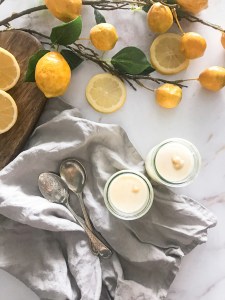
This week I learned about a little piece of medieval magic called the posset.
What is a posset? Not, as you might think, an odd variant of the possum, but a dessert. And a dessert that shouldn’t, at least on first glance, work. At all.
But it does, and it is magic.
I titled this post “medieval magic” because I’m a sucker for a fun alliteration, but my familiarity with the posset comes from historical fiction set in the nineteenth century. (It was originally a drink of milk curdled with wine often used for medicinal purposes, but the word evolved.) I knew that it was a dessert and something like custard, but not the how or why of it.
As of yesterday, I have added this particular spell to my magical recipe book.
Why magic? Because the posset, which is a cream-based pudding-like dessert, shouldn’t work.
Look at this ingredient list:
- heavy cream
- sugar
- citrus juice
Gently boil cream and sugar for five minutes, remove from heat and stir in juice, cool then chill.
That’s it. Unlike panna cotta, custard or pudding, there’s no gelatin, eggs or starch to bind the ingredients together. It still comes out of the fridge a thick, spoonable dessert that goes beautifully with fruit and a Biscoff cookie base. And it’s simple. The biggest commitment is chilling time.
The recipe I modified, with notes:
Creamy Key Lime Pie Bars Recipe | King Arthur Baking
- I used regular lime juice and bolstered the tang with a bit of lemon oil (if anyone knows where to find bottled key lime juice in Ottawa, let me know)
- doubled the recipe to fit a 9×13 pan
- cookie base: used Biscoff for added flavor, but next time skip the sugar and bake for ~half the time
Seriously, though, why does this work?
The magic is in the interaction of the acids in the juice and the cream.
How To Make A Posset – An Acid Set Cream – The Culinary Exchange
Possets are acid set creams. This makes citrus flavors perfect posset making foundations.
Yes, please.
Posset – The old school dessert we’re bringing back
It’s a 3 ingredient custard that tastes like the love child of lemon curd & pastry cream…
- Dissolving sugar into cream keeps the posset from being gritty
- Boiling the cream evaporates off a little bit of the water, concentrating the fats in the cream for an extra-luscious texture
- The acid coagulates the proteins in the cream, which causes the posset to thicken as it cool. Coagulation means that proteins are getting together and hanging out. The closer they hang, the firmer the final filling texture!
So kind of like cheese, but in the end, nothing like cheese. The posset was fruity, tangy, and delicious, exactly the sort of magic I love.
* * *


 J.R. Johnson
You must be logged in to post a comment.