Today I’m sharing my new favorite background music, great for everything from working to reading. It’s delightfully calming (and even has a little bonus at the end:)
(If you have Amazon Prime, it’s also available there.)
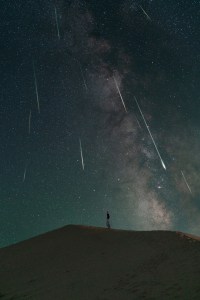
The 2026 Orionid meteor shower peaks on the night between October 21 and October 22. The Orionids can produce bright, fast meteors that make for a spectacular show with the constellation Orion in the background.
Here’s an interactive map and more info to help you get oriented: Orionids Meteor Shower 2026. And this week’s a great time to check it out because the moon, while waxing, has a way to go before it’s full. And darker skies mean brighter stars.
I’m posting this today because while the Orionids will peak in a day or two, they’re already happening. Day and night. Right above us! So even if you can’t get outside or there are clouds on those particular nights or you’re just wishing for a touch of cheer, these shooting stars will continue through November 7th.
Maintaining a daily blog is both fun and sometimes challenging. To make it easier to keep up, I have a document with notes and partial drafts that acts as a pantry for ideas.
Sometimes, bits of those drafts become untethered from their original post and float free, like dandelion fluff on the breeze.
And sometimes, like fluff, they become useful in their own right:
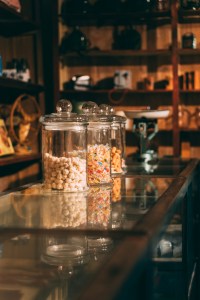
I actually disagree with a lot of this, but that’s a me thing. The important part, I would argue, is to know what works for you specifically, and do that. If your art is powered by olde thyme apothecary candy or chocolate mint ice cream or raspberry lemon cake, do that:)
What original concept did I disagree with? No clue! But I think I stuck the landing.
On writing in genres that some may not appreciate, from a writer (and archaeologist!) whose work spans urban fantasy, steampunk, mystery, history, humor, and romance:
“It doesn’t really matter what people think (loudly, in public), because as the huge number of romance readers can attest, it will not impact your audience reach. We will survive despite mockery at cocktail parties.
If you leave readers with a sense of community and feeling happy? They will love you forever regardless of label.” — Gail Carriger, The Heroine’s Journey
It’s October, so of course it’s time for the scary and the thrilling. And what have we here? A piece by John Scalzi, sci-fi author extraordinaire, on some of his favorite tales.
Monsters are in the DNA of science fiction. Right from the beginning, they have shambled forth to represent the folly of scientists, the terror of the outsider and the sneaking suspicion that the actual monsters might not be who you thought they were. Without these creatures, science fiction would be much less interesting — and a hell of a lot less metaphorical. These are some of the best monster books, from the birth of the genre to one of its newest entries.
If you’re the sort of person who likes the scary stuff, enjoy!
Hey, remember that asteroid we punched? And by “that asteroid” I mean Dimorphos, the cute little moonlet to Didymos, and by “we” I mean NASA’s 2022 DART mission. You know, the one where humanity sent a spacecraft to slam into an unsuspecting asteroid just minding its own business out there in the cosmos?
Right, that one. It turns out the story isn’t quite over!
“This thing that we thought was going to be very cut and dry turned out to be really interesting and complicated,” Thomas said. … That’s where Hera comes in, with its first arrival maneuver scheduled for Oct. 15.
October 15th? Why, that’s today! The spacecraft just started what will be the first of many orbital braking maneuvers. The earliest expected arrival date at Chez DimDidy is November 4th. (For the complete schedule, full telemetry, arrival simulation, and more, check out ESA’s Hera site online.)
And this is just the beginning of a months-long mission to better understand the asteroid’s composition and map the impact event. They even have two little probe-lets piggybacking on the bigger Hera probe. Once there, all three craft will Do Science.
How exciting! And hopefully the asteroid won’t hold a grudge.
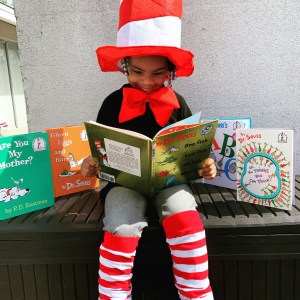
Ms. Maze, who calls herself a “radical street librarian,” has gone viral on TikTok for delivering free books to hundreds of children in the Baltimore area via a trolley. The green and gold vehicle transports children to a “magical” place where they can discover which genres excite them and develop an appreciation for reading…
As the story goes, in 1578, English explorer Martin Frobisher and his crew gave thanks and communion was observed, either on land at Frobisher Bay, in present day Nunavut, or onboard a ship anchored there. The explorers dined on salt beef, biscuits, and mushy peas and gave thanks through Communion for their safe arrival in then Newfoundland. This is now accepted as the first “Canadian” Thanksgiving, forty-three years before the first “American” Thanksgiving.
Thankfully, we’ve come a long way from salt beef and mushy peas. While we’re on the topic, why do we eat what we do on Thanksgiving? Thousands of years of agricultural innovation by Native peoples, mostly! Here’s a quick explainer.



You must be logged in to post a comment.