Feeds:
Posts
Comments

Posts Tagged ‘creativity’

“The arts aren’t a leisure industry—the arts have always been an imaginative and emotional wrestle with reality—a series of inventions and creations. A capacity to think differently, a willingness to change our understanding of ourselves. To help us to be wiser, more reflective, less frightened people. Artists make something out of nothing every day.” — Jeanette Winterson

* * *

Read Full Post »

If you’re reading this sci-fi curious blog you probably already know that Sir Patrick Stewart has died. I wanted to share two of the pieces I read about his life and career:

Patrick Stewart, star of ‘Star Trek’ and ‘X-Men,’ has died

Sir Patrick Stewart’s most famous characters tackled concepts such as honor, morality and courage…

Patrick Stewart, ‘Star Trek’ Captain and Professor X on ‘X-Men,’ Dies at 86

By the time he became a screen star, Mr. Stewart was a lauded stage veteran in Britain, where he began working with the Royal Shakespeare Company in 1966. After making his first public stage appearance at 19, he performed in both classical and contemporary works alongside fellow up-and-coming actors like Ben Kingsley, Helen Mirren and Glenda Jackson… To most American film and television fans, however, he was always Picard, even after the “X-Men” movies. And though in terms of substance the character may have been light years removed from his meatier roles with the R.S.C., Mr. Stewart continued to express pride in his work as that resolute ship captain, dismissing theater-world peers who had looked askance at him when he went to Hollywood.

Growing up without a television meant no Star Trek when I was a child; it was a fandom I came to later, and Stewart was a big part of that.

His talent brought gravitas and sincerity to a series that could have been just another show filled with sci-fi shenanigans. I mean, reruns of Knight Rider and Battlestar Galactica and the like were fun, but they didn’t spend a lot of time tackling the critical moral and societal issues of the day. The Next Generation did that and more, and Stewart was a big part of making the show as good as it was.

Of course, he also played Charles Xavier in the X-Men and a whole host of stage characters. Each of his fans will have a favorite role, but for me, it’s Captain Picard.

…

Ok, maybe more than two articles!

I thought this was a terrific call-out to sci-fi in general and Stewart in particular for inspiring humanity to move forward:

As Picard on ‘Star Trek’, Patrick Stewart Impacted Generations of Scientists

Patrick Stewart, who died on Wednesday, was many things to many people: a world-renowned actor, a knight of the realm, a patron of the arts, a tireless fighter for raising awareness of domestic abuse. And for millions, Mr. Stewart will chiefly be remembered as Jean-Luc Picard, the stoic, pacifist captain of the U.S.S. Enterprise who first appeared in “Star Trek: The Next Generation.” Mr. Stewart’s iconic character was also a source of inspiration for thousands of space scientists.

And finally, a heartfelt reaction from Wil Wheaton, who was Stewart’s castmate on TNG:

I wish I really were a Traveler of all of space and time.

I wish I really were a Traveler of all of space and time, so I could go to him, one final time, and tell him how much he means to me. I think he knew, but still.

A lot of the cultural touchstones of the sci-fi community are leaving us (Walter Koenig, who played Ensign Chekov in the original Star Trek, also passed away this week), and that’s hard. But it’s also a touching reminder that their lives changed us, and for the better.

* * *

Read Full Post »
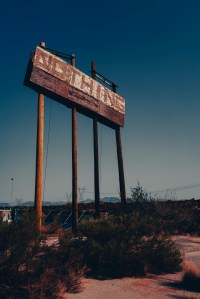
“As the cognitive scientist Daniel Willingham has written: ‘Contrary to popular belief, the brain is not designed for thinking. It’s designed to save you from having to think.’ Because the brain is naturally inclined to avoid effortful thinking and to rely instead on familiar patterns, complete freedom tends to lead to unoriginal ideas, simply repeating what is known. Constraints push the brain beyond its default tendencies, forcing it to engage in deeper problem-solving. Total freedom, then, is the enemy of creativity, and constraint its companion.” — David Epstein, Inside the Box

* * *

Read Full Post »

I ran across a bit of writing advice from C.S. Lewis, from letters he wrote in the 1950s:

Advice to a Young Writer – The C.S. Lewis Official Substack

1. Always try to use the language so as to make quite clear what you mean and make sure your sentence couldn’t mean anything else.

2. Always prefer the plain direct word to the long, vague one. Don’t implement promises, but keep them.

3. Never use abstract nouns when concrete ones will do. If you mean “more people died,” don’t say “mortality rose.” …

Click through to the full list to see what resonates. Some of these work for me, some don’t (some days background music is very helpful!), but I find them all interesting as ways to think about how to do better as a writer.

I came to this site for the writing link, but also stumbled across an interesting discussion between Stephen Colbert and Greta Gerwig, who talks about her new adaptation of The Magician’s Nephew. This was never my favorite Narnia book, but maybe that will change? Her take on Barbie was an unexpected pleasure, and I look forward to seeing how she reinvents this Lewis story.

Greta Gerwig on The Magician’s Nephew

She talks about when she first encountered the books, how she tapped into C.S. Lewis’s creative instincts, and how she brought his rich imagery to life on the big screen.

Enjoy!

* * *

Read Full Post »

Maintaining a daily blog is both fun and sometimes challenging. To make it easier to keep up, I have a document with notes and partial drafts that acts as a pantry for ideas.

Sometimes, bits of those drafts become untethered from their original post and float free, like dandelion fluff on the breeze.

And sometimes, like fluff, they become useful in their own right:

I actually disagree with a lot of this, but that’s a me thing. The important part, I would argue, is to know what works for you specifically, and do that. If your art is powered by olde thyme apothecary candy or chocolate mint ice cream or raspberry lemon cake, do that:)

What original concept did I disagree with? No clue! But I think I stuck the landing.

* * *

Read Full Post »

On writing in genres that some may not appreciate, from a writer (and archaeologist!) whose work spans urban fantasy, steampunk, mystery, history, humor, and romance:

“It doesn’t really matter what people think (loudly, in public), because as the huge number of romance readers can attest, it will not impact your audience reach. We will survive despite mockery at cocktail parties.

If you leave readers with a sense of community and feeling happy? They will love you forever regardless of label.” — Gail Carriger, The Heroine’s Journey

* * *

Read Full Post »

“If you feel safe in the area that you’re working in, you’re not working in the right area. Always go a little further into the water than you feel you’re capable of being in. Go a little bit out of your depth, and when you don’t feel that your feet are quite touching the bottom, you’re just about in the right place to do something exciting.” — David Bowie

* * *

Read Full Post »

You probably know that it’s the 250th anniversary of the United States, but did you know that this year is also the 150th anniversary of the modern American library system? I didn’t! 

To mark the occasion, and to get a better understanding of what life is like for librarians today, reporters went to the annual American Library Association conference in Chicago this summer and interviewed almost 50 librarians about their work. What is it like to be a librarian in America today? 

Librarians Discuss the Challenges and Triumphs of Running a Library Today

A lot has changed since the American Library Association was established in 1876 — even just over the past decade. The library has gone from a building full of books to arguably the most versatile civic center in any community lucky enough to have one… But most of all, they want you to know what the library really is: a safe place for people to gather around books, ideas and one another.

The work these often under-appreciated folks do touches so many communities in so many positive ways. Which reminds me, it’s about time to donate to my local library again!

“The misconception about libraries to me is that they feel irrelevant because we’re in a digital information age, but I would say they’re more relevant now than ever before because we’re conflating content with information and information with knowledge.” — Sam Helmick, Iowa City, Iowa, Iowa City Public Library

* * *

Read Full Post »

As election season in the US ramps up, chaos continues around the world, and opening news and social media sites exposes you to a negatively incentivized firehose of information, what’s a creative to do?

These writers have Ideas.

21.37: Barrier Breaking: The World Is on Fire | Writing Excuses

“How do you continue to work? How do you survive? How do you be a person when everything around you is on fire without turning into the dog that says everything is fine?”

My day job involves a lot of news, so this is relevant for me. My usual approach is to try to write first thing in the morning, before I log on. It doesn’t always work but it helps.

(Let me say that elections and current events are important, obviously! I’m very much not recommending that you tune out completely, but I am saying that finding ways to give yourself some space for both creativity and news-related sanity is a good thing. Also, vote!)

While we’re at it, how can you translate your feelings onto the page in ways that help develop your characters and story?

21.39: Write What You Feel | Writing Excuses

The next time you’re actually experiencing a big emotion, this is how you can tell you’re a writer, is that you’re gonna sit there and go, can I use this? But think about like, what are your muscles doing?

What is your heart rate doing?

When you think back to that emotion, how does the temperature, that moment when the room is suddenly, you’re blazing hot or you’re suddenly cold, those people record those because that’s a thing you experience. How sensitive do you become to sound or touch or lights? What is your breath doing?

And then like your thoughts, what are you paying attention to? Do your thoughts feel smooth or are they skipping around? How is your memory attached to this?

I think all those somatic things are really, really wonderful.

* * *

Read Full Post »

The 2026 MacArthur Fellows have been announced, and this year’s class is an interesting mix. From climate scientists to fiction writers, historians to chemists and more, the list provides a window into just some of the work being done by smart, enthusiastic, and creative people today.

These Fellows have found ways to capture some of the most important issues of our time, and it’s great to see such varied examples of constructive creativity, and to think of all the other people out there doing good work. Let’s hear it for flashes of genius!

* * *

Read Full Post »

Older Posts »