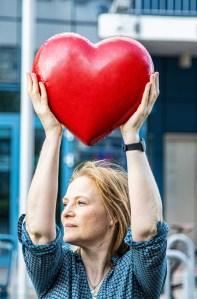
“Empathy is the most radical of human emotions.” — Gloria Steinem
* * *
Posted in Other, tagged #365Ways, #365Ways2026, quotes, Thoughts on October 13, 2026| Leave a Comment »
“Empathy is the most radical of human emotions.” — Gloria Steinem
* * *
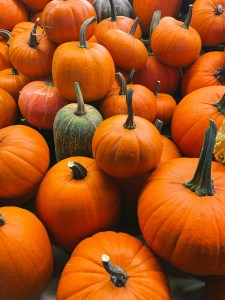
Posted in Food and..., Holidays, tagged food, Canada, history, innovation, Thanksgiving, #365Ways, #365Ways2026, agriculture on October 12, 2026| Leave a Comment »
Happy Thanksgiving, Canada!
That’s right, Canada has its own Thanksgiving Day, and it now falls before the US holiday. It also began earlier than the US holiday.
The history of Thanksgiving in Canada
As the story goes, in 1578, English explorer Martin Frobisher and his crew gave thanks and communion was observed, either on land at Frobisher Bay, in present day Nunavut, or onboard a ship anchored there. The explorers dined on salt beef, biscuits, and mushy peas and gave thanks through Communion for their safe arrival in then Newfoundland. This is now accepted as the first “Canadian” Thanksgiving, forty-three years before the first “American” Thanksgiving.
Thankfully, we’ve come a long way from salt beef and mushy peas. While we’re on the topic, why do we eat what we do on Thanksgiving? Thousands of years of agricultural innovation by Native peoples, mostly! Here’s a quick explainer.
Happy Day!
* * *
Posted in Food and..., tagged #365Ways, #365Ways2026, food stuff, Thoughts on October 11, 2026| Leave a Comment »
This weekend we made ten kilos of chili, six fruit tortes, and had an outdoor adventure. I’m ready for a chill evening and a bit of ice cream:)
Today’s random fact: the name for the paddle that churns cream into ice cream is a dasher.
* * *

Posted in Other, tagged #365Ways, #365Ways2026, lessons for living, philosophizing, quotes, Thoughts on October 10, 2026| Leave a Comment »
Bertrand Russell on the Secret of Happiness – The Marginalian
“The secret of happiness is this: let your interests be as wide as possible, and let your reactions to the things and persons that interest you be as far as possible friendly rather than hostile.”
* * *

Posted in Other, tagged space, #365Ways, geology, explainers, #365Ways2026, cool science stuff on October 9, 2026| Leave a Comment »
Here’s a little science for your Friday.
How Often do Asteroids Hit the Earth? Crash Course Geology #20
How worried should we be about giant asteroid impacts? In this episode of Crash Course Geology, we’ll learn how to tell an asteroid from a meteorite, what happens when space rocks approach the Earth, and how scientists track potential threats before they reach us.
* * *

Posted in Other, tagged #365Ways, #365Ways2026, a good day, a little magic, Thoughts, unexpected joys on October 8, 2026| Leave a Comment »
Some days I am suddenly filled with a low-level feeling of joy. Everything sparks with at least a touch of beauty, the world has a bit magic to it, and it’s easy to find the best in all things.
Today, I’m happy to say, is one such day. (Is it a coincidence that I just delivered a big work project and can now take some time to smell the flowers? Perhaps not.)
Hope your day has a little magic in it too!
* * *

Posted in Writing, tagged #365Ways, #365Ways2026, advice, art, creativity, inspiration, Thoughts, Writers, writing on October 7, 2026| Leave a Comment »
“If you feel safe in the area that you’re working in, you’re not working in the right area. Always go a little further into the water than you feel you’re capable of being in. Go a little bit out of your depth, and when you don’t feel that your feet are quite touching the bottom, you’re just about in the right place to do something exciting.” — David Bowie
* * *

Posted in Other, tagged #365Ways, #365Ways2026, art, books, censorship, freedom, libraries on October 6, 2026| Leave a Comment »
Oh look, it’s Banned Books Week in the US.
Banding Together for Banned Books Week 2026
Banned Books Week, taking place October 4–10 this year, concentrates and amplifies the messaging of right to read organizations. Libraries, bookstores, and literary associations are hosting in-person and virtual events, featuring authors, educators, and advocates.
Interested in examples of books that have been banned this year? Here’s a list: Banned Books List 2026 – PEN America
In the near future, Offred is a handmaid in an authoritarian society who is not permitted to read. We’ll let that sink in.
And if you are a teenager in a library system that is banning books, Books Unbanned is for you.
A Books Unbanned library card gives teens across the United States free digital access to ebooks and digital resources, including banned and challenged books—no matter where they live. Books Unbanned helps ensure teens can read what they like, explore new ideas and form their own opinions.
Whether you support your local library, attend an event, read a book that’s been challenged to see what You think, or something else entirely, I hope you take a moment to appreciate the right to read without censorship. Because that benefits us all!
* * *
Posted in Other, Writing, tagged #365Ways, #365Ways2026, life, Thoughts, work, Writers, writing on October 5, 2026| Leave a Comment »
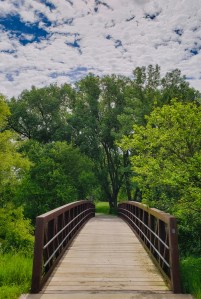
In some ways, this quote expresses a very Monday sort of sentiment, but I like that you can flip it from “must do” to “get to.”
“No one can build you the bridge on which you, and only you, must cross the river of life.” — Friedrich Nietzsche
* * *
Posted in Other, tagged #365Ways, #365Ways2026, data, history, humanity, storytelling, Thoughts on October 4, 2026| Leave a Comment »
Some days you come across something on the web that helps you remember why people thought it was a good idea in the first place. For today’s entry into that ledger, I present Any Human Ever.
Any Human Ever: one life from over 100 billion
So: what would happen if stories were drawn from actual data, randomized to give a valid representation of the human story? That’s the question that was stuck in my head, and that drove this project forward. If you could draw a life at random from all of human history, what would it look like? Roll the dice, and see a genuinely random life, depicted as well as the data allow. Do it again and again, and what kind of pointillist painting emerges from all those colorful drops of humanity?
I love this idea. Do statistics have their place? Absolutely. Is this perfect? Maybe not, but I spent some time in grad school arguing for the humanization of data, and that debate solidified my belief that one of the best ways to connect people to ideas is through stories.
Have fun exploring 100 billion of them.
* * *



You must be logged in to post a comment.