If my brain had been working yesterday I would have mentioned the fact that many of us have an unusual opportunity to see the Aurora Borealis right now.
“The word Aurora was first used by Galileo and comes from Latin and is the name of the goddess of dawn.” — NOAA
This light show in space is typically reserved for latitudes close to the Earth’s poles, but we happen to be experiencing a G3 solar storm right now. This happens when solar storms drive coronal mass ejections, solar flares, solar particle events and solar winds at us. And by us, I mean Earth.
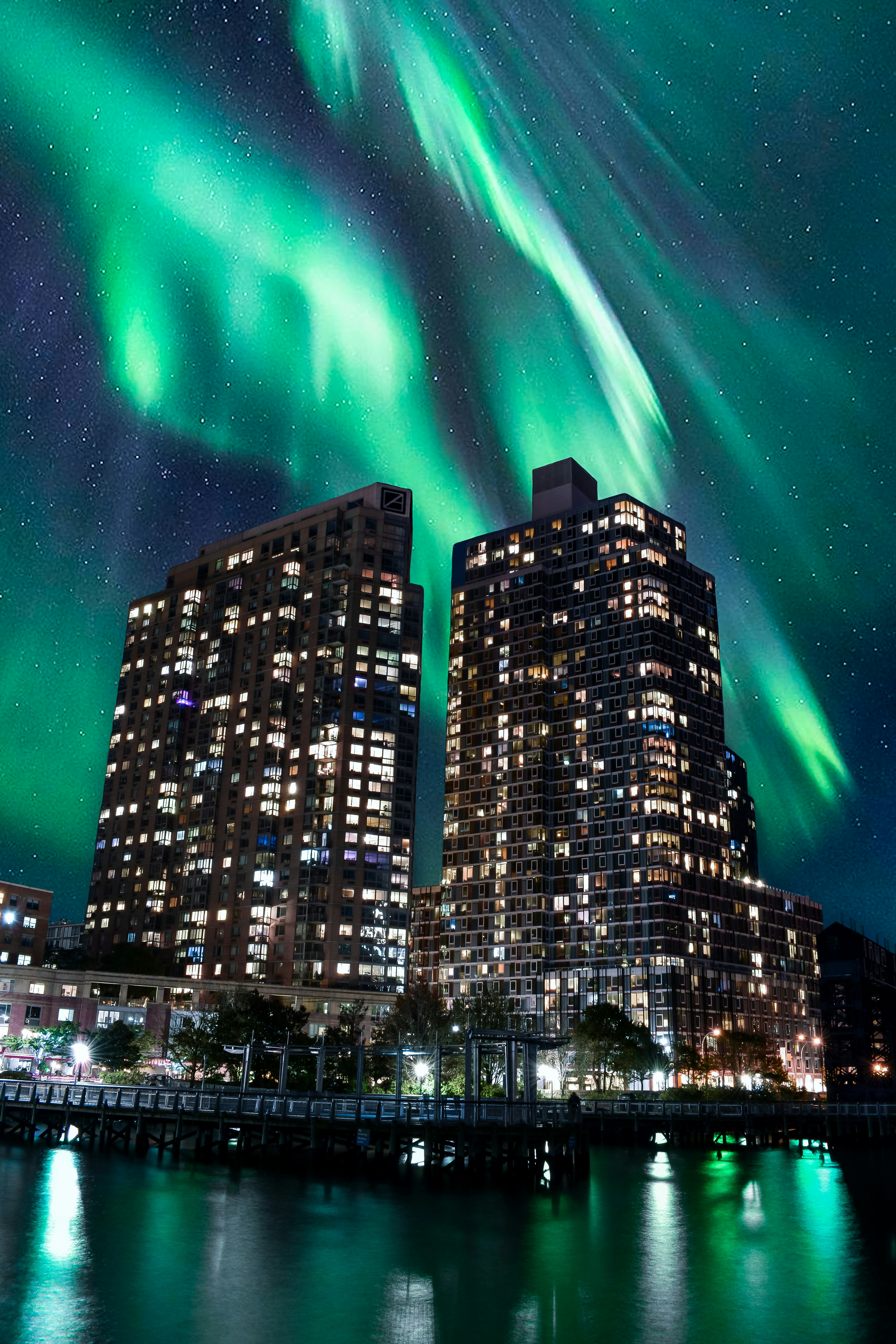
First, some pretty pictures from as far south as Florida:
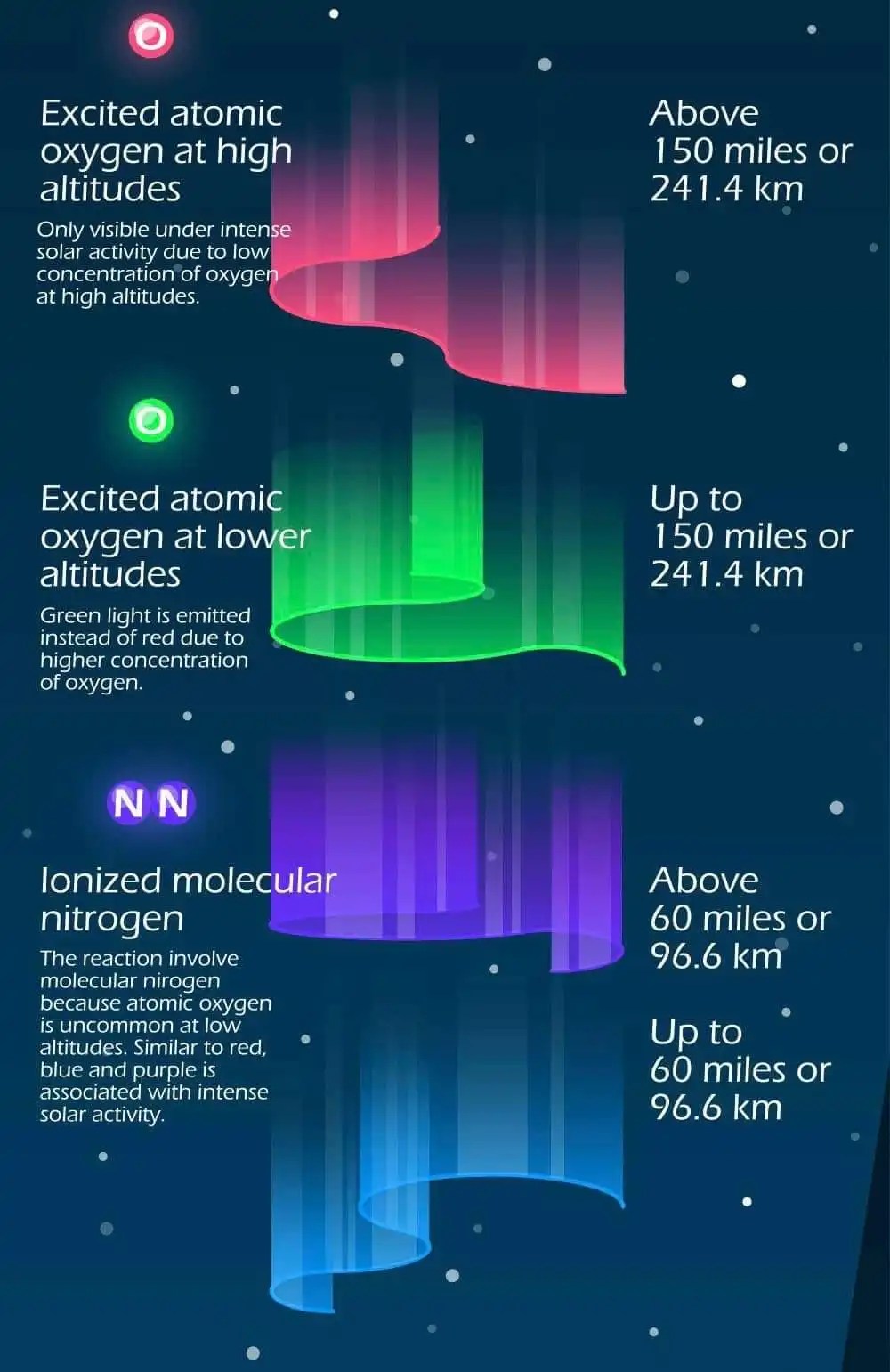
Our sun is the main reason for an aurora display. Particles energized by the sun race toward Earth, colliding with our upper atmosphere. Earth’s magnetic field divert this energy towards the north and south poles. As these energized particles enter Earth’s atmosphere, they excite gas atoms and molecules. The colors observed depend on which gas atoms they interact with.
In addition to colorful light bands, sometimes an aurora has black bands that block starlight. The dark regions likely come from electric fields in the upper atmosphere that block electrons from interacting with gases.
I won’t be hurt if you want to stop here and go search for more pictures, but if you’d like to know more about the how and why, read on!
When and where can you see the northern and southern lights also known as the aurora? This page provides a prediction of the aurora’s visibility tonight and tomorrow night in the charts below. The animations further down show what the aurora’s been up to over the last 24 hours and estimates what the next 30 minutes will be like. The aurora’s colorful green, red, and purple light shifts gently and often changes shape like softly blowing curtains.
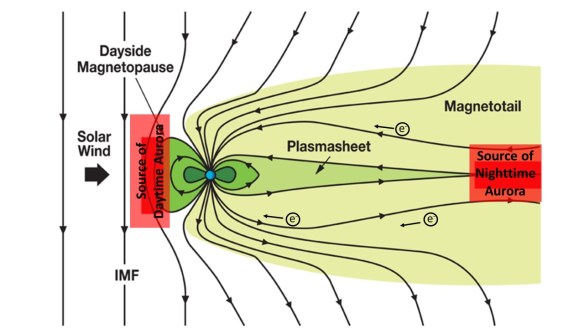
The figure below shows the magnetosphere and the locations where electrons are accelerated (in red). The red region on the right of the figure is where the electrons that produce night-time aurora are accelerated and the source of the processes that generate geomagnetic storms.
Pretty colors are pretty, of course, but why should we care about space weather?
Space weather is a global issue. Unlike terrestrial weather events, like a hurricane, space weather has the potential to impact not only the United States, but wider geographic regions. These complex events can have significant economic consequences and have the potential to negatively affect numerous sectors, including communications, satellite and airline operations, manned space flights, navigation and surveying systems, as well as the electric power grid.
Aaaand in case you haven’t had enough about auroras in particular and space weather in general, NOAA has a fun dashboard for you!


You must be logged in to post a comment.