Feeds:
Posts
Comments

Posts Tagged ‘science’

This article from 2016 highlights the terahertz spectrometer, which is a technology that can read books without opening them.  

This new machine can read book pages without cracking the cover | PBS NewsHour

The machine uses beams of radiation to creep in between pages and scan individual letters. This new tool wasn’t made to create disdain among classic readers or for those too lazy to lift a cover. Rather it may unlock the secrets of old books or ancient texts too fragile to be disturbed by human touch.

Scanning an object layer by layer and deriving meaning from the images? Cool, nifty, amazing, a breakthrough for archaeologists and antiquarians everywhere!

Also, remind me again why mammograms still require what is, in effect, a highly sophisticated panini press?*

And yes, it is exactly as uncomfortable as it sounds.

* I know, I know, living tissue is not the same thing as parchment or an Italian sandwich. Still, it’s hard not to think that the gap between the current and ideal mammogram experience represents an untapped opportunity for innovation. Ladies, can I get an amen?

* * *

Photo by Dmitry Stepanov on Unsplash

Read Full Post »

Will the Artemis moon mission finally fly? The answer seems to be, “Probably.”* The weather has been challenging but tonight’s forecast looks good. Here’s hoping all goes well tonight!

NASA’s new Artemis moon rocket is once again being readied for its first flight : NPR

A successful launch would be a key milestone for NASA’s Artemis program, which aims to put the first woman and first person of color on the lunar surface. The agency has not launched a space vehicle designed to send astronauts to the moon since 1972.

* Edit from the future: the answer is yes!

* * *

Photo by Siim Lukka on Unsplash

Read Full Post »

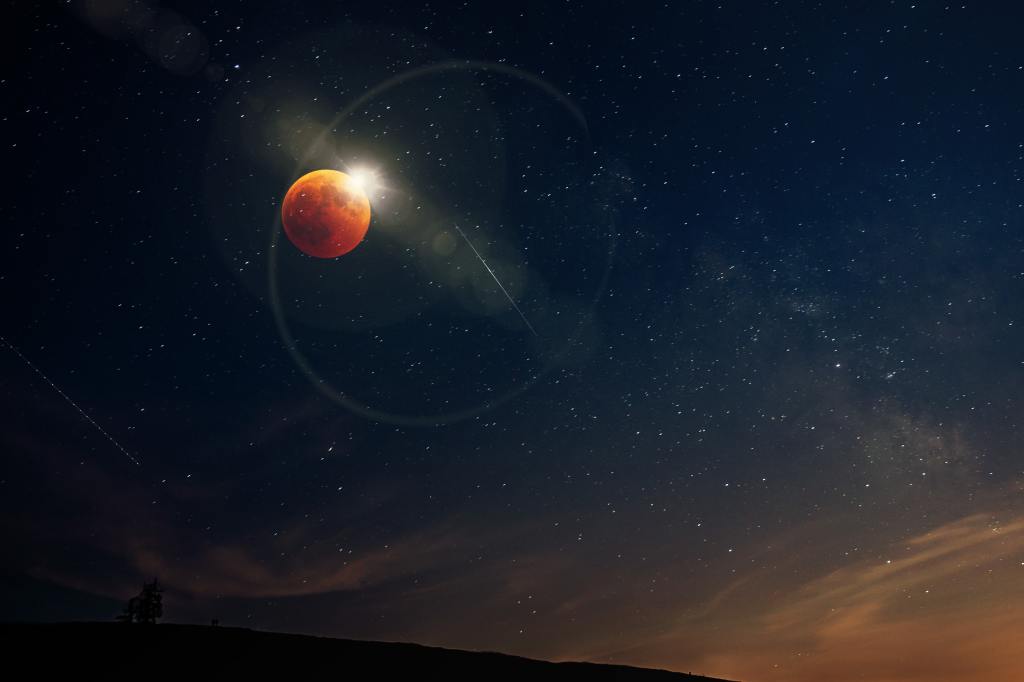
Do you love Tuesdays? Want to get a head start on tomorrow? (Or hate Tuesdays and want something to make tomorrow better? Yeah, that’s more me, I’m afraid.) Or perhaps you’re just looking for an excuse to stay up late, you know, For Science? You are in luck!

A total eclipse happens this week, and it will be the last one for 3 years : NPR

The initial phase of the eclipse begins at 3:02 a.m. ET, according to NASA. The partial eclipse then begins at 4:09 a.m. ET, when to the naked eye, it looks like a bite is being taken out of the moon. The lunar disk enters totality at 5:17 a.m. ET and will last for about an hour and a half.

Want more science? Check out NASA’s page on this eclipse: What You Need to Know About the Lunar Eclipse – Moon: NASA Science.

One of my relatives is very much a night owl, so she will have no trouble catching this. The rest of us might have to set our alarms (or, let’s be honest, check out the video tomorrow; no shame either way!).

Enjoy!

* * *

Photo by Vincenzo Malagoli on Unsplash

Read Full Post »

Earth Smash!

Way to go, NASA, you did good!

NASA’s DART mission successfully crashes spacecraft into asteroid

It was a cosmic smash-up watched around the world.

* * *

Sorry not sorry! (Image credit: NASA/JHUAPL)

Read Full Post »

Today is the first test of humanity’s nascent planetary defense system. Like Armageddon, except scientists are the heroes.

NASA will hit an asteroid with a spacecraft to change its course : NPR

“It’s just a spacecraft that is going to go and smack an asteroid.” Oh, is that all?

* * *

NASA’s Double Asteroid Redirection Test (DART) is scheduled to crash a spacecraft into an asteroid to test our ability to nudge potentially dangerous near-Earth objects into safer trajectories. That is excellent, and we can watch it.

How to Livestream NASA Smashing an Asteroid to Test Planetary Defense Plan

The impact day broadcast of the actual test will start on Monday, September 26 at 6 p.m. EDT, which you can watch on NASA TV, a livestream on NASA’s YouTube channel.

* * *

What will happen and how will we know? 

Ground-based telescopes are key to DART asteroid mission success | Space

On Monday (Sept. 26), the Double Asteroid Redirection Test (DART) spacecraft will slam into a small space rock called Dimorphos — on purpose, at a staggering 4 miles (6.6 kilometers) per second. The exercise comes in the name of planetary defense, which aims to protect human civilization from any large asteroid that may be on a collision course. For the mission to succeed, scientists need to measure exactly how much the orbit of Dimorphos around its larger companion, Didymos, speeds up. And the DART spacecraft won’t be in any shape to make that measurement itself, so mission personnel are relying on ground-based telescopes to track the aftermath of impact.

If this trial run works, terrific, but even failure would better prepare us to defend Earth. 

Si vis pacem, para [asteroides].

Publius Flavius Vegetius Renatus (with minor paraphrasing)

* * *

Photo by Senad Palic on Unsplash

Read Full Post »

Lieutenant Uhura is now with the stars.

Public domain, via Wikimedia Commons

Nichelle Nichols, Lt. Uhura on ‘Star Trek,’ dead at 89
Nichols was one of the first Black women featured in a major television series, and her role as Lt. Nyota Uhura on the original TV series was groundbreaking: an African American woman whose name came from Uhuru, the Swahili word for “freedom.”

“For the first time, we are being seen the world over as we should be seen.”

— Martin Luther King Jr., Star Trek’s Uhura Reflects On MLK Encounter

Nichelle Nichols showed us all that the future belonged to more than just white men, and then she helped NASA build that future.

“After Apollo 11, Nichelle made it her mission to inspire women and people of color to join this agency, change the face of STEM and explore the cosmos. Nichelle’s mission is NASA’s mission. Today, as we work to send the first woman and first person of color to the Moon under Artemis, NASA is guided by the legacy of Nichelle Nichols.”

— NASA Administrator Bill Nelson
NASA, Public domain, via Wikimedia Commons

She demonstrated, with talent, conviction, determination and grace, that the future is brighter when all of us are in it.

“If they let me in the door, I will open it so wide that they will see the world.”

— Woman in Motion tells story of how Star Trek’s Uhura changed NASA forever | Ars Technica

She did. We did. And humanity is so much better for it.

“If you can see it, you can be it,” the saying goes. Nichelle Nichols gave millions of people the opportunity to see themselves on the frontiers of science and exploration, boldly expanding human understanding.

She inspired so many of us to reach for the stars. What a legacy.

— Hillary Clinton

* * *

(NASA/Bill Ingalls) NASA Identifier: nasahqphoto-5161637425

Read Full Post »

Yesterday’s drabble was fiction, but this article is not. There really are Martians, and they’re living among us!

NASA engineer Nagin Cox on Mars rover time

This comic, illustrated by Anuj Shrestha, is inspired by an interview with NASA engineer Nagin Cox from TED Radio Hour’s episode It Takes Time.

Read Full Post »

Progress

It can be hard to measure progress. Incremental gains are often overpowered by a flood of negative, and hard to ignore, counter-programming. But every so often we take a step Up, and if we’re lucky, we can look back and see how far we’ve come.

The Webb telescope is one such step. Images from Hubble are impressive, but while the older platform has done a great job, it’s been at it for twenty years.

What does it mean for Hubble to now have a sibling out there in space? How much does Webb expand our ability to see into the cosmos? 

This much: Webb Compare.

It’s wonderful to see how far we’ve come.

* * *

Photo by David Travis on Unsplash

Read Full Post »

If you’re in North America, you may be treated to a dramatic meteor shower tonight. 

Or, you know, maybe not.

Meteor storm of 1,000 shooting stars per hour possible this week | Space

The Tau Herculids meteor shower may light up the skies over North America on May 30 and 31. Or it may not. There’s a chance we might pass through the thickest part of the comet fragment that is creating the debris, in which case the night skies will be filled with shooting stars.

You can watch the possible tau Herculid meteor shower live online, courtesy of the Virtual Telescope Project. The project’s astrophysicist Gianluca Masi will provide live all-sky cameras from Arizona and Brazil starting at 12 a.m. EDT (0400 GMT) on Tuesday, May 31.

I kind of love that despite all of humanity’s scientific advances, such events can remain a delightful surprise.

* * *

Photo by Red Zeppelin on Unsplash

Read Full Post »

Need to take a quick break, maybe get off the planet for a bit? Now’s a great time to visit the Moon!

Send your name to the Moon with NASA’s Artemis mission!

Send Your Name to Space

Add your name here to have it included on a flash drive that will fly aboard Artemis I.

You could even do a little public service and cleanup litter once you’re up there, because Space Junk Just Crashed Into the Far Side of the Moon at 5,800 MPH.

While we’re talking space, you can also check out the current Location Map for Perseverance Rover.

Because sometimes it’s nice to be reminded of the good that humans can do, too.

* * *

Photo by Silas van Overeem on Unsplash

Read Full Post »

« Newer Posts - Older Posts »