If you don’t track space news or astronomy news or science news, you may not have seen the announcement about the debut of the Vera C. Rubin Observatory’s recent drop of galactically cool imagery.
Even if you have seen the announcements, you may not know the story behind the observatory, its world-beating telescope, or the woman it’s named after. Here’s a quick orientation and of course, a look at some of that amazing imagery.
World’s largest telescope debuts
The Legacy Survey of Space and Time camera is expected to capture more information about the universe than all optical telescopes throughout history combined.
What is the observatory observing from its perch on Cerro Pachón in Chile? All the things!
Ever-changing Universe Revealed in First Imagery From NSF–DOE Vera C. Rubin Observatory
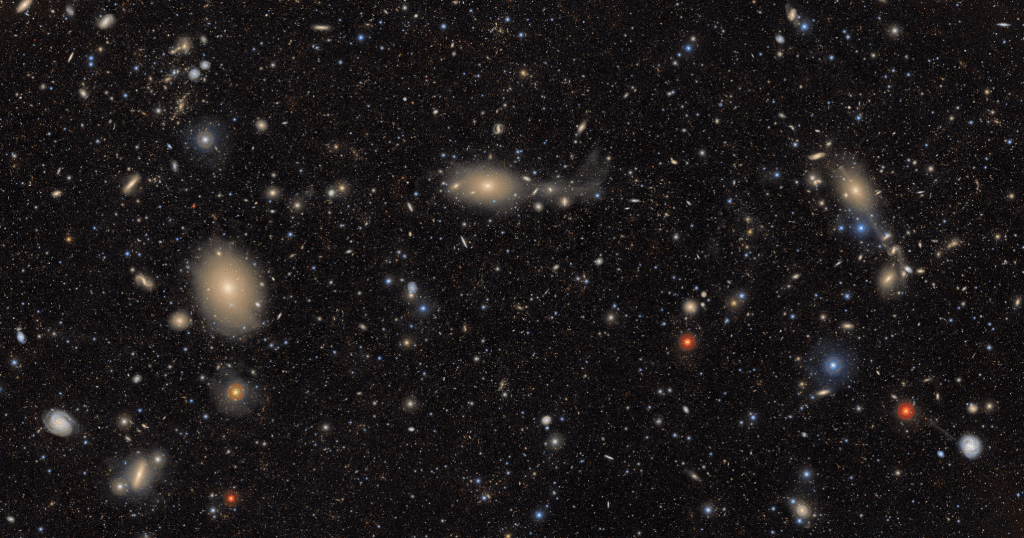
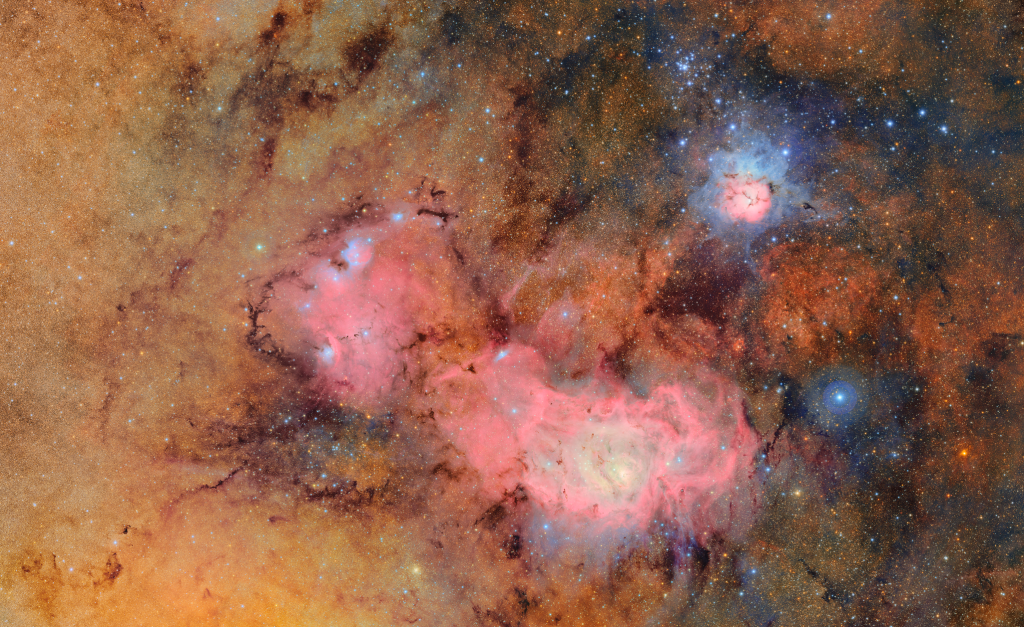
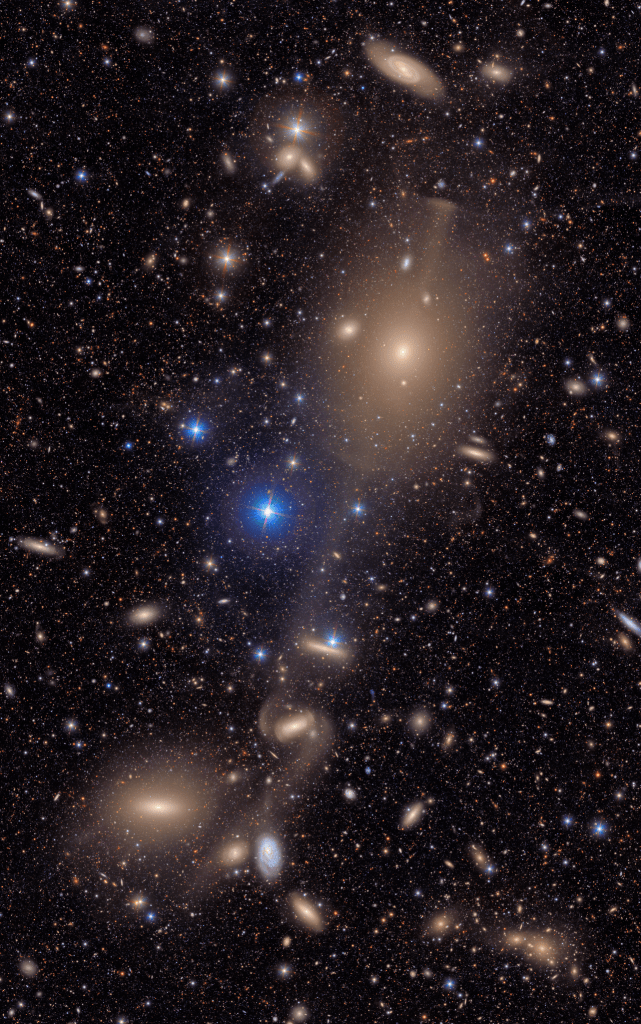
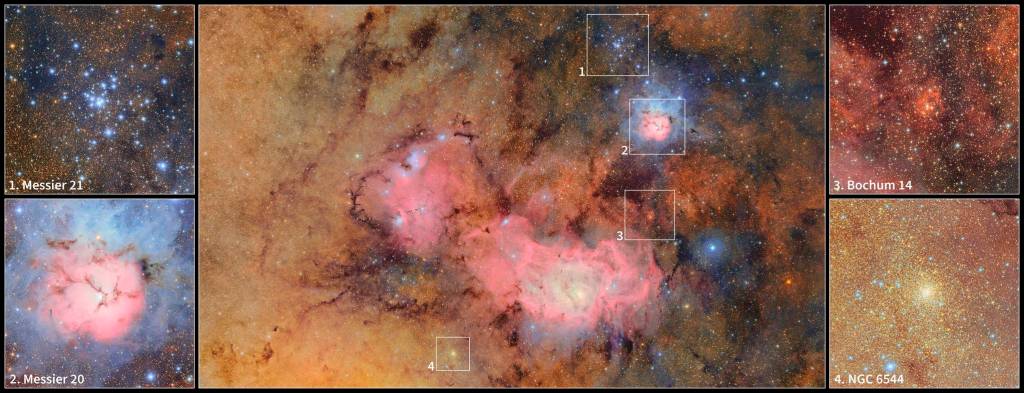
In just over 10 hours of test observations, NSF–DOE Rubin Observatory has already captured millions of galaxies and Milky Way stars and thousands of asteroids. The imagery is a small preview of Rubin Observatory’s upcoming 10-year scientific mission to explore and understand some of the Universe’s biggest mysteries.
Here are just some of the first images: Rubin Observatory.
Vera Rubin: First celestial image from revolutionary telescope
It should detect killer asteroids in striking distance of Earth and map the Milky Way. It will also answer crucial questions about dark matter, the mysterious substance that makes up most of our universe.
Exactly who was Vera C. Rubin? Just a girl who dreamed of space, ignored the haters, and grew up to be a world-class scientist.
The Woman Behind the World’s Biggest Camera
But who is the observatory’s namesake astronomer?
Vera Rubin is best known for presenting the first sound evidence of dark matter—an elusive substance that makes up more than 80 percent of our universe, yet doesn’t interact with light or other electromagnetic radiation, making it impossible to glimpse directly through a telescope. Her central scientific accomplishment involved discovering a mismatch between the predicted angular motion of galaxies and the observed motion of galaxies. Rubin’s calculations offered a solution to this so-called “galaxy rotation problem” by suggesting that galaxies must contain at least 10 times as much mass as can be accounted for by the visible stars. This invisible mass constituted evidence for what astronomers had earlier proposed to be dark matter.
Rubin became a cosmological giant against the odds, illuminating a path for future female astronomers.
(And, I’d like to add, becoming a role model for kids of all shapes and sizes!) Want even more in-depth info about telescope and its capabilities?
First Data from Vera Rubin Observatory Rewrites Astronomy (Starting Now) – YouTube
In this exclusive interview, Professor Mario Jurić reveals how the Vera Rubin Observatory accidentally discovered 2,000 asteroids in just 10 hours while testing its capabilities on the distant Virgo Cluster—transforming humanity’s asteroid discovery rate from 20,000 per year globally to potentially over one million annually with a single telescope.
Short and very cool video of the Trifid and Lagoon nebulae, compiling more than seven hours of observing time: Trifid and Lagoon Nebulas (Video-ES).
And sure, why not, a space game!
Space Surveyors is a fun, interactive game where YOU move the Rubin telescope around the sky. How many stars, galaxies, supernovae, comets, and asteroids can you catch in one minute, before the sun rises?
While players aren’t moving the *real* telescope around, it’s still fun to play. (I discovered 22 objects before the clouds rolled in and the sun came up. Bet you can do better:)
Adventure! Discovery! Secrets of the universe! This, kids, is why math is important.*
* I mean, sure, also to figure out if you have enough money to pay rent and still buy ice cream, but also this!
* * *


You must be logged in to post a comment.