By now you have probably heard that there will be a full eclipse of the Sun on April 8th. (If you haven’t, this is your public service announcement. The world is not ending and the Sun will return to its place in the sky. No wolves, dragons or demons are involved. The gods of sun and light just need to slip out for a quick break.) The next time this will happen in the contiguous US won’t be until 2044.
Millions of people will be able to view the eclipse. Here’s a map of the eclipse path:
Keep in mind, of course, that even those outside the path of totality will be able to view a partial eclipse.
When will it happen? Here’s a table, with another map. Because I like maps.
Total Solar Eclipse on April 8, 2024 (Great North American Eclipse )
If you will be able to view this super cool space phenomenon, then you’ll want to get your hands on some eclipse glasses.
Of course, we now know that the Sun isn’t really eaten during an eclipse. Instead, it does what it always does: rain ultraviolet rays on everything in its path. That’s why you should never look at a solar eclipse without protective eyewear.
And if you are in charge of kids on April 8th (or adults, we should have sciencey fun too!) consider the ideas in this article:
How Schools Can Turn the Solar Eclipse Into an Unforgettable Science Lesson
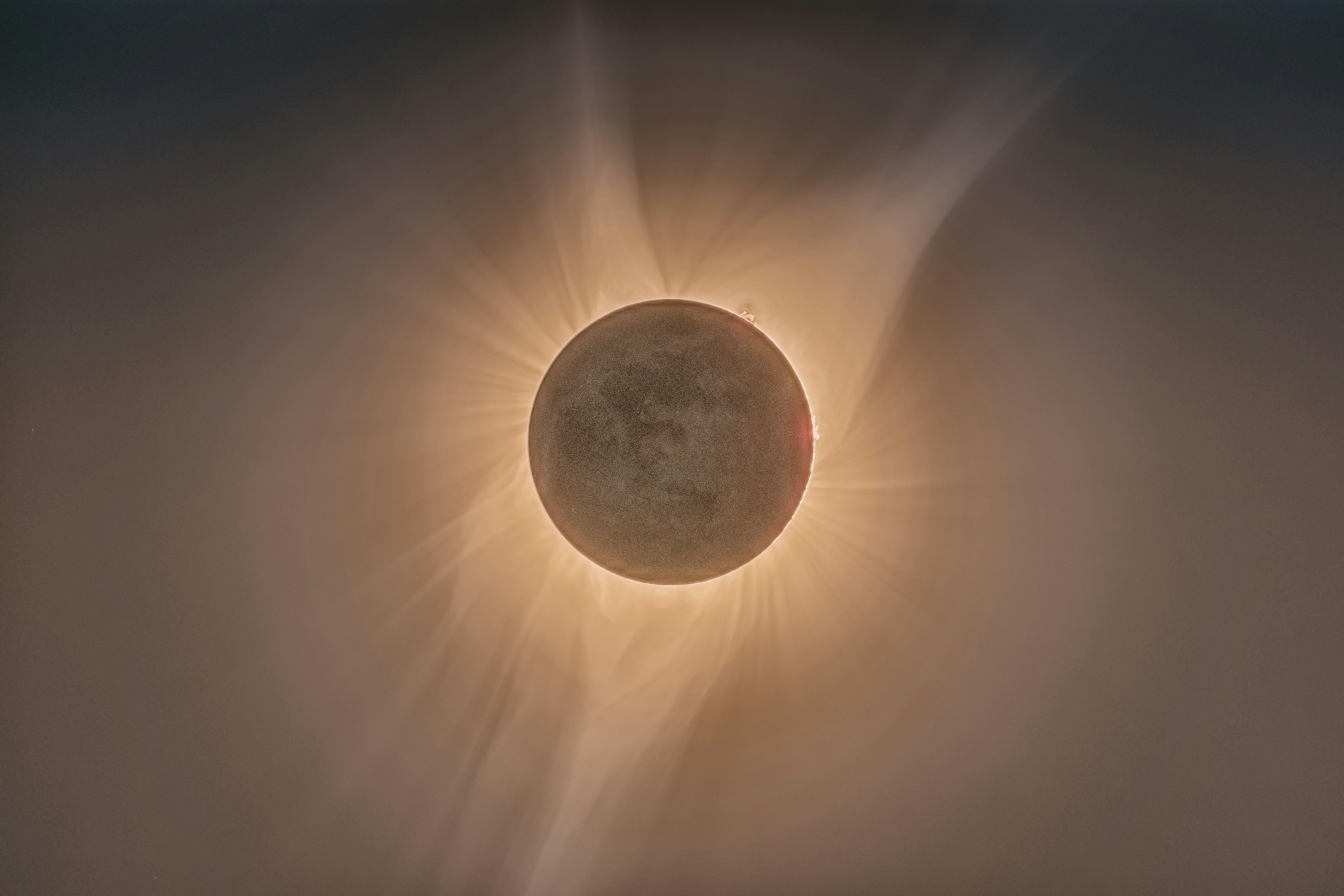
If the weather cooperates, science students of all ages could be in for quite a show on April 8. The first sign will be a sudden temperature drop. The sky will darken, and winds will shift. A dark shadow will appear on the horizon. Faint waves of light may waft across the ground. A ring of bright light will shine from the outer edges of the otherwise darkened sun. Then the moon will cover the sun completely and, for a few seconds, a thin red layer may appear around its outer rim.
And just for fun, here’s a little something for your ears, too:
Listen to the Eclipse Song Made by the Sound of Light of an Eclipse
Ok, that’s a little edgy. But still fascinating!
* * *


Leave a Reply!