“I believe in Liberty for all men: the space to stretch their arms and their souls, the right to breathe and the right to vote, the freedom to choose their friends, enjoy the sunshine, and ride on the railroads, uncursed by color; thinking, dreaming, working as they will in a kingdom of beauty and love.”
This world belongs to you. You are here to lead, to blossom out in the open, to show your heart to strangers, to fail and fail and fail again — with grace, with humor, with dignity, with joy.
This week I learned about a little piece of medieval magic called the posset.
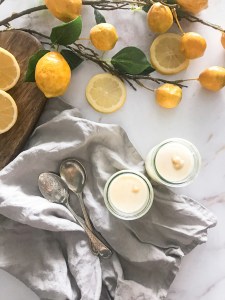
What is a posset? Not, as you might think, an odd variant of the possum, but a dessert. And a dessert that shouldn’t, at least on first glance, work. At all.
But it does, and it is magic.
I titled this post “medieval magic” because I’m a sucker for a fun alliteration, but my familiarity with the posset comes from historical fiction set in the nineteenth century. (It was originally a drink of milk curdled with wine often used for medicinal purposes, but the word evolved.) I knew that it was a dessert and something like custard, but not the how or why of it.
As of yesterday, I have added this particular spell to my magical recipe book.
Why magic? Because the posset, which is a cream-based pudding-like dessert, shouldn’t work.
Look at this ingredient list:
heavy cream
sugar
citrus juice
Gently boil cream and sugar for five minutes, remove from heat and stir in juice, cool then chill.
That’s it. Unlike panna cotta, custard or pudding, there’s no gelatin, eggs or starch to bind the ingredients together. It still comes out of the fridge a thick, spoonable dessert that goes beautifully with fruit and a Biscoff cookie base. And it’s simple. The biggest commitment is chilling time.
It’s a 3 ingredient custard that tastes like the love child of lemon curd & pastry cream…
Dissolving sugar into cream keeps the posset from being gritty
Boiling the cream evaporates off a little bit of the water, concentrating the fats in the cream for an extra-luscious texture
The acid coagulates the proteins in the cream, which causes the posset to thicken as it cool. Coagulation means that proteins are getting together and hanging out. The closer they hang, the firmer the final filling texture!
So kind of like cheese, but in the end, nothing like cheese. The posset was fruity, tangy, and delicious, exactly the sort of magic I love.
There’s a bird hanging around outside, one that’s been frequenting the yard on and off for the past couple of weeks. It’s a cardinal. Pretty, but not extraordinary around here.
This particular bird, however, is a bit peculiar in that it seems to have some interesting blotchy marks on its wings. Or maybe its belly. Or its back? Perhaps it’s just a juvenile taking his first flights into adulthood. I can’t be sure because I’m a typically nearsighted book nerd and the pesky little guy refuses to sit still long enough for me to get my phone or binoculars.
So I think it may have some unusual markings, but maybe it’s just me. All I know is that it’s interesting and I’d like a closer look.
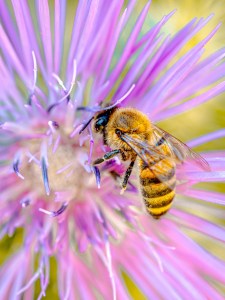
I haven’t been able to get that close-up look, yet, but the possibility of it keeps me focused, and paying attention to what I can see. Squirrel shenanigans, a giant lazy bumblebee, gulls riding air currents overhead, a huge black wasp, a tiny little bee feeding on grass flowers, a chipmunk, lightning bugs in the yard, the beauty of the volunteer daisies around the corner of the house.
I may not always see everything I hope, but I see far more than I would if I were not paying attention at all.
And that’s a very good thing.
“Instructions for living a life. Pay attention. Be astonished. Tell about it.”
We took a little time out this afternoon to deliver encouragement to some hardworking friends. And delicious 0% blueberry beer from Broadhead Brewery, perfect for a hot summer’s day.
Recommend!
“Happiness is not made by what we own. It is what we share.”
If you don’t track space news or astronomy news or science news, you may not have seen the announcement about the debut of the Vera C. Rubin Observatory’s recent drop of galactically cool imagery.
Even if you have seen the announcements, you may not know the story behind the observatory, its world-beating telescope, or the woman it’s named after. Here’s a quick orientation and of course, a look at some of that amazing imagery.
The Legacy Survey of Space and Time camera is expected to capture more information about the universe than all optical telescopes throughout history combined.
What is the observatory observing from its perch on Cerro Pachón in Chile? All the things!
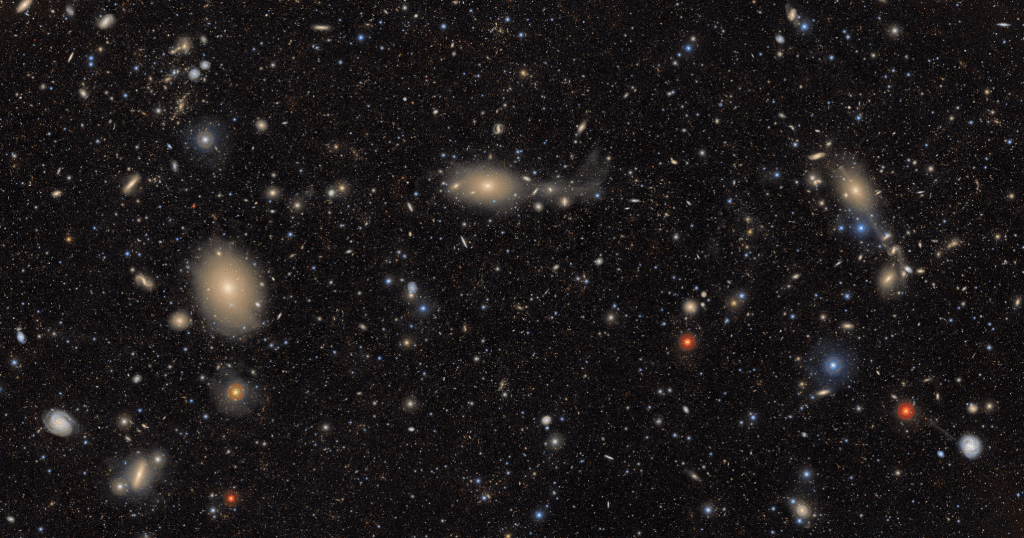
In just over 10 hours of test observations, NSF–DOE Rubin Observatory has already captured millions of galaxies and Milky Way stars and thousands of asteroids. The imagery is a small preview of Rubin Observatory’s upcoming 10-year scientific mission to explore and understand some of the Universe’s biggest mysteries.
It should detect killer asteroids in striking distance of Earth and map the Milky Way. It will also answer crucial questions about dark matter, the mysterious substance that makes up most of our universe.
Exactly who was Vera C. Rubin? Just a girl who dreamed of space, ignored the haters, and grew up to be a world-class scientist.
Vera Rubin is best known for presenting the first sound evidence of dark matter—an elusive substance that makes up more than 80 percent of our universe, yet doesn’t interact with light or other electromagnetic radiation, making it impossible to glimpse directly through a telescope. Her central scientific accomplishment involved discovering a mismatch between the predicted angular motion of galaxies and the observed motion of galaxies. Rubin’s calculations offered a solution to this so-called “galaxy rotation problem” by suggesting that galaxies must contain at least 10 times as much mass as can be accounted for by the visible stars. This invisible mass constituted evidence for what astronomers had earlier proposed to be dark matter.
Rubin became a cosmological giant against the odds, illuminating a path for future female astronomers.
(And, I’d like to add, becoming a role model for kids of all shapes and sizes!) Want even more in-depth info about telescope and its capabilities?
In this exclusive interview, Professor Mario Jurić reveals how the Vera Rubin Observatory accidentally discovered 2,000 asteroids in just 10 hours while testing its capabilities on the distant Virgo Cluster—transforming humanity’s asteroid discovery rate from 20,000 per year globally to potentially over one million annually with a single telescope.
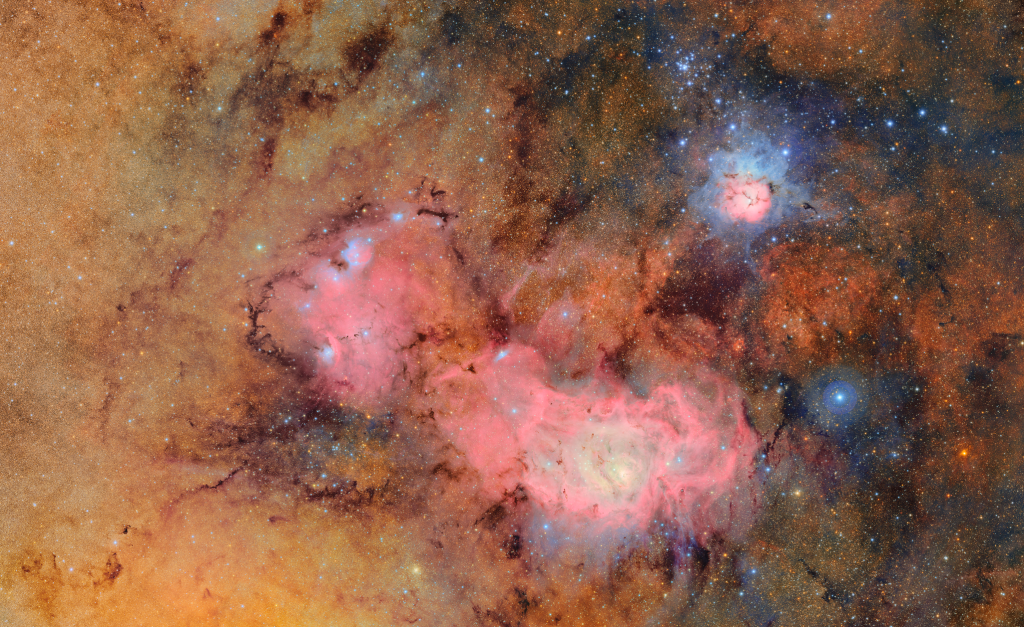
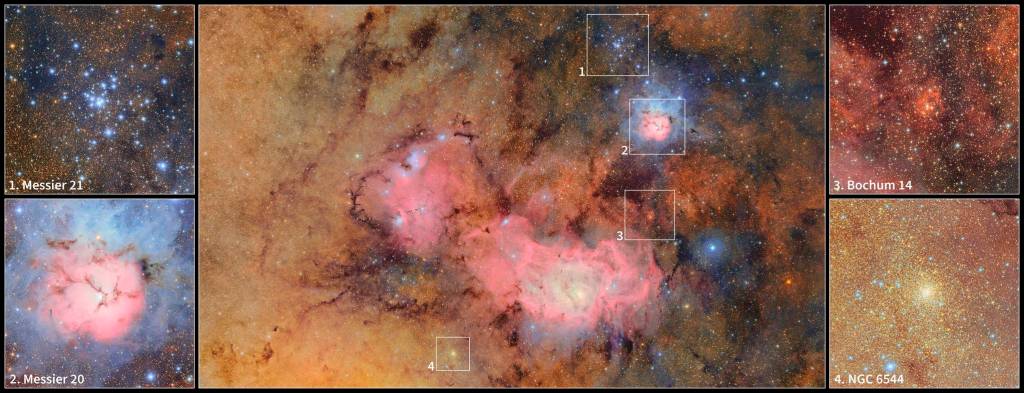
Short and very cool video of the Trifid and Lagoon nebulae, compiling more than seven hours of observing time: Trifid and Lagoon Nebulas (Video-ES).
Space Surveyors is a fun, interactive game where YOU move the Rubin telescope around the sky. How many stars, galaxies, supernovae, comets, and asteroids can you catch in one minute, before the sun rises?
While players aren’t moving the *real* telescope around, it’s still fun to play. (I discovered 22 objects before the clouds rolled in and the sun came up. Bet you can do better:)
Adventure! Discovery! Secrets of the universe! This, kids, is why math is important.*
* I mean, sure, also to figure out if you have enough money to pay rent and still buy ice cream, but also this!
A random explainer for curious minds: In case you’re wondering about voting in the New York City mayor’s primary, or what people advocating for ranked choice voting are going on about, here’s an interactive demo. With ice cream!
Get a taste of RCV by ranking your five favorite ice cream flavors and then follow along as the votes get counted and we find out which flavor tops the cone.
* * *
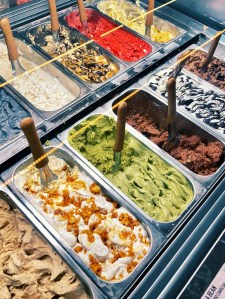
Honestly, I just feel like ice cream. Photo by Hilda Gea on Unsplash








You must be logged in to post a comment.