Feeds:
Posts
Comments

Posts Tagged ‘astronomy’

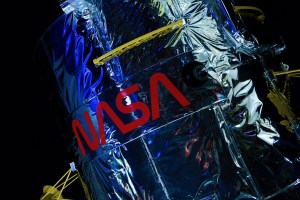
If you don’t track space news or astronomy news or science news, you may not have seen the announcement about the debut of the Vera C. Rubin Observatory’s recent drop of galactically cool imagery.

Even if you have seen the announcements, you may not know the story behind the observatory, its world-beating telescope, or the woman it’s named after. Here’s a quick orientation and of course, a look at some of that amazing imagery.

World’s largest telescope debuts

The Legacy Survey of Space and Time camera is expected to capture more information about the universe than all optical telescopes throughout history combined.

What is the observatory observing from its perch on Cerro Pachón in Chile? All the things!

Ever-changing Universe Revealed in First Imagery From NSF–DOE Vera C. Rubin Observatory

In just over 10 hours of test observations, NSF–DOE Rubin Observatory has already captured millions of galaxies and Milky Way stars and thousands of asteroids. The imagery is a small preview of Rubin Observatory’s upcoming 10-year scientific mission to explore and understand some of the Universe’s biggest mysteries.

Here are just some of the first images: Rubin Observatory.

Vera Rubin: First celestial image from revolutionary telescope

It should detect killer asteroids in striking distance of Earth and map the Milky Way. It will also answer crucial questions about dark matter, the mysterious substance that makes up most of our universe.

Exactly who was Vera C. Rubin? Just a girl who dreamed of space, ignored the haters, and grew up to be a world-class scientist.

The Woman Behind the World’s Biggest Camera

But who is the observatory’s namesake astronomer?

Vera Rubin is best known for presenting the first sound evidence of dark matter—an elusive substance that makes up more than 80 percent of our universe, yet doesn’t interact with light or other electromagnetic radiation, making it impossible to glimpse directly through a telescope. Her central scientific accomplishment involved discovering a mismatch between the predicted angular motion of galaxies and the observed motion of galaxies. Rubin’s calculations offered a solution to this so-called “galaxy rotation problem” by suggesting that galaxies must contain at least 10 times as much mass as can be accounted for by the visible stars. This invisible mass constituted evidence for what astronomers had earlier proposed to be dark matter.

Rubin became a cosmological giant against the odds, illuminating a path for future female astronomers.

(And, I’d like to add, becoming a role model for kids of all shapes and sizes!) Want even more in-depth info about telescope and its capabilities? 

First Data from Vera Rubin Observatory Rewrites Astronomy (Starting Now) – YouTube

In this exclusive interview, Professor Mario Jurić reveals how the Vera Rubin Observatory accidentally discovered 2,000 asteroids in just 10 hours while testing its capabilities on the distant Virgo Cluster—transforming humanity’s asteroid discovery rate from 20,000 per year globally to potentially over one million annually with a single telescope.

Short and very cool video of the Trifid and Lagoon nebulae, compiling more than seven hours of observing time: Trifid and Lagoon Nebulas (Video-ES).

And sure, why not, a space game!

Space Surveyors Game

Space Surveyors is a fun, interactive game where YOU move the Rubin telescope around the sky. How many stars, galaxies, supernovae, comets, and asteroids can you catch in one minute, before the sun rises?

While players aren’t moving the *real* telescope around, it’s still fun to play. (I discovered 22 objects before the clouds rolled in and the sun came up. Bet you can do better:)

Adventure! Discovery! Secrets of the universe! This, kids, is why math is important.*

* I mean, sure, also to figure out if you have enough money to pay rent and still buy ice cream, but also this!

* * *

Read Full Post »

Tonight, a little astronomy-related drama!

North America will have a blood worm moon this week. Here’s how you can see it

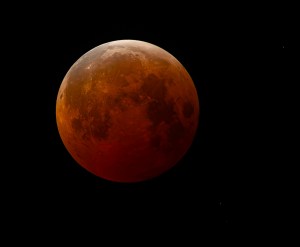
Late Thursday night or Friday early morning, North Americans with clear skies can look up to see a full moon with a beautiful reddish hue. 

What to know about March’s full “Blood Worm Moon,” a total lunar eclipse

March’s full moon, known as the Worm Moon, will pass into Earth’s shadow on the night of March 13, or early on March 14, depending on the time zone, according to NASA. This eclipse will be visible from Earth’s Western Hemisphere.

While the peak of the eclipse will happen in the middle of the night (my time, at least), we should be able to see the event begin as the red(dish) moon rises around 7pm. 

Why red? The color can vary based on the Moon’s path and the Earth’s atmosphere. The shade is measured on the Danjon Scale, which is a thing I hadn’t heard of but absolutely needed to know!

Danjon Scale of Lunar Eclipse Brightness

Earth’s atmosphere contains varying amounts of water (clouds, mist, precipitation) and solid particles (dust, organic debris, volcanic ash). This material filters and attenuates the sunlight before it’s refracted into the umbra. For instance, large or frequent volcanic eruptions dumping huge quantities of ash into the atmosphere are often followed by very dark, red eclipses for several years. Extensive cloud cover along Earth’s limb also tends to darken the eclipse by blocking sunlight. 

And for fun: Capri Sun Releases a Glow-in-the-Dark Moon Punch

Not fun but interesting: This week’s ‘blood moon’ eclipse mirrors one Christopher Columbus used to scare indigenous people in 1504

Enjoy. I’m hoping for an L3 on the Danjon scale!

* * *

Read Full Post »

You may remember in 2023 when I mentioned a five-planet parade in the skies, or in 2024 when six planets aligned

Fun sky news: this week we are in line for a parade of all seven planets!

When and how to view February planet alignment

Skywatchers will get a cosmic treat this week with a celestial gathering of planets.

A planetary alignment, or a “planet parade,” according to the internet, will grace our night sky just after dusk, according to SkyatNightMagazine. You can expect to see seven planets align Friday when Mercury joins Mars, Jupiter, Uranus, Neptune, Venus and Saturn.

Mercury, Venus, Jupiter, and Mars will be visible to the naked eye, but Saturn will be harder to spot low on the horizon, and you’ll need a telescope for Uranus and Neptune. Still, “every other world in our solar system will be visible among the stars at the same time — if you know where to look.”

“You really only have a few minutes after sunset to catch them before they drop below the horizon. After that, you’ll still be able to see Venus, Jupiter, and Mars clearly for a much longer time,” Dr Bloomer added.

I don’t have a telescope, and we often can’t see this kind of event because of city lights. 

Still cool!

* * *

Photo by Luke Stackpoole on Unsplash

Read Full Post »

Today is Pluto Day!

Lowell Observatory holds I Heart Pluto Festival

On Feb. 18, 1930, the young astronomer Clyde Tombaugh discovered Pluto, considered for decades a planet and “demoted” to dwarf planet status in 2008.

A few weeks later, an 11-year old girl named Venetia Burney suggested the name Pluto because of its connection to the god of the cold dark underworld.

This in-depth discussion of Pluto covers all sorts of interesting facts, including details of its discovery, how the New Horizons spacecraft gave us a much more detailed picture, and more. (Did you know that Pluto is half the size of the Moon but has five moons of its own? And someone who weighs 180 pounds on Earth would weigh 11 pounds on Pluto.)

What Makes Pluto So Intriguing | TIME

It takes Pluto slightly over 248 Earth years to orbit the sun, which means that on March 23, 2178, one Plutonian year will have elapsed since the dwarf planet was first spotted, on Feb. 18, 1930.

Here’s a cool animation showing our increasingly detailed understanding of Pluto:

And here’s an interactive image of Pluto 3D Model – NASA Solar System Exploration.

You’ll always be a planet to me, Pluto!

* * *

NASA/Johns Hopkins University Applied Physics Laboratory/Southwest Research Institute

Read Full Post »

Tonight’s full moon is called the Snow Moon. How appropriate, as we are about to get hit with what people are calling Snowmageddon 2025.

How to see tonight’s full Snow Moon rise with the ‘Heart of the Lion’ before Valentine’s Day

The moon will be officially full at 8:53 a.m. EST on Wednesday (Feb. 12) and will be best seen at dusk at the moment of moonrise where you are. It will be in the constellation Leo, hanging above the bright star Regulus. 

And since we’re talking storms, if you’ve ever wondered why some bring snow while others bring sleet or freezing rain, check this out: Severe Weather 101: Winter Weather Types.

We may not be able to see the moon tonight, if the storm is as dramatic as predicted, but it’s nice to know it’s up there!

* * *

Read Full Post »

Welcome to the new year! Here’s what you can expect from space in 2025 (including a new way of studying the solar corona that looks enough like the Millennium Falcon to be extra fun):

Look up! Here’s what’s to watch for in space in 2025 – NPR

After a spectacular 2024, which featured a year of wonder in the skies, including a total solar eclipse and rare sightings of the northern lights, 2025 is set to bring even more astronomical events.

* * *

Photo by Benjamin Davies on Unsplash

Read Full Post »

Greetings, fellow space travelers! Today is the winter solstice, the Northern Hemisphere’s shortest day of the year. 

Winter solstice 2024: How to celebrate the start of winter – NPR

“At 4:20 a.m. EST, the solstice marks the beginning of winter in the Northern Hemisphere and summer in the Southern Hemisphere,” NASA says on its website.

That means from now until the end of June, each day will get a little bit longer — and brighter…

Read the full article for some fun facts on the solstice, plus a link to solstice-themed music, food and writing, including work by beloved children’s author Susan Cooper (my brother and I loved The Dark Is Rising).

Today is also the official start of winter, and the temperature is dropping like a rock in a gravity well. Stay warm, it just gets brighter from here!

* * *

I think there’s a druid in there somewhere. Photo by Dyana Wing So on Unsplash

Read Full Post »

If you happen to live in a place that will have clear skies tonight (or tomorrow), rejoice! It is time for that highlight of the annual meteor shower cycle, the Geminids.

Geminids meteor shower: What to know, viewing tips – NPR

The Geminids, which are bright and have a yellow hue, are considered one of the best and most reliable annual meteor showers, when at least 120 meteors are usually seen per hour during its peak, NASA says. 

The Geminid meteor shower peaks in the middle of December, with the most activity this year expected late Friday and into early Saturday, according to NASA.

Alas, we expect snow and clouds here tonight, but I’m happy knowing that you, dear reader, might have a chance to see one of the most spectacular shows in the solar system.

* * *

Photo by Venti Views on Unsplash

Read Full Post »

If my brain had been working yesterday I would have mentioned the fact that many of us have an unusual opportunity to see the Aurora Borealis right now. 

“The word Aurora was first used by Galileo and comes from Latin and is the name of the goddess of dawn.” — NOAA

This light show in space is typically reserved for latitudes close to the Earth’s poles, but we happen to be experiencing a G3 solar storm right now. This happens when solar storms drive coronal mass ejections, solar flares, solar particle events and solar winds at us. And by us, I mean Earth.

First, some pretty pictures from as far south as Florida:

PHOTOS: Exceptional solar storm sparks stunning auroras across Canada – The Weather Network

But wait, why does solar energy sometimes turn the sky into an Impressionist painting?

Understanding aurora colors; the science behind the display | MPR News

Our sun is the main reason for an aurora display. Particles energized by the sun race toward Earth, colliding with our upper atmosphere. Earth’s magnetic field divert this energy towards the north and south poles. As these energized particles enter Earth’s atmosphere, they excite gas atoms and molecules. The colors observed depend on which gas atoms they interact with.

Aurora colors explained, National Weather Service

And hang on, it comes in black?!

Aurora Colors Explained – Southern and Northern Lights

In addition to colorful light bands, sometimes an aurora has black bands that block starlight. The dark regions likely come from electric fields in the upper atmosphere that block electrons from interacting with gases.

I won’t be hurt if you want to stop here and go search for more pictures, but if you’d like to know more about the how and why, read on!

Aurora Dashboard (Experimental) | NOAA – NWS Space Weather Prediction Center

When and where can you see the northern and southern lights also known as the aurora? This page provides a prediction of the aurora’s visibility tonight and tomorrow night in the charts below. The animations further down show what the aurora’s been up to over the last 24 hours and estimates what the next 30 minutes will be like. The aurora’s colorful green, red, and purple light shifts gently and often changes shape like softly blowing curtains.

Aurora – 30 Minute Forecast | NOAA – NWS Space Weather Prediction Center

This is a short-term forecast of the location and intensity of the aurora.

Even more in-depth sciency stuff!

Aurora Tutorial | NOAA – NWS Space Weather Prediction Center

The figure below shows the magnetosphere and the locations where electrons are accelerated (in red). The red region on the right of the figure is where the electrons that produce night-time aurora are accelerated and the source of the processes that generate geomagnetic storms.

Pretty colors are pretty, of course, but why should we care about space weather?

Education and Outreach | NOAA – NWS Space Weather Prediction Center

Space weather is a global issue. Unlike terrestrial weather events, like a hurricane, space weather has the potential to impact not only the United States, but wider geographic regions. These complex events can have significant economic consequences and have the potential to negatively affect numerous sectors, including communications, satellite and airline operations, manned space flights, navigation and surveying systems, as well as the electric power grid.

Aaaand in case you haven’t had enough about auroras in particular and space weather in general, NOAA has a fun dashboard for you! 

Space Weather Enthusiasts Dashboard | NOAA – NWS Space Weather Prediction Center

The goddess of dawn

shivers with rainbow delight.

The sun blows his kiss.

* * *

Photo by Ibrahim Boran on Unsplash

Read Full Post »

Yesterday, we headed out into one of the many beautiful trail systems dotted around Ottawa. The day was bright and the paths were carpeted in a lovely array of gold, orange and red leaves. It felt like a perfect way to usher in fall, but it turns out we were a day early.

Today, however, we can celebrate the Autumn Equinox, when night and day are (more or less) equal, and the sun shines directly down streets set east to west, as they do in places like Chicago.

Autumnal equinox 2024 brings fall to the Northern Hemisphere today

When is the first day of fall in 2024?

A carefully worded answer is that on Sunday, Sept. 22, at 8:44 a.m. Eastern daylight time (5:44 a.m. Pacific daylight time) autumn begins astronomically in the Northern Hemisphere, and spring in the Southern. At that moment, the sun would be shining directly overhead as seen from a point in the equatorial Atlantic Ocean, 461 miles (743 km) south-southwest of Monrovia, Liberia. 

10 Things About the September Equinox

Here are 10 facts about the first day of astronomical fall (autumn) in the Northern Hemisphere.

Welcome to fall!

* * *

Photo by John Jennings on Unsplash

Read Full Post »

« Newer Posts - Older Posts »