Feeds:
Posts
Comments

Posts Tagged ‘eclipse 2024’

Our eclipse experience was great. We found a terrific little nature preserve called the Cooper Marsh Conservation Area, with boardwalks, picnic tables, lawns and benches. Lunch, exploration, then a bit of chillaxation as we waited for the eclipse.

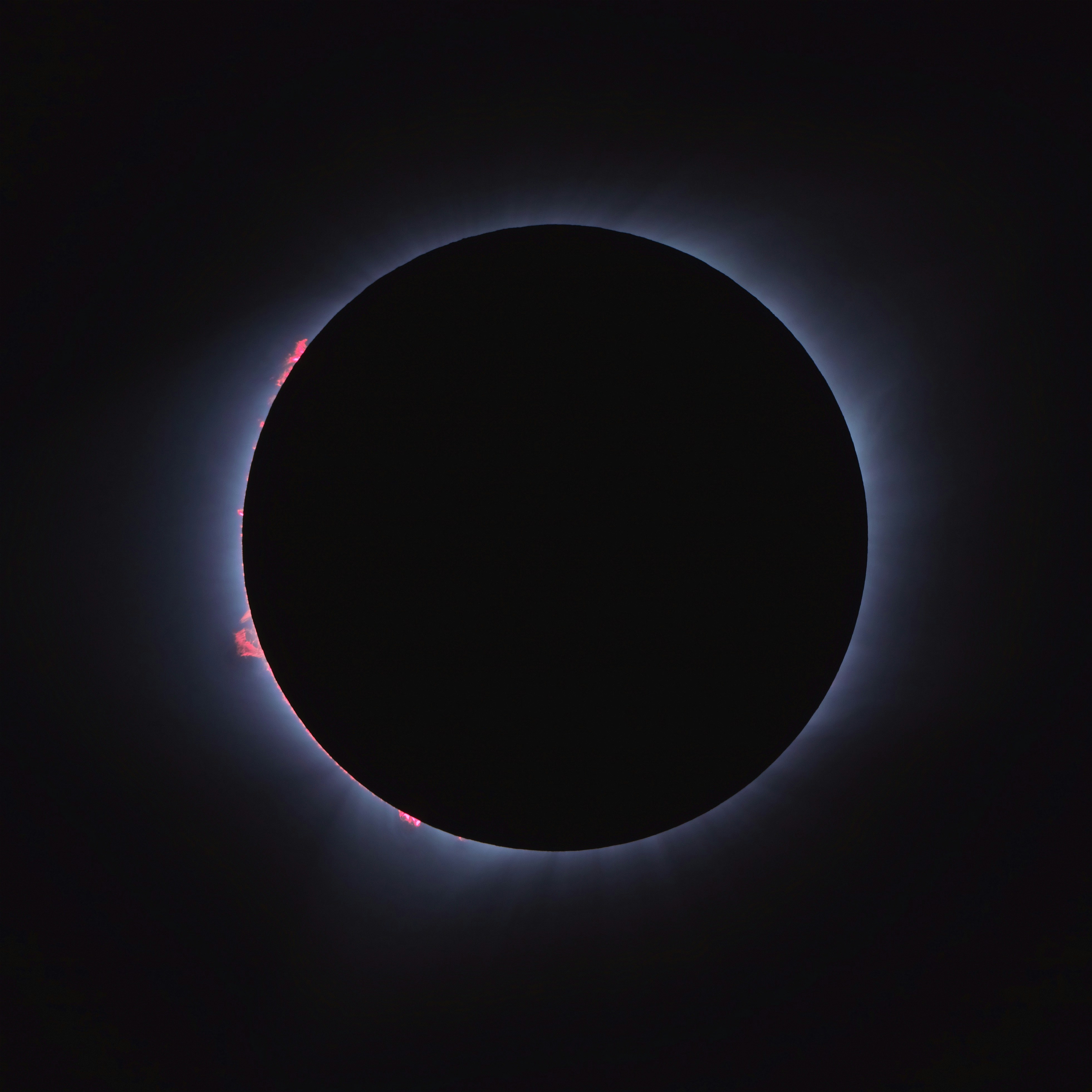
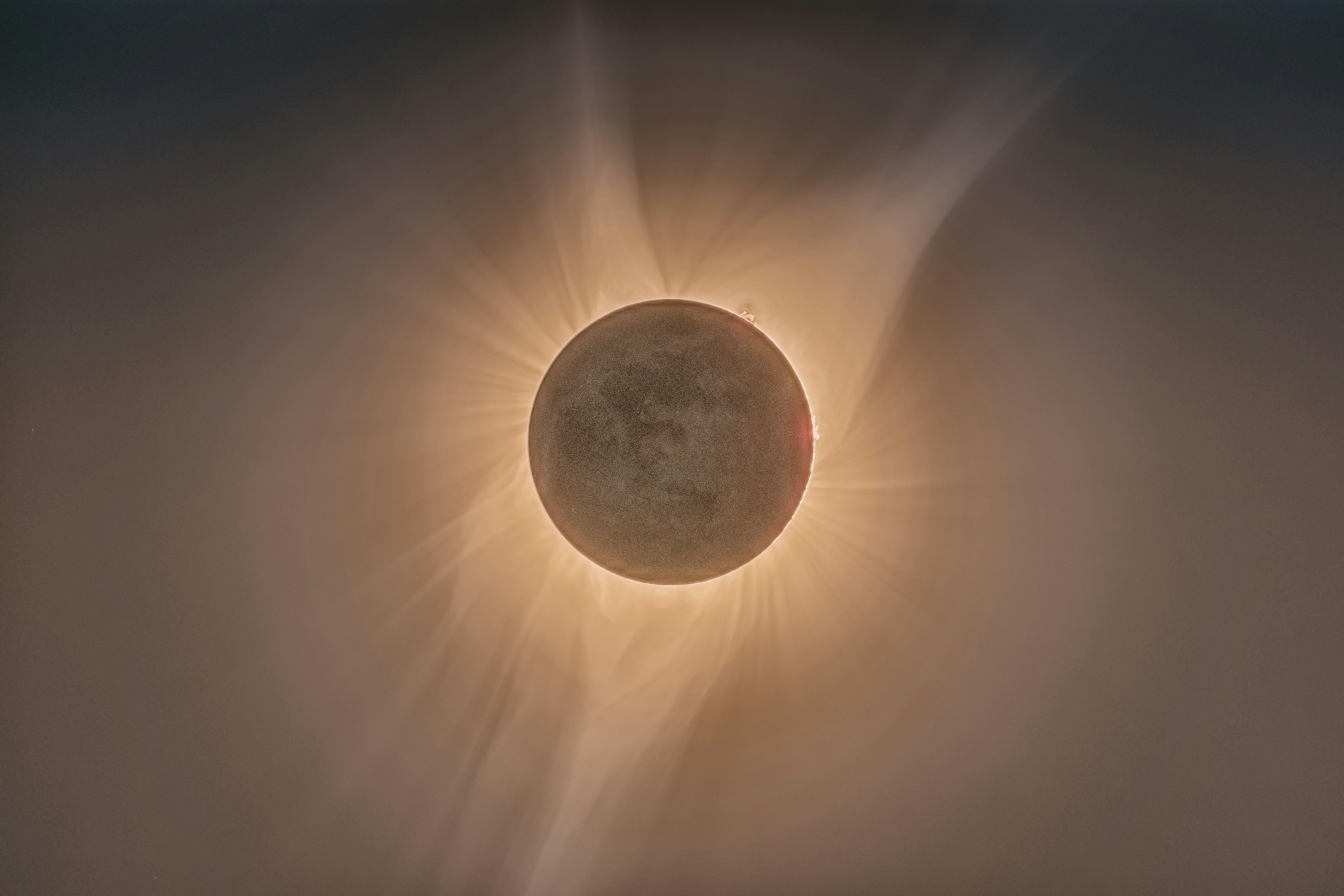
When they said that there is a significant difference between 99% and totality, they were not kidding. It was a beautiful day, but when the light faded and the stars came out? Just perfect.

If you missed it, here are highlights from NASA’s feed, along with a collection of images.

Amazing!

* * *

Read Full Post »

If you can go outside and view the eclipse using protective glasses or an indirect method like a pinhole or disco ball, great! But even if you can’t get outside, there are many ways to watch the event online, like The Planetary Society’s live cast with Bill Nye.

* * *

Photo by karen kayser on Unsplash

Read Full Post »

Why care about Monday’s eclipse (aside from the fact that it’s demonstrably cool)? This physicist is working to find answers to the why, how and how bad of coronas and solar storms, and eclipses can help with that. How? Read on!

Why a solar physicist has been chasing solar eclipses for more than three decades – Vox

Despite how much damage solar storms can do to our tech on Earth, scientists are still struggling to predict them. And that’s because they don’t understand that much about how the corona works.

* * *

Photo by Selvan B on Unsplash

Read Full Post »

If you are anywhere near the path of totality for the big event on Monday, April 8th, are you eclipse ready? I will argue that one of the most important parts of such prep is to ensure that you have a plan for safe eclipse viewing. This article may be of help:

Are Your Solar Eclipse Glasses Fake? Here’s How to Check | Scientific American

Legitimate eclipse glasses are at least 1,000 times darker than the darkest sunglasses you can buy….

While lab tests are the best way to determine whether glasses meet the ISO standard, Fienberg says there is a three-part test people can do at home if they’re concerned their eclipse viewers aren’t up to the task.

First, put your glasses on indoors and look around. The only things you should be able to see are very bright lights, such as a halogen bulb or a smartphone flashlight.

Then, if the glasses pass the indoor test, bring them outside—but don’t look at the sun just yet. Look around: it should be too dark to see distant hills, trees or even the ground.

If that second test is passed, keep the glasses on and quickly glance at the sun. You should comfortably see a bright, sharp-edged round disk. If your glasses pass all three tests, they are probably safe to wear. Still, Fienberg points out that it’s best to use them for only a few seconds every minute or so during the eclipse…

Here’s a reference for Suppliers of Safe Solar Viewers & Filters | Solar Eclipse Across America.

Your eyes need eclipse protection, but did you know that your phone/camera does too?

How to photograph the eclipse, according to NASA | Popular Science

Speaking of NASA, NASA needs your smartphone during April’s solar eclipse. Go citizen scientists!

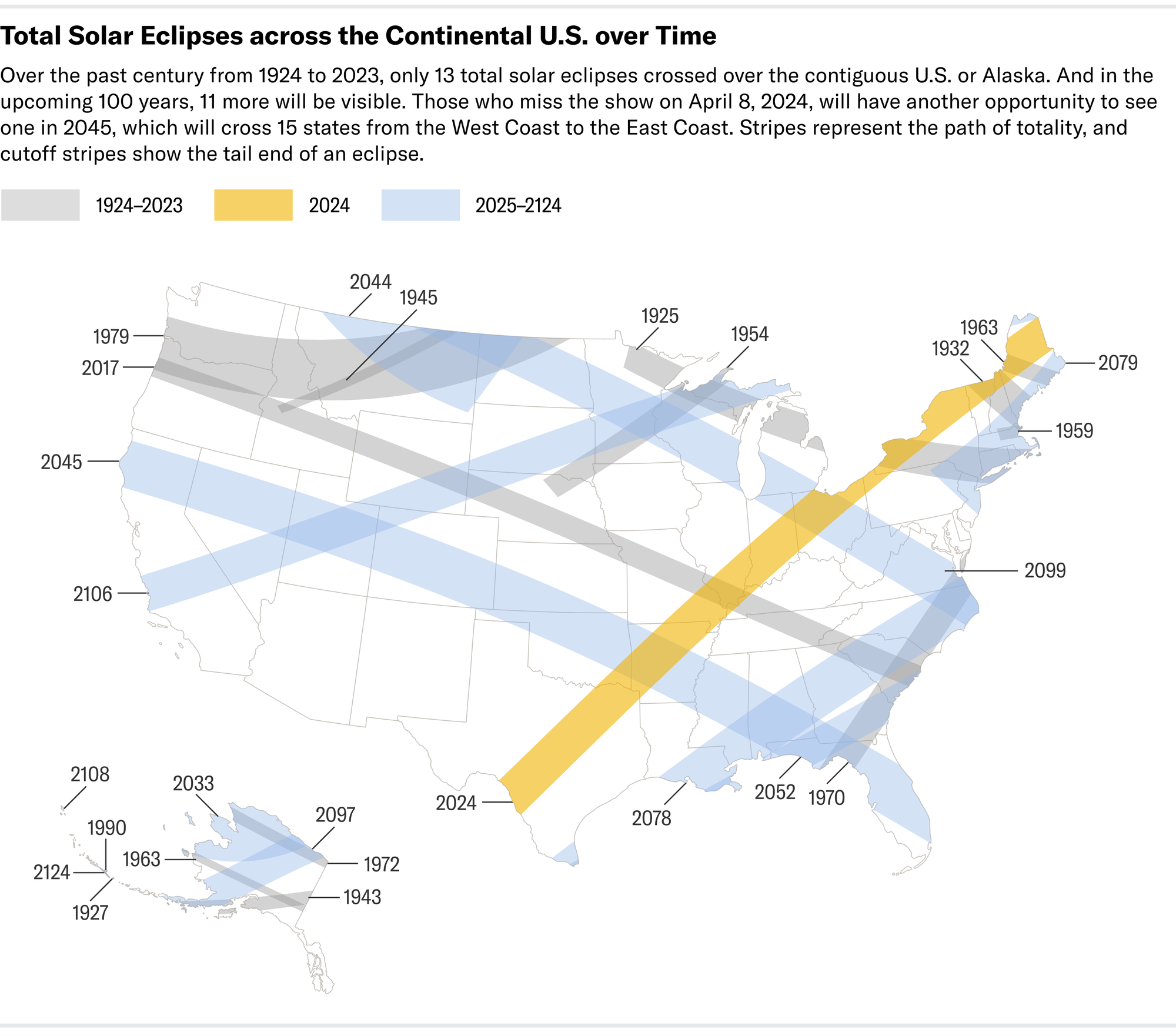
And if you’re already looking forward to upcoming total solar eclipses, here’s a map to help you plan:

Map of total solar eclipses across the Continental US over time
From Scientific American: See Where Future U.S. Eclipses Will be Visible
Credit: Shuyao Xiao; Source: NASA (data)

2106, here we come!

* * *

Photo by Jason Howell on Unsplash

Read Full Post »

By now you have probably heard that there will be a full eclipse of the Sun on April 8th. (If you haven’t, this is your public service announcement. The world is not ending and the Sun will return to its place in the sky. No wolvesdragons or demons are involved. The gods of sun and light just need to slip out for a quick break.) The next time this will happen in the contiguous US won’t be until 2044.

Millions of people will be able to view the eclipse. Here’s a map of the eclipse path:

NASA Eclipse Explorer

Keep in mind, of course, that even those outside the path of totality will be able to view a partial eclipse. 

When will it happen? Here’s a table, with another map. Because I like maps.

Total Solar Eclipse on April 8, 2024 (Great North American Eclipse )

If you will be able to view this super cool space phenomenon, then you’ll want to get your hands on some eclipse glasses.

How safe are your solar eclipse glasses? Cheap fakes from online marketplaces pose a threat, supply-chain experts say

Of course, we now know that the Sun isn’t really eaten during an eclipse. Instead, it does what it always does: rain ultraviolet rays on everything in its path. That’s why you should never look at a solar eclipse without protective eyewear.

And if you are in charge of kids on April 8th (or adults, we should have sciencey fun too!) consider the ideas in this article:

How Schools Can Turn the Solar Eclipse Into an Unforgettable Science Lesson

If the weather cooperates, science students of all ages could be in for quite a show on April 8. The first sign will be a sudden temperature drop. The sky will darken, and winds will shift. A dark shadow will appear on the horizon. Faint waves of light may waft across the ground. A ring of bright light will shine from the outer edges of the otherwise darkened sun. Then the moon will cover the sun completely and, for a few seconds, a thin red layer may appear around its outer rim.

And just for fun, here’s a little something for your ears, too:

Listen to the Eclipse Song Made by the Sound of Light of an Eclipse

Ok, that’s a little edgy. But still fascinating!

* * *

Photo by Bryan Goff on Unsplash

Read Full Post »