Feeds:
Posts
Comments

Posts Tagged ‘science’

You may remember in 2023 when I mentioned a five-planet parade in the skies, or in 2024 when six planets aligned

Fun sky news: this week we are in line for a parade of all seven planets!

When and how to view February planet alignment

Skywatchers will get a cosmic treat this week with a celestial gathering of planets.

A planetary alignment, or a “planet parade,” according to the internet, will grace our night sky just after dusk, according to SkyatNightMagazine. You can expect to see seven planets align Friday when Mercury joins Mars, Jupiter, Uranus, Neptune, Venus and Saturn.

Mercury, Venus, Jupiter, and Mars will be visible to the naked eye, but Saturn will be harder to spot low on the horizon, and you’ll need a telescope for Uranus and Neptune. Still, “every other world in our solar system will be visible among the stars at the same time — if you know where to look.”

“You really only have a few minutes after sunset to catch them before they drop below the horizon. After that, you’ll still be able to see Venus, Jupiter, and Mars clearly for a much longer time,” Dr Bloomer added.

I don’t have a telescope, and we often can’t see this kind of event because of city lights. 

Still cool!

* * *

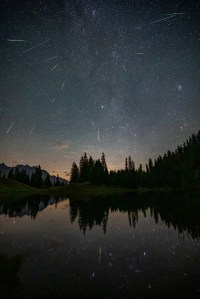
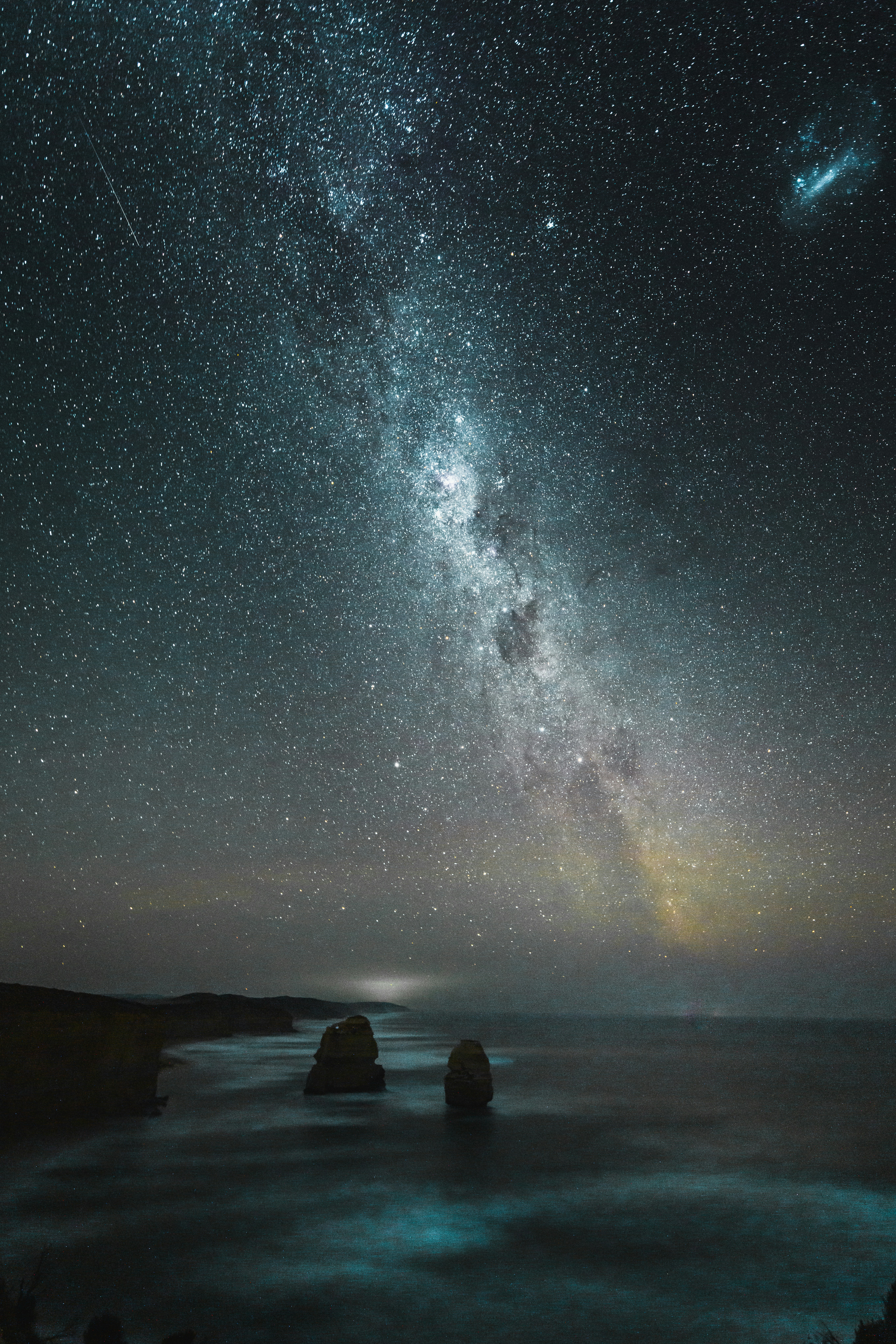
Photo by Luke Stackpoole on Unsplash

Read Full Post »

Here’s a question: what if we flipped the whole “search for alien life” on its head and asked How Far Away Could We Detect… Ourselves?

A fledgling space-travelling civilization similar to ours may be out there somewhere in the Milky Way. Maybe they have their own fledgling SETI program, complete with radiotelescope arrays scanning the sky for the telltale signs of another technological civilization.

If there is, and if they do, from how far away could they detect our technosignatures? New research is asking that question.

Answer? Very far away!

Better check my work for typos again, because you never know who might see this! 😉

* * *

Photo by Maxim Hopman on Unsplash

Read Full Post »

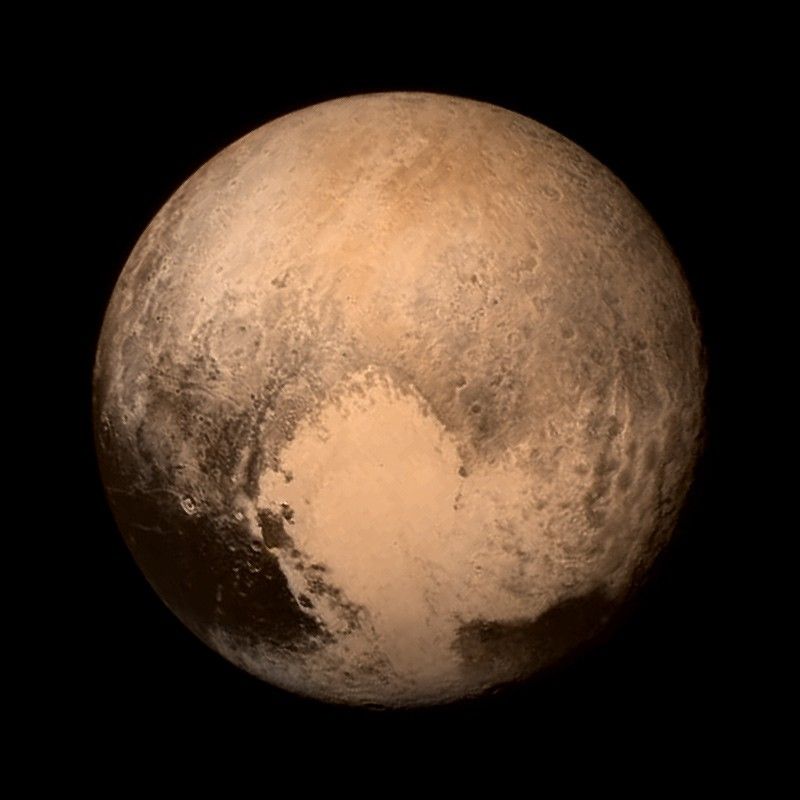
Today is Pluto Day!

Lowell Observatory holds I Heart Pluto Festival

On Feb. 18, 1930, the young astronomer Clyde Tombaugh discovered Pluto, considered for decades a planet and “demoted” to dwarf planet status in 2008.

A few weeks later, an 11-year old girl named Venetia Burney suggested the name Pluto because of its connection to the god of the cold dark underworld.

This in-depth discussion of Pluto covers all sorts of interesting facts, including details of its discovery, how the New Horizons spacecraft gave us a much more detailed picture, and more. (Did you know that Pluto is half the size of the Moon but has five moons of its own? And someone who weighs 180 pounds on Earth would weigh 11 pounds on Pluto.)

What Makes Pluto So Intriguing | TIME

It takes Pluto slightly over 248 Earth years to orbit the sun, which means that on March 23, 2178, one Plutonian year will have elapsed since the dwarf planet was first spotted, on Feb. 18, 1930.

Here’s a cool animation showing our increasingly detailed understanding of Pluto:

And here’s an interactive image of Pluto 3D Model – NASA Solar System Exploration.

You’ll always be a planet to me, Pluto!

* * *

NASA/Johns Hopkins University Applied Physics Laboratory/Southwest Research Institute

Read Full Post »

Some days you realize that yes, we really are living in the future. Point in case:

Oxford Scientists Say They’ve Achieved Quantum Teleportation

Researchers at the University of Oxford say they’ve achieved quantum teleportation — stitching together separate quantum computers to run an algorithm collaboratively, across a distance, in a “breakthrough” they say could lead to powerful quantum supercomputers.

Still lots to do on the road to practicality, of course, but how cool is that?

* * *

Photo by Dynamic Wang on Unsplash

Read Full Post »

What do Saturn, Venus, Neptune, Uranus, Jupiter and Mars all have in common? They’re all currently in alignment, at least from our Earthly perspective.

6 planets aligning in night sky will get even better in February

Venus, Saturn and Neptune will be bunched together low in the southwestern sky, while Mars, Jupiter and Uranus will glow higher in the southern sky.

One trick for finding the planets is to look for how they shine. Stars appear to twinkle while planets do not, making it easier to pick out planets in a star-studded sky.

Weather and light pollution permitting, four of these planets will be visible to the naked eye. Pretty cool!

* * *

Photo by Zelch Csaba on Pexels.com

Read Full Post »

We had brunch today with good friends. They are smart and fun and interesting and love our cat (which, let’s face it, is about the best thing you can say about a person). 

We don’t all share the same politics. Why do I mention this? To point out that it doesn’t matter. 

We may not be on the same page in terms of voting and algorithms, but we like a lot of the same real-life things, we share a lot of the same fundamental values, and are always curious about the others’ experience and perspectives. 

It doesn’t hurt that they like my cooking;)

How to step out of your inner monologue and understand the world better – Big Think

The interesting thing about being a human is that we’re stuck inside our internal model—it’s all we ever see. But with the endeavors of science, literature, and philosophy, we’re able to step outside of ourselves and understand, “Hey, the way I see the world isn’t the only way to see the world. It’s not the only truth.” The more we get good at that, the more we can try to build a better society.

* * *

Photo by Amir Geshani on Unsplash

Read Full Post »

We’re having some electrical work done today, which means I’ll be in and out of the modern world. It also means that I will be spending a non-zero amount of time asking questions about power, and wishing my childhood had included a little more time with (Presidential Medal of Freedom awardee!) Bill Nye and his catchy explanations of science science science. 

Good news, it’s not too late!

Bill Nye The Science Guy – S01E18 – Electricity

And for those of you who just want the basics, i.e. how not to become a path to ground for the “opportunistic freeloader” that is electricity, check out this quick explainer:

THE BASICS OF ELECTRICITY

Stay safe, friends, and for those days when electrons fail you, keep your pencils sharp!

* * *

Read Full Post »

Welcome to the new year! Here’s what you can expect from space in 2025 (including a new way of studying the solar corona that looks enough like the Millennium Falcon to be extra fun):

Look up! Here’s what’s to watch for in space in 2025 – NPR

After a spectacular 2024, which featured a year of wonder in the skies, including a total solar eclipse and rare sightings of the northern lights, 2025 is set to bring even more astronomical events.

* * *

Photo by Benjamin Davies on Unsplash

Read Full Post »

Some (Mon)days you might just want to get away. Or maybe you’re just a huge fan of that classique of modern cinema, The Core

What If You Just Keep Digging? – YouTube

Have you ever thought, “what if I just dug a really really deep hole?”

Well, the USSR actually did. The hole they dug is deeper than the deepest part of the ocean. It’s deeper than Mt. Everest is tall! They began digging it in the 1970s as part of a space race, but down. The United States only got to 600 ft before pulling funding. But the USSR kept going for 20 years. They made it about a third of the way through the Earth’s crust and then STOPPED.

But what if… you just… kept… digging? 

If you dug a hole to the center of the Earth, what would you find? What would happen to you? And what does our newest tech tell us is REALLY down below your feet?

* * *

Photo by Alejandro Alas on Unsplash

Read Full Post »

As we’re right around the full (super!) moon this weekend (and I’m knee-deep in tech and tax stuff, super fun), here’s a composite image of the moon with amazing detail.

An Enormous Photo of the Moon Zooms in on the Cratered Lunar Topography in Incredible Detail

The self-taught Kurdish astrophotographer amassed 81,000 images, which he stitched into a 708-gigabyte composite revealing the intricacies of the lunar topography in stunningly high resolution.

Scroll down through the images to be impressed by the work of this self-taught astrophotographer.

* * *

What the moon looked like to Galileo in 1610, Public domain, via Wikimedia Commons

Read Full Post »

« Newer Posts - Older Posts »