Some days, time just seems to fly by. Those are usually days with new and interesting experiences, where every moment fires off new synapses. Other days not so much, particularly on days that call for the predictable.
If you, like me, are feeling the drag of Pandemic Mondays, you might find a little comfort in this new model of Earth’s tectonic activity over the last billion years. Because there’s time that feels like it’s crawling by, and then there’s sloooooow time.
“It’s mesmerising: like ill-fitting jigsaw pieces, bits of continents slam together and morph into supercontinents, break apart, and then crash back together in new formations – with each second of the video leaping forward 25 million years.”
I’m in the mood for cookies today, and winter spices seem like just the flavor. I’m not big on commercial cookies but I do have a soft spot for Biscoff.
A Belgian speculoos cookie, Biscoff are crunchy, flavorful, go great with coffee or tea, and can be (here’s the sad part) hard to find. They were at Costco for about a minute and then gone. Amazon would be happy to sell me a bunch but for inflated prices.
After some fruitless searching among the European delis in the area, I wondered if I could make my own. (Surely I could write reams of speculative fiction, if only I were fueled by speculoos. I had to find out.)
Good news! Stella Parks put together a recipe for a homemade version. You can dive into it here, with her explanation of why what should have been a simple process was not, and why some of the most important ingredients can get lost in translation.
* * *
This recipe was a great place to start but not spicy enough for me. If you compare the original with what’s below, you’ll see I’ve boosted the spices considerably. I’ve also trimmed down the ingredients a little.*
Candi sugar was ok but it was hard to find and I found it a little too sweet. The kinako, or roasted soybean flour, was interesting but was a little too nutty and could lean toward burnt flavors.
I don’t know that these cookies have done much for my writing, but they are perfect for an afternoon coffee break. Enjoy!
.5g (scant 1/4 t.) ground or freshly grated nutmeg
.4g (fat 1/8 t.) kosher salt; for table salt, use half as much by volume or use the same weight
.25g (fat 3/16 t.) ground cloves
.4g (scant 1/4 t.) ground cardamom
.125g (fat 1/16 t.) ground anise
15g (1 T.) water
155g (1 1/4 C.) flour
Directions
1. With oven rack in lower middle position, preheat to 350°F. In the bowl of a stand mixer fitted with a paddle attachment, combine sugar with butter, baking soda, cinnamon, nutmeg, salt, cloves, cardamom, and anise. Cream on medium speed until fluffy, soft, and pale, about 10 minutes, pausing to scrape the bowl and paddle as needed if the sugar seems dense and compacted at the bottom of the bowl.
2. While creaming on medium speed, slowly drizzle in the water a little at a time. Once it disappears into the fluffy butter/sugar mix, reduce speed to low and add the flour all at once. Continue mixing until the dough begins to gather around the paddle.
3. Turn the dough onto a clean surface, and knead gently to form a ball. Pat into a rectangular shape, then dust with flour, above and below. Roll to a thickness of ~3/16-inch, using a ruler for guidance. Slide a spatula or bench scraper beneath the dough to loosen, and brush away any excess flour.
4. With a fluted pastry wheel, pizza cutter or blade, cut the dough into 3/4-inch strips, then cut crossways to form 2-inch rectangles. Cut the scraps with cookie cutters or bake as is. With an offset spatula, transfer the cutouts and scraps to a parchment-lined cookie sheet, leaving ~half inch between each piece to account for spread.
5. Bake until cookies are golden brown, about 16 minutes. Cool to room temperature directly on the baking sheet; the cookies will not crisp until fully cool. Store leftovers in an airtight container up to 1 month at room temperature; the scraps can be ground to use for crumbs and frozen in an airtight container for up to 3 months.**
* * *
* I’ve included Imperial units but note that they are by nature less precise than weights, and I’ve only tested the recipe in grams. I will say that a couple of years ago I bought an inexpensive spice scale to go with my regular kitchen scale and it was very much worth it.
** Seriously though, they won’t be around that long. And I usually make a double batch.
* * *
My recipe iterations, with version notes and the Post-it I use for marking out the dough spacing.
I know I’ve been on a whole snow / winter kick but hey, it’s winter! It’s also snowing here today and is very pretty, with the sort of light, fluffy flakes that bring a blanket of quiet as they fall. Which reminds me!
These free printable Star Wars snowflake patterns from Anthony Herrera Designs are very cool. If you like that sort of thing, which I do!
Just one fine example of Starflake awesomeness
I’ve made these in printer paper, cardstock and acrylic, using everything from scissors, Cricut, and laser cutter. Print, cut, and enjoy!
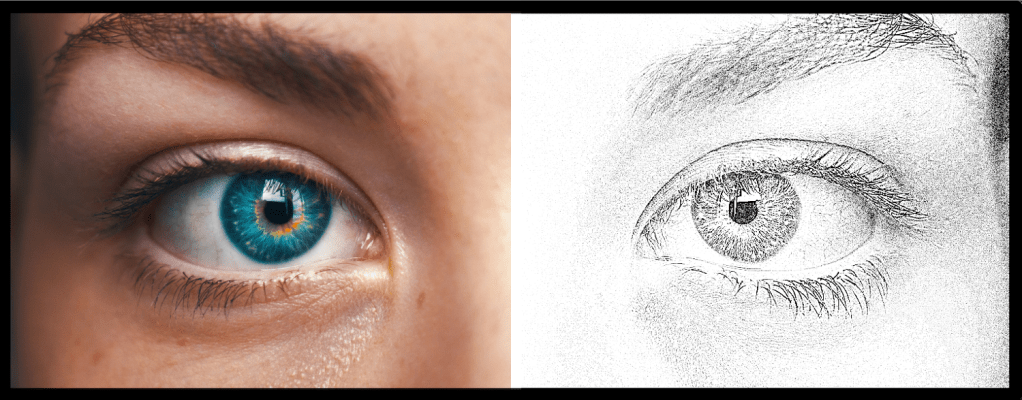
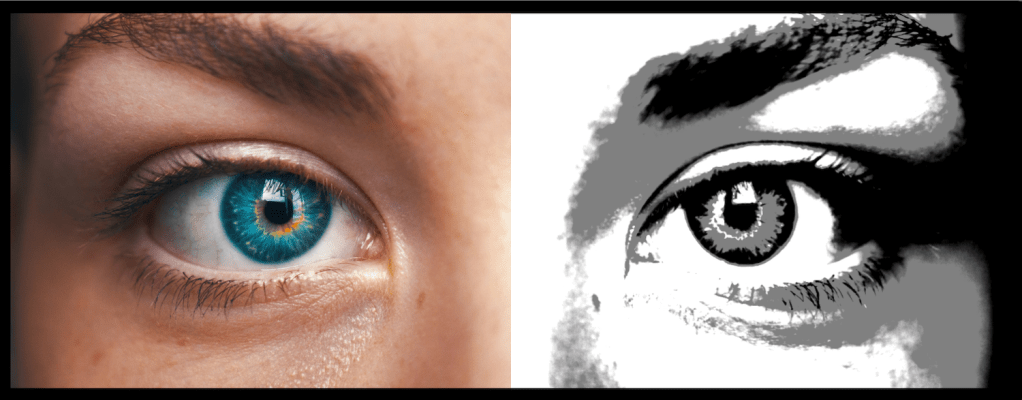
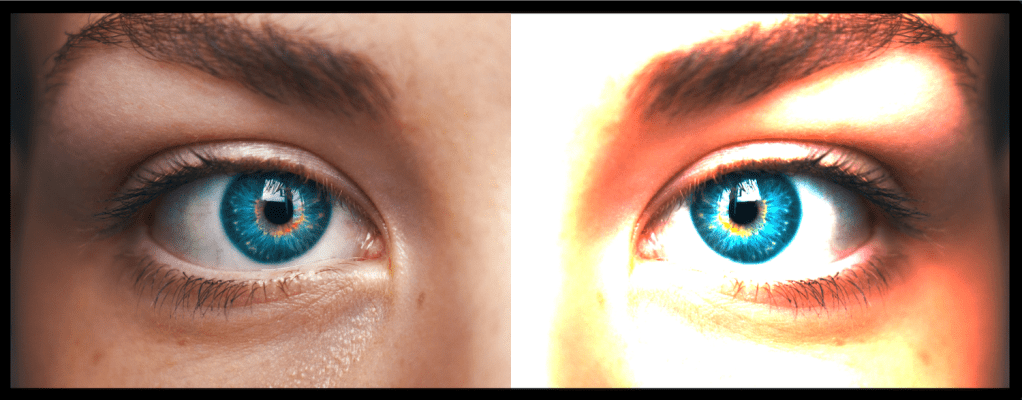
Well, I thought I was going to write about something else today, but apparently (apropos of this previous post) I wanted to draw eyes. It’s what I would have done for that earlier post if I hadn’t hit a little hiccup in the software department.
I recently had to give up Photoshop and the rest of Adobe’s Creative Suite. Ok, I didn’t have to, but the subscription software model gives me hives, so I switched to Affinity Photo. It’s a little like trying to bake a cake in someone else’s kitchen. Same concept, same goal, but everything’s in a slightly different place and the ingredients are all different brands. So I’m having fun teaching myself what’s what and where.
I ran across a draft letter I wrote several years ago, and I’m kicking myself for not sending it. Why? It was a condolence letter to the husband of an old friend of the family, and I realize now that I never felt like it was good enough to send.
L. and her first husband were close to my parents when I was young, and as couples split apart and merged in new formations, L. remained part of our circle. Even when she remarried, moved away and I hadn’t seen her for years, L. occupied a warm place in my heart. Then she got sick and died, and I didn’t know what to say to the new husband I’d never met.
Still, I searched for a card. I bought a stamp. I drafted a letter. I didn’t send it.
Running across the draft, I realize that what I might have said was less important than the impulse to share what L. meant to me. Here’s my draft, names abbreviated:
Dear P.,
I wanted to write to say how sorry I was to hear about L.’s passing. You know my father M. well, of course, and L. was a good friend of our family for years.
L. was many things, an academic, a family friend, wife, mother, upstanding member of the community and snazzy dresser. She was kind enough to invite us to her son’s bar mitzvah. The energy was happy, swirling, bright and compelling, much like L. herself.
When I think of L., I remember her smile, her warmth, the care she showed for those around her. I think of her dancing.
I am so sorry for her loss.*
Perfect? No, but it was good enough. What lesson do I take from this? What will I tell myself the next time?
I wanted it to be perfect because it mattered. But I had it backwards. I understand now that because it mattered, it didn’t have to be perfect.
* Note following a discussion on this with my father: I debated using the more typical “sorry for your loss” but decided that while I was deeply sorry for P., what I meant in the bigger picture was “I’m so sorry she’s gone.” So I used “her loss.” Told you it wasn’t perfect, but that’s ok.
After crawling its way across the US, a huge storm is hitting the Northeast right now. It’s strange to look down south and see weather I’m more used to associating with Canada.
Our weather is bright sun and blue skies today, so I’ll have to empathize by tracking weather maps and making my own snowflakes with this fun online Snowflake Generator.
To my family and friends, and all those caught in the storm, stay safe!
“When the sun sets in the winter at, say, 3:30 and doesn’t rise until 6 or 7, you have much longer to travel. During the day when the sun is out, it’s much easier to see somebody in the woods — to chase somebody and follow someone.”
I also hadn’t realized that Tubman was taught to navigate by Black Jacks, or free African-American sailors.
* * *
I’ve used this image before but it’s pretty perfect for this, so here it is again:













You must be logged in to post a comment.