From the Sun’s corona to animal behaviour and human emotions, these rare celestial events continue to provide scientists with valuable insights more than two millennia after they were first observed.
Tomorrow is an interesting day, astronomically speaking. Let me check my list; it’s a long one (and be warned, exclamation marks ahead!).
Let’s see:
solar eclipse, check
meteor shower, check
planetary conjunction, check!
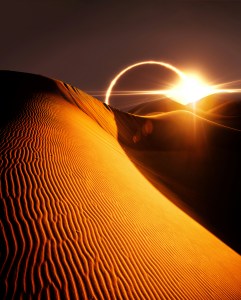
The Eclipse
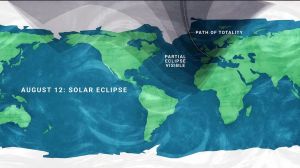
Parts of Western Europe will see a total eclipse, the first visible on mainland Europe in 27 years, but many other places on Earth will have at least a partial version. When and where can you see it? Here’s a look at the timing.
While totality will be visible from parts of Greenland, Iceland and Spain, millions more people across Europe will experience a dramatic partial solar eclipse. Whether you’re chasing the moon’s shadow in Reykjavik or watching the moon take a ‘bite’ out of the sun from London, Paris, or Berlin, timing is everything.
New York City will only see about 9% totality just before 2pm, for example, but if you happen to be in London at 7:13pm, well, 91% totality for you!
The project, entitled “The Prado in the light of the eclipse”, proposes a progressive transformation of the lighting applied to some of the most iconic paintings in the celebrated gallery. Through this shift in light, the video shows how small variations in illumination can radically alter the perception of colours, shapes and the atmosphere of the paintings, revealing details and nuances that everyday light leaves hidden.
That’s already a lot, and we haven’t even talked about meteors or other planets!
The day starts before the Sun comes up. On the morning of August 12, six planets — Jupiter, Mercury, Mars, Uranus, Saturn, and Neptune — will appear spread across the sky.
Do not expect a tight line of bright dots. This is a wide planetary alignment, stretching from the horizon across a large part of the sky. Mars and Saturn will be the easiest planets to spot with the naked eye. Mercury will sit low above the horizon shortly before sunrise. Jupiter will be bright, but very close to the horizon. Uranus and Neptune will need binoculars or a telescope.
Check the link above for times, but for me this would be just after 6am.
It’s going to be a pretty special day, astronomically speaking. Actually, I should have set up this post in terms of time (location dependent, of course!), like so:
early morning: planet parade
early afternoon: solar eclipse
evening: Perseid meteor shower!
If you have a few moments and clear sky, check it out. There’s a lot going on up there!
* * *
A map showing viewing areas of the August 2026 total solar eclipse. NASA/JPL-Caltech
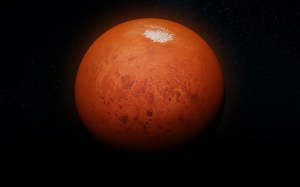
Created from thousands of images, the sequence begins with Mars as a small crescent in the distance. During close approach on May 15, the Red Planet’s cratered surface fills the imager instrument’s field of view. As the spacecraft departs Mars, the changing perspective reveals the planet’s icy south pole.
Want to learn more about the mission? Here’s an article from NASA:
One of the (many) great things about NASA is that the images it produces are public domain. What might a curious and creative person do with such imagery? Why, cut it together as a moon mission movie, of course!
“I have been completely spellbound by the images coming out of NASA’s Artemis II mission,” Boswell wrote on YouTube. “NASA / ESA deserves best cinematography at the Oscars! I dropped everything to put together a tribute to the mission, piecing together the best, highest resolution footage and mission photography with a custom eight-minute score.”
In case you could use a little space-based inspiration today. Thank you, John D. Boswell!
Today, I’d like to pay tribute to Wally Funk, one of the early pioneers in flight and one of the first women to train with NASA. She didn’t get to be an official astronaut in the end, but she could fly just about anything, trained thousands at her own flight school, and much more. She also made a suborbital flight via Blue Origin’s New Shepard ship in 2021, becoming the oldest woman to reach space at 82.
“I loved every minute of it. I just wish it had been longer.”
If you’re interested in the history of space, or women in space, or kick-ass ladies in general, I highly recommend the 2018 documentary Mercury 13 on Netflix.
Here’s to Wally’s example of determination, perseverance, and all-around excellence, and to finding ways to make dreams come true!
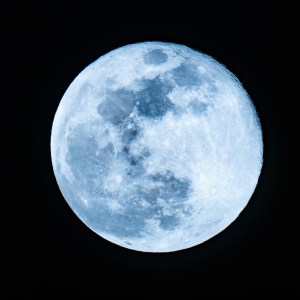
Tomorrow night is the second full moon of May, which makes it a blue moon. They are rare but not very, as they happen every two or three years. The next one won’t happen until December 2028.
People who step outside at the end of the month to catch a glimpse of the rare lunar event should also be able to spot Venus and Jupiter in the western sky about an hour after sunset. Meanwhile, early risers should be able to see Mars and Saturn in the eastern sky about an hour before daybreak.
I wanted to let you know a day ahead of time in case you, like me, like to have these things on your calendar!
Some space veterans seemed to find this scent quite pleasant. “It is hard to describe this smell; it is definitely not the olfactory equivalent of describing the palate sensations of some new food that ‘tastes like chicken.’
Yes, these are the things I find interesting about space. Not the math (with apologies to all my math teachers ever) or the physics (with apologies to all the classes I never took), but the lived experience.
When I’m thinking about a story and need to ground the reader, this sort of information is useful. What would it feel like, what would it taste like?
And to save you from tracking down one of the many (many) space-themed Artemis links I’ve put up over the past couple of days, you can watch tonight’s homecoming here starting at 6:30pm EDT!
Since my recent posts have spent a lot of time in space, let’s take a slight break from the nonfiction drama of NASA’s Artemis II mission and shift over to the fictional world of space adventure.
In his books, Andy Weir (The Martian) works hard to bring scientific accuracy to his fiction. The challenge is balancing the demands of a thrilling story with the science that grounds it in reality.
While “Project Hail Mary” has its share of explosions and catastrophes, it’s the thinking that’s thrilling. Grace and Rocky must come together, with tools and whiteboards, craft and ingenuity, to solve a seemingly insoluble problem. They make mistakes, but they learn from those mistakes and from each other.
… when I walked out of a recent preview screening of the film adaptation of Andy Weir’s 2021 science fiction novel Project Hail Mary, I had tears of joy in my eyes. The filmmakers had done justice not just to the original story, but also to the science at the heart of it.
From NASA, with lots of interesting subsidiary links:
Let NASA shed some light: Explore the resources below to learn the science facts fueling the science fiction.
(Wait, Tau Ceti was also featured in fiction by Isaac Asimov, Arthur C. Clarke, Frank Herbert, Robert Heinlein, Ursula K. Le Guin, and Kim Stanley Robinson? And was the setting for Barbarella? This planet gets around!)
The final assessment of the science? Not perfect, but good. And precisely accurate or not, this promises to be another very entertaining movie. (I’ve read the book but haven’t seen the film yet. Yes, I am a little behind the curve!)
Since we’re here, how about an article on the movie as a climate parable? (warning, spoilers!)
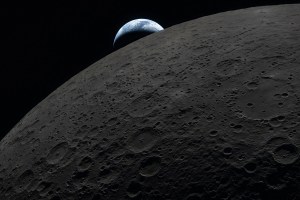
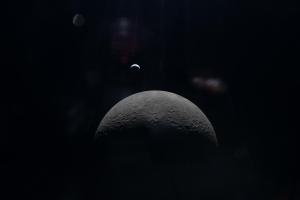
A quick update from the solar system’s coolest road trip: the Artemis II mission just set a new distance record, going farther into space than the Apollo 13 astronauts did in 1970.
“There was a moment about an hour ago where Mission Control Houston reoriented our spacecraft as the sun was setting behind the Earth. And I don’t know what we all expected to see at that moment, but you could see the entire globe, from pole to pole. You could see Africa, Europe, and if you looked really close, you could see the northern lights. It was the most spectacular moment, and it paused all four of us in our tracks.” — mission commander Reid Wiseman



You must be logged in to post a comment.