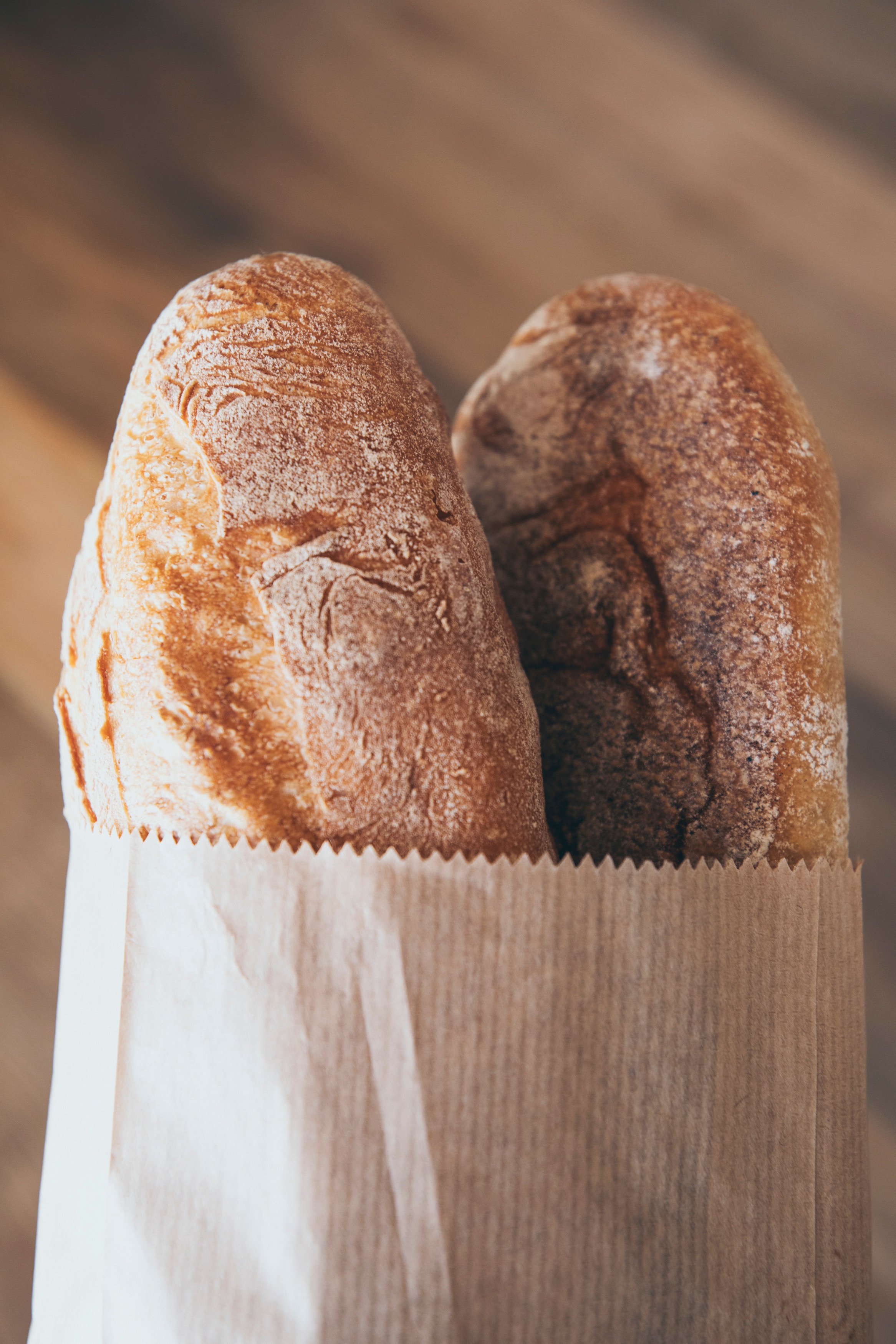
I have made sandwich loaves, no-knead bread, Swedish braids, cinnamon twists, lemon loaves, pound cake, blueberry lemon bread, banana bread, and many other kinds of bread in my time, but never baguettes.
After an enlightening conversation with S.M. Stirling about writing and baking, I was inspired to give it a shot.
Initial recipe: selected. I’ll likely test out a few more but this looked like a decent place to start.
/insert hold music of your choice
Results? Pretty good! The finished loaves aren’t quite as pretty/large/browned as I’d like and I have a list of process items to tweak, but the taste and texture were both excellent.
When my mother asked for Christmas ideas, I put bread pans on the list (I use these). Sure, I have two, I thought, but with four I could double the recipe and make bread half as often.
Thanks to pandemic scheduling, that Christmas dream came true this Easter:)
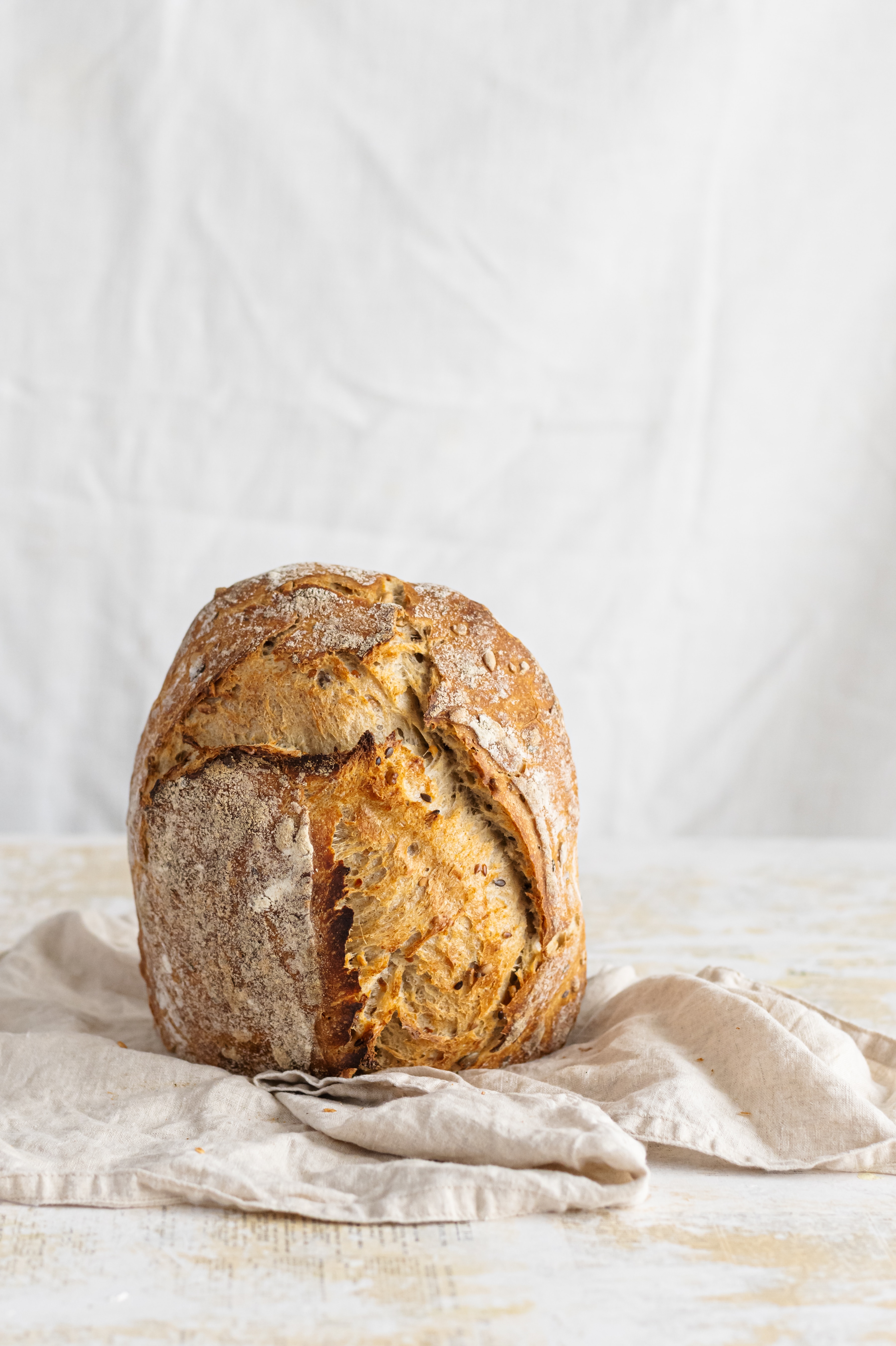
The pans were put to good use today (thanks, Mom!), and we are now the happy owners of four loaves currently cooling in the kitchen.
I doubled my standard recipe and it appears to be a success. Great news, not least because there were a couple of moments along the way where things could have gone off the rails.
First, the doubled amounts almost overwhelmed my 6-quart KitchenAid. It was a lot to mix. The good news is that the new batch of flour is performing better than last year’s flour, which needed (heh) twice the kneading time to build any gluten at all.
Second, and most dangerously/amusingly, I used new yeast. The dough rose beautifully but much faster than expected. The last batch took two hours for the first rise. I checked today’s batch after an hour and had to laugh. The dough was twice the size it should have been and the container’s lid was bulging up with the sort of vigor I expect from active volcanoes or chest-bursting aliens. Releasing the pressure was an exercise in risk management, but I got it done.
Of course, I also made minor adjustments to the process throughout. As one does.
So, fresh yeast, fresh flour, and a fresh take on an old recipe. And now it’s time to see what Mr Man thinks of the results!
My nephew has expressed an interest in learning how to cook. This makes me happy. In my experience, a person who can cook well and with an open heart is welcome anywhere.
Ladies and Gentlemen, we regret to announce that because this year’s annual Pi Day celebration falls on a Tuesday, it will have to be postponed. The good news is that pi is infinite. Any day can be Pi Day!
I will focus on pie at a later, more auspicious time. Until then, please enjoy both the mathematical concept and culinary reality of pi/e.
We’re having friends over for dinner for the first time in (what seems like) decades, and I’ve apparently forgotten everything I knew about giving a dinner party. So lots to do, but I did take the time to update my chocolate volcano recipe to metric.
Need a bite of encouragement? Ever wonder how gyoza are made, or how an architect might make it into the Michelin guide for his dumplings? All this and more, including dough “as tender as an earlobe” await your edification and enjoyment!
A young family member tried her first root beer float this past week. She preferred straight ice cream, in the end, but it got me thinking about the complex history of what appears to be a fairly simple treat.
From a societal standpoint, the road to such a dessert requires an understanding of the science of crystallization as well as carbonation, plus the ability to package and distribute the ingredients while maintaining temperature and freshness.
From an entrepreneurial perspective, who came up with the idea of merging frozen dessert with thirst-quenching beverage in the first place?
A lot of folks, it seems.
Meet the people who claim to have invented (some version of) this classic dish:
The full moon that night shined on the snow-capped Cow Mountain and reminded him of a scoop of vanilla ice cream. He hurried back to his bar and scooped a spoonful of ice cream into the children’s favorite flavor of soda, Myers Avenue Red Root Beer. After trying, he liked it and served it the very next day. It was an immediate hit.
Whether these somewhat fanciful stories reflect the full truth we can’t know. What we do know is that by the end of the nineteenth century, the U.S. was awash with ice cream floats.
* * *
Why so many instances of similar inventions, all around the same time? That takes us back to the bit about this particular creation being part of a complex system of social, technical and economic factors. Simultaneous invention happens all the time, with ideas big and small.
The history of science is full of ideas that several people had at the same time.
So don’t worry that your idea for a vampire story or cake recipe or video game or mousetrap has already been done. The world needs new creations, and new versions of old inventions, all the time. Learn from what’s gone before, of course, but if a project captures your attention, pursue it.
It hasn’t been done your way. And your way may be exactly what the world needs right now.
* * *
The purple cow (with grape juice and vanilla ice cream) has always been my favorite. Photo by Ryan Song on Unsplash








You must be logged in to post a comment.