Feeds:
Posts
Comments

Archive for the ‘Science!’ Category

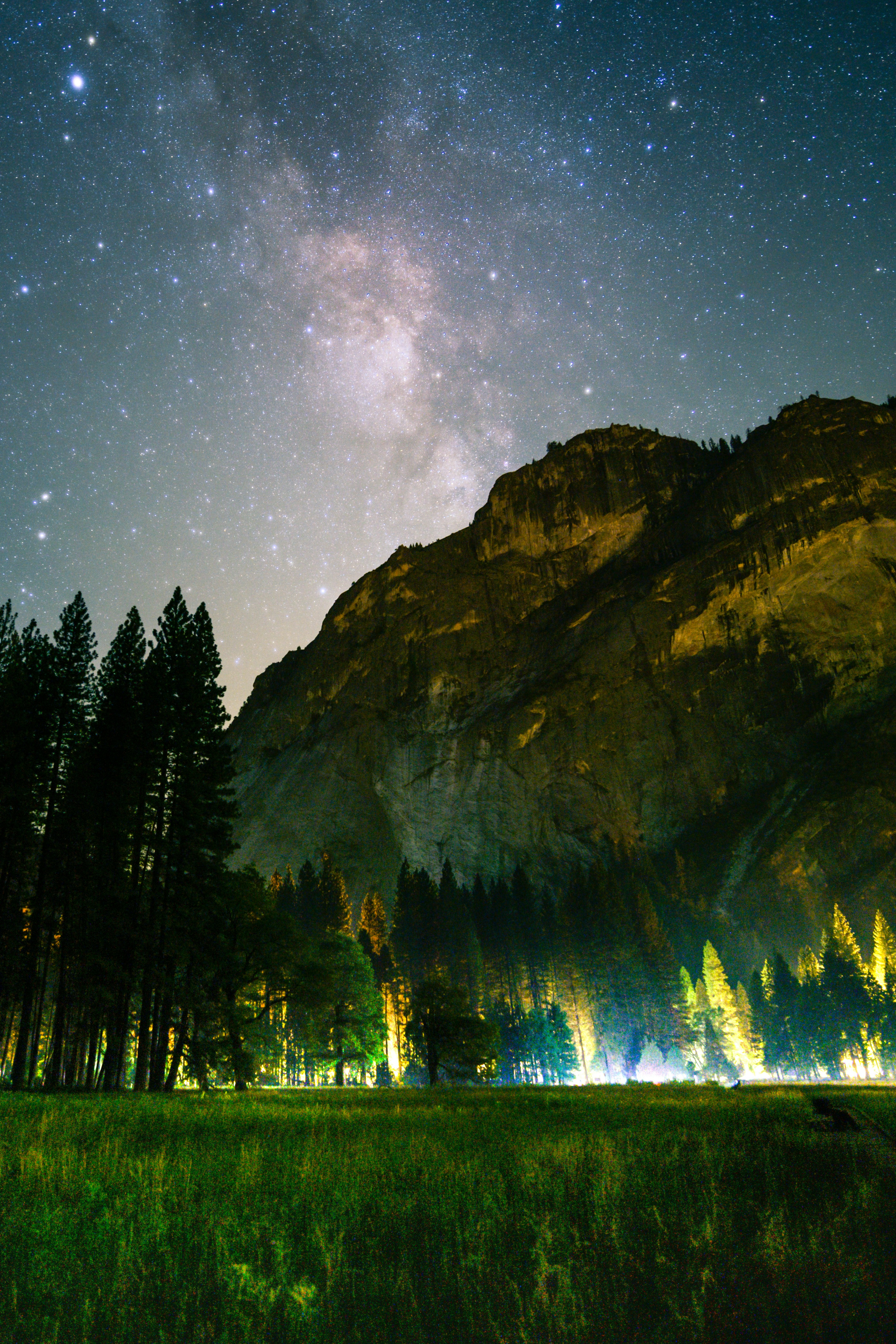
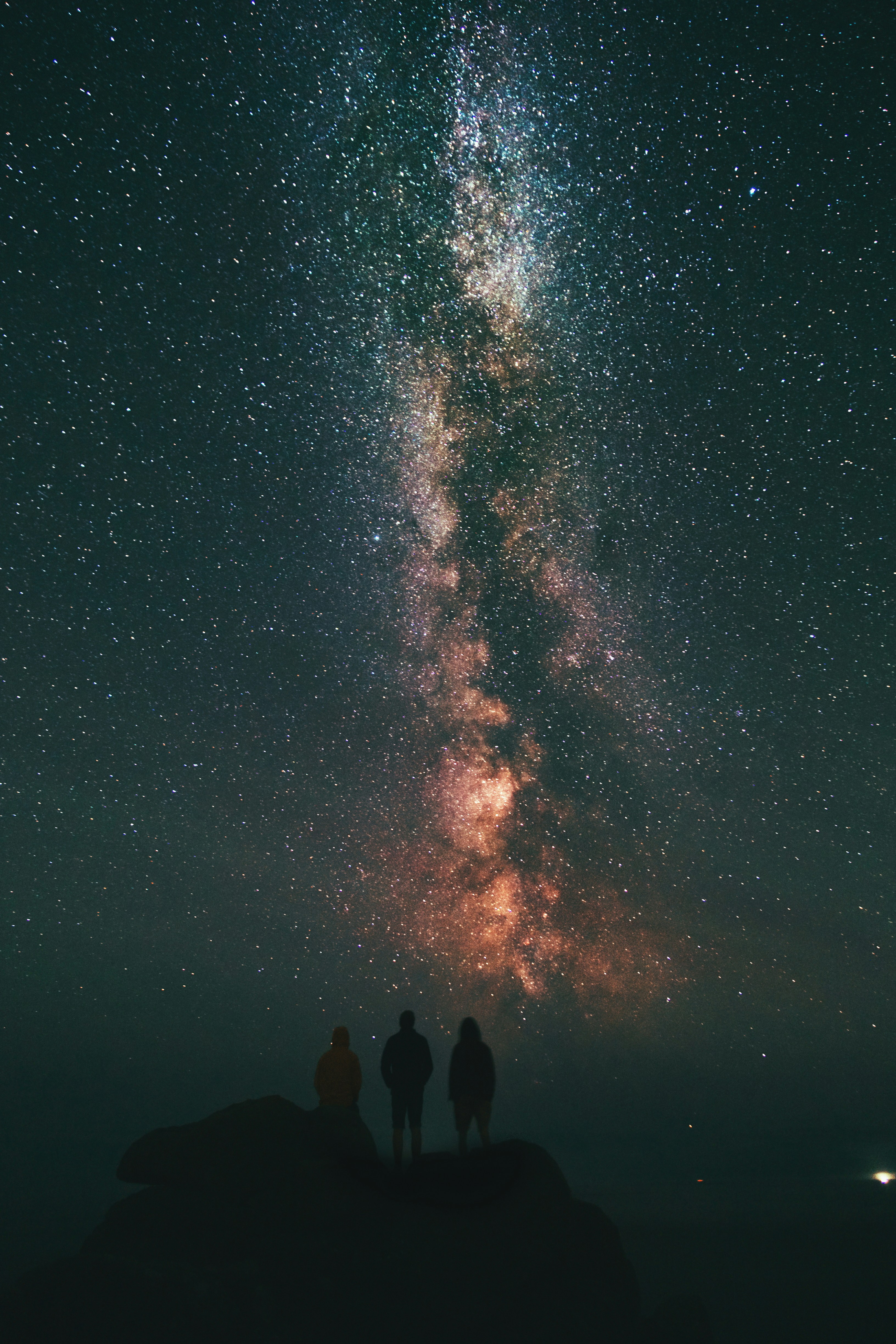
If you’re the sort of person who enjoys looking up, you might like this list of September skywatching tips from NASA.

What’s on the roster? Another supermoon, a partial lunar eclipse, Saturn doing its ring thing, and something called International Observe the Moon Night, plus more more more.

Check out the article or watch the video here:

Have fun!

* * *

Photo by Jordan Steranka on Unsplash

Read Full Post »

It’s Tuesday (ugh) and it’s practically a Monday thanks to the holiday weekend and I’ve been thinking about Nature thanks to our recent museum visit, so let’s get a little weird, shall we?

Welcome to the University of Glasgow’s Wellcome Centre for Integrative Parasitology!

What’s this, you may ask? A serious science center (excuse me, centre) with a public engagement arm so dedicated and creative that they turned parasites into a comic book? And when the first issue became a surprise hit, went on to produce a five-part series about some of the world’s most impactful parasites?

Yes, that is exactly what I’m saying.

You’re wellcome.*

* Heh, see what I did there. Yeaahhh, because it’s that kind of day:)

* * *

Photo by João Pedro Schmitz on Unsplash

Read Full Post »

The Canadian Museum of Nature is situated in Ottawa’s Victoria Memorial Museum Building, a giant stone edifice built over a hundred years ago. Its mosaic tile floors, carved wooden bannisters and stained glass windows provide a lovely backdrop for exhibits old and new. 

Can’t go in person? Here’s a brief video tour:

We started at the top, in a temporary exhibit on insects. Some icky, yes, but the longevity, creativity and adaptability of that class of creatures is fascinating. 

Next stop wolves, then the Arctic, then Earth, Mammals, Water, Birds and finally, Dinosaurs.

The fossils throughout were impressive. Giant whale? Check. A complete Daspletosaurus torosus (a cousin of T. rex) skeleton? Check! 

A bit of fun from a Museum palaeobiologist:

I also picked up a box of Canadian rocks to remember the beauty and complexity of the geology beneath our feet.

Example rocks include rose quartz, quartz crystal, bornite, amazonite, sodalite, pyrite, amethyst, hematite, copper, labradorite, jade, rhodonite and fluorite. Lovely.

And in the floor of the Fossil Gallery, an embedded spiral* shows the extent of geological history as we know it, complete with a tiny section at the end for the Cenozoic era, age of mammals, with an even smaller epoch at the end featuring the rise of humanity.

* I should have taken a picture of this but did not, and can’t find a picture of it online. Here’s a different version to give you an idea. 

Jarred C Lloyd, CC BY 4.0, via Wikimedia Commons

This is why I love history in general, and museums in particular. On the one hand, a long-term perspective is very good at making one feel small, but on the other hand, there is real joy in knowing that you are a part of something so very big.

The experience was both humbling and delightful.

* * *

The aforementioned spiral is at the feet of this fine fellow. D. Gordon E. Robertson, CC BY-SA 3.0 via Wikimedia Commons

Read Full Post »

Here’s an interesting puzzle: How Do You Send a Warning 1,000 Years into the Future? – Now I Know

Think back to what the Earth was like a thousand years ago — the year 1,015. Almost everything would be foreign to modern eyes and ears — even the language would be incomprehensible. For all intents and purposes, humanity from a millennium ago may as well be an alien species (culturally, at least) with similar DNA, which simply happens to have lived on the same planet we do now.

How do we communicate with people so far removed from our own language, culture, and assumptions? It’s a great question, whether you’re thinking about the safest approach to nuclear waste disposal or contacting aliens.

In order to keep the people of the future safe from the radioactive goop created today, we need a way to tell them to watch out. And more likely than not, very few aspects of today’s society will be around to do that. Even a sign warning travelers of potential dangers would be insufficient — who among us could translate runes from the Middle Ages?

(My mom, that’s who, but point taken.)

What particularly interests me about these proposed solutions (an Atomic Priesthood dedicated to perpetuating knowledge through myth? color-changing cats?!) is that they seem to have skipped over the most obvious approach. How to conjure the fear of death, to warn people away, and to alert the future not to what is there, but what will happen if it is disturbed?*

This is a plague panel from the early 17th century. If you saw this on a house, would you go in or turn and run the other way?

Deutsches Historisches Museum Berlin, Public domain, via Wikimedia Commons

In the end, the U.S. Department of Energy plan opted to go with warning signs in multiple languages illustrated with images of people in pain. Still, I wondered, what’s wrong with the classics?

Another odd writer thought, brought to you by an odd writer.

* Also, the real problem seems to be the gap between exposure and untimely demise. If you break into a tomb and die immediately, that sends a pretty strong message. And no one has to tell people not to build on an active lava flow, but a peaceful-looking mountain with fertile soil close to the bustling port of Naples and the dynamic town of Pompeii (circa 78 AD)? What’s not to like?

* * *

Photo by chris robert on Unsplash

Read Full Post »

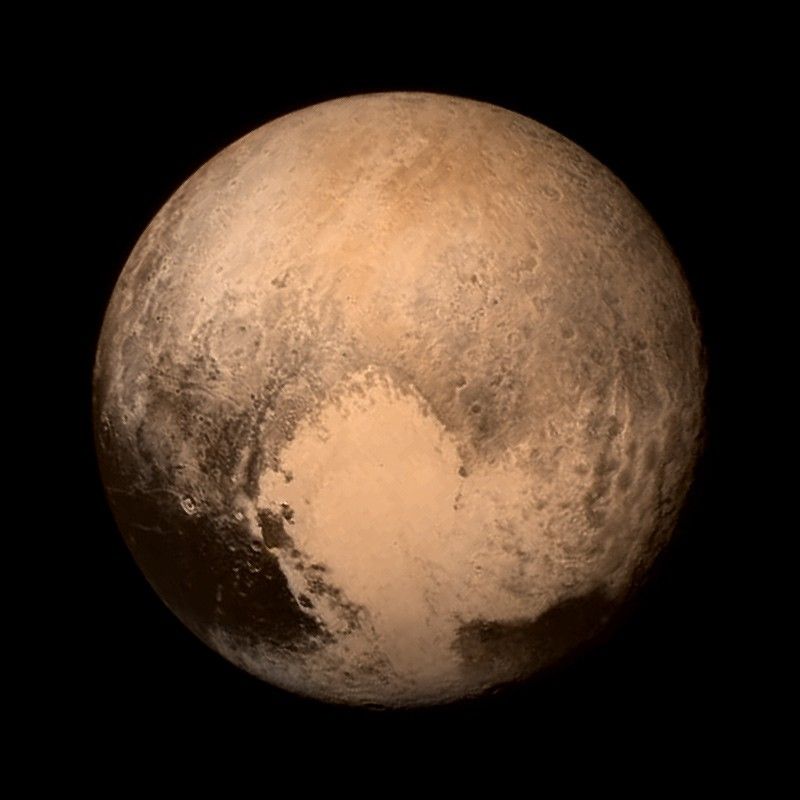
Moon (Part 1)

Last night there was a dramatic super blue moon. If you missed it, try looking up tonight, it should seem almost as impressive. 

Supermoon Blue Moon 2024 — Top photos from around the world | Space

And if clouds or smoke block your view, not to worry! The next three full moons will be super, too.

* * *

Photo by Igor Omilaev on Unsplash

Read Full Post »

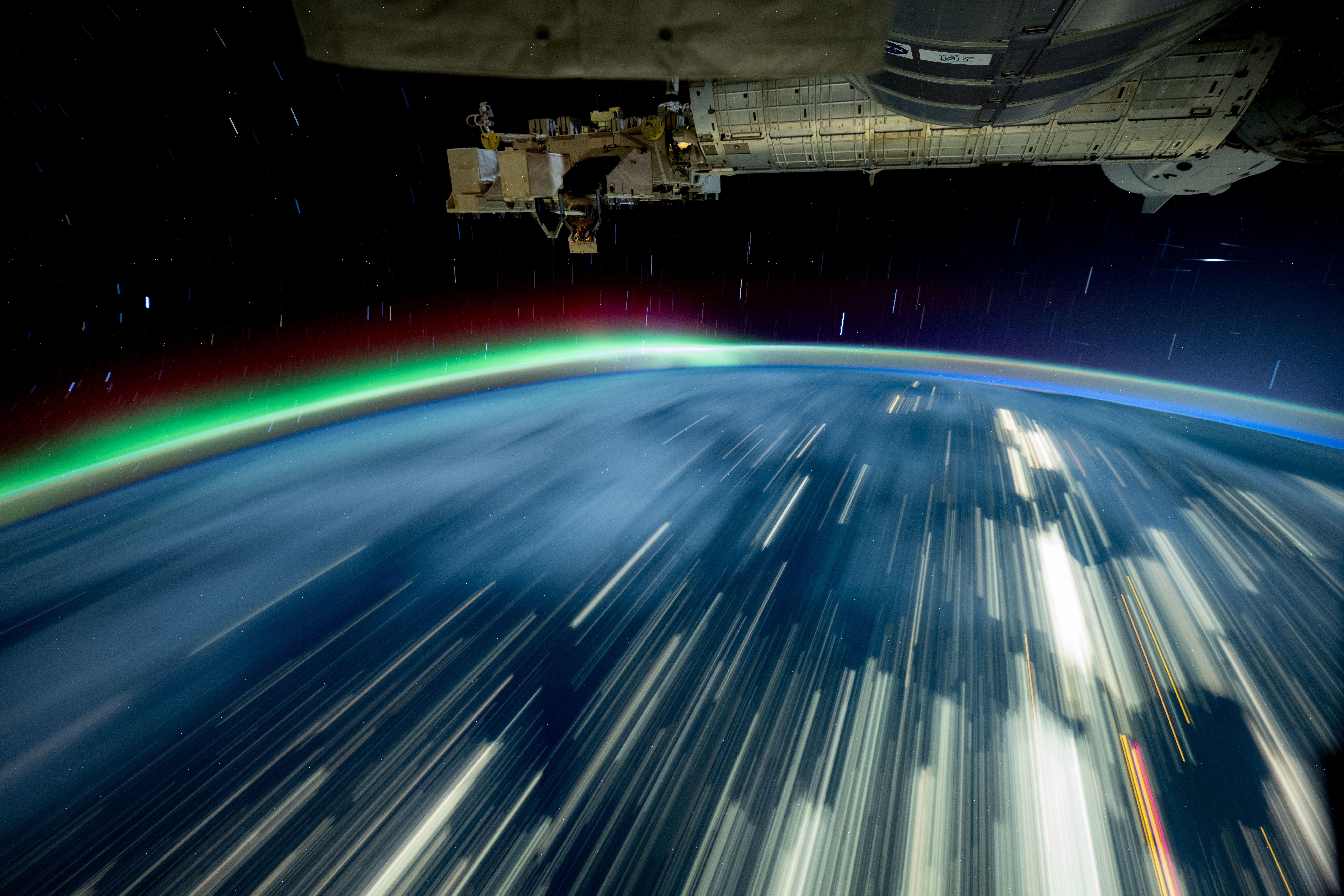
The folder where I keep post ideas is filling up with space stories. Many of them are about Mars, but let’s start with something a little closer to home and go more than 250 miles above Earth to the International Space Station.

NASA’s site has lots of info and fun facts like these.

Did you know that the ISS has been continuously occupied since November 2000? That you can track its position live? Or that the station’s live/work space is larger than a six-bedroom house? 

View from NASA spacewalker Thomas Marshburn’s camera via Flickr

Sounds like the place is downright homey. And that’s a good thing, as Butch Wilmore and Suni Williams, the two astronauts who have been stuck at the ISS due to problems with Boeing’s Starliner spacecraft, will no doubt attest.

How Two Stranded Astronauts Are Camping Out in Space | TIME

Williams’ and Wilmore’s short stay may now not be over until February—stretching an eight-day mission to an eight-month one….

Initially, they were to spend most of their eight days aloft working in the Starliner—checking its communications, life support, power, and other systems. But they long since finished up that checklist and have instead been assisting the rest of the crew with science experiments and maintenance chores, including such unglamorous work as repairing a urine processing pump.

That sounds super fun (actually, it kind of does), but it’s not all work up there. Are they staring out the viewport at Earth, pointing out their house sixteen times a day? Competing in the Space Olympics? (Not a thing, as far as I know, but astronauts do have to exercise two hours a day to maintain muscle mass and general health.) Have they used their spare time to compose a space-themed version of the Gilligan’s Island theme song? (Did I ask AI to do this? Maaaaaybe. But if I did, it wasn’t very good.)

Speaking of television, perhaps they’re catching up on their favorite shows. Did you know that astronauts can binge-watch just like the rest of us?

Every TV Show Astronauts Can Watch on the ISS Right Now

There are, of course, space-themed shows like Hulu’s The First with Sean Penn from 2018, the critically acclaimed alt-history drama For All Mankind, and the Trump-era comedy Space Force. Other new series include Book of Bobba FettThe Crown, and the cooking show Chopped. Other sci-fi series include AndorStar Trek DiscoveryFirefly, and Battlestar Galactica

Still no word on who gets to hold the remote.

* * *

Photo by Jared Allen on Unsplash

Read Full Post »

I’m reading a nonfiction book that is fascinating, detailed and (so far, at least) very well written. My favorite sentence from the bit I read at lunch is this perfect illustration of how to set the tone as well as the stage:

The lighting is subtle, the decor an elegant symphony of beige.

— Gretchen Bakke, The Grid: The Fraying Wires Between Americans and Our Energy Future

Can’t wait to read the rest!

* * *

Photo by Photoholgic on Unsplash

Read Full Post »

It’s Monday and my day job brain is a little tired. So why not take a little time to stretch my mind in other ways, like listening to a couple of cool dudes chat about a nice light topic… like controversies in quantum mechanics;)

Neil deGrasse Tyson and Sean Carroll Discuss Controversies in Quantum Mechanics

(We’re also watching 3 Body Problem, the series based on Liu Cixin’s award-winning novel, so it’s maybe kind of like semi-related big brain study material?)

Yeah, I don’t understand most of this at a deep level but I really like that there are other humans on this planet who do.

* * *

Speaking of science, this is also an excellent opportunity to celebrate a new blog by scientist, award-winning author and friend Arthur H. Manners. He is currently working on The Sci-Fi Writer’s Guide to Reality, a series with the goal of helping SF writers understand the fundamentals of science.

I love this idea so much. One great session at last year’s Writers of the Future workshop was given by Dr. Beatrice Kondo. It was Day 6 of a long week. Many of us were half asleep, until the good doctor started talking in a serious, straightforward way about what it would take to make some of the crazy stuff in our heads work in real life. Really terrific stuff.

Writers & Illustrators of the Future Workshop Week 2023 – Day 6

Kondo talked the writers through the science of several common writing scenarios. Why can a submarine only travel at certain speeds underwater? What would happen to someone’s body if they tried to lift a car? How do exoskeletons work?

Then she touched on tissue engineering, stem cells, 3D bio-printing, breathing underwater, genetic engineering, and whether human wings or human photosynthesis would actually work.

Chatting after the session, a lot of the writers expressed a desire for a collection of introductory information on various scientific topics. Not a thick textbook for students of the field, but the sort of material one might need to both ground a story and to better imagine the possibilities of those topics.

I am so happy to see that Arthur has taken up this challenge. 

New Release: Writing About Remote Sensing in Sci-Fi – Arthur H. Manners

I’ve just finished the first 6-part primer in my new blog called the Sci-fi Writer’s Guide to Reality. The blog aims to help science fiction writers with the fundamentals of science. The first primer focuses on remote sensing (the act of trying to determine what’s going on over there, i.e., at a distance, through means other than physical contact). This topic is rich and essential to many aspects of science fiction, from spaceship sensors to astronomical observations.

Yes, please!

Here’s the first installment of his six-part primer on remote sensing: 

Sci-fi Primers- Remote Sensing – Part 1

Ensign: “Captain, the long-range scanners indicate that the aliens’ blood-type is O-negative.”

Captain: “My God… Universal donors. What else is on the scanners?”

Ensign: “That the aliens think Star Wars Episodes Seven through Nine were the best.”

Captain: “Monsters! Arm the photon torpedoes!”

So if you’re wondering how remote sensing works, what is handwavium (official writer terminology alert!), and what crosses the boundaries between science and magic, check out this guide: 

Sci-fi Primers- Remote Sensing – Part 1

Sci-fi Primers- Remote Sensing – Part 2

Sci-fi Primers- Remote Sensing – Part 3

Sci-fi Primers- Remote Sensing – Part 4

Sci-fi Primers- Remote Sensing – Part 5

Sci-fi Primers- Remote Sensing – Part 6

Go, science!

* * *

Real magic. Photo by Ahmed Nishaath on Unsplash

Read Full Post »

On this hot day, here’s a little chill.

Relax to Mesmerizing Aerial Views of Iceland’s ‘Glacial Flour’ Pulsing Through Waterways — Colossal

As glaciers expand and recede, they have the capacity to grind rock so fine that geologists refer to the pulverized material as glacial flour. It slips down rivers and into lakes, carrying the otherworldly turquoise hue through a unique and resilient ecosystem. In Iceland, the blue-green color is complemented by rivers that flow yellow, thanks to sulfur from nearby volcanoes, or red from dissolved ferrous iron—also known as bog iron. Coursing over rock and black sand, the streams take on dazzling, rhythmic patterns.

* * *

Photo by USGS on Unsplash

Read Full Post »

For those of you who enjoy time travel, thought exercises, physics, Doctor Who, or just hate bad time travel concepts (me!), here’s a fun and informative article.

The invisible dangers of travelling through time

The mishaps caused by time travellers exploring the past are a staple of science fiction. But what does physics think?

* * *

Photo by Andy Beales on Unsplash

Read Full Post »

« Newer Posts - Older Posts »