Feeds:
Posts
Comments

Archive for the ‘Science!’ Category

I didn’t get everything done today that I’d planned. I did make apple pie, though, and that’s not nothing.

“If you wish to make an apple pie from scratch, you must first invent the universe.”

― Carl Sagan

* * *

Photo by Andy Chilton on Unsplash

Read Full Post »

Do you love Tuesdays? Want to get a head start on tomorrow? (Or hate Tuesdays and want something to make tomorrow better? Yeah, that’s more me, I’m afraid.) Or perhaps you’re just looking for an excuse to stay up late, you know, For Science? You are in luck!

A total eclipse happens this week, and it will be the last one for 3 years : NPR

The initial phase of the eclipse begins at 3:02 a.m. ET, according to NASA. The partial eclipse then begins at 4:09 a.m. ET, when to the naked eye, it looks like a bite is being taken out of the moon. The lunar disk enters totality at 5:17 a.m. ET and will last for about an hour and a half.

Want more science? Check out NASA’s page on this eclipse: What You Need to Know About the Lunar Eclipse – Moon: NASA Science.

One of my relatives is very much a night owl, so she will have no trouble catching this. The rest of us might have to set our alarms (or, let’s be honest, check out the video tomorrow; no shame either way!).

Enjoy!

* * *

Photo by Vincenzo Malagoli on Unsplash

Read Full Post »

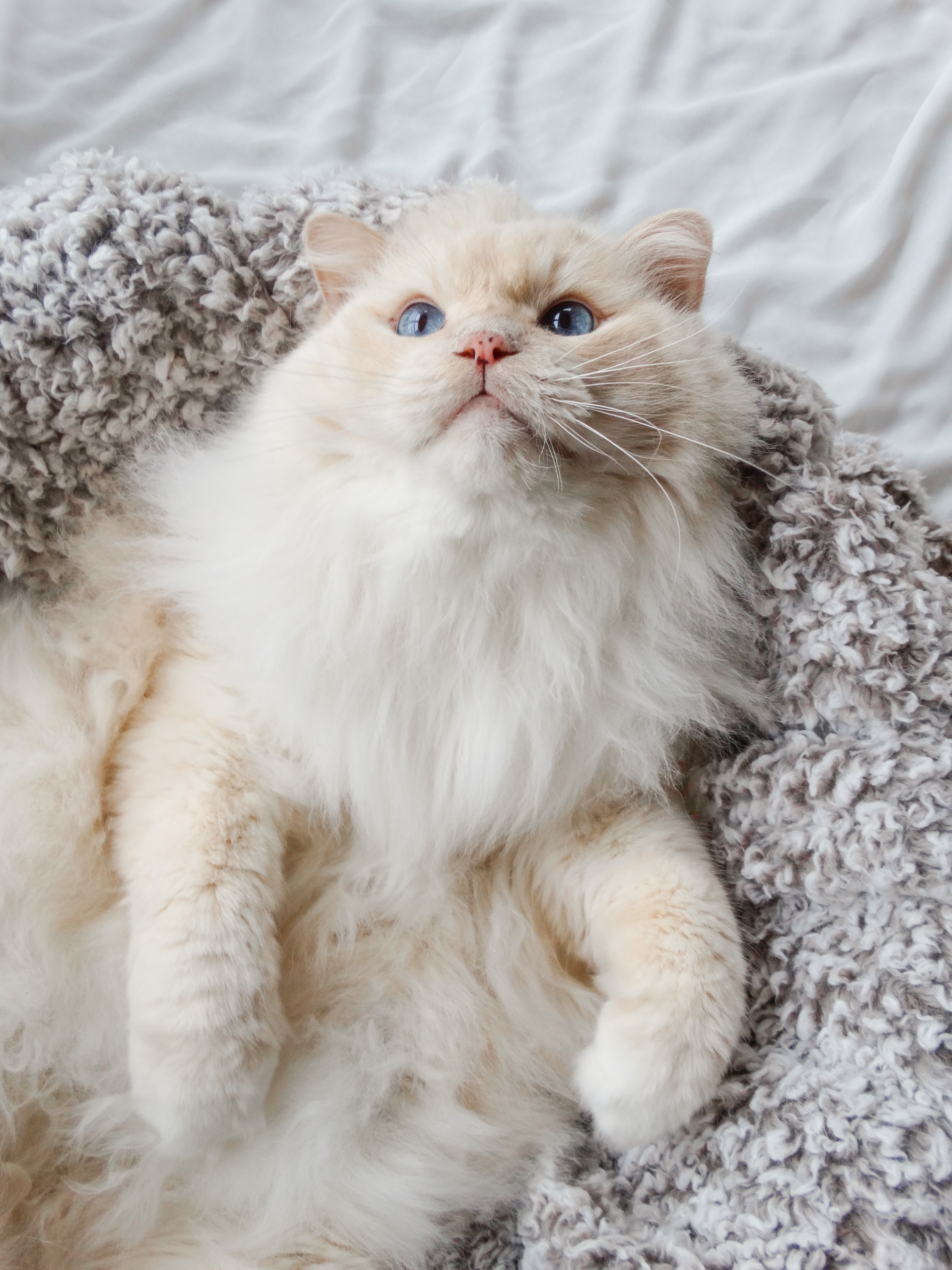
Thanks to a short night and a long workday I’m feeling sluggish. The cat is helping by following me around and randomly flopping onto his side, then purring up a storm. It’s adorable and quite soothing, the perfect foil to an otherwise deeply average day.

But what if you don’t have a cat, or the cat you do have is severely lacking in chill? Never fear! The internet is here to help.

* * *

Photo by Gaelle Marcel on Unsplash

Read Full Post »

Never discount yourself. If you don’t go after a dream or a goal and if you don’t try, you’re never going to make it.

— Nicole Mann, NASA Crew-5 commander, Marine Corps pilot and the first Native American woman to go to space (NPR)

* * *

Photo by Linus Sandvide on Unsplash

Read Full Post »

It’s migration season and millions of birds are, right now, flooding the skies. I grew up noticing flocks of geese arrowing their way south but migration is much more than that.

According to BirdCast’s tool, 347 million birds are predicted to be on the move across the US tonight.

For those of us in other Western hemisphere locales, this site beautifully illustrates the interconnected flow of birds by type and pathway. 

Bird Migration Explorer

A quick search of my area shows the paths of eagles, thrushes, gulls, woodcocks, owls, scoters (had to look that one up), whip-poor-wills, hawks, sandpipers, warblers and more.

* * *

I’ve written about bird migration before but this post has a more specific call to action. Nothing too hard, just a polite request: for the few weeks when migration is at its peak, dim your lights if you can.

Opinion | Lights Out, America! (Songbirds Are Counting on Us.) – The New York Times

Migrating birds are vulnerable to many hazards: predators, extreme weather, insufficient food and insufficient water. Glass is particularly treacherous. Expanses of glass — windows without mullions, storm doors, skyscrapers — are the worst.

Good news? When it comes to lighting and windows, there’s usually an easy fix.*

I’ve tried the UV stickers designed to show birds where not to fly but they were just so-so.

Remember those little gold stars teachers sometimes give out? I picked up a batch and have used them to give the patio doors “Bird-friendliest glass in the neighborhood” awards. The upside is that these stars are cheap and easy to replace. The downside is that they are made of paper and, while they last a surprisingly long time considering, they are still just paper. I’ve had to replace them at least once a season.

This year I upgraded to purpose-built stickers designed both for birds and the great outdoors. This is the company I used but I’m sure there are others (no affiliation, just a satisfied customer): Feather Friendly.

Easy, satisfying, and one step toward being a better neighbor to nature.

At our best as a species, this is what we do: We change our ways to protect others, and then we adjust to the new ways. Soon, we can’t remember doing things differently.

Margaret Renkl

* For more about this problem and potential fixes, including Lights Out programs and building guidelines, check out What You Should Know About Bird Migration and Light Pollution and Bird-Safe Design Guidelines.

* * *

Photo by Michael Krahn on Unsplash

Read Full Post »

Earth Smash!

Way to go, NASA, you did good!

NASA’s DART mission successfully crashes spacecraft into asteroid

It was a cosmic smash-up watched around the world.

* * *

Sorry not sorry! (Image credit: NASA/JHUAPL)

Read Full Post »

The winds are cooler, the rains no longer soft. Bird feeders empty faster and the flowers look defiant rather than content.

I love summer, of course, but there’s something special about a hot bowl of soup and a warm blanket and crisp blue days and brightly colored leaves.

It’s a wonderful time of year for just about anything, but especially for taking stock and making plans.

Welcome to Fall.

Autumn equinox is the first day of fall. How is that different from a solstice? : NPR

Fall starts at 9 p.m. ET Thursday, a day officially known as the autumn equinox.

* * *

Twilight Surprise

The sky burns down,
A rim of coals glowing gold and red,
Limned with orange again
And kissed with hints of pink.
The clouds reflect tangerine and plum,
Overshadowing the silent glory.
Darkness and light,
Balanced upon this equinox,
Dance together like old lovers …
… and beget beauty.

― Elizabeth Barrette, From Nature’s Patient Hands

* * *

Photo by Samuel Ferrara on Unsplash

Read Full Post »

And now, a brief promo for Canada’s national animal.

An unlikely ally in the face of wildfires and droughts: the humble beaver

In the face of increasing wildfires and droughts, scientists are looking to a highly skilled “environmental engineer” to help fight climate change: the industrious beaver.

* * *

Photo by Tim Umphreys on Unsplash

Read Full Post »

I’ve always enjoyed Mary Roach’s science writing (especially Packing for Mars: The Curious Science of Life in the Void and Gulp: Adventures on the Alimentary Canal). I also have family in Colorado, spent many of my formative mountain-biking and blueberry-picking years trying not to encounter bears*, and passed a conservation truck with a (reassuringly sturdy) bear cage in the back just the other day. 

All of this means that Roach’s essay caught my attention, and so today’s fun bit of reading is about the perils, and promise, of life with bears. It’s an excerpt from her latest book, Fuzz: When Nature Breaks the Law.

Black bears are back and in your back yard | New Scientist

With a growing percentage of Fat Alberts, will coexistence eventually become a possibility? Or even a policy? Could we live with bears in the backyard the way we live with raccoons and skunks?

* I grew up around black bears like those in this article. Large and potentially dangerous, sure (the rule was never get between a bear and her cub, because yeah, just no), but they’re not grizzlies or polar bears. They can be a very different kind of story. (One that starts with “nom” and ends with… you may not be around for the end.)

* * *

Would you be this chill with all those mosquitoes on you? I would not. Photo by John Thomas on Unsplash

Read Full Post »

You may have heard that NASA scrubbed the Artemis moon launch for technical reasons. The good news is that the launch will be rescheduled. 

NASA could again try to launch Artemis moon mission as soon as late September : NPR

Until then, we wait.

Why Is NASA’s Hold Music So Catchy? – The Atlantic

* * *

Photo by Arno Senoner on Unsplash

Read Full Post »

« Newer Posts - Older Posts »