Feeds:
Posts
Comments

Archive for the ‘Science!’ Category

For those of us in the Northern Hemisphere, today marks the shortest day of the year.

December Solstice

The December solstice is the moment the Sun is directly above the Tropic of Capricorn in the Southern Hemisphere. This is the southernmost latitude it reaches during the year. After the solstice, it begins moving north again.

Today is also technically the start of winter, although the fifteen inches of snow in our front yard this past week would beg to differ.

Between that and predictions of another big storm in the offing, it’s no wonder Santa is so determined to make his annual road trip.

* * *

Photo by Tatiana Colhoun on Unsplash

Read Full Post »

This year was a bumper one for our neighborhood rabbits. We had a lot of babies running around during the warmer months, and still have at least a few adults. One has been acting a little extra lately, sprinting by the porch and across the street rather than sauntering as it did this summer. He seems to be trying to minimize the amount of time he and his brown fur spend exposed over snow-covered ground. Sensible, as we still have a few stray cats and other predators in the area.

Which led me to ask, “How does a rabbit know what color it is?”

* * *

The opposite of this. Photo by Andy Brunner on Unsplash

Read Full Post »

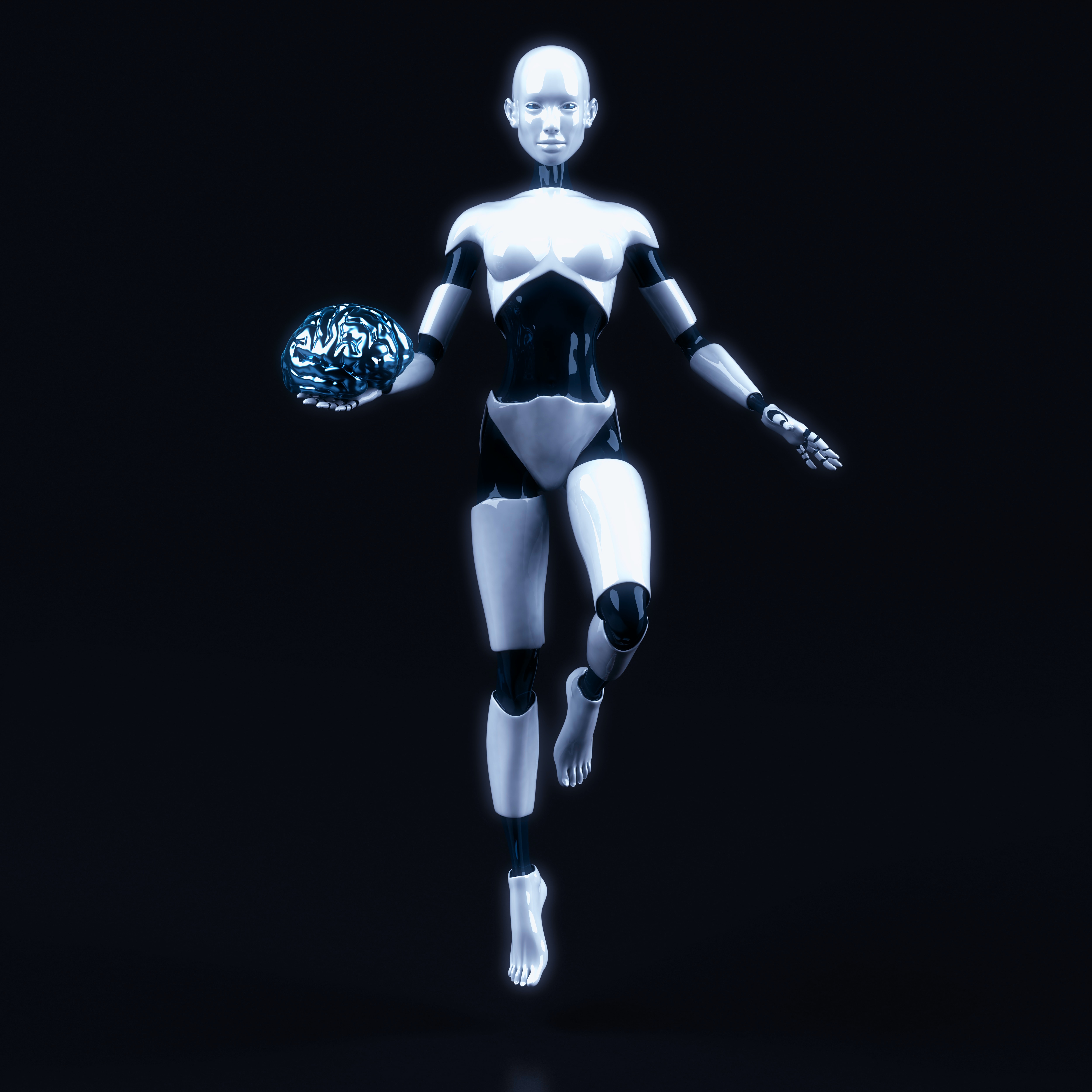
/for those not interested in new technology, the influence of that technology on writing, or our future overlords’ feelings about cat names and other topics, avert your eyes!

You may have seen recent discussions on ChatGPT, the new AI chat bot blazing its way across the internet.

We gave ChatGPT a college-level microbiology quiz. It aced it. – Big Think

I resisted for a few days and then gave in. Is it as good as they say? In my (admittedly limited experience), yes and no. Here are a few examples.

* * *

I’ve written about AI-assisted writing before, but the models are getting markedly better. There are still hiccups like getting stuck mid-list due to an odd love for the word “Catrick” (on the way to “List the top one hundred humorous names for a cat” which, let’s face it, should be AI 101). “Catrick Stewart” yes, “Catrick Eddie Vedder” maybe not so much.

Other jobs it did quite well.

Need a “six-paragraph blog post explaining space elevators”? ChatGPT has you covered:

A space elevator is a hypothetical structure that would allow vehicles to travel from the surface of the Earth to outer space. The concept of a space elevator was first proposed by the Russian scientist Konstantin Tsiolkovsky in 1895, and has been explored in various forms by scientists and engineers over the years.

The basic idea behind a space elevator is to have a cable or tether anchored to the surface of the Earth and extending into space. This tether would be attached to a stationary platform, known as a counterweight, at the outer end. Vehicles, such as spacecraft, would then be able to travel up and down the tether, using electric motors to climb or descend as needed.

The main advantage of a space elevator over traditional rocket-based launch systems is that it would allow for much cheaper and more efficient access to space. Rockets require a large amount of fuel to lift off from the Earth’s surface and overcome the planet’s gravitational pull. A space elevator, on the other hand, would essentially be “riding” the Earth’s rotation to reach space, using a fraction of the energy required by a rocket.

However, there are several challenges to building a space elevator. One major challenge is the material that would be used for the tether. The tether would need to be incredibly strong and lightweight, as it would need to be able to withstand the enormous forces exerted on it by the Earth’s rotation and the weight of vehicles traveling along it. Additionally, the tether would need to be able to withstand the extreme temperatures and radiation found in space.

Another challenge is the cost and feasibility of constructing such a massive structure. The tether would need to extend all the way into space, potentially reaching an altitude of more than 20,000 miles. Building and maintaining such a structure would be a massive undertaking, requiring significant financial and technological resources.

Despite these challenges, the concept of a space elevator continues to be explored and studied by scientists and engineers. Some believe that the development of new materials, such as carbon nanotubes, could make the construction of a space elevator possible in the future. Until then, however, the dream of a space elevator remains just that – a dream.

― ChatGPT

Or perhaps you need “a blog post about interesting events in today’s history with a little humor”?

Today in history, we commemorate some truly fascinating events! For example, did you know that on this day in 1872, the world’s first international football match was played between Scotland and England? It ended in a 0-0 tie, but it was a historic moment for the sport and for Anglo-Scottish relations.

But that’s not all! On this day in 1859, the first professional football game was played in the United States. And in 1922, the tomb of King Tutankhamun was discovered, sparking a renewed interest in ancient Egyptian history and culture.

But it’s not all serious business today. On this day in 1823, the first ever Christmas Eve office party was held in New York City. And in 1965, the first ever Yule Log was broadcast on television, providing a cozy and festive atmosphere for viewers at home.

So as you can see, there’s a lot to celebrate today! Whether you’re a sports fan, a history buff, or just looking to party, there’s something for everyone in today’s historical events. So let’s raise a glass and toast to another year of interesting and memorable moments in history!”?

― ChatGPT

But if you want “a hundred word story about a talking cat”? The results were perhaps less useful:

The talking cat was a curious creature. She would sit by the window for hours, watching the world go by and musing about the strange habits of humans. She had many questions, but no one to answer them. That is, until she met the little girl who lived next door. The girl was just as curious as the cat, and the two of them quickly became fast friends. They would spend their days together, the cat sharing her wisdom and the girl listening with rapt attention. And as the girl grew older, the cat was always there to offer guidance and support. They were an unlikely pair, but they were the best of friends.

― ChatGPT

And it completely choked on a few requests, like “write a poem where the last word in every line is a palindrome” (it ignored the palindrome request and just wrote a poem, same when anagrams were tested) and “What did Robert Heinlein say about signs of social change?”

I’m sorry, I am not able to browse the internet, so I cannot provide information on what Robert Heinlein may have said about signs of social change. As a large language model trained by OpenAI, my knowledge is based on the text that has been input into my training data, which has a cutoff date of 2021. I do not have the ability to browse the internet or access new information.

― ChatGPT

* * *

As you can see, it also makes the production of a lot of text possible in a very short period of time. I have some ideas but finding ways to make it useful for fiction is still a work in progress, I think.

Although it did help me with ideas for dinner.

Mars Dinner Recipe

Ingredients:

  • 2 cups dehydrated mashed potatoes
  • 1 cup dehydrated mixed vegetables (peas, carrots, corn)
  • 1 cup dehydrated beef or chicken
  • 1 tablespoon dehydrated onion
  • 1 tablespoon dehydrated garlic
  • 1 tablespoon olive oil
  • Salt and pepper to taste

Instructions:

• In a small pot, combine the mashed potatoes, mixed vegetables, beef or chicken, onion, and garlic. Add enough water to cover the ingredients, and stir to combine.

• Place the pot over a portable stove or heat source, and bring the mixture to a boil.

• Reduce the heat to low, and let the mixture simmer for 10-15 minutes, or until the meat and vegetables are fully rehydrated and the potatoes are soft.

• Stir in the olive oil, and season with salt and pepper to taste.

• Serve hot and enjoy your dinner on Mars!

* * *

Photo by ThisisEngineering RAEng on Unsplash

Read Full Post »

Today has been all about dealing with tech issues. Along those lines:

Watch an egg fall from near space...

A former NASA engineer and now-YouTuber has created a viral sensation with a video documenting efforts to send an egg to near space to test if it cracks up on landing.

Because sure, why not?

* * *

Photo by 青 晨 on Unsplash

Read Full Post »

Explore the wondrous interconnectivity of life with this interactive graphic:

OneZoom Tree of Life Explorer

An interactive map of the evolutionary links between all living things known to science. Discover your favourites, see which species are under threat, and be amazed by the diversity of life on earth.

How small the selection we have today, and how precious.

* * *

Photo by Johannes Plenio on Pexels.com

Read Full Post »

To supplement my previous post on the progress we’ve made imaging the far side of the Moon, here are a number of snapshots from the Artemis I Orion flyby.

See the Far Side of the Moon: Incredibly Detailed Pictures From Artemis I Orion Close Lunar Flyby

I’m pretty sure I see a forest. Or possibly Bigfoot’s footprints. 

And it definitely looks like cheese.

* * *

Photo by Towfiqu barbhuiya on Unsplash

Read Full Post »

I am working on story edits today and found myself needing to look up a lunar technicality. Next thing I know, I was reading a detailed account of the first lunar spacewalk at Tranquillity Base. I thought you might enjoy it too.

Wide Awake on the Sea of Tranquillity | NASA

July 20, 1969: The day began on the farside of the Moon. Armstrong, Aldrin and crewmate Mike Collins flew their spaceship 60 miles above the cratered wasteland. No one on Earth can see the Moon’s farside. Even today it remains a land of considerable mystery, but the astronauts had no time for sight-seeing. Collins pressed a button, activating a set of springs, and the spaceship split in two. The half named Columbia, with Collins on board, would remain in orbit. The other half, the Eagle, spiraled over the horizon toward the Sea of Tranquillity.

“You are Go for powered descent,” Houston radioed…

This also got me thinking about the farside of the moon. We’ve learned a lot about it since these images in 1959:

First Photo of the Lunar Farside – Moon: NASA Science 

Check out the image comparison a few paragraphs in. Or heck, here’s my version:

Image credit: NASA

And since we’re talking about the moon, let’s wrap with an update from Artemis:

NASA to Share Artemis I Update with Orion at Farthest Point from Earth | NASA

Orion entered a distant lunar orbit on at 4:52 p.m. EST Friday, Nov. 25, where the spacecraft will remain for about a week to test systems in a deep space environment about 40,000 miles above the lunar surface before beginning the journey back to Earth. 

* * *

Photo by Pixabay on Pexels.com

Read Full Post »

The Artemis moon mission is now underway, which means fun updates like this video flyby of the Moon.

… NASA’s Orion spacecraft performs a close approach of the lunar surface on its way to a distant retrograde orbit, a highly stable orbit thousands of miles beyond the Moon. During the Artemis I flight test, launched on Nov. 16, Orion will travel 280,000 miles (450,000 km) from Earth and 40,000 miles (64,000 km) beyond the far side of the Moon, carrying science and technology payloads to expand our understanding of lunar science, technology developments, and deep space radiation.

— Artemis I Close Flyby of the Moon – YouTube

Check out Orion’s location with the Artemis Real-time Orbit Website: NASA: Artemis I.

* * *

Photo by Hebert Santos

Read Full Post »

This article from 2016 highlights the terahertz spectrometer, which is a technology that can read books without opening them.  

This new machine can read book pages without cracking the cover | PBS NewsHour

The machine uses beams of radiation to creep in between pages and scan individual letters. This new tool wasn’t made to create disdain among classic readers or for those too lazy to lift a cover. Rather it may unlock the secrets of old books or ancient texts too fragile to be disturbed by human touch.

Scanning an object layer by layer and deriving meaning from the images? Cool, nifty, amazing, a breakthrough for archaeologists and antiquarians everywhere!

Also, remind me again why mammograms still require what is, in effect, a highly sophisticated panini press?*

And yes, it is exactly as uncomfortable as it sounds.

* I know, I know, living tissue is not the same thing as parchment or an Italian sandwich. Still, it’s hard not to think that the gap between the current and ideal mammogram experience represents an untapped opportunity for innovation. Ladies, can I get an amen?

* * *

Photo by Dmitry Stepanov on Unsplash

Read Full Post »

Will the Artemis moon mission finally fly? The answer seems to be, “Probably.”* The weather has been challenging but tonight’s forecast looks good. Here’s hoping all goes well tonight!

NASA’s new Artemis moon rocket is once again being readied for its first flight : NPR

A successful launch would be a key milestone for NASA’s Artemis program, which aims to put the first woman and first person of color on the lunar surface. The agency has not launched a space vehicle designed to send astronauts to the moon since 1972.

* Edit from the future: the answer is yes!

* * *

Photo by Siim Lukka on Unsplash

Read Full Post »

« Newer Posts - Older Posts »