Not every threat in nature has fangs. Some sit quietly, rooted in soil, dressed in flowers, laced with poison.
And since we’re on the topic, what about the (mostly but not entirely historical) trend of poison gardens, and how are they related to the history of medicine?
Visitors to the Poison Garden are allowed to look but not touch, says head gardener Trevor Jones. “They’re not allowed to stand too close to the plants. They’re not allowed to smell them or touch them or taste any of them, because they do all have the ability to kill you.”
In this as in so many other cases, knowledge is power!
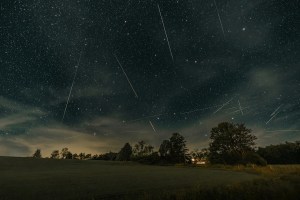
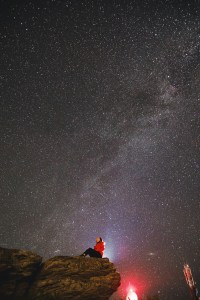
A ritual of summer is gazing up at the night sky in the hopes of seeing meteors, also known as shooting stars, flash across the night sky. While the annual Perseid meteor shower usually gets the most attention, a better bet might be a couple of less-famous meteor showers that will peak on Tuesday night.
It’s summer and that means it’s shooting star time, but what should we do when the astronomical calendar aligns in ways that make it harder to see what is usually one of the best meteor showers of the year?
Don’t give up. Instead, get outside early. Days early.
Peak Perseid will happen August 12th, right around the full moon. All that light will make it hard to see the meteors.
That doesn’t mean there’s nothing else going on overhead, though. If you can, head out tomorrow night and look up.
…the moon will be only about 25% full this week, when two meteor showers known as the Southern Delta Aquariids and the Alpha Capricornids reach their peak on the night of July 29 going into July 30.
And mark your calendars for next year’s Perseids, which should be excellent.
If you’ve ever wondered what’s down in the ocean deeps, the funnest version of the answer is that we mostly don’t know!
Here’s an interesting article featuring graphic illustrations by Angela Hsieh, showing what we know about the ocean, its depths, the differences between the Sunlit, Midnight, and other zones, and the many (many) things we have yet to discover about the oceans that surround us.
Whoops, I forgot to mention a recent solar system milestone. Two days ago, the Earth (that’s you and that’s me!) reached aphelion, or the point in our orbit at which we’re the farthest distance away from the Sun. That puts us at approximately (give or take the distance we’ve traveled in the past two days) about 3 million miles farther away from the sun than we are at perihelion.
This happens every year in early July, which might sound backward. If we’re farthest from the sun, shouldn’t it be cooler?
The answer lies in the fact that the Earth gets closer to and farther away from the Sun, but it’s also tilted.
Our planet spins at an angle — about 23.5 degrees — which means different parts of the globe receive more (or less) sunlight depending on the time of year. In July, the Northern Hemisphere is tilted toward the sun, bringing longer days and higher sun angles that lead to more direct sunlight — all of which produce summer-like heat.
Since Kepler’s laws of motion dictate that celestial bodies orbit more slowly when farther from the sun, we are now moving at our slowest pace in orbit, slightly less than 18 miles per second (29 kilometers per second) compared to just over 19 at perihelion.
Given that, today might be a good time to relax, and enjoy the ride.
If you don’t track space news or astronomy news or science news, you may not have seen the announcement about the debut of the Vera C. Rubin Observatory’s recent drop of galactically cool imagery.
Even if you have seen the announcements, you may not know the story behind the observatory, its world-beating telescope, or the woman it’s named after. Here’s a quick orientation and of course, a look at some of that amazing imagery.
The Legacy Survey of Space and Time camera is expected to capture more information about the universe than all optical telescopes throughout history combined.
What is the observatory observing from its perch on Cerro Pachón in Chile? All the things!
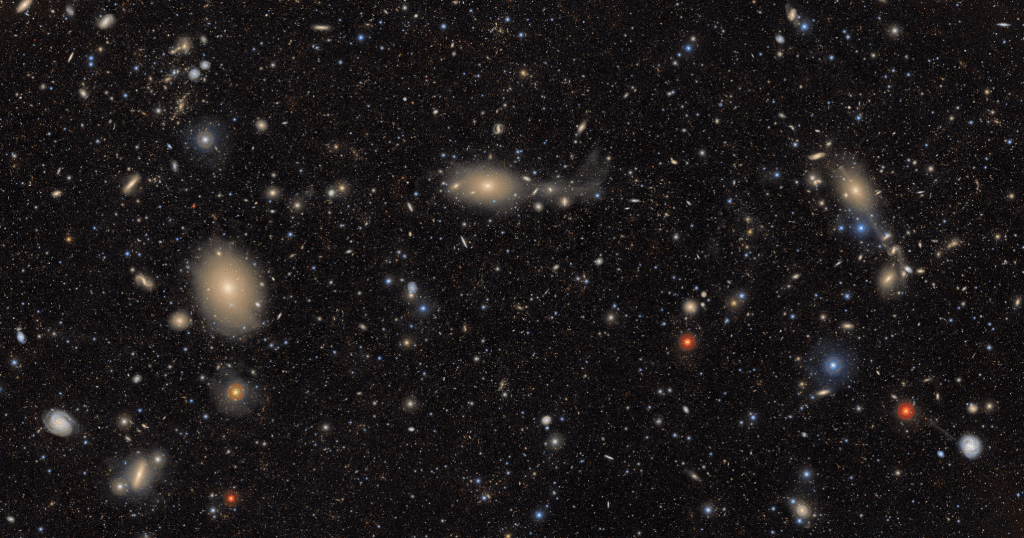
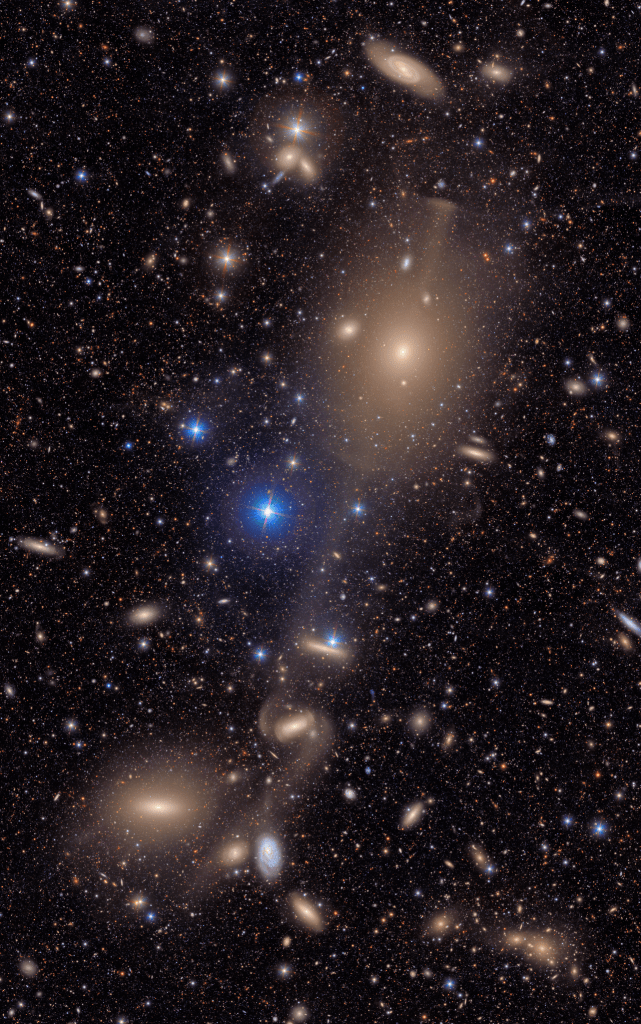
In just over 10 hours of test observations, NSF–DOE Rubin Observatory has already captured millions of galaxies and Milky Way stars and thousands of asteroids. The imagery is a small preview of Rubin Observatory’s upcoming 10-year scientific mission to explore and understand some of the Universe’s biggest mysteries.
It should detect killer asteroids in striking distance of Earth and map the Milky Way. It will also answer crucial questions about dark matter, the mysterious substance that makes up most of our universe.
Exactly who was Vera C. Rubin? Just a girl who dreamed of space, ignored the haters, and grew up to be a world-class scientist.
Vera Rubin is best known for presenting the first sound evidence of dark matter—an elusive substance that makes up more than 80 percent of our universe, yet doesn’t interact with light or other electromagnetic radiation, making it impossible to glimpse directly through a telescope. Her central scientific accomplishment involved discovering a mismatch between the predicted angular motion of galaxies and the observed motion of galaxies. Rubin’s calculations offered a solution to this so-called “galaxy rotation problem” by suggesting that galaxies must contain at least 10 times as much mass as can be accounted for by the visible stars. This invisible mass constituted evidence for what astronomers had earlier proposed to be dark matter.
Rubin became a cosmological giant against the odds, illuminating a path for future female astronomers.
(And, I’d like to add, becoming a role model for kids of all shapes and sizes!) Want even more in-depth info about telescope and its capabilities?
In this exclusive interview, Professor Mario Jurić reveals how the Vera Rubin Observatory accidentally discovered 2,000 asteroids in just 10 hours while testing its capabilities on the distant Virgo Cluster—transforming humanity’s asteroid discovery rate from 20,000 per year globally to potentially over one million annually with a single telescope.
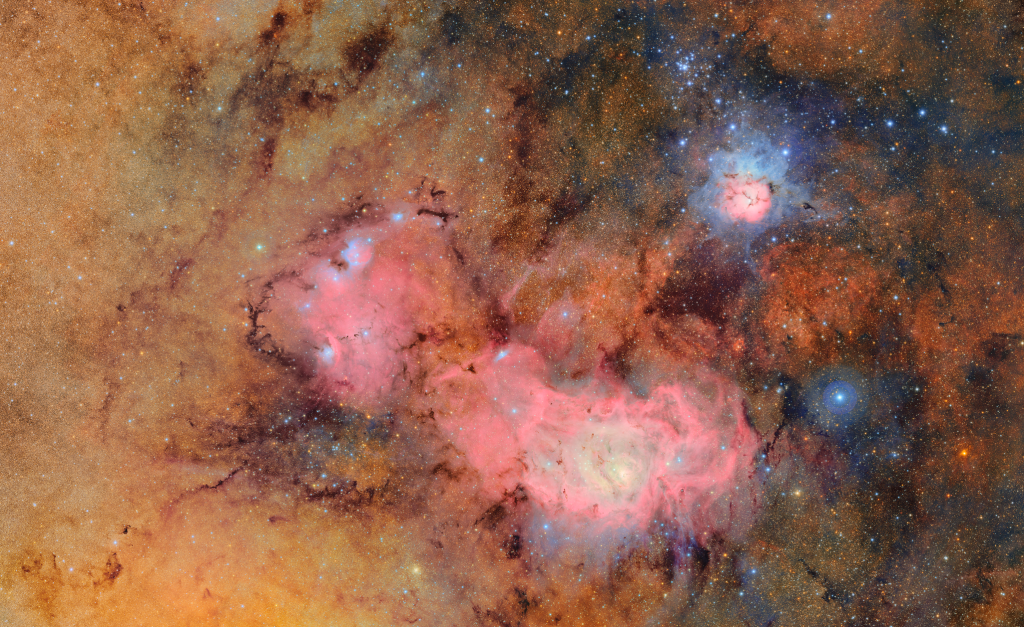
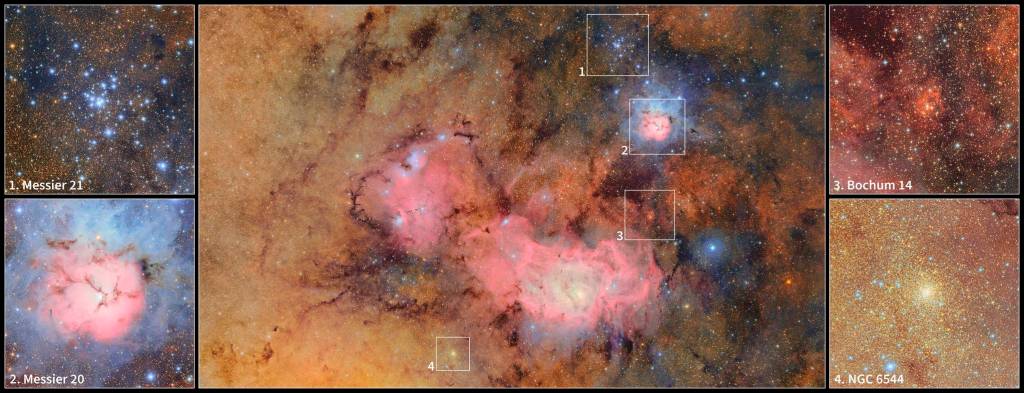
Short and very cool video of the Trifid and Lagoon nebulae, compiling more than seven hours of observing time: Trifid and Lagoon Nebulas (Video-ES).
Space Surveyors is a fun, interactive game where YOU move the Rubin telescope around the sky. How many stars, galaxies, supernovae, comets, and asteroids can you catch in one minute, before the sun rises?
While players aren’t moving the *real* telescope around, it’s still fun to play. (I discovered 22 objects before the clouds rolled in and the sun came up. Bet you can do better:)
Adventure! Discovery! Secrets of the universe! This, kids, is why math is important.*
* I mean, sure, also to figure out if you have enough money to pay rent and still buy ice cream, but also this!
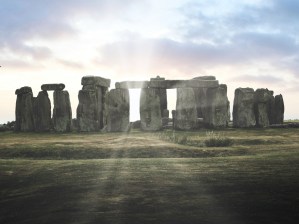
Today the sun will reach its northernmost latitude. It will sit above the Tropic of Cancer, which means that today is the longest day in the northern hemisphere, and the shortest day in the southern hemisphere.
This marks the start of astronomical summer for the northern hemisphere for this year.
And in parts of Canada, we have a bit of added fun.
The entire country will experience the longest day of the year on Friday the 20th.
However, if you live anywhere from northern and eastern Ontario to the Atlantic coast, Saturday the 21st will be the exact same length as the 20th, down to the second. This includes Timmins, North Bay, Ottawa, and Bainsville in Ontario, plus everywhere to the east — all of Quebec, New Brunswick, Prince Edward Island, Nova Scotia, and Newfoundland and Labrador.
Check out the rest of the article for more on the astronomy of it all, where the name comes from, and what a solargraphy is (pretty, that’s what).
I hope you enjoy the solstice, no matter where you are. And if you (like me) get two, even better!
First let me make clear that what I’m about to share is 100% not safe for work. Or delicate ears. I mean, yeah, there’s a lot of swearing. That said, the subject matter is one of those topics that almost requires strong language.
This series of videos pairs climate scientists with comedians who translate for us regular folks.
Watch Emmy Award-winning comedian David Cross and Professor Michael Oppenheimer pretty much fix the climate crisis between them, in the first US pilot of the hit “Climate Science Translated” series. What’s the gist? Most Americans (74%) actually want more climate action from government. What no one wants is sky-high insurance bills, a home destroyed by extreme weather, or to pass on a ruined planet to their kids.
The films use humor (and profuse swearing) to translate the urgency of the problem, and bring it back down to Earth.
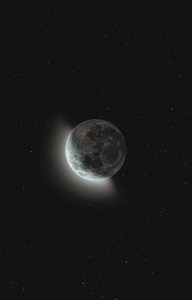
Sadly, it looks like the Ispace lander Resilience did not make a successful landing on the moon yesterday. (If it did land, it’s harboring enough resentment about the process that it’s refusing to pick up the phone.)
Ispace has gone out of its way to make clear that it’s not giving up. The motto underpinning today’s mission was “never quit the lunar quest.” And by all accounts, the company has every intention of sticking with these moon missions until they succeed.
Let this be a lesson to all you aspiring creatives out there. Never quit! (And maybe name the next lander Persistence?)
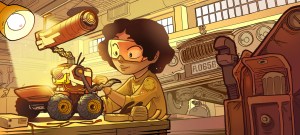
There was a second issue, too, called First Woman: Expanding Our Universe. Both were free and available to the public on NASA’s site. (Which makes sense, because NASA is paid for by US tax dollars, including mine.) Sadly, both have now been removed.
But good news, aspiring explorers! As highlighted over at Space.com, both issues are still available via that bastion of awesome, The Wayback Machine:
Issue #1: Dream to Reality follows Callie’s trailblazing path as the first woman on the Moon. Callie and her robot sidekick, RT, overcome setbacks, disappointment, and tragedy along the way. From her childhood dreams of space travel to being selected as an astronaut candidate, Callie takes us on her journey to the Moon.
I don’t always take the time to update older links, but I thought this one was important.
Because if humanity stops inspiring the next generation, humanity stops.
I attended a wedding once where I was seated next to a civil engineer. Being me, I wanted to know all about how things in his world worked. He was nearing retirement and had Opinions. It was a good conversation, but what I remember most was his advice: “If you want to understand a place, first find out where your water comes from, and then where it goes.”
Water and sewage, two of the most essential components of a functional modern society.
I thought of that dinner when I ran across this essay by Charles C. Mann. In it, he kicks off a series called “How the System Works” that touches on many of the ways in which humanity has built “the hidden mechanisms that support modern life.”
I find conversations like this fascinating because for so many of us, the process of supplying clean water, electricity, food systems and more might as well be magic.
This is not a statement about Kids These Days so much as about Most People These Days. Too many of us know next to nothing about the systems that undergird our lives. Which is what put me in mind of Thomas Jefferson and his ink.
Jefferson was one of the richest men in the new United States…. But despite his wealth and status his home was so cold in winter that the ink in his pen sometimes froze, making it difficult for him to write to complain about the chill.
And if this is magic, consider this series an introductory spell book:)



You must be logged in to post a comment.