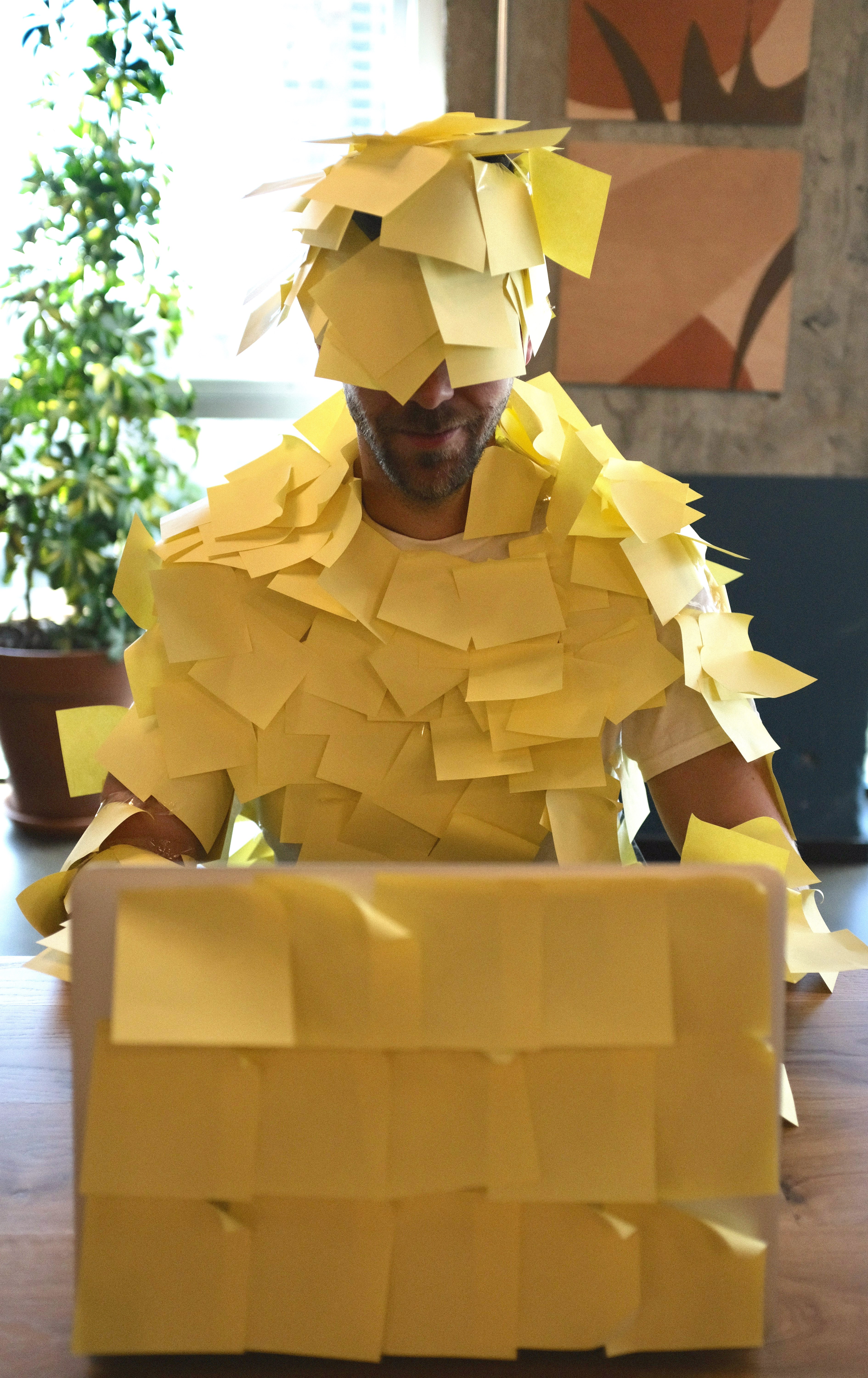
It’s the weekend and I feel I should be using my time for creative work, but instead I have a long and growing list taking up space in the back of my mind (and on Post-its fluttering from desk to pocket to pile). This list includes both the ignorable (“clean basement, for real this time”) and the not so much (“Taxes!”).
Today’s Now I Know (a fun free newsletter, recommended) talks about some of the fundamental elements of being a successful spy. Essentially, the key is to play a character as truthfully as possible.
When I moved to Canada I was suddenly surrounded by people and places that were just subtly different from what I was used to. The way people dress, talk, eat, smile, and yes, stand, are all signifiers of culture and place. It made me more conscious of what was the same and what was different, or what made me look at an actor in a commercial and immediately say, “Sooo Canadian!” when Mr Man didn’t register a difference.
Here’s the video referenced in the article, with Jonna Mendez, former CIA agent and Chief of Disguise:
What makes a character look “right” or not, or act as if they are rooted in a particular time and place? Understanding those fundamental cues is a great way to think about adding depth to stories and the characters who drive them.
While we’re here, Mendez also has a fun video critiquing scenes in spy movies, useful to anyone writing a story with espionage:
“…very often a risk is worth taking simply for the sake of taking it. There is something enlivening about expanding our self-definition, and a risk does exactly that. Selecting a challenge and meeting it creates a sense of self-empowerment that becomes the ground for further successful challenges.”
— Julia Cameron, The Artist’s Way
“So do it. If you win, you win, and if you lose, you win.”
Freedom to Read Week is an annual event that encourages Canadians to think about and reaffirm their commitment to intellectual freedom.
Well, I am all about that. The more readers in the world, the better.
And while we’re on the topic, if you happen to live in a place where access to books is not what it could be, allow me to introduce you to the Open Library.
Open Library is free and open to anyone. Some features require that you have an Open Library account.
The idea that story can have an effect on the humans that consume it is not new. It’s well accepted across many cultures, and well supported by studies, that children’s development is aided by hearing stories, with benefits ranging from emotional development and improved communication skills to increased vocabulary and social maturity. But adults are also affected and changed by story.
In a recent chat with my mother, I mentioned that I thought she would enjoy the movie version of The Martian. I don’t know if she was convinced by my sales pitch: “An astronaut is stranded alone on Mars and has to find a way home before he dies a horrible death. It’s hilarious!” but I hope she’ll watch it.
Andy Weir’s book is also a lot of fun. It was published ten years ago this month, and to celebrate he wrote a new chapter and shared it with us all.
Since 2014, approximately 500 books of all genres have been adapted to film or television. In total, just over four dozen of those books adapted were written by Black authors. Only four of those 50+ Black adaptations were speculative works.
You must be logged in to post a comment.