Funny because it’s true! 🙂
Posted in Entertainment, Funny, tagged #CoronaCreativity, #ThingsILike, creativity, fun on April 3, 2020| Leave a Comment »
Posted in Writing, tagged creativity, inspiration, work, writing on February 4, 2020| Leave a Comment »
Today I’m going to share a secret: I’m not writing.
It’s not much of a secret, really, but I’ve been avoiding it all the same. Not writing means no NaNoWriMo, no new short stories, no new crazy ideas for novels, at least none that have made it onto the page. The day job is still busy and I’m active on other fronts, but when it comes to writing I’m just… taking a break.
That should be ok, refilling the well, letting the fields lie fallow and all that, but I’ll be honest, it doesn’t always feel that way. That’s a big part of why I haven’t posted here. But here’s the thing. You can’t be super productive all the time, or I can’t, anyway. Sometimes I need time to step back, take a breath, and get ready for the next round.
Part of that is admitting when I need a break to refresh. The other part is remembering that despite all the not-so-awesome in the world, there is also magic:)
Posted in Writing, tagged arts, awesome, books, creativity, Fiction, genre fiction, Hugo Awards, Hugos, inspiration, Murderbot, science fiction, sff, speculative fiction, writing, yay on August 19, 2019| Leave a Comment »
The folks over at Boing Boing have listed last night’s 2019 Hugo award winners, complete with links:
Best Novel: The Calculating Stars, by Mary Robinette Kowal (Tor)
Best Novella: Artificial Condition, by Martha Wells (Tor.com publishing)
Best Novelette: “If at First You Don’t Succeed, Try, Try Again,” by Zen Cho (B&N Sci-Fi and Fantasy Blog, 29 November 2018)
Best Short Story: “A Witch’s Guide to Escape: A Practical Compendium of Portal Fantasies,” by Alix E. Harrow (Apex Magazine, February 2018)
Best Series: Wayfarers, by Becky Chambers (Hodder & Stoughton / Harper Voyager)
Best Related Work: Archive of Our Own, a project of the Organization for Transformative Works
Best Graphic Story: Monstress, Volume 3: Haven, written by Marjorie Liu, art by Sana Takeda (Image Comics)
Best Professional Editor (Short Form): Gardner Dozois
Best Professional Editor, Long Form: Navah Wolfe
Best Professional Artist: Charles Vess
Best Semiprozine: Uncanny Magazine
Best Fanzine: Lady Business
Best Fancast: Our Opinions Are Correct
Best Fan Writer: Foz Meadows
Best Fan Artist: Likhain (Mia Sereno)
Best Art Book: The Books of Earthsea: The Complete Illustrated Edition, illustrated by Charles Vess, written by Ursula K. Le Guin (Saga Press / Gollancz)
Lodestar Award for Best Young Adult Book: Children of Blood and Bone, by Tomi Adeyemi (Henry Holt / Macmillan Children’s Books)
John W. Campbell Award for Best New Writer: Jeannette Ng
Best Dramatic Presentation, Long Form: Spider-Man: Into the Spider-Verse, screenplay by Phil Lord and Rodney Rothman, directed by Bob Persichetti, Peter Ramsey and Rodney Rothman (Sony)
Best Dramatic Presentation, Short Form: The Good Place: “Janet(s),” written by Josh Siegal & Dylan Morgan, directed by Morgan Sackett (NBC)
So excited to see my favorite Murderbot and the Wayfarers series get some love, and I’m looking forward to checking out some of the others on the roster. For more reading material, check out Tor.com’s full list of nominees. Enjoy!
Posted in Writing, tagged creativity, Fiction, fun, Motivation, persistence, short stories, snow, speculative fiction, Thoughts, winter, work, Writers, writing, yay on January 24, 2019| Leave a Comment »
Right now I’m all about WIPs, or works in progress, in writing and other arenas. (Ironically, I started this post days weeks a while ago and then skipped over it to wrap up November with the NaNoMakeMo post. Now we’re back to this post in progress:)
I haven’t wanted to post much here because my day-to-day isn’t necessarily all that interesting, so I like to have something interesting to say. And the middle of anything can feel… well, just average. It can be tough talking about works in progress.
For example, what did you do today? Got up, hit the treadmill, worked on a story, did some research, switched from the treadmill desk to the standing desk and worked on the day job. Periodically took breaks to do things like make a bunch of sous vide egg cups, wash a million plastic bags**, or hit the workshop.
Speaking of the workshop, part of why my writing project is taking longer than I’d like is that I’m dividing my attention. You may remember I put up a post about the “exciting creative synergies inherent in cross-media productivity” or something like that;) Still true, at least for me, but spreading one’s attention does tend to slow things down, at least that’s how it’s working out for me. It’s like doing a dual major instead of just one. The prep takes forever but in the end, it will all be worth it (right? here’s hoping!).
***
In writing:
I’ve been working on a longer-form piece and don’t have much to say about it, honestly, except “Hey, still working on that novella!” and “It’s going to suuuuper great when I get it done but, well, it’s not done yet” “Yep, this is taking freaking forever!” and “I’m past the bit with the donuts but now I’m stuck at the part with the walk-in freezer. Honestly, who has a walk-in freezer in space, anyway?” (answer, me:).
I was going to put up a shot of my writing file, but I don’t want you to see all the highlighting and bold text meaning “this word choice is terrible and/or completely out of place and/or if she was wearing a spacesuit in the last scene, how can she be rubbing her face in this bit?, fix it or else!”*
Here’s a shot of a lake in winter instead. From inside, because it was -29C, people!

***
In wood:
I made a handle for a friend’s fishing pole (you may remember my adventures in deepwater lake trout fishing from a ways back; it involves metal line and requires a sturdy handle, and his wasn’t). Well, I’ve actually made two so far and I’m finishing up a third. Practice is good for skill development, of course, and I want to keep going until I have a product I’m happy with. The proportions of the first version weren’t quite what I wanted (Mr. Man likes it, but I wanted to try again), the second has a potential weak spot (and again), but the third looks just right.
***
Maybe there’s value in sharing the tedium as well as the highs, the work that goes on behind the scenes so that you know it’s not just you. I’m just a regular Jolene, plugging away at something that makes me happy (most of the time, anyway:). If you think a thing is worth doing, and you’re learning and improving and it’s helping you be the person you want to become (unless that person is unpleasant and/or criminal, just saying), go ahead. Make the effort. I’ll do my best to enjoy all the days, average or not.
So let’s rewrite this experience of “in progress” or the “dreaded middle.” I’m not done yet, but I am rounding the corner. What’s my goal? What’s in the way? How can I break it down to make what’s left more manageable?
I love crossing things off a list. So satisfying! To that end, I’ve started listing each project on a piece of paper and break it down into component parts. Like so:

The big stack on the left are completed goals. Everything else is in progress, including “The Secret Life of Henchman #3” and “make a bed of nails.” Because that’s how I roll:)
***
(interjection from the future, which is now, but was later, then)
The space pirate story has a beginning (two, actually, must fix that) and an end, and it’s ready for next steps. No one died.
/ahem
Allow me to rephrase.
No one died who didn’t absolutely deserve it.
Here’s hoping your year is starting off well. Or at the very least, better than Henchman #3’s!
***
* Still, here’s a bit I find amusing: “The difference between us is that I will actually call you a ride. The fact that they’ll come bearing handcuffs is your own damn fault.”
** I hate washing plastic bags. I like the fact that it keeps waste out of landfills and encourages a reuse mindset, but the process of washing and drying bags is just ridiculous, awkward, messy and inefficient. The whole time I’m chanting to myself, “There has to be a better way.” If you know of one, feel free to share!
Posted in Writing, tagged 2019, creativity, JK Rowling, Motivation, persistence, quotes, Thoughts, work, Writers, writing on January 17, 2019| 1 Comment »
Ahem. It’s not you, it’s me.
You may have noticed that I haven’t posted much lately. Part of that is the inevitable press of other work but before November 2016 I managed. The last couple of years have been harder. Too many distractions. Too much uncertainty. Too much crazy.
Something had to give, and you’ve seen the results in my absence here. (Sadly, I’m not alone.)
That said, I’m still working, still thinking, still writing. Still coming up with things I’d like to post, if I could just find the mental space and time.
When it comes to this blog, I’ve realized something important. The more it helps me do my work, the more I’ll write, here and elsewhere.
***
New plan. Let’s see if I can siphon off the ideas and thoughts that are spinning around in my head. If I can put them down here, I may be able to focus more on work to be done, and on new projects for the future.
“I use the Pensieve. One simply siphons the excess thoughts from one’s mind, pours them into the basin, and examines them at one’s leisure. It becomes easier to spot patterns and links, you understand, when they are in this form.”
— Albus Dumbledore
***
Buckle up, it might get weird:)
Posted in Likes, Other, Writing, tagged #NaNoMakeMo, #ThingsILike, creativity, Fiction, foodz, fun, home, inspiration, Motivation, nanowrimo, Thoughts, woodturning, work, Writers, writing, yay on December 3, 2018| 1 Comment »
So, November.
/vroom!
Yeah. Like that.
November is (of course!) National Novel Writing Month. I’ve taken part for the past however many years, and it has been fun. I laugh, I write, I cry, I win. Then I collapse in a mostly useless heap for the next many weeks. The holidays don’t help post-NaNo productivity, of course, but I don’t know that a draining push to write write write write does either. I’m looking for sustainable output.
I’m also distracted this year. As mentioned, I’ve taken up woodworking and it’s fun. I like the challenge, I like the creativity and idea generation, the inevitable roadblocks, problem-solving, and the triumphant conclusion.
It’s a lot like writing, actually, only with more finished product and results that don’t depend on the vagaries of editorial preference.
So this November, I decided to do something a little different. Instead of NaNoWriMo, I opted for NaNoMakeMo.
Me, one month, making stuff, with the definition of “stuff” being flexible. Words, wood, whatever. I’m one of those people who can be well and truly stuck on one project but super productive on another. As long as I’m working on whatever my secret brain wants to pay attention to, much gets done.
I decided to use this quirk to my advantage. It’s a classic productivity trick called structured procrastination. I may have mentioned it here before.
The first rule is there are no rules.
Write, turn, bake, sew, whatever. The goal is what’s important, not how to get there, and for November the goal was simple: Make more stuff.
I pulled on my big girl work clothes and got to it.
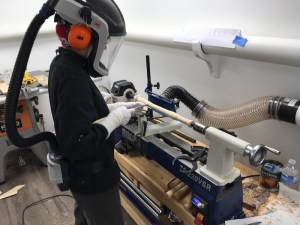
/insert 30 days of work work work work work.
/ok, fine, I didn’t work all 30 days
/some days I sat inside by the fire and read, because winter and cold and snow, people!
* * *
So how did the first inaugural NaNoMakeMo go?
My original plan was to post updates (with photos and witty commentary even!) as I went along, sharing each and every project through the twists and turns of the creative process. When that didn’t happen, I decided to make an awesome advent calendar-style image map linking all of the awesome into one aesthetically-pleasing package.
Yeah, that didn’t work out. Images and updates take time. Thinking about how to frame a project takes time. Stepping back from the desk or workbench or computer takes time and also the sort of mental space I don’t always have when I’m mid-stream. And the interweb informs me that image maps have been out of style Like For Ever.
Too bad, I was going to use this fun image. It pretty much sums up my month.
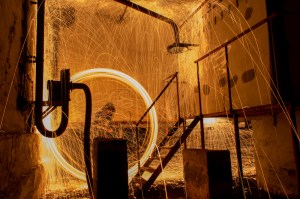
Instead you get this uber post. Also, I made this list.

(Yes, that’s my list handwriting. It is both teeny tiny and impossible to read, or so I’ve been told. I have no trouble with it at all. Let me just get a magnifying glass;)*
* * *
So how did it go? Pretty well, actually.
I got a lot done on a lot of different projects, which I find very satisfying. Rather than feel I’ve ignored much of life in order to focus on one dimension, writing, I’ve made progress on multiple fronts.
For evidence of same, please see Exhibit A (note: some projects have been excluded in the interest of maintaining holiday-related surprises;)
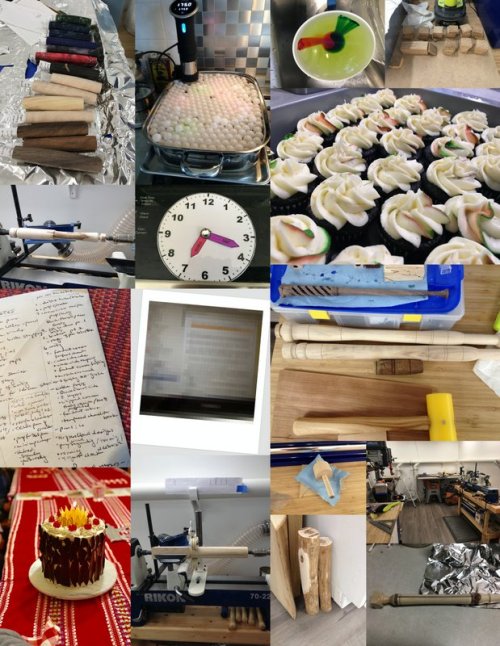
I made things, I broke things, I learned more about what to do and what not. Yay:)
* * *
What would I change? Next time I might plan a bit more. Fifty thousand words is a little nuts but having a target helps your aim, you know? Goals and also alternatives, for when the old attention span is minimal and absolutely everything looks interesting except the work on the desk. Maybe I’ll list the different possibilities on little pieces of paper and keep them in a jar for when I need to pull out a new project.
(Teeny tiny lists on teeny tiny scraps of paper, in a Swedish glass jar. Because that’s how I roll, and if there’s one benefit to the passing years, it’s figuring out new ways to work around my own crazy:)
In sum: NaNoMakeMo may be a less dramatic way to approach creativity than NaNoWriMo but it’s also, at least for me, more sustainable. And in the end, a productive, constructive life is the true goal.
And so I declare the inaugural NaNoMakeMo a pretty not-bad success. Here’s hoping you enjoyed your month too!
* * *
* The point usually isn’t the reading. It’s about thinking, and the process of sketching out an idea or problem helps me think it through. I find that works best when I’m scribbling on the back of some envelope, or a scrap bit of paper or the corner of a random flyer. Who says no one uses the mail anymore?
Posted in Writing, tagged #ThingsILike, #ThingsIMade, creativity, finishing, home, persistence, Thoughts, woodturning on October 4, 2018| Leave a Comment »
Politics make me sad.
Baking makes me happy. Being constructive and making things (and countering the negativity inherent in the current public discourse) makes me happy.
And so I give you my latest creation: A rolling pin…

… complete with a flower on the handle. (Or is that a “flour”? 😉
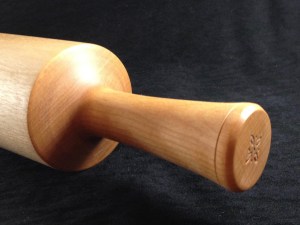
Next stop, Canadian Thanksgiving and (you guessed it!) pie.
Chin up, fellow humans. We’re just one alien invasion away from remembering that we’re all in this together.
Posted in Likes, Other, tagged arts, creativity, design, Illustrator CS5, Thoughts, tips&tricks on April 8, 2018| Leave a Comment »
I can’t draw, but I do love designing things like maps and logos and books and fun gifts. I use software to make it all work and shortcuts can be a terrific time saver. That’s why I’m excited to report that I recently discovered a very helpful trick for aligning objects in Illustrator.
I came to Illustrator from Freehand and found myself tripping over simple things. This particular tip fixes an issue that’s been bugging me for years, so I wanted to share in case I’m not the only one. (Maybe you already know this trick? Good for you, now give me a sec to share this bit of wisdom with those of us who have been less fortunate;)
I use Illustrator CS5 so ymmv, but here’s the gist, paraphrased from this useful article:
Select the objects you want to align, then (here’s the important bit) click once on the object or guide you want to use to control the alignment of the other selected objects. No shift key needed, just a straight click. The Key Object will show a heavy border outline around it. Align as usual.
It should look something like this:
Enjoy!
Posted in Writing, tagged #ThingsILike, books, creativity, Fiction, fun, genre fiction, Motivation, nanowrimo, persistence, science fiction, sff, speculative fiction, Thoughts, work, Writers, writing on November 6, 2017| Leave a Comment »
It’s November. Days are cold and nights are frosty. The cat wants in. And out. And back in again. It’s also the time of year for NaNoWriMo.
Yep, I’m doing it! My plan is to win (because of course) but most importantly, my goal is to get back on the regular-everyday-seriously-stop messing around writing train, and to practice a select number of specific writing skills. I haven’t gotten around to updating my official NaNo information, but I am working industriously away, so double handful of yay there.
Right now it looks as though the story I’m working on will involve superheroes and science fiction, but you just never know when a story will take a left turn. Will there be elves in the closet? Magic cotton candy machines? Or a secret bio lab planning to doom us all?!? One never knows:)
As I’ve mentioned in years past, I tend to be a pantser who heads to the keyboard and tackles the project head on, but I’m mixing it up this year.

Now I’m off to do some planning, some pantsing, and lots of writing:)
Posted in Holidays, Likes, tagged #ThingsILike, awesome, creativity, entertainment, fun, inspiration, science fiction, sff, star wars, yay on October 31, 2017| Leave a Comment »
Oh hey, don’t ask me how but it’s the end of October already. This holiday I bring you the winner of The Most Awesome Costume award (as determined by yours truly):
/zomg, now I so want a speeder:)
Happy Halloween!


You must be logged in to post a comment.