Feeds:
Posts
Comments

Posts Tagged ‘food’

Today, an addition to my recipe collection so I know where to find this next time I need a light, perfectly sweet, flavorful chocolate frosting to go with my favorite chocolate cake.

This is my new go-to frosting recipe. 

Chocolate Cream Cheese Frosting – Sally’s Baking

  • 339g (12 oz.) full-fat brick cream cheese, softened
  • 170g (12 Tbsp; 3/4 C.) butter, softened
  • 420g (3 1/2 C.) confectioners’ sugar
  • 55g (2/3 C.) unsweetened cocoa powder
  • 1 t. pure vanilla extract
  • 1–2 T. milk or heavy cream
  • pinch salt

For full instructions and more, head over to Sally’s.

Mr Man’s rating: “Yes, please and thank you!”

* * *

Read Full Post »

We’re going out for a quick errand, which may or may not be an excuse to get some ice cream.

It’s also a good excuse for me to share this fun story, about finding a little levity in the midst of even the most difficult times.

And ice cream:)

* * *

Read Full Post »

Let’s call this post the latest in my “actually, some things are very definitely better, thankfully!” series.

What was food like before the FDA? | Popular Science

Short answer? Not good! 

Read the article for more on formaldehyde, brick dust, lead and other things you never thought would be mentioned in a story about food. (There’s also a shout-out to Upton Sinclair’s classic novel The Jungle, which, among other things, helped publicize the unsavory conditions inside Chicago’s meatpacking plants.)

Now I’m off to have a Plaster of Paris-free sandwich, yum!

* * *

Read Full Post »

Today, a quick visit to Sicily to make tomato paste by hand. I had no idea it was this concentrated!

How to Make Tomato Paste in Sicily | The Kid Should See This

It’s easy. Take a ridiculously large amount of perfectly ripe Sicilian tomatoes. Cut them up. Leave them in the sun for 4 days to reduce down to about one tenth of their original volume. Put them in a jar and save it for a gloomy February day.

Here’s the video:

* * *

Read Full Post »

This week I learned about a little piece of medieval magic called the posset.

What is a posset? Not, as you might think, an odd variant of the possum, but a dessert. And a dessert that shouldn’t, at least on first glance, work. At all.

But it does, and it is magic.

I titled this post “medieval magic” because I’m a sucker for a fun alliteration, but my familiarity with the posset comes from historical fiction set in the nineteenth century. (It was originally a drink of milk curdled with wine often used for medicinal purposes, but the word evolved.) I knew that it was a dessert and something like custard, but not the how or why of it.

As of yesterday, I have added this particular spell to my magical recipe book.

Why magic? Because the posset, which is a cream-based pudding-like dessert, shouldn’t work.

Look at this ingredient list:

  • heavy cream
  • sugar
  • citrus juice

Gently boil cream and sugar for five minutes, remove from heat and stir in juice, cool then chill. 

That’s it. Unlike panna cotta, custard or pudding, there’s no gelatin, eggs or starch to bind the ingredients together. It still comes out of the fridge a thick, spoonable dessert that goes beautifully with fruit and a Biscoff cookie base. And it’s simple. The biggest commitment is chilling time.

The recipe I modified, with notes:

Creamy Key Lime Pie Bars Recipe | King Arthur Baking

  • I used regular lime juice and bolstered the tang with a bit of lemon oil (if anyone knows where to find bottled key lime juice in Ottawa, let me know)
  • doubled the recipe to fit a 9×13 pan
  • cookie base: used Biscoff for added flavor, but next time skip the sugar and bake for ~half the time 

Seriously, though, why does this work?

The magic is in the interaction of the acids in the juice and the cream. 

How To Make A Posset – An Acid Set Cream – The Culinary Exchange

Possets are acid set creams. This makes citrus flavors perfect posset making foundations.

Yes, please.

Posset – The old school dessert we’re bringing back

It’s a 3 ingredient custard that tastes like the love child of lemon curd & pastry cream…

  • Dissolving sugar into cream keeps the posset from being gritty
  • Boiling the cream evaporates off a little bit of the water, concentrating the fats in the cream for an extra-luscious texture
  • The acid coagulates the proteins in the cream, which causes the posset to thicken as it cool. Coagulation means that proteins are getting together and hanging out. The closer they hang, the firmer the final filling texture!

So kind of like cheese, but in the end, nothing like cheese. The posset was fruity, tangy, and delicious, exactly the sort of magic I love.

* * *

Read Full Post »

I have not tried these. I want to try these:

Ted Lasso Biscuits – Broma Bakery

Because what’s more fun than making dreams reality?

* * *

Read Full Post »

I’ll be working on a cake recipe this weekend, and I’m thinking about it now. As I mentally work my way through possible iterations and prepare to release this recipe into the world (or at least the personal archive that is this blog), I’m thinking of this funny piece:

Did You Even Consider Every Possible Lived Experience Before Recklessly Posting Your Chili Recipe on Social Media?

Look, I get it. You thought what you posted was innocuous. Still, did you stop to think about everyone who has ever lived and how it could make them feel?

I mean, it’s cake and not chili, but no, no I did not.

* * *

Photo by Alexandra Gorn on Unsplash

Read Full Post »

My favorite sandwich bread recipe makes two loaves. That’s just enough for Mr Man to eat most of a loaf the first day, and then polish off the second loaf over the next day or two. Making this bread isn’t hard but it does take up most of a morning, and it would be nice if the results lasted a bit longer.  

Given that, I’ve adapted the recipe to make three loaves and include it here so I won’t misplace the random scrap of paper I used for my calculations. (Yes, that happens a lot!)

* * *

Even More Sourdough Sandwich Bread

Ingredients

Levain

  • 192g flour
  • 192g water
  • 66g sourdough starter

Dough

  • 946g flour
  • 75g sugar 
  • 22g salt
  • 8.4g instant yeast
  • 85g butter, softened
  • 573g milk (70° to 80°F, I microwave for 63 seconds) 
  • the ripe levain

Instructions (abbreviated*)

  • Mix the levain ingredients the night before and let rise
  • The next morning, mix and then knead together all of the dough ingredients (~12 minutes)
  • Let the dough rise for 1 to 2 hours, until ~doubled in size
  • Divide the dough into three, shape into loaves, let rise in buttered 9″ loaf pans until ~1″ above rim
  • Bake for 30 to 35 minutes at 375F

* I’ve memorized this recipe by now, but for more details see the original post. And apologies for not converting these measurements back into cups etc. but my bread needs to be shaped!

Enjoy!

* * *

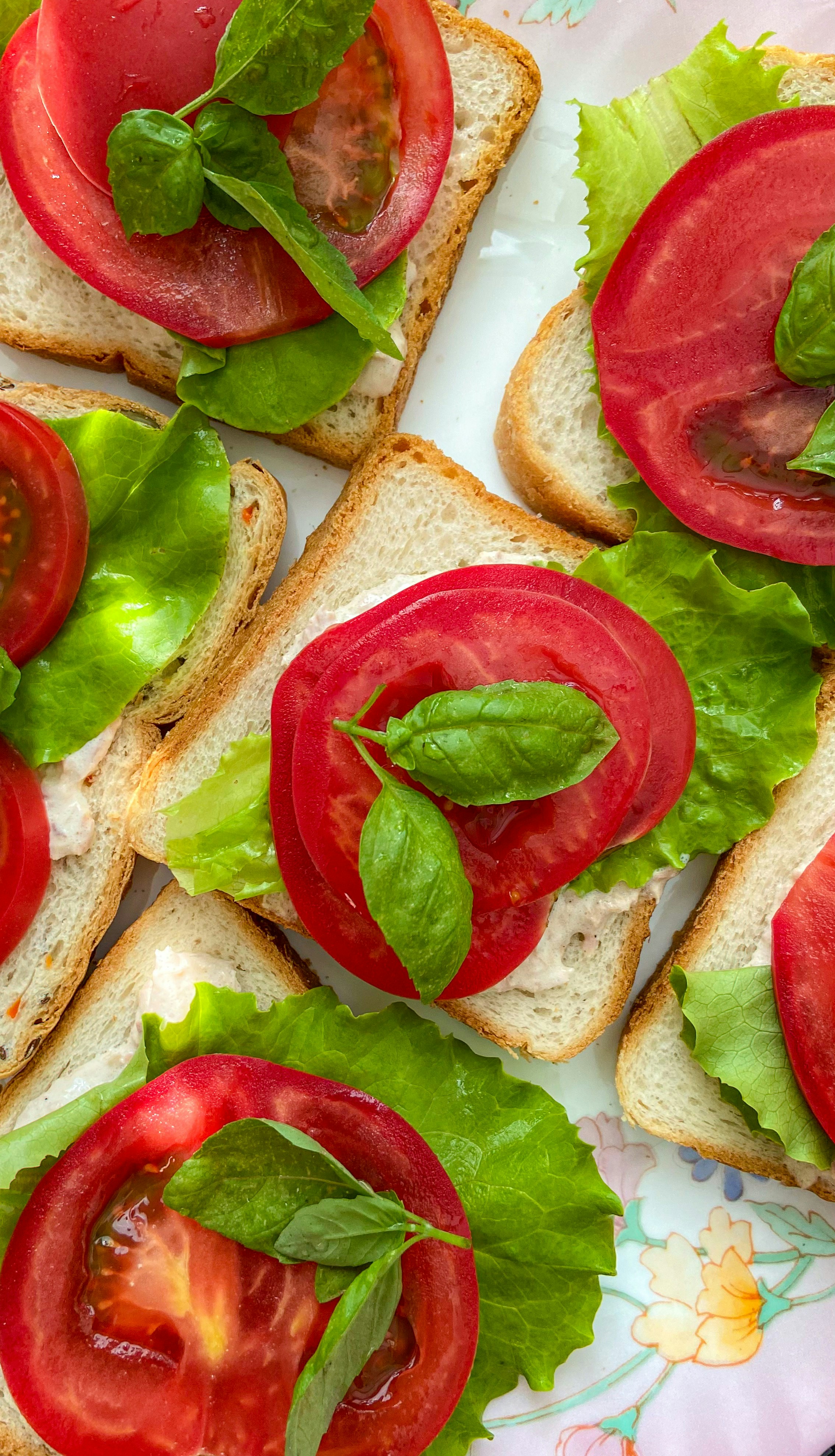
Not quite the BLTs we’re planning, but close enough! Photo by Dimitri on Unsplash

Read Full Post »

I stumbled across a spice mix yesterday and ended up going down a rabbit hole of seasoning mixes, chefs and surprises. Did I collect a list of Burlap & Barrel wants that will keep my wish list going for the foreseeable future? I did. And did I learn some interesting and fun facts about cooking with spices that are new to me? Also yes.

For example: I didn’t recognize hing at first, but it’s also called perungayam or asafoetida, which I have heard of but never cooked with. It’s used in Indian and other recipes and is good for people who can’t or don’t want to use onions and garlic. (B&B’s tasting notes equate 1/8 teaspoon of the spice to one whole onion plus six cloves garlic, so yeah, it packs a punch.) I happen to be a mite sensitive to alliums so I decided to explore more. Which led me to this in-depth article:

Asafoetida’s Lingering Legacy Goes Beyond Aroma — Whetstone Magazine

Devil’s dung. Seytan tersi. Merde du diable.

In English, Turkish, French and a whole host of other languages, the monikers for asafoetida are so deeply unflattering that you’d wonder why anyone would want to consume or cook with the spice at all. Its most commonly used English name is just as unambiguous. Derived from Farsi and Latin, asafoetida simply translates to “stinking resin.”

So what is asafoetida, and why is it so divisive? 

If you aren’t one of the millions who already use this particular spice, read on for more, including an interesting detour through Afghanistan and Iran with Alexander the Great. Because even kings have to eat!

* * *

Photo by Laura C on Unsplash

Read Full Post »

I have discovered a new cookie recipe, and liked it enough to want to share the recipe. I don’t usually like soft puffy cookies, but I really like these.

Here is the original recipe with detailed instructions over at Serious Eats: Fiori di Sicilia Cookies Recipe.

My version, slightly different and in metric.

Recipe Notes: 

  • Doubles well.
  • Fiori di Sicilia: this brand has the best flavor I’ve found so far but in Canada it may be easier to find this version.
  • Lemon oil: I like this brand but whichever you choose, look for an oil without added water or alcohol.
  • I also broke down and bought a big pack of pre-cut parchment paper sheets. These were pricer than the industrial sized-rolls from Costco (there are also cheaper pre-cut options), but the increase in my parchment-related happiness was very much worth it.

Reviews: 

  • “Omg these are the best!!” (Mr Man)
  • “You have crafted a cookie that managed to defeat COVID!“ (friend on the mend, happily!)

* * *

Sadly, I do not have a picture of the cookies. We ate them.
Photo by Isabella Fischer on Unsplash

Read Full Post »

Older Posts »