Feeds:
Posts
Comments

Posts Tagged ‘history’

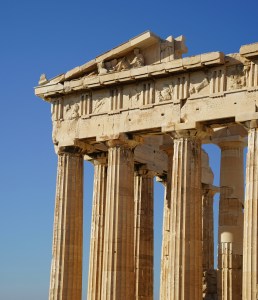
I could go into a whole thing about history and how it’s cool, or ancient civilizations and how they are cool, or uncovering architectural ruins that were foundations for lives lived once upon a time (and how that’s cool), but as I’m on deadline at the day job I’ll just leave you with this:

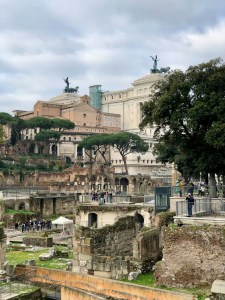
How Civilizations Built on Top of Each Other: Discover What Lies Beneath Rome, Troy & Other Cities

The idea of discovering a lost ancient city underground has long captured the human imagination. But why are the abandoned built environments of those fantasies always buried? The answer, in large part, is that such places do indeed exist under our feet, at least in certain parts of the world.

And it’s not just places like Rome or London. Cities like New York and Paris also have underground layers, and some cities were built in or under the earth.

I also enjoy this image of a cross-section of the A303 in England, which runs from Hampshire to Devon via Stonehenge (or so Wikipedia tells me, I haven’t been!).

In case you, too, have always wondered about the history beneath your feet!

* * *

Read Full Post »

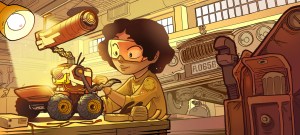
A couple of years ago I wrote about NASA’s excellent graphic novel encouraging folks to imagine themselves on the moon: First Woman: Dream to Reality.

There was a second issue, too, called First Woman: Expanding Our Universe. Both were free and available to the public on NASA’s site. (Which makes sense, because NASA is paid for by US tax dollars, including mine.) Sadly, both have now been removed.

But good news, aspiring explorers! As highlighted over at Space.com, both issues are still available via that bastion of awesome, The Wayback Machine:

Calliefirst – NASA

Issue : Dream to Reality follows Callie’s trailblazing path as the first woman on the Moon. Callie and her robot sidekick, RT, overcome setbacks, disappointment, and tragedy along the way. From her childhood dreams of space travel to being selected as an astronaut candidate, Callie takes us on her journey to the Moon.

I don’t always take the time to update older links, but I thought this one was important.

Because if humanity stops inspiring the next generation, humanity stops.

* * *

Read Full Post »

I attended a wedding once where I was seated next to a civil engineer. Being me, I wanted to know all about how things in his world worked. He was nearing retirement and had Opinions. It was a good conversation, but what I remember most was his advice: “If you want to understand a place, first find out where your water comes from, and then where it goes.” 

Water and sewage, two of the most essential components of a functional modern society. 

I thought of that dinner when I ran across this essay by Charles C. Mann. In it, he kicks off a series called “How the System Works” that touches on many of the ways in which humanity has built “the hidden mechanisms that support modern life.” 

I find conversations like this fascinating because for so many of us, the process of supplying clean water, electricity, food systems and more might as well be magic.

We Live Like Royalty and Don’t Know It — The New Atlantis

This is not a statement about Kids These Days so much as about Most People These Days. Too many of us know next to nothing about the systems that undergird our lives. Which is what put me in mind of Thomas Jefferson and his ink.

Jefferson was one of the richest men in the new United States…. But despite his wealth and status his home was so cold in winter that the ink in his pen sometimes froze, making it difficult for him to write to complain about the chill.

 And if this is magic, consider this series an introductory spell book:)

* * *

Read Full Post »

Today I’m thinking about life, the universe and everything. Mostly good thoughts! I’m not doing a great job of articulating them all, though, so let me just take a moment to commemorate one key event on this day in 1945.

It’s Victory in Europe Day, and while the end of World War Two wouldn’t come for several more months, it marked a significant step on that path. 

What You Need To Know About VE Day 8 May 1945

Millions of people rejoiced in the news that Germany had surrendered, relieved that the intense strain of total war was finally over. In towns and cities across the world, people marked the victory with street parties, dancing and singing.

As I’ve noted before (and no doubt will again!), the exceptionalism of humanity is our ability to accumulate and pass down knowledge, experience, and lessons from one person to another, one generation to another, one society to another. That’s the magic. 

How we use it, however, is now up to us.

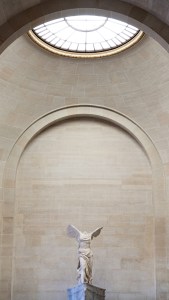
Winged victory waits

for the call of those learning

history’s lessons.

* * *

Read Full Post »

Global trade is very much in the news these days. While many of the current moves from the US seem designed to take the country back to a time when every country stood on its own, those times have, arguably, been much exaggerated. There are many historical examples of interconnectivity, from the Egyptians to the Greeks to the Romans to the Silk Road and many more, but I recently saw a very cool map that brought this idea home.

A Brilliantly Detailed Map Of Medieval Trade Routes & Networks

Even before the modern era, the Afro-Eurasian world was deeply interconnected through trade.

I found this map to be a fascinating look into a network of world trade during an era many might assume was very insular. The only thing I wish it included is travel times. How long, for example, would it have taken for cardamom to get from India to Venice to Oslo and into a loaf of braided bread?

Here’s the map from Martin Jan Månsson, part of his website, The Age of Trade

Medieval trade route networks

Zoom in and be impressed! 

(Bonus for your amusement: a comic on tariffs from xkcd 🙂

* * *

Read Full Post »

Measles Is One Of The Most Contagious Diseases On Earth

Measles infection can result in severe and sometimes permanent complications including pneumonia, lung damage, brain damage, and death.

But unlike some infectious diseases, measles has a safe, effective vaccine that can protect us from infection.

We, the general public, can control measles outbreaks.

… [this bit’s for the grandparental units out there; stay healthy, folks!]

The first live measles virus vaccines—which are more effective—were available in 1969.

So anyone born between 1957–1968 may not have sufficient antibodies to avoid infection. Consult your doctor about immunization.

Many of our parents, grandparents, and other waybacks lived through a lot of difficult things: two world wars, the Great Depression, Spanish Influenza, polio, smallpox, or life before basic standards of health and safety, for example. (Coincidentally, today is also the anniversary of the declaration of the Covid pandemic. Because history may not repeat itself, but it does rhyme.)

If you’re fortunate enough to still have relatives who lived through those times, consider asking them what it was like, and who they lost.

You might hear some interesting stories.

* * *

Read Full Post »

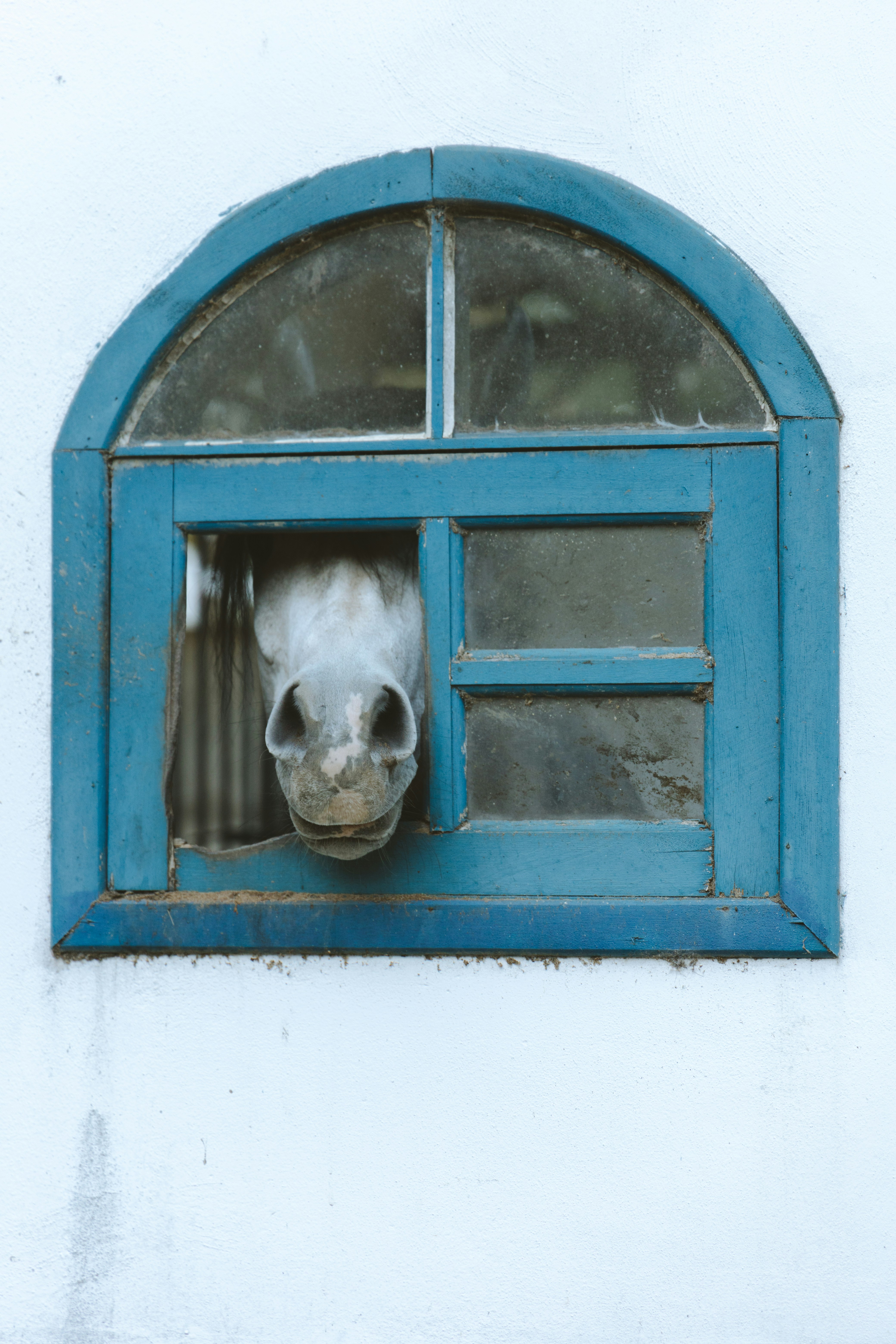
Last night, we watched the original Ghostbusters, which is always fun. Coincidentally and just in time to inspire this post, today I ran across this article from Dan Lewis at Now I Know that opens with that film and evolves into a fascinating discussion of why firehouses have poles.

Curious horses, that’s why!

How Horses Created Firehouse Poles – Now I Know

…in the late 1870s, “David Kenyon of Company 21, an all-African-American firehouse in Chicago [. . .] reached the ground by sliding down a wooden pole normally used to bale hay for horses.” Kenyon realized that this could be made into a permanent feature…

Read the whole thing for more on why poles were not just a good idea, but critical for firefighters. Spoiler alert, it’s not just because sliding down poles is fun!

* * *

Photo by Thiago Rocha on Unsplash

Read Full Post »

Today is Holocaust Memorial Day. I do try to emphasize the brighter side of life in this blog and this is not that, but it’s important. Fewer children are taught this history and too many adults act like it never happened (and could never happen again).

As survivors pass on those of us who remain must remember what and how and why. Not only for those who died, but for ourselves and our futures. This is the power of stories.

It is right that those who committed atrocities be held responsible, but remembrance days like this aren’t primarily about blame for past guilt. They are about the political tides that make these events possible. They are about the ordinary people swept up in such times.

Most of all, they are about avoiding future repetition.

International Holocaust Remembrance Day – United States Holocaust Memorial Museum

The United Nations General Assembly designated January 27—the anniversary of the liberation of Auschwitz-Birkenau—as International Holocaust Remembrance Day, a time to remember the six million Jewish victims of the Holocaust and the millions of other victims of Nazi persecution.

‘New way of bearing witness’: one of biggest Holocaust archives goes online

Announced on Holocaust Memorial Day, the Wiener Holocaust Library’s new online platform includes more than 150,000 items collected over nine decades. Users can view letters, pamphlets and photographs that record the rise of fascism in Britain and Europe.

My grandpa chose not to speak about his Holocaust experiences – but he asked me to tell the world

I’ve been asked why I believe Holocaust education is so important, and I find it hard to verbalise. It seems so obvious to me, as the grandchild of survivors, that these stories must continue to be told – it sounds cliche to quote “those who forget history are doomed to repeat it”, but with every passing year, it’s clear we are continuing to forget the horrors humanity is capable of. Gyuri’s final message was clear: tell the world, so they can learn from it.

* * *

Photo by Jan Huber on Unsplash

Read Full Post »

It turns out I’m super, and you might be too!

The National Archives needs Citizen Archivists who can read cursive

“Reading cursive is a superpower,” said Suzanne Isaacs, a community manager with the National Archives Catalog in Washington, D.C.

If you’d like to help the Library of Congress decipher History (yes, with a capital H), consider becoming a volunteer Citizen Archivist.

Because History is cool, and so are you.

* * *

This is in Italian so I can’t read it, but you get the point. Photo by 
Alessio Fiorentino on Unsplash

Read Full Post »

So, here’s the thing: I don’t really like the Middle Ages. I feel a little bad about that because if you have a History degree it seems like you are obligated to keep an open mind about even the worst centuries, but it’s true. The Middle Ages are very much middling in my book.

Is this bias a result of the (relative) lack of historical records, the goofy headgear, or the whole Black Death, Inquisition, feudal lords fighting over tiny territories, and “Bad Times All Around” vibe that so many of those centuries have?

Well, maybe.

However! While reading an interesting article on a medieval herb garden (as one does), I realized that the era was into some of the things that I am into: the many uses of plants, bookbinding, woodturning, weaving, dyeing, and a wide variety of handmade hacks designed to moderate the vicissitudes of life. (The fantasy genre also owes a lot to that time period, and to be fair the bycocket, or Robin Hood hat, was pretty cool.)

So, yeah. It’s possible that I might have a touch of the medieval in me. Which goes to show that I shouldn’t rule out whole swaths of history, or people, or things. (Except the Plague, I continue to be very much down on pandemics. For, you know, reasons.)

So while I’m never going to be a fan of petty monarchs, famine, uncertain hygiene or strict class divisions, the next time the topic of the Middle Ages comes up, I’ll do my best to keep an open mind. 

* * *

Photo by Wasim Z Alkhatib on Unsplash

Read Full Post »

« Newer Posts - Older Posts »