“The two most powerful warriors are patience and time.”
— Leo Tolstoy
* * *
Posted in Other, tagged #365Ways, #365Ways2023, inspiration, Thoughts on June 20, 2023| Leave a Comment »
“The two most powerful warriors are patience and time.”
— Leo Tolstoy
* * *
Posted in Other, Writing, tagged #365Ways, #365Ways2023, creativity, genre fiction, inspiration, power, progress, Thoughts, Writers, writing on June 16, 2023| Leave a Comment »
Martha Wells, creator of Murderbot, the recently published Witch King and other terrific tales, recently posted a copy of her co-guest of honor speech from WisCon. It’s worth reading.
It doesn’t always seem like it from our moment in time, but there actually has been a lot of progress in the science fiction and fantasy world during the 30 years of my career.
In it, she applauds how far we’ve come while pointing out the issues that remain, and that progress is “not a perpetual motion machine.” To keep moving up, it must be protected, cared for, and cultivated.
Which we can absolutely, positively do.
“Any human power can be resisted and changed by human beings.”
— Ursula Le Guin
* * *
Posted in Favorites, Science!, Writing, tagged #365Ways, #365Ways2023, behavioral science, creativity, inspiration, Thoughts, Writers, writing on June 4, 2023| Leave a Comment »
Some days it feels as though all the ideas have been done. We went for a walk today and passed a posse of girls in the park. I did a double take, because it was as if I’d been pulled back in time to the 1980s, at least as far as their outfits went. Are those high-waisted (deeply uncomfortable) stiff denim jeans I see? Check. What’s that, a Madonna-esque bustier? Check. Could that be a pair of Converse sneakers and a fluffy scrunchie? Check and check.
That got me thinking about Ötzi the Ice Man, a Neolithic-era man whose body (with clothing) was discovered in the South Tyrol Alps between Austria and Italy more than 5,000 years after his death.
Ötzi’s equipment is the oldest and best preserved in the world. His Copper Age clothing and weapons were frozen in the ice with him and therefore remained well preserved to this day.
— Ötzi’s New Clothes
If you follow that link, you’ll see that his clothes are surprisingly stylish.
I have no idea exactly why someone murdered Ötzi (not for his excellent goatskin coat, apparently), but it was probably for a reason we would at least recognize, if not condone: love, hate, anger, fear, revenge, greed, justice or security, just to name a few. Human needs, human abilities, human issues haven’t changed all that much in millennia. Even so, it would still be fascinating to know the specifics of Ötzi’s story.
In some ways, it can be the same with story ideas. The ingredients are the same, it’s how you mix them up that matters.
On the Quest for Originality, Recombine the Familiar – By Adam Alter – Behavioral Scientist
Often, the best way to get unstuck on the quest for originality is to combine two old ideas to form a new one, rather than searching for a single, novel creative nugget…. Trying to do something completely new is a recipe for paralysis.
If you’re stuck on a project and looking for a way forward that doesn’t feel like a 5,000 year old retread of the same old same old, this approach might help.
* * *
Posted in Writing, tagged #365Ways, #365Ways2023, #wotf39, #WritersOfTheFuture, creativity, genre fiction, inspiration, Thoughts, Writers, writing on June 1, 2023| Leave a Comment »
Two of my fellow Writers of the Future v39 winners have posted blogs about craft, and I wanted to share:
Writing Resilience | by David Hankins
One Writer’s Journey | by Elaine Midcoh
David and Elaine are great writers and terrific people, and both of those traits come through in these posts. Enjoy!
* * *

Posted in Science!, tagged #365Ways, #365Ways2023, aliens, creativity, inspiration, puzzles, science on May 30, 2023| Leave a Comment »
Here’s an interesting puzzle for the science-minded:
A message just arrived from outer space (but not aliens). Decode it!
After decades of searching for extraterrestrial intelligence, humanity finally picked up a message from outer space today. Three of Earth’s top radio astronomy observatories detected the signal coming from somewhere near Mars. Its content has yet to be decoded.
Okay, okay, the message is not actually from aliens. Humans arranged for it to be transmitted to simulate receiving a signal from extraterrestrials. Consider it a dress rehearsal — a chance for us all to see how we’d respond if aliens really did transmit a message to Earth.
For more background on the project and the coded message, head to A Sign in Space.
Also, who knew that SETI has an artist in residence (and are we sure she isn’t an alien?)
* * *

Posted in Other, Writing, tagged #365Ways, #365Ways2023, constraint, creativity, inspiration, making stuff, sheep, Thoughts, Writers, writing, yay on May 22, 2023| Leave a Comment »
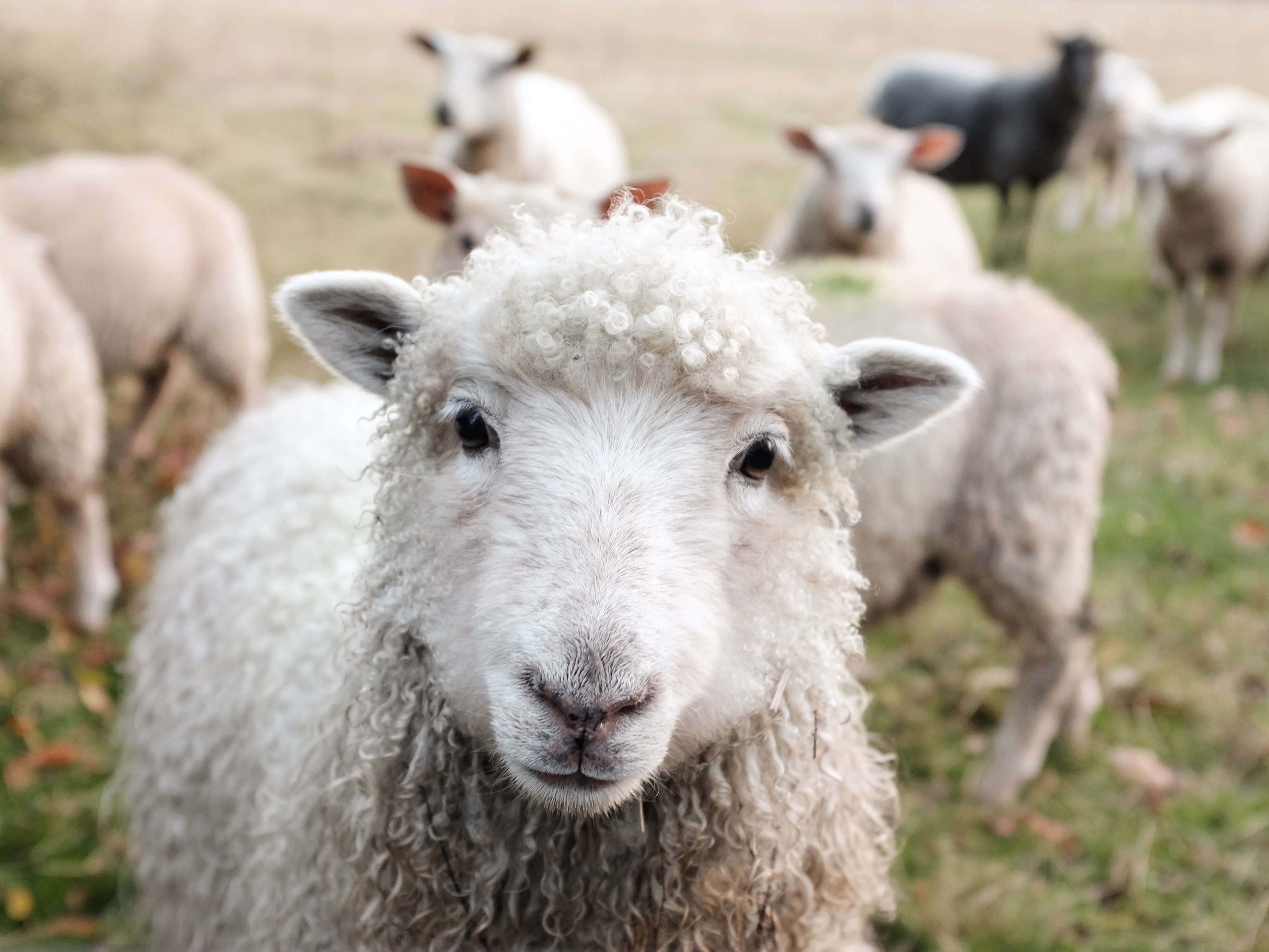
I like crafting in general, I like weaving in particular, and I like the freeing nature of creative constraints, so this “sheep to shawl” competition is right up my alley.
In a Sheep to Shawl competition, you have 5 people, 1 sheep, and 3 hours – NPR
Each team is made up of one sheep and five people: one shearer, three spinners, and a weaver. The team has three hours to shear the sheep, card the wool, spin the wool into yarn, and then weave that yarn into an award-winning shawl.
It’s not exactly the same as NaNoWriMo or drabbles or the 24-hour story challenge we recently did at Writers of the Future (crazy, fun, and not nearly as bad as I thought it would be:) but it’s in the same vein.
Here’s to artists exploring boundaries everywhere.
* * *
Posted in Holidays, Writing, tagged #365Ways, #365Ways2023, genre fiction, inspiration, Writers of the Future, writing on May 17, 2023| Leave a Comment »
Why is that, you ask? Because yesterday was my book birthday and that makes me happy. Thanks to everyone who has expressed interest in volume 39, preordered, ordered, or requested the book from the local library!
It’s a little bit like a fairytale, so today let’s tag along with my Writers of the Future award, which went on a little trip to see the Hugh Comstock fairytale cottages in Carmel-by-the-Sea, California.
Here’s the award visiting Storybook Cottage (although I digitally removed the barriers between the award and the cottage, because symbolism!).
* * *

Posted in Likes, Reviews, Writing, tagged #365Ways, #365Ways2023, #WritersOfTheFuture, creativity, Fiction, genre fiction, inspiration, Writers, writing, yay on May 15, 2023| Leave a Comment »
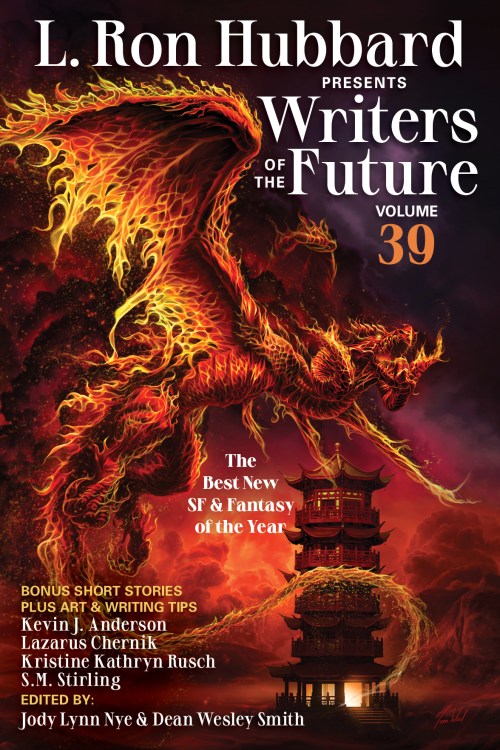
Tomorrow is the book birthday for Writers of the Future Volume 39, which includes my story “Piracy for Beginners” and much more. The publishers went all out, with 544 pages plus a full-color gallery for illustrations, and of course electronic and audiobook versions.
Am I excited? I am. Am I eager for you to meet my fellow authors and illustrators, who are all amazing talents? They are! Will I remind you of these facts again tomorrow? Probably, because I think that anyone with an interest in science fiction and/or fantasy will find something to love in this collection. After reading the book and spending a week with the other new authors, I was impressed and I hope you will be too.
Links!
e/BOOK/AUDIO: Amazon | Apple Books | Barnes & Noble | Bookshop | Google Play | Kobo
* * *
Posted in Holidays, tagged #365Ways, #365Ways2023, family, inspiration, Thoughts on May 14, 2023| 1 Comment »
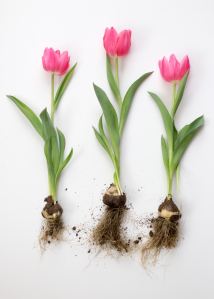
For my mother, and my other mothers, and to all those out there who appreciate flowers, here’s a piece on the history of tulips (one of my mother’s favorite flowers) and their role in art (another of my mom’s favorite things).
Happy Mother’s Day!
There is no other period of art history more closely associated with tulips than the Dutch Golden Age. Marked by economic prosperity, scientific discovery, and flourishing arts and culture, the tulip came to be a hallmark of the Netherland’s successes. There is some disagreement about exactly when and by whom the first tulips were brought to the Dutch Republic, but it is known that they were imported from the Ottoman Empire sometime in the latter half of the 16th century. Already a costly commodity, the demand for specific bulbs of different colors and varieties quickly outpaced the supply of tulips—and thus Tulip Mania, or the Tulip Craze, began. At its height, the price for a rare and prized tulip bulb was on par with a craftsperson’s annual wage.
* * *
Posted in Writing, tagged #365Ways, #365Ways2023, #wotf39, creativity, fun, inspiration, Writers of the Future on May 12, 2023| Leave a Comment »
Here’s a puzzle based on one of the illustrations in the forthcoming Writers of the Future Volume 39 (coming out May 16th!). Both the writer and illustrator of this piece are great artists and lovely people. Can’t wait for you to meet them both in Volume 39, but until then, enjoy Death and the Taxman!
Have fun with this story illustration from Writers of the Future Volume 39 depicting the Grim Reaper, trapped in an IRS agent’s dying body, who must regain his powers before he faces judgment for his original sin. Take a good look at the image before you push the re-start button at the lower left side of the page!
— Galaxy Press newsletter

* * *



You must be logged in to post a comment.