Feeds:
Posts
Comments

Posts Tagged ‘nature’

I’m still watching the Fish Doorbell (it’s been quiet at the times I’m on but it’s still fun), and now I’ve added a new livestream to my list of “things to watch when I need a minute of chill.”

If you also need a minute of chill, check this out:

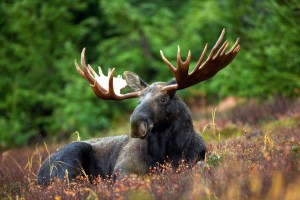
Livestream of moose migrating to their summer pastures fascinates millions | AP News

Before Swedish slow TV hit “The Great Moose Migration” began airing Tuesday, Ulla Malmgren stocked up on coffee and prepared meals so she doesn’t miss a moment of the 20-day, 24-hour event.

“Sleep? Forget it. I don’t sleep,” she said.

Here’s the direct link to this distillation of slow Swedishness: Den stora älgvandringen – Idag 00-00 | SVT Play

Despite the many ongoing challenges of animals in the modern world, there’s something deeply comforting about this reminder that the non-human world continues to turn.

And moose are still on the loose.

* * *

Read Full Post »

Of all Nature’s gifts

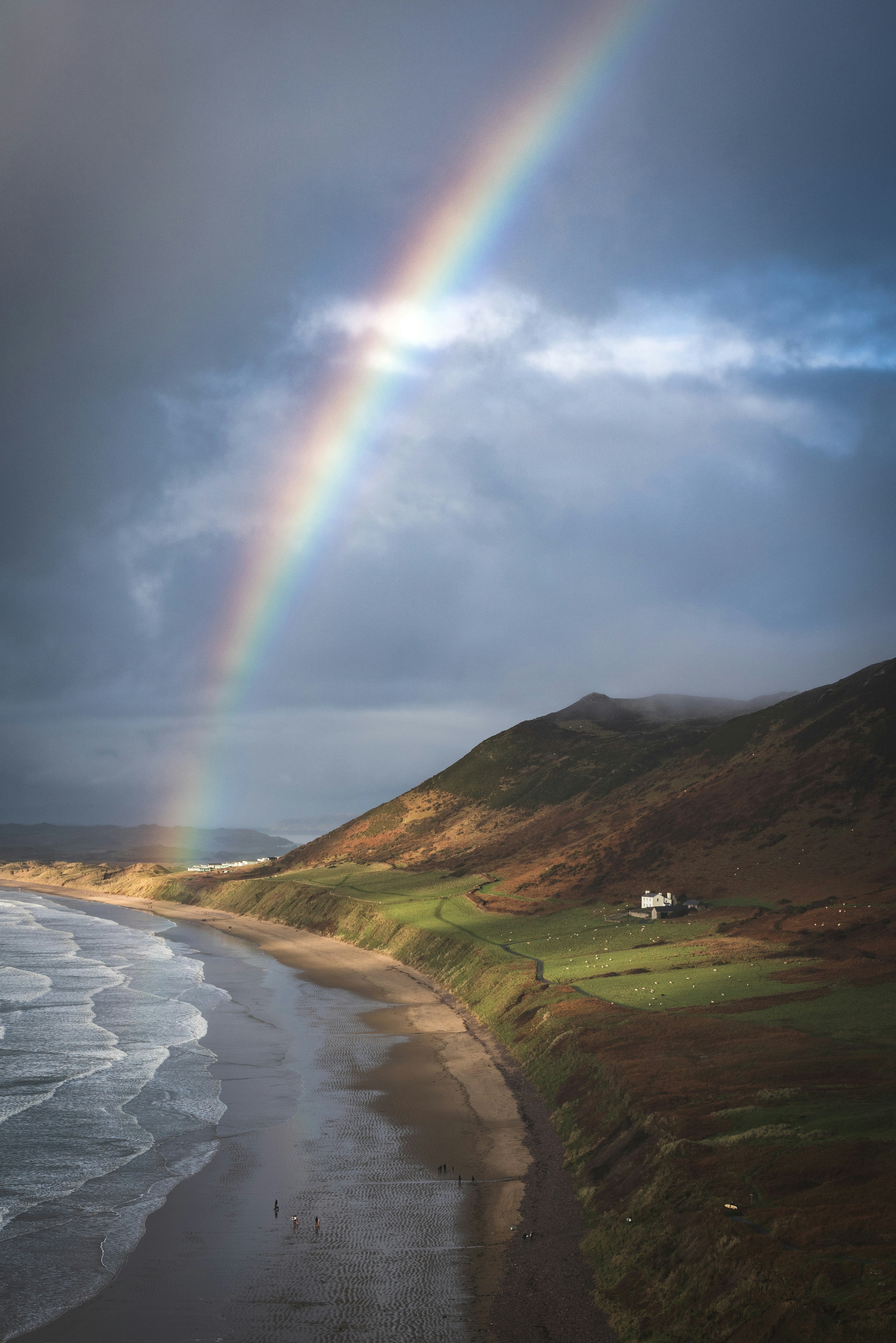
Bright sun, warm rain, skies above…

You bring naught but joy.

* * *

Photo by Marcus Woodbridge on Unsplash

Read Full Post »

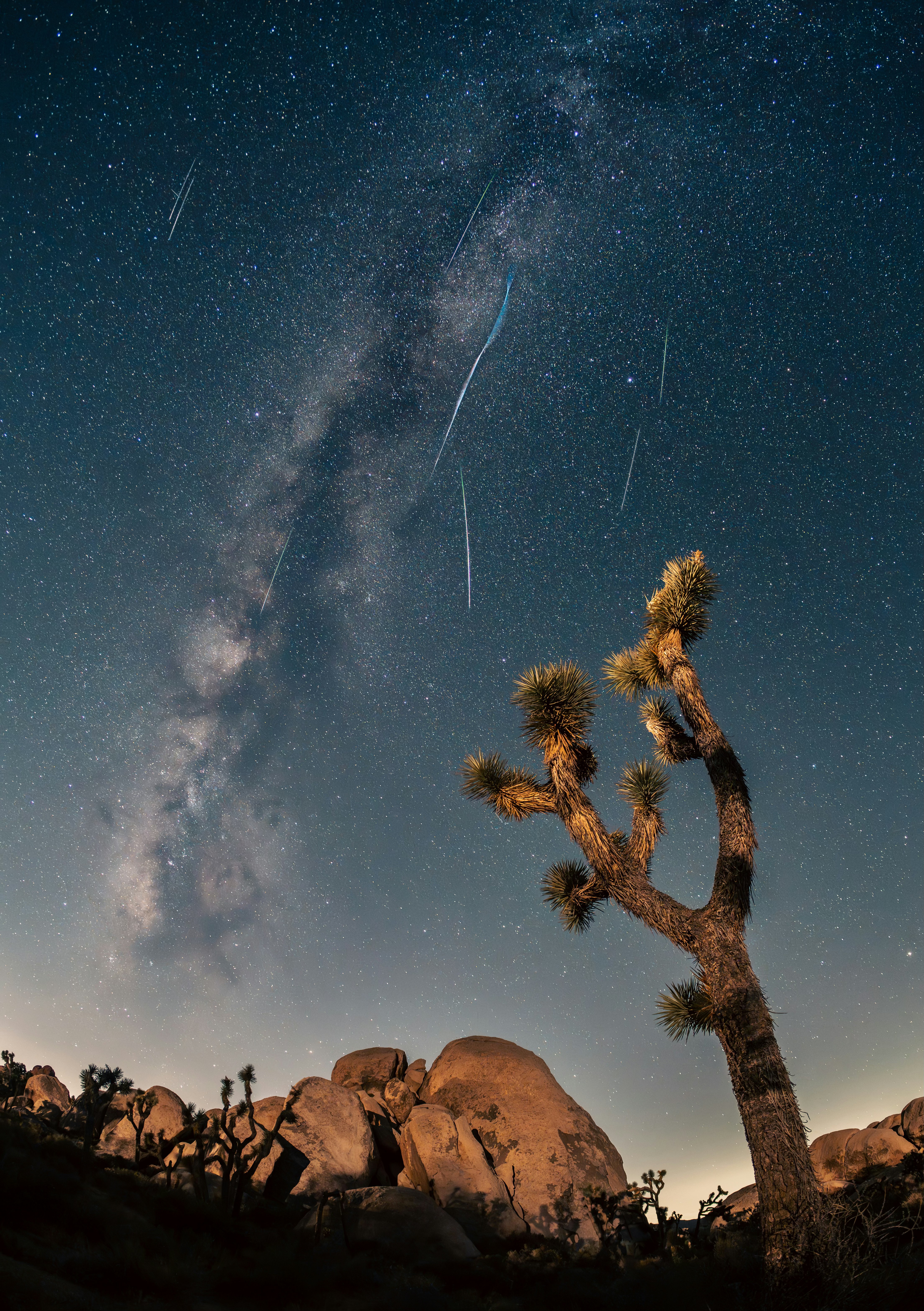
If you happen to live in a place that will have clear skies tonight (or tomorrow), rejoice! It is time for that highlight of the annual meteor shower cycle, the Geminids.

Geminids meteor shower: What to know, viewing tips – NPR

The Geminids, which are bright and have a yellow hue, are considered one of the best and most reliable annual meteor showers, when at least 120 meteors are usually seen per hour during its peak, NASA says. 

The Geminid meteor shower peaks in the middle of December, with the most activity this year expected late Friday and into early Saturday, according to NASA.

Alas, we expect snow and clouds here tonight, but I’m happy knowing that you, dear reader, might have a chance to see one of the most spectacular shows in the solar system.

* * *

Photo by Venti Views on Unsplash

Read Full Post »

Apple Season

One great thing about fall is that it’s apple season. Not that the modern world doesn’t have apples year round, but what better time to enjoy this fruit? Maybe it’s just me and my apple crumble fixation. 

That said, my love of apples has nothing on this guy’s:

Apple Rankings by The Appleist Brian Frange – Comedian Brian Frange

Brian Frange is a comedian and writer who has been yelling about apples for years… 

Start by entering an apple type, scrolling down to browse, or heading over to the list of Apple Rankings, and enjoy the detailed yet humorously opinionated descriptions.

* * *

Photo by LeeAnn Cline on Unsplash

Read Full Post »

Did you know that the traditional Japan almanac recognized 72 micro-seasons?

Japan’s 72 Microseasons | Nippon.com

In ancient times the Japanese divided their year into 24 periods based on classical Chinese sources. The natural world comes to life in the even more vividly named 72 subdivisions of the traditional Japanese calendar.

I thought of that fact this morning when I woke to what felt like a sea change in the weather. The overnight temperatures have been dropping, of course, but there is something else.

Along with a new chill in the air, the morning started with fog that wound between houses, draping the neighborhood in a layer of mystery. The cries of geese echoed down from above as they arrowed south.

It is the season of feathers and fog.

* * *

Photo by Ian Cumming on Unsplash

Read Full Post »

“I’m so glad I live in a world where there are Octobers.”

— L.M. Montgomery

* * *

Photo by Josh Hild on Unsplash

Read Full Post »

Tinged in Red

Nights are cooler, the afternoon sky is a crisp blue, and the outermost leaves of the giant maple tree across the street are tinged in red. It must be time for fall foliage predictions!

Fall foliage map: When and where to expect autumn colors

Click through for animated maps and links to more info, explainers, and a printable coloring book for the kiddos (or you, I don’t judge!).

* * *

Photo by Chad Madden on Unsplash

Read Full Post »

This is just all kinds of delightful:

Giant Trolls in Detroit Lakes Bring the Public on a Fairy Tale Adventure

The Danish artist has continued to expand his work in America and has just completed his most ambitious project ever with Alexa’s Elixir. Located in Detroit Lakes, Minnesota, the exhibition takes people on a journey to solve a riddle and find a Golden Rabbit.

Sculptor, recycling artist and activist Thomas Dambo makes giant trolls and shares them with the rest of us. And when they say “giant,” they mean it!

If you happen to be in the Detroit Lakes area of Minnesota, this looks like a lot of fun.

WHERE ARE MY TROLLS ? LOST 9 SCULPTURES IN MINNESOTA! – YouTube

* * *

Photo by Sean Foster on Unsplash

Read Full Post »

Wait, today is the summer solstice already? Not quite sure how that happened but here we are, almost halfway through the year. That’s a little scary (time, it flies!) and a lot reassuring: the world keeps turning, no matter what. 

So here we go again!

Summer solstice: Everything you need to know about the longest day of the year

The summer solstice is Thursday, June 20. It’s the longest day and shortest night in the Northern Hemisphere. It’s also the first official day of summer.

Happy summer!

* * *

Photo by Ankit Sood on Unsplash

Read Full Post »

Last year Mr Man and I drove north from Los Angeles. Our goal was San Francisco and points in between, but before we could get there we had to escape LA. Our hotel room faced south and had a view of the pool and a sliver of Hollywood Boulevard, but nothing that resembled nature. We plotted a course out of the city that took us north through the canyons and picked up a rental car. 

Heading into the hills, we drove through a landscape that, while studded with the bright flowers of a superbloom, revealed a checkerboard of green growth and canyons sliced into smaller and smaller segments. Hollywood, Beverly Hills, the 101 and the 405 frame the natural world in a rigid network of pavement.

How, I wondered, do animals without wings survive here? The answer is with difficulty.

There is, however, some good news on that front!

World’s largest wildlife bridge will help animals cross California highway – The Washington Post

The 10-lane freeway that slices through this part of Southern California is one of the busiest in the country, ushering more than 300,000 cars across the greater Los Angeles area every day.

For drivers, it’s a nightmare: This stretch of Highway 101 is known as the “highway from hell,” the infamous host of the nation’s worst commutes.

But if the 101 is bothersome for bipeds, it is downright disastrous for the wildlife that also calls the region home. The 101 cuts like a chain saw through a vibrant natural ecosystem of coastal sage scrub and oak trees interspersed with suburban neighborhoods, disrupting the movement of animals and threatening their survival.

Now a massive infrastructure project is underway to suture together the vast tracts of fragmented wildlife habitat that have been separated by the highway for decades. Construction on a key phase of the Wallis Annenberg Wildlife Crossing — a $100 million structure funded by a mix of public and private money — began last month and is expected to open in early 2026.

One thing the article doesn’t get into is the fact that wildlife crossings, while not cheap to build, actually save money and lives. 

Earth Day Success Story: Wildlife Crossings Keep Animals and People Safe – Newsweek

“They are a cost-effective way of addressing the problem from the human side,” she said, pointing out the human toll from collision deaths, injuries and damage to vehicles. “We’ve got structures in the western states where they pay for themselves in less than five years.”

Like, A Lot of money, and A Lot of lives, both animal and human. It’s also not just a problem in highly urbanized landscapes like LA.

Animal crossings over and under highways can save big dollars — not just lives — says new study

WSDOT published a report of its own earlier this year on the benefits of wildlife crossings for road safety. Aside from matters of life and death, WSDOT estimated the average vehicle-deer collision resulted in economic costs of $9,175. Hitting an elk ballooned the average cost per collision to $24,242 and a moose even more, $42,652 per collision.

The good news is that California isn’t the only one getting in on this party. They’re actually a little late to the game. Canada pioneered wildlife overpasses two decades ago, and the idea has spread around the world.

The story of Canada’s pioneering adventures in overpasses for non-humans: As Banff’s famed wildlife overpasses turn 20, the world looks to Canada for conservation inspiration.

Fancy study with many long paragraphs and detailed mitigation case studies but here’s the really interesting bit: It can actually cost less to build a crossing than to do nothing. As an example, it’s estimated that the annual cost of animal collisions at $232 million (in 2021 dollars, which is like a million bajillion now).

And finally, here’s a page with a handy chart summarizing the average “Direct monetary costs of ungulate-vehicle collisions” (as a Pennsylvanian/Canadian I know such collisions are a big deal, but it’s even more dramatic to see the difference between the cost of hitting a deer ($6,617 and a moose $30,760 (in 2007 dollars, no less)!)

In conclusion, I love the idea of animal crossings for a number of reasons. Not only does it save animals and ecosystems while costing less in the long term, it also safeguards people. I love solutions that are smart, sensible, and just make sense.

Win win!

* * *

Photo by Tor Stryger on Unsplash

Read Full Post »

« Newer Posts - Older Posts »