Feeds:
Posts
Comments

Posts Tagged ‘science’

It’s Tuesday (ugh) and it’s practically a Monday thanks to the holiday weekend and I’ve been thinking about Nature thanks to our recent museum visit, so let’s get a little weird, shall we?

Welcome to the University of Glasgow’s Wellcome Centre for Integrative Parasitology!

What’s this, you may ask? A serious science center (excuse me, centre) with a public engagement arm so dedicated and creative that they turned parasites into a comic book? And when the first issue became a surprise hit, went on to produce a five-part series about some of the world’s most impactful parasites?

Yes, that is exactly what I’m saying.

You’re wellcome.*

* Heh, see what I did there. Yeaahhh, because it’s that kind of day:)

* * *

Photo by João Pedro Schmitz on Unsplash

Read Full Post »

Here’s an interesting puzzle: How Do You Send a Warning 1,000 Years into the Future? – Now I Know

Think back to what the Earth was like a thousand years ago — the year 1,015. Almost everything would be foreign to modern eyes and ears — even the language would be incomprehensible. For all intents and purposes, humanity from a millennium ago may as well be an alien species (culturally, at least) with similar DNA, which simply happens to have lived on the same planet we do now.

How do we communicate with people so far removed from our own language, culture, and assumptions? It’s a great question, whether you’re thinking about the safest approach to nuclear waste disposal or contacting aliens.

In order to keep the people of the future safe from the radioactive goop created today, we need a way to tell them to watch out. And more likely than not, very few aspects of today’s society will be around to do that. Even a sign warning travelers of potential dangers would be insufficient — who among us could translate runes from the Middle Ages?

(My mom, that’s who, but point taken.)

What particularly interests me about these proposed solutions (an Atomic Priesthood dedicated to perpetuating knowledge through myth? color-changing cats?!) is that they seem to have skipped over the most obvious approach. How to conjure the fear of death, to warn people away, and to alert the future not to what is there, but what will happen if it is disturbed?*

This is a plague panel from the early 17th century. If you saw this on a house, would you go in or turn and run the other way?

Deutsches Historisches Museum Berlin, Public domain, via Wikimedia Commons

In the end, the U.S. Department of Energy plan opted to go with warning signs in multiple languages illustrated with images of people in pain. Still, I wondered, what’s wrong with the classics?

Another odd writer thought, brought to you by an odd writer.

* Also, the real problem seems to be the gap between exposure and untimely demise. If you break into a tomb and die immediately, that sends a pretty strong message. And no one has to tell people not to build on an active lava flow, but a peaceful-looking mountain with fertile soil close to the bustling port of Naples and the dynamic town of Pompeii (circa 78 AD)? What’s not to like?

* * *

Photo by chris robert on Unsplash

Read Full Post »

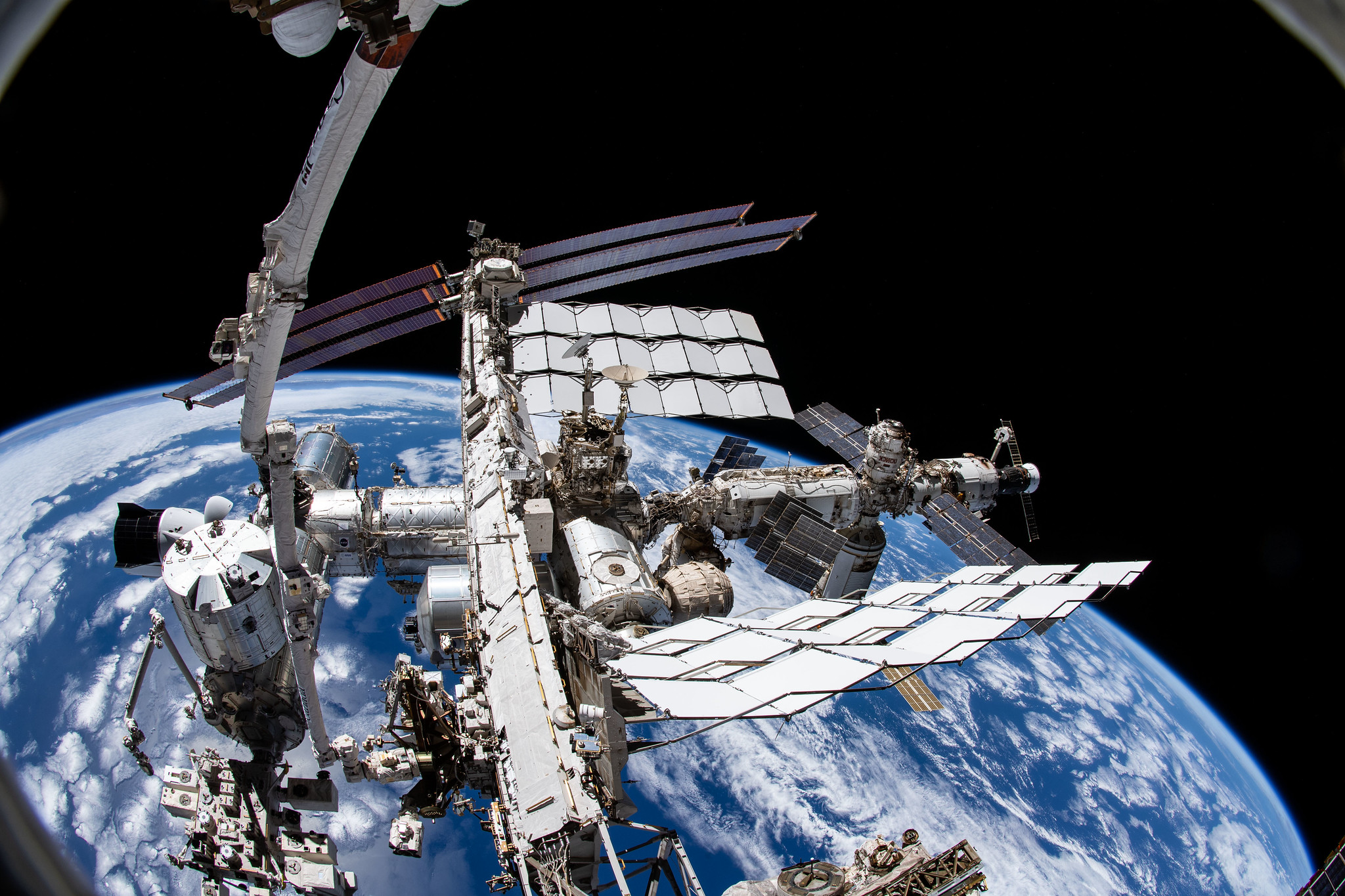
The folder where I keep post ideas is filling up with space stories. Many of them are about Mars, but let’s start with something a little closer to home and go more than 250 miles above Earth to the International Space Station.

NASA’s site has lots of info and fun facts like these.

Did you know that the ISS has been continuously occupied since November 2000? That you can track its position live? Or that the station’s live/work space is larger than a six-bedroom house? 

View from NASA spacewalker Thomas Marshburn’s camera via Flickr

Sounds like the place is downright homey. And that’s a good thing, as Butch Wilmore and Suni Williams, the two astronauts who have been stuck at the ISS due to problems with Boeing’s Starliner spacecraft, will no doubt attest.

How Two Stranded Astronauts Are Camping Out in Space | TIME

Williams’ and Wilmore’s short stay may now not be over until February—stretching an eight-day mission to an eight-month one….

Initially, they were to spend most of their eight days aloft working in the Starliner—checking its communications, life support, power, and other systems. But they long since finished up that checklist and have instead been assisting the rest of the crew with science experiments and maintenance chores, including such unglamorous work as repairing a urine processing pump.

That sounds super fun (actually, it kind of does), but it’s not all work up there. Are they staring out the viewport at Earth, pointing out their house sixteen times a day? Competing in the Space Olympics? (Not a thing, as far as I know, but astronauts do have to exercise two hours a day to maintain muscle mass and general health.) Have they used their spare time to compose a space-themed version of the Gilligan’s Island theme song? (Did I ask AI to do this? Maaaaaybe. But if I did, it wasn’t very good.)

Speaking of television, perhaps they’re catching up on their favorite shows. Did you know that astronauts can binge-watch just like the rest of us?

Every TV Show Astronauts Can Watch on the ISS Right Now

There are, of course, space-themed shows like Hulu’s The First with Sean Penn from 2018, the critically acclaimed alt-history drama For All Mankind, and the Trump-era comedy Space Force. Other new series include Book of Bobba FettThe Crown, and the cooking show Chopped. Other sci-fi series include AndorStar Trek DiscoveryFirefly, and Battlestar Galactica

Still no word on who gets to hold the remote.

* * *

Photo by Jared Allen on Unsplash

Read Full Post »

I’m reading a nonfiction book that is fascinating, detailed and (so far, at least) very well written. My favorite sentence from the bit I read at lunch is this perfect illustration of how to set the tone as well as the stage:

The lighting is subtle, the decor an elegant symphony of beige.

— Gretchen Bakke, The Grid: The Fraying Wires Between Americans and Our Energy Future

Can’t wait to read the rest!

* * *

Photo by Photoholgic on Unsplash

Read Full Post »

I’m a simple person with simple questions. Fortunately, xkcd is here to answer at least some of them. Like this, for example:

* Fascinating, and also possibly sponsored by the Dutch.

* * *

Photo by Priscilla Du Preez 🇨🇦 on Unsplash

Read Full Post »

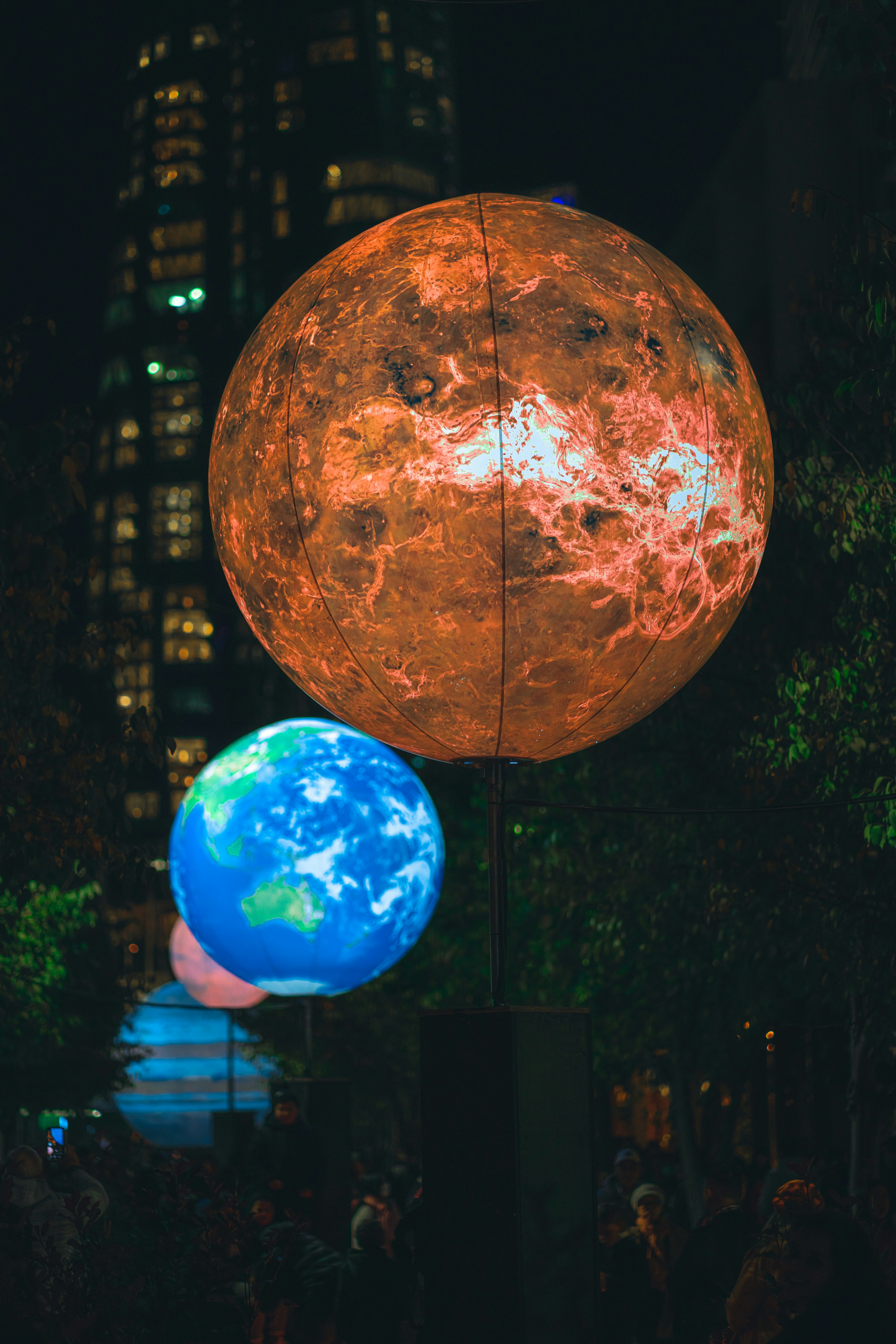
Apologies for the late notice but this is a public service announcement. Please be aware that there will be a parade in your neighborhood about twenty minutes before sunrise, on the morning of June 3rd, and everyone is invited!

Planet Parade 2024: How To See Rare Celestial Event

This rare event, often referred to as a “planet parade,” will occur on June 3, 2024, and feature Mercury, Mars, Jupiter, Saturn, Uranus, and Neptune all lining up close together.

Unfortunately, most of the planets won’t be visible to the naked eye, but it’s fun just to know that it’s happening.

* * *

Photo by Chris Andrawes on Unsplash

Read Full Post »

A phrase in a recent Storybundle promo caught my eye: “real life would be better if it had magic.”

Not that I actually think there are werewolves and vampires lurking around every corner, and I definitely believe in the power of science and all its wonders, but in general? I couldn’t agree more.

For me, magic is possibility

Magic is the sure and certain knowledge that while we like to think we know everything the world has to offer, we do not.

I find that encouraging. You may have noticed that our world has a number of pressing issues, from the social to the political to the environmental. It would be wonderful to be able to pull out a magic wand and make those problems go away, but that’s not how our magic works.

Our magic is anchored in reality. I’ve talked about this idea before, but think it bears repeating. Just like the best fantasy, it relies on people (that’s you and that’s me) who care about their family, their friends, and their communities. 

This form of magic is slower, yes, but surer. A rogue warlock can’t come along one day and upend everything we’ve worked for, just because he stole a forbidden spell from the archives of Alexandria-Under-Sea. (The Lernaean Hydra has been protecting those archives for centuries, thankfully! If you visit, tell him I sent you. And bring salmon snacks, he loves those.)

It also means that the problems and constraints we face today aren’t necessarily permanent. Not if we continue to study, to observe, to understand the world around us. (To quote Kurt Vonnegut, science is magic that works.) Not if we understand that every face is a mirror of our own humanity. Not if we are brave and focused and keep our eyes on our goals.

And if someone tells you that there is no hope? That you might as well give up?

Don’t listen to them.

So what if you’ve misplaced your magic wand. That’s ok, you can still be a hero. You can make your own magic.

Just embrace a world of possibilities. And then work to make it real.

* * *

Photo by Lena Polishko on Unsplash

Read Full Post »

Our eclipse experience was great. We found a terrific little nature preserve called the Cooper Marsh Conservation Area, with boardwalks, picnic tables, lawns and benches. Lunch, exploration, then a bit of chillaxation as we waited for the eclipse.

When they said that there is a significant difference between 99% and totality, they were not kidding. It was a beautiful day, but when the light faded and the stars came out? Just perfect.

If you missed it, here are highlights from NASA’s feed, along with a collection of images.

Amazing!

* * *

Read Full Post »

If you can go outside and view the eclipse using protective glasses or an indirect method like a pinhole or disco ball, great! But even if you can’t get outside, there are many ways to watch the event online, like The Planetary Society’s live cast with Bill Nye.

* * *

Photo by karen kayser on Unsplash

Read Full Post »

Why care about Monday’s eclipse (aside from the fact that it’s demonstrably cool)? This physicist is working to find answers to the why, how and how bad of coronas and solar storms, and eclipses can help with that. How? Read on!

Why a solar physicist has been chasing solar eclipses for more than three decades – Vox

Despite how much damage solar storms can do to our tech on Earth, scientists are still struggling to predict them. And that’s because they don’t understand that much about how the corona works.

* * *

Photo by Selvan B on Unsplash

Read Full Post »

« Newer Posts - Older Posts »