Feeds:
Posts
Comments

Posts Tagged ‘science’

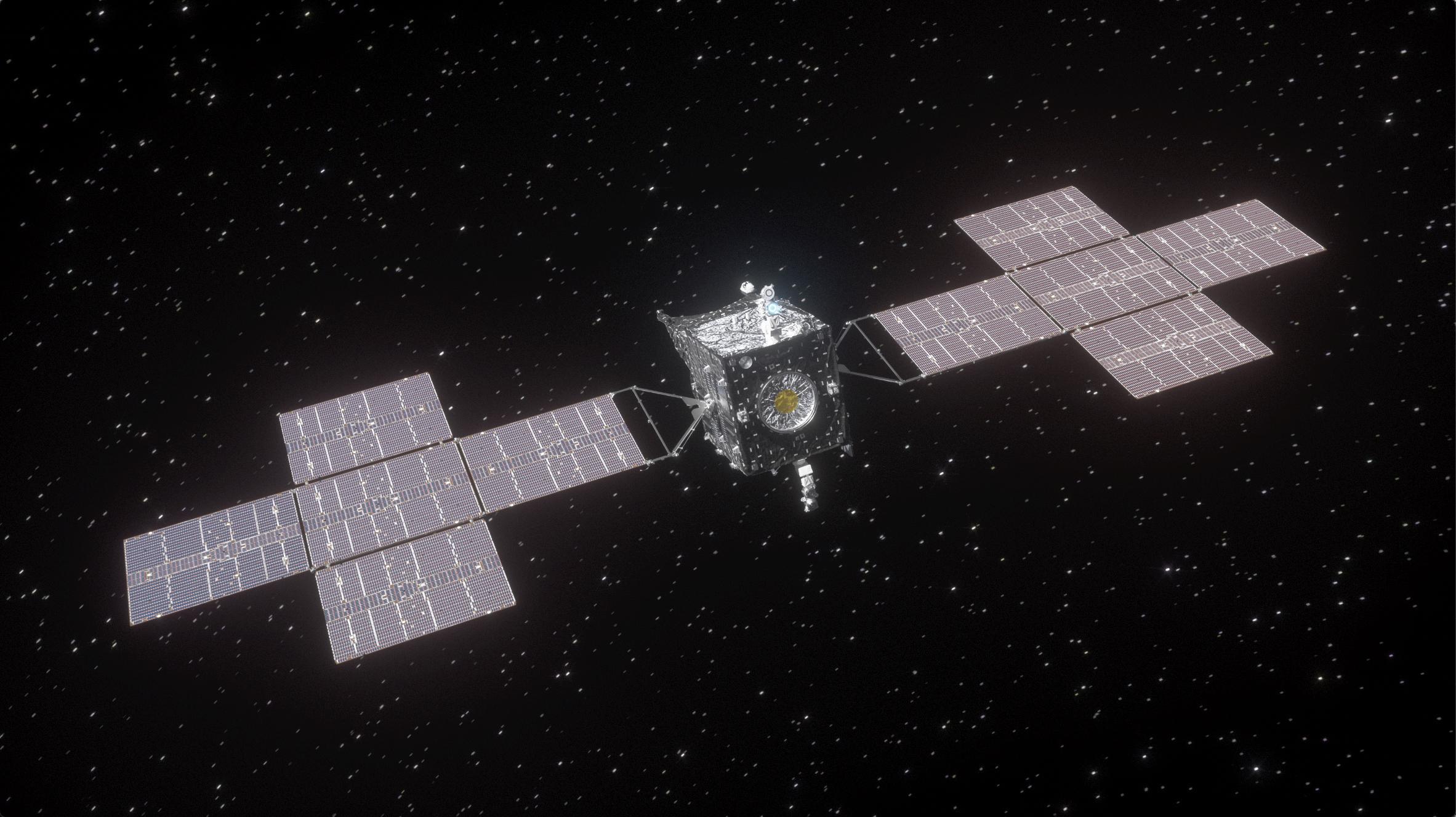
In less than an hour, NASA is set to launch Psyche, a mission to an asteroid with lots and lots of bling, arrival date in 2029.

Set to launch from NASA’s Kennedy Space Center in Florida, Psyche will travel across the solar system to an asteroid of the same name, which has unusually high metal content. Scientists hope understand why this is so, and to help answer fundamental questions about Earth’s own metal core and the formation of our solar system.

— Psyche – NASA

All of those important fundamental questions, yes. But you know they are also going to look for the shiny shiny. 

For more on the mission:

6 Things to Know About NASA’s Asteroid-Exploring Psyche Mission – NASA

Can’t wait until 2029 to get into all things Psyche? Get Involved Opportunities | NASA Psyche Mission

(I particularly like the examples of #PsycheSpaceCRAFTY.)

Watch the launch live:

(Good news from the future: New mission to metal-rich asteroid Psyche successfully blasts off!)

* * *

Peter Rubin/NASA/JPL-Caltech/ASU (PIA25138): NASA’s Psyche Spacecraft en Route to the Asteroid Belt (Artist’s Concept) 

Read Full Post »

Today, we hope to receive a very special delivery: a capsule containing a sample of an asteroid.

The OSIRIS-REx mission has been in progress for over seven years. Today we find out if its ultimate goal is successful.

In Depth | OSIRIS-REx – NASA Solar System Exploration

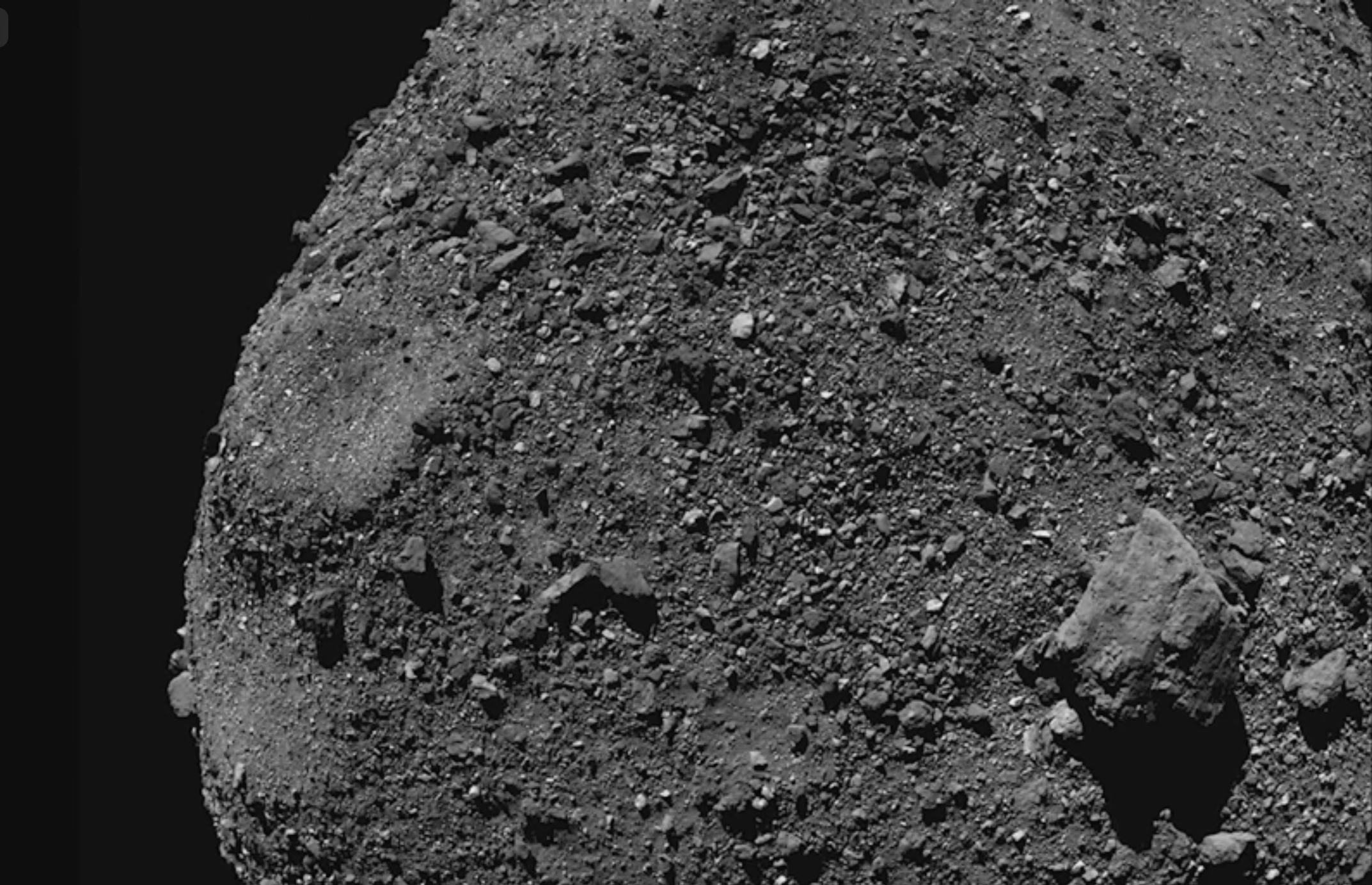
The Origins, Spectral Interpretation, Resource Identification, Security-Regolith Explorer (OSIRIS-REx) is the first U.S. spacecraft to collect a sample from an asteroid. OSIRIS-REx traveled to near-Earth asteroid Bennu and is bringing a small sample to Earth for study…

The mission, developed by scientists at the University of Arizona, will give us more information about how the early solar system formed and about how life began. It will also help us better understand asteroids that could impact Earth in the future.

The plan is for the return capsule to land at the Defense Department’s Utah Test and Training Range. If successful, humanity will have the opportunity to study pristine asteroid material.

Interested in videos, activities, and other information about the mission? Here you go:

OSIRIS-REx Resources – NASA Solar System Exploration

The capsule is expected to land at approximately 10:55am Eastern time. Want to watch the livestream? Me too:)

OSIRIS-REx Asteroid Sample Return (Official 4K NASA Broadcast)

* Spoiler alert! The mission was a success!

* * *

Read Full Post »

It’s that time again. If you are in the northern hemisphere on planet Earth, today is the Fall Equinox.

Autumnal Equinox 2023: First Day of Fall | Facts, Folklore & More | The Old Farmer’s Almanac

After the autumnal equinox, days become shorter than nights as the Sun continues to rise later and nightfall arrives earlier. This ends with the winter solstice, after which days start to grow longer once again. 

The word “equinox” comes from Latin aequus, meaning “equal,” and nox, ”night.” On the equinox, day and night are roughly equal in length.

Why just “roughly” equal in length?

Why day and night aren’t equal length on an equinox

Firstly, the sun has a size—it’s not just a point in the sky.… Secondly, the Earth’s atmosphere refracts (bends) sunlight.

What does the ebb and flow of axial luminescence look like from space?

NASA: Seeing Equinoxes and Solstices from Space

For more on the “why” of seasons, check out this explainer:

What Causes the Seasons? | NASA Space Place

* * *

Photo by Alicia Petresc on Unsplash

Read Full Post »

NASA just released a report on the current status of research on unidentified anomalous phenomena, more commonly referred to by Area 51 enthusiasts as UFOs.

Here’s the full report:

UNIDENTIFIED ANOMALOUS PHENOMENA: Independent Study Team Report

Don’t have time for the full document? Here’s a summary article:

NASA UFO report finds no evidence of ‘extraterrestrial origin’ for UAP sightings | Space

NASA’s UFO study team released its long-awaited first report today, and while its experts found no signs of extraterrestrial origins for reported sightings, the space agency is appointing a new chief to study the phenomenon.

The takeaway? Sorry, folks, it’s not aliens.

But.

When it comes to mysteries like these, we still have a lot more to learn. 

* * *

Photo by Gene Brutty on Unsplash

Read Full Post »

This week, you have a once-in-a-430 year chance to see a new comet. Comet Nishimura was just discovered last month, and will be gone by the end of the week.

Nishimura green comet: what is it, how to see it and when it will be back – NPR

Scientists determined that this comet takes about 430 years to orbit the sun.

So the last time it was visible from Earth was in the late 1500s — before Galileo Galilei pointed his telescope to the sky.

The last time this comet came through these parts was just a few years before Galileo invented his telescope. The comet was discovered just last month, by an amateur astronomer named Hideo Nishimura.  

There are good images of the comet as well as detailed location information here: The new comet Nishimura is closest to Earth today.

I should have posted this a few days ago, because the comet is now passing us. If you’re interested, the comet is visible this week with binoculars or a telescope, but only with effort and only from the northern hemisphere. Try looking toward the east, low on the horizon, before sunrise, and look for the constellation Leo.

I don’t have good binoculars or a telescope, but that’s fine. It’s enough for me to know that this comet, and so many other fascinating objects, are still out there. 

Waiting to be discovered.

* * *

Photo by Sten Rademaker on Unsplash

Read Full Post »

Today’s Word of the Day (in my world, at least) is “noctilucent.”

The term is typically applied to a specific type of cloud, “a luminous thin usually colored cloud seen especially at twilight at a height of about 50 miles (80 kilometers).” It’s the luminous aspect that makes these clouds particularly dramatic.

Noctilucent clouds: What are they and how can you see them? | Space

The name noctilucent is derived from the Latin words “nocto” and “lucent” which translates to “night” and “shining” respectively, according to Merriam Webster.

These clouds are seasonal, and in the Northern hemisphere that season is now.

Noctilucent clouds: The season starts now!

The season for noctilucent clouds at northerly latitudes is now. People at high latitudes report seeing noctilucent clouds. This happens every year, from about May through August in the Northern Hemisphere, and from November through February in the Southern Hemisphere.

I chose this word because its Latin origins are interesting to unpack, it refers to a beautiful and intriguing phenomenon, and it’s fun to say.

The world is a marvelous, mysterious and magical place. Science (and science fiction!) just makes it that much better.

* * *

Photo of noctilucent clouds taken in Laboe, Germany, on June 21, 2019. Image by Matthias Süßen/ WikipediaCC BY-SA 4.0.

Read Full Post »

Happy summer solstice, everyone! (Fine, it’s called the June Solstice, but we all know what that means here in the Northern Hemisphere, don’t we? Summer!)

What is it?

Do You Really Know Why Earth Has A Solstice? – 13.7- Cosmos And Culture – NPR

Remarkably, Earth has seasons for the same reason that a good quarterback can throw a tight spiral. 

Even more explanations:

June Solstice 2023: Shortest & Longest Day of the Year

Why is it a thing?

Because it’s cool. And also because our ancestors knew a lot about practical astronomy. Seasons mattered.

* * *

Photo by Hulki Okan Tabak on Unsplash

Read Full Post »

Here’s an interesting puzzle for the science-minded:

A message just arrived from outer space (but not aliens). Decode it!

After decades of searching for extraterrestrial intelligence, humanity finally picked up a message from outer space today. Three of Earth’s top radio astronomy observatories detected the signal coming from somewhere near Mars. Its content has yet to be decoded.

Okay, okay, the message is not actually from aliens. Humans arranged for it to be transmitted to simulate receiving a signal from extraterrestrials. Consider it a dress rehearsal — a chance for us all to see how we’d respond if aliens really did transmit a message to Earth.

For more background on the project and the coded message, head to A Sign in Space.

Also, who knew that SETI has an artist in residence (and are we sure she isn’t an alien?)

* * *

Photo by Donald Giannatti on Unsplash

Read Full Post »

Today’s post is brought to you by fiber optic cable, the innovation currently being inserted into my lawn.

In a discussion about grass vs. clover lawns today, I mentioned that our neighborhood is being wired for fiber internet. For weeks, we’ve had orange-vested dudes (and they’re all dudes) roaming in packs, hauling giant spools of multi-colored cables, digging up driveways and yards (and reseeding with industrial-strength grass seed), and generally doing their best to drag our 1990s development into the modern era.

Now we’ve got cable ends sticking up everywhere, a new panel in the grass looking like a secret bunker entrance, and neighbors wondering whether all this fuss is worth it. 

It also led to the question, how do fiber optics work, exactly?

Answer: I have a layman’s understanding of the technology (data becomes light and zoom zooms down a shiny glass tube) but yeah, better look that up:)

* * *

Here’s a quick backgrounder about fiber optics from the folks who invented it.

Educational Resources | Optical Fiber | Optical Communications | Corning

Corning scientists Dr. Robert Maurer, Dr. Peter Schultz, and Dr. Donald Keck invented the first low-loss optical fiber in 1970. Inspired by their belief that information could be transmitted through light, Drs. Maurer, Schultz, and Keck spent four years experimenting with different properties of glass until they succeeded, creating the first low-loss optical fiber for telecommunications use.

How does it work?

Encoded into a pattern of light waves, information travels through each optical fiber by a process of internal reflection. The waves move through the fiber from a given source to a destination such as a cable box where it is then decoded.

(So is it a little like a super sophisticated version of an Aldis signal lamp? I guess that’s one way to think about it.)

For more (and more scientific) details, check out this excellent video:

And just for fun, how do they connect North America to Africa to Asia, and everywhere else?

* * *

Photo by Umberto on Unsplash

Read Full Post »

More Mars

You can now explore the highest-res map of Mars ever made

also 

NASA released wild footage of Mars helicopter flying over alien desert | Mashable

* * *

Photo by SIMON LEE on Unsplash

Read Full Post »

« Newer Posts - Older Posts »