Sadly, the Artemis II moon mission has been pushed back again, and the new launch window now won’t happen until April at the earliest. Pesky helium flow issues!
Happily, this week we can entertain ourselves with a planetary conjunction!
Look up this week and see a whole bunch of planets. Just after sunset, looking west (mostly), planets Mercury, Venus, Saturn, and Jupiter will all be visible to the unaided eye simultaneously.
We’ve lived in this house for years but this morning I discovered something new. Some confluence of sun angle, time of day and positioning meant that the lampshade in the kitchen reflected a rainbow-colored series of textured light onto the ceiling. It was both joyful and unexpected, reminding me that there is beauty everywhere.
If I look.
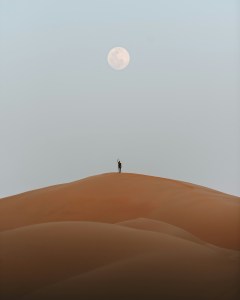
Speaking of reflected light, there’s a full moon tonight.
Tonight’s moon is known by many names, including the Wolf Moon, Cold Moon, and Snow Moon. We may finally have clear skies tonight, too, and I’m looking forward to looking up.
February’s Full Snow Moon reaches peak illumination at 5:09 P.M. EST on Sunday, February 1. Step outside after dusk to see the Full Moon in all of its glory!
Since we’re here, I’ll share a link that led to a flurry of conversation in my family.
On July 20, 1969, the Apollo 11 Lunar Module with Neil Armstrong and Buzz Aldrin aboard touched down on the surface of the Moon 4 days, 6 hours, and 45 minutes after having launched from Cape Canaveral. At 02:56:15 GMT, Neil Armstrong became the first human to set foot on another celestial body.
My parents were remembering where they were when it happened (at the next-door neighbor’s in Michigan, because they didn’t have a television), and what it felt like to watch the landing. Uplifting.
And looking ahead, NASA’s first crewed mission around the moon in over half a century will be happening soon.
Like many of you, we caught some of the winter weather that’s making such a splash this weekend. I feel for those who are digging out from the snow and sleet and ice many got, but for us it was a little snow and a lot of cold.
We hit -34C last night, which is (checks notes) really really cold! Which made today the perfect day to post this quick @ScienceandtheCity video on how space would feel, temperature wise.
We Earthlings are in the middle of the Leonid meteor shower. It takes place this year from November 6th through the 30th, but will peak overnight tonight. Even better, the moon is only 9% full, so the only competition will be from human light sources.
Overnight from Tuesday to Wednesday, November 4-5, the Sun, Earth, and Moon will align in syzygy, with the Earth-facing side of the Moon fully illuminated by the Sun.
So last night, tonight, and tomorrow all showcase the moon at its best. I don’t know about you, but I do not get tired of that big bright ball in the sky getting even bigger and brighter.
Being away from the rest of us doesn’t mean Curiosity isn’t getting the best dirt. In fact, its latest discovery has the potential to stir up what we know about life on Mars!
Here’s Neil deGrasse Tyson to break it down for us:
As Neil asks, “Could we have Martian neighbors?” If yes, would they fancy a mid-afternoon coffee break?
I have a folder of interesting articles, quotes, and ideas. When the cicadas are buzzing and the temperature is too hot to think of anything particularly timely, I search that folder for stories that might interest you.
Today, this treasure trove of ideas wants you to know about a critical space station issue: water.
When you’re on a camping trip, you might have to pack your own food and maybe something to filter or treat water that you find. But imagine your campsite is in space, where there’s no water, and packing jugs of water would take up room when every inch of cargo space counts. That’s a key challenge engineers faced when designing the International Space Station.
Real life Dune! Ok, not really, but kind of! And this is exactly the sort of technology that can benefit the Earth-bound among us too.
Whoops, I forgot to mention a recent solar system milestone. Two days ago, the Earth (that’s you and that’s me!) reached aphelion, or the point in our orbit at which we’re the farthest distance away from the Sun. That puts us at approximately (give or take the distance we’ve traveled in the past two days) about 3 million miles farther away from the sun than we are at perihelion.
This happens every year in early July, which might sound backward. If we’re farthest from the sun, shouldn’t it be cooler?
The answer lies in the fact that the Earth gets closer to and farther away from the Sun, but it’s also tilted.
Our planet spins at an angle — about 23.5 degrees — which means different parts of the globe receive more (or less) sunlight depending on the time of year. In July, the Northern Hemisphere is tilted toward the sun, bringing longer days and higher sun angles that lead to more direct sunlight — all of which produce summer-like heat.
Since Kepler’s laws of motion dictate that celestial bodies orbit more slowly when farther from the sun, we are now moving at our slowest pace in orbit, slightly less than 18 miles per second (29 kilometers per second) compared to just over 19 at perihelion.
Given that, today might be a good time to relax, and enjoy the ride.
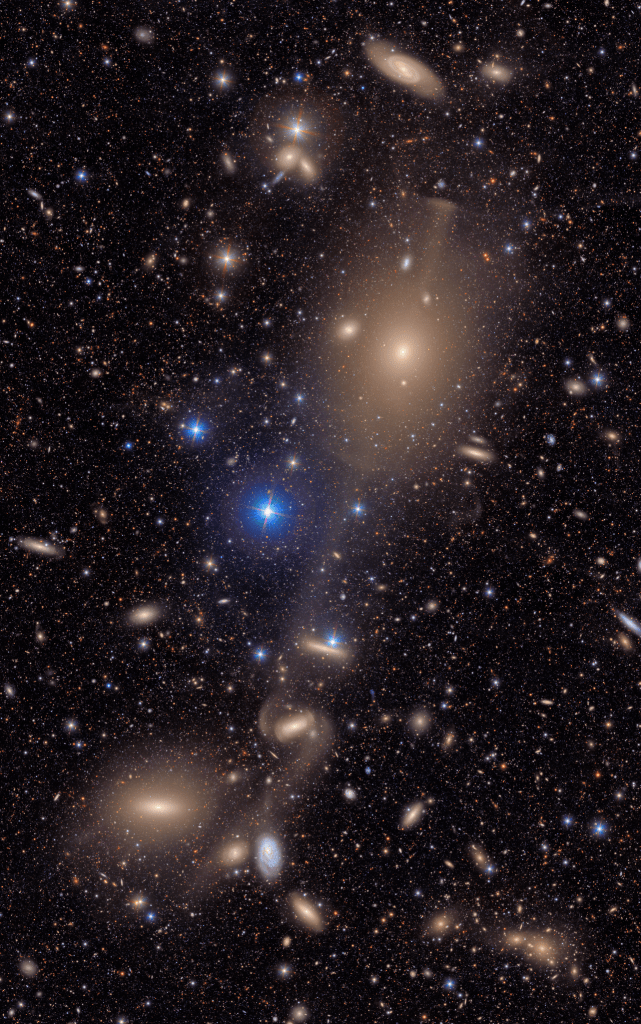
If you don’t track space news or astronomy news or science news, you may not have seen the announcement about the debut of the Vera C. Rubin Observatory’s recent drop of galactically cool imagery.
Even if you have seen the announcements, you may not know the story behind the observatory, its world-beating telescope, or the woman it’s named after. Here’s a quick orientation and of course, a look at some of that amazing imagery.
The Legacy Survey of Space and Time camera is expected to capture more information about the universe than all optical telescopes throughout history combined.
What is the observatory observing from its perch on Cerro Pachón in Chile? All the things!
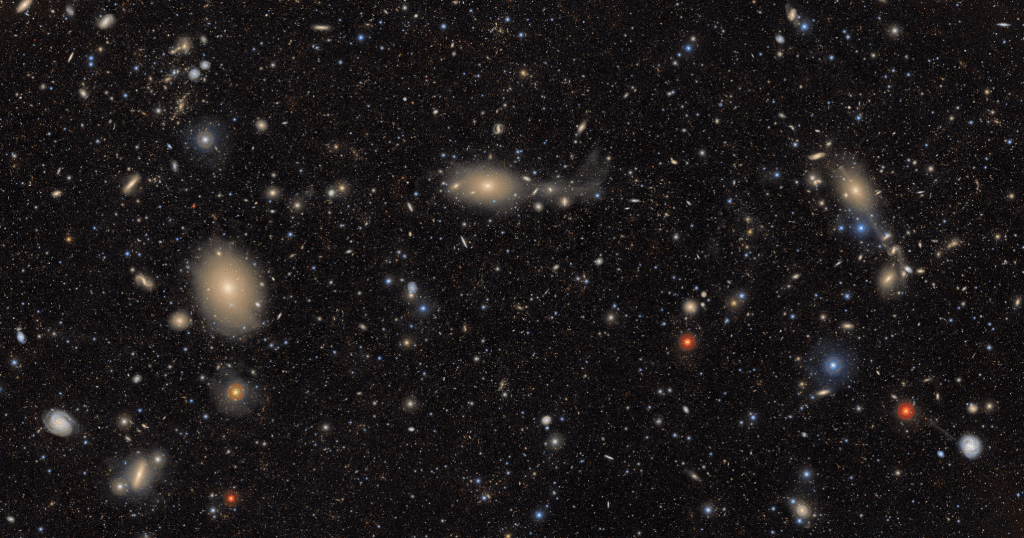
In just over 10 hours of test observations, NSF–DOE Rubin Observatory has already captured millions of galaxies and Milky Way stars and thousands of asteroids. The imagery is a small preview of Rubin Observatory’s upcoming 10-year scientific mission to explore and understand some of the Universe’s biggest mysteries.
It should detect killer asteroids in striking distance of Earth and map the Milky Way. It will also answer crucial questions about dark matter, the mysterious substance that makes up most of our universe.
Exactly who was Vera C. Rubin? Just a girl who dreamed of space, ignored the haters, and grew up to be a world-class scientist.
Vera Rubin is best known for presenting the first sound evidence of dark matter—an elusive substance that makes up more than 80 percent of our universe, yet doesn’t interact with light or other electromagnetic radiation, making it impossible to glimpse directly through a telescope. Her central scientific accomplishment involved discovering a mismatch between the predicted angular motion of galaxies and the observed motion of galaxies. Rubin’s calculations offered a solution to this so-called “galaxy rotation problem” by suggesting that galaxies must contain at least 10 times as much mass as can be accounted for by the visible stars. This invisible mass constituted evidence for what astronomers had earlier proposed to be dark matter.
Rubin became a cosmological giant against the odds, illuminating a path for future female astronomers.
(And, I’d like to add, becoming a role model for kids of all shapes and sizes!) Want even more in-depth info about telescope and its capabilities?
In this exclusive interview, Professor Mario Jurić reveals how the Vera Rubin Observatory accidentally discovered 2,000 asteroids in just 10 hours while testing its capabilities on the distant Virgo Cluster—transforming humanity’s asteroid discovery rate from 20,000 per year globally to potentially over one million annually with a single telescope.
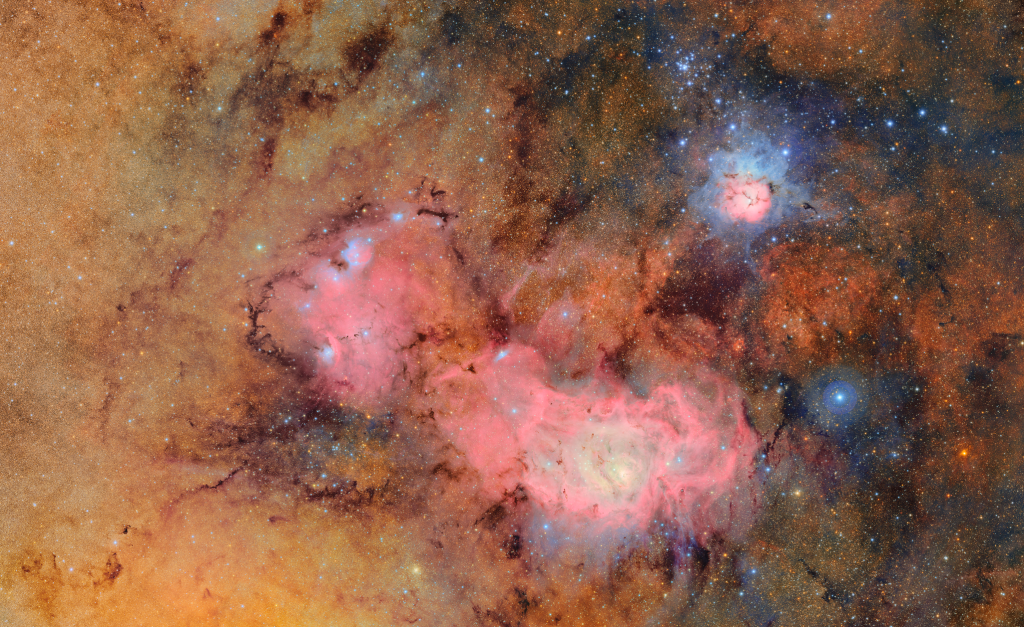
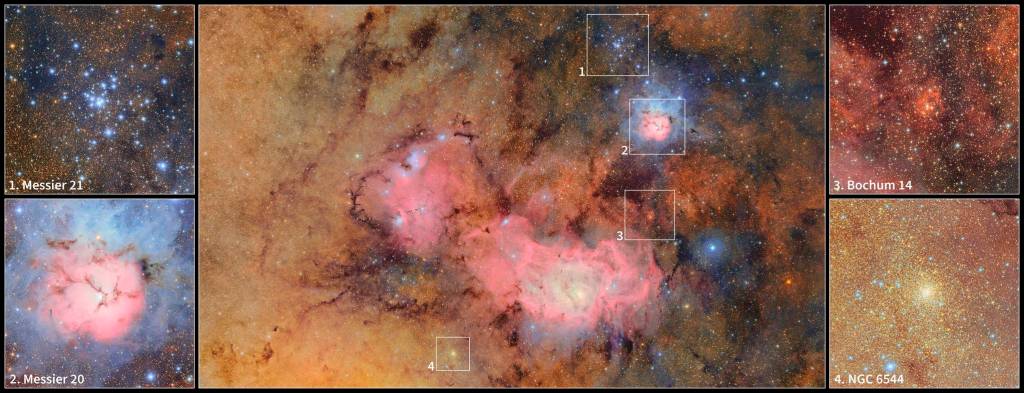
Short and very cool video of the Trifid and Lagoon nebulae, compiling more than seven hours of observing time: Trifid and Lagoon Nebulas (Video-ES).
Space Surveyors is a fun, interactive game where YOU move the Rubin telescope around the sky. How many stars, galaxies, supernovae, comets, and asteroids can you catch in one minute, before the sun rises?
While players aren’t moving the *real* telescope around, it’s still fun to play. (I discovered 22 objects before the clouds rolled in and the sun came up. Bet you can do better:)
Adventure! Discovery! Secrets of the universe! This, kids, is why math is important.*
* I mean, sure, also to figure out if you have enough money to pay rent and still buy ice cream, but also this!





You must be logged in to post a comment.