The video begins on a rotating full-globe of Mars, with white polar caps and mottled tan surface visible. It then zooms in on the westernmost part of the large Valles Marineris canyon system, a region highlighted by a white box, and swaps to a new Mars Express visualisation of Noctis Labyrinthus. The camera then flies slowly across a landscape that is broken apart by deep intersecting valleys and canyons.
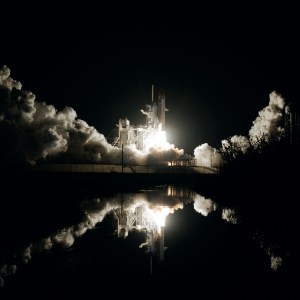
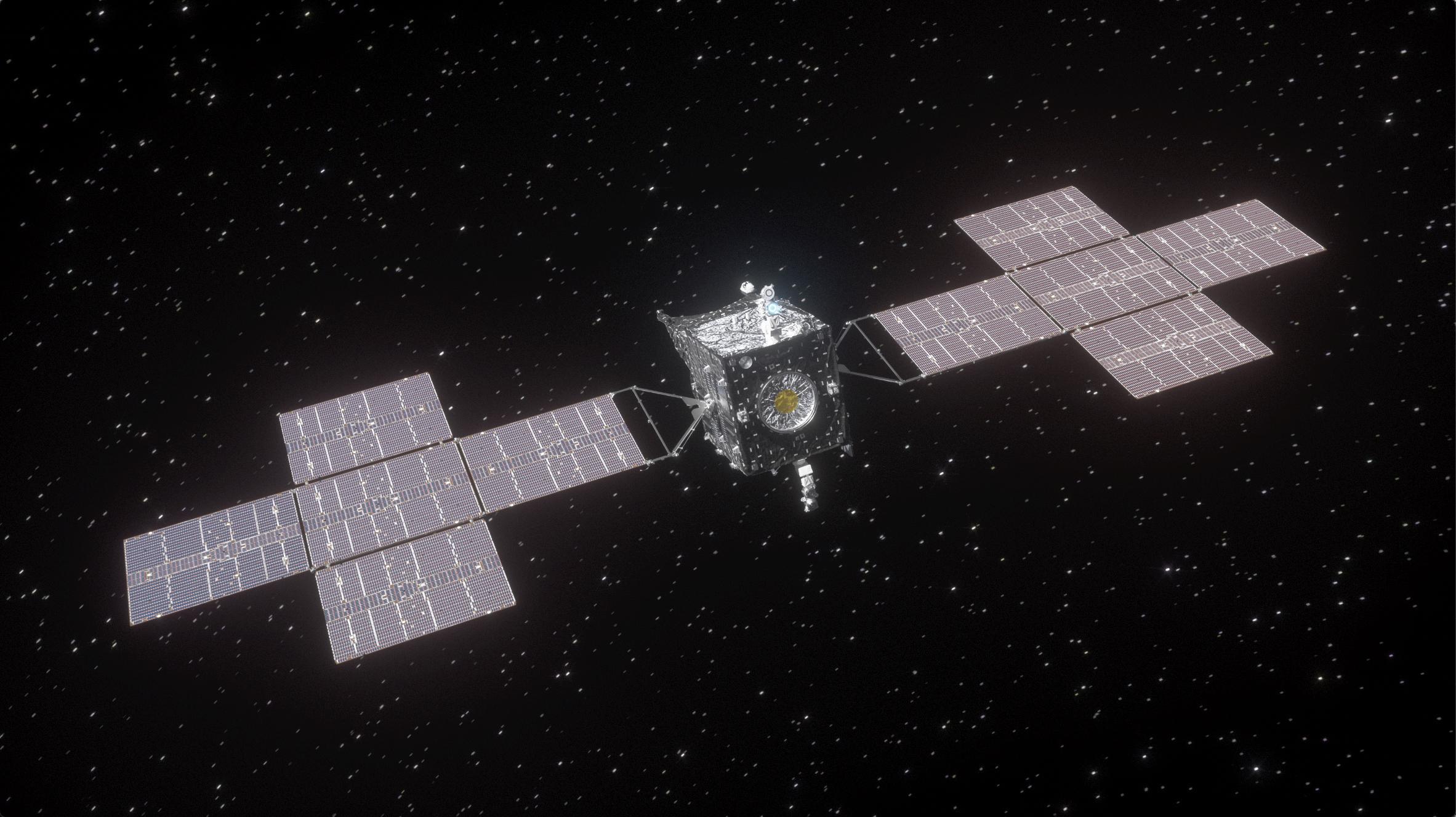
In less than an hour, NASA is set to launch Psyche, a mission to an asteroid with lots and lots of bling, arrival date in 2029.
Set to launch from NASA’s Kennedy Space Center in Florida, Psyche will travel across the solar system to an asteroid of the same name, which has unusually high metal content. Scientists hope understand why this is so, and to help answer fundamental questions about Earth’s own metal core and the formation of our solar system.
NASA recently released the Artemis II roster for the next crewed lunar mission. As one article put it, “this is not your grandfather’s moon mission” and that’s a good thing. The crew is 25% female, 25% African American, and even (gasp!) 25% Canadian! (Think you too have what it takes? Here’s a link to get started: Astronaut Selection Program | NASA. Good luck!)
Why go to space? There are a lot of potential answers. Given the complex, diverse and fascinating future of exploration, here’s a collection of stories and essays that address this very question.
Stories by: Madeline Ashby, Steven Barnes, Eileen Gunn, Ramez Naam, Carter Scholz, Karl Schroeder, Vandana Singh
Essays by: Jim Bell, Lawrence Dritsas, Linda T. Elkins-Tanton, Emma Frow, Roland Lehoucq, Andrew D. Maynard, Clark A. Miller, Deji Bryce Olukotun, Steve Ruff, William K. Storey, Sara Imari Walker, G. Pascal Zachary
The space agency will host Artemis 1 launch webcast on Aug. 29 to showcase the uncrewed launch on NASA’s first Space Launch System megarocket from Launch Pad 39B at the Kennedy Space Center in Florida.
As of this writing, live updates have begun. Weather forecasts are good but there is an engine issue. Engineers are working the problem but some delays are expected.
The fact that humanity has been going into space, and to the moon, for decades doesn’t mean it’s easy. And that’s ok.
“I don’t need easy. I just need possible.”
— Katie Bone, 16-year old nationally-ranked athlete and Type 1 diabetic
What am I reading with lunch? How about a graphic novel about a woman, space, and a spunky little robot? App and interactivity are optional (but could be fun).
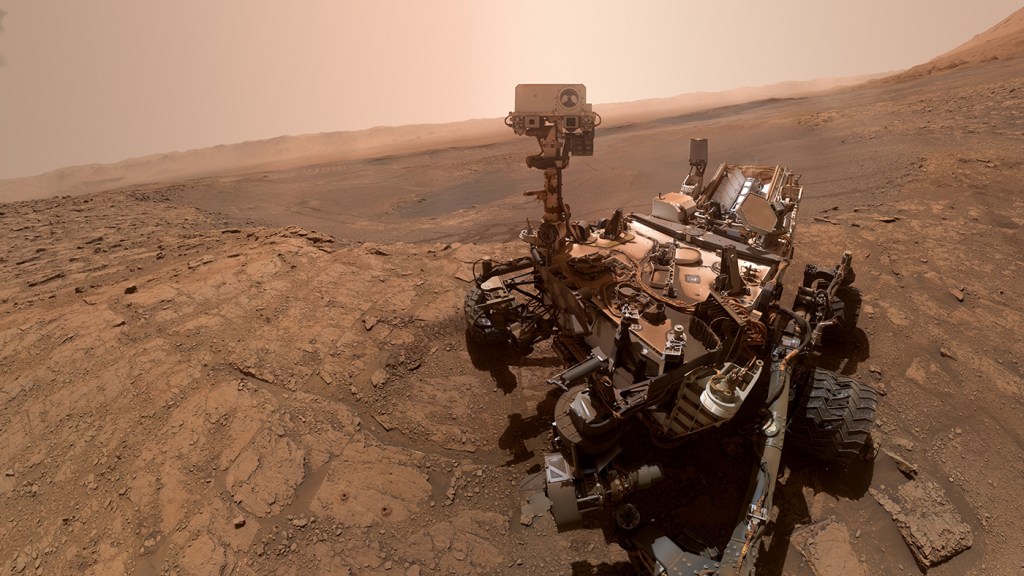
So, Mars. For the NASA mission, today is the day! I posted on Mars yesterday to give you time to download any apps, plan your landing watch party (socially distanced, of course!), and look up your nearest Krispy Kreme.
Are you ready? Curiosity is! Look at the little guy waving;)
Fingers crossed, but no matter what happens, it’s an exciting day in space!
* * *
Why is Mars red, anyway?
For the same reason that so many of our barns are red: iron oxide. It’s a common compound, both here and on Mars. We use it for paint and our planetary core, among other things, but Mars is a little different. First, of course, there’s no Sherwin-Williams on Mars, but also:
Whereas the bulk of Earth’s iron sank to its core when the planet was young and molten, NASA scientists think Mars’ smaller size (and weaker gravity) allowed it to remain less differentiated. It does have an iron core, but abundant iron exists in its upper layers, also.…The planet’s bloody tinge — visible even from millions of miles away — got it strapped with the name of the Roman god of war, while other civilizations also named the planet for what was once its main distinguishing feature. The Egyptians called it “Her Desher,” meaning “the red one,” while ancient Chinese astronomers went with “the fire star.”









You must be logged in to post a comment.