Feeds:
Posts
Comments

Posts Tagged ‘speculative fiction’

via Slate.com:
Using Science Fiction to Create a Better Tomorrow: A Future Tense Event Recap

Oh, this looks fun. A recent event hosted by Slate’s Future Tense and Issues in Science and Technology in D.C. focused on ways that imagination in general, and science fiction in particular, can help inspire a better future. Sure, dystopias are all the rage and who doesn’t love a good apocalypse, but people have always enjoyed teasing themselves with frightening things. The key word is “teasing”… that doesn’t mean we actually want to live there.

(Srsly, do you really want a horde of raving zombies standing between you and your pumpkin spice latte every morning? Neither do I. I want to live in a future where disease is manageable, hunger is obsolete, and creativity and innovation rule the day in the best ways. I also want a flying car. Because where are all the flying cars?!)

Check out the October 2nd event, complete with video of speakers like Neal Stephenson, Ted Chiang, Elizabeth Bear, representatives from NASA, DARPA, SyFy and many others, here: Can We Imagine Our Way to a Better Future?

From the tales we tell about robots and drones, to the narratives on the cutting edge of neuroscience, to society’s view of its most intractable problems, we need to begin telling a new set of stories about ourselves and the future.

Related links:
— Neal Stephenson’s article at the World Policy Institute, on the importance of renewing our society’s ability to “get big things done”: Innovation Starvation.
— The anthology Hieroglyph: Stories and Visions for a Better Future.
— For more links to short stories (including pieces from Hieroglyph) and related discussions on this topic, see the final section of the Slate article.
Read Full Post »

Here’s another great piece of writing advice, this time from prolific and award-winning author Seanan McGuire. She gives us 50, yes, fifty thoughts on writing, some on the act of writing and some on being a writer. It’s a useful list. Let’s just say she had me at “You’re going to suck when you start.”
🙂

Read Full Post »

If you have ever had questions about how to introduce your submission, I recommend The Occult Wisdom of Cover Letters by Helena Bell. It’s extensive, covers a great many details that only come up when you are ready to submit at 4:13 a.m. and have no one to ask, and is funny besides.

Essentially, her advice boils down to “the story stands or falls on its own” so keep it short and simple. Also, I recommend paying special attention to the appendix of “terrible things.” Avoid!

Read Full Post »

Today we have helpful hints on reading aloud (and presentation in general) from Mary Robinette Kowal.

As an accomplished narratorpodcasterpuppeteer and author with lots of touring experience, she should know. And she does!

Check out her 17-part series for a plethora of detailed and useful suggestions for handling stage fright, phrasing, breathing, recording, what can go wrong (and how to cope with grace), and so much more. If you have a tour in the offing or, you know, you just want to be prepared for your future as a literary genius, this series is for you.

Read Full Post »

This has been true for a while but Shadow Unit 1 is available to download for free:

Shadow Unit is a contemporary science fiction series about a group of FBI agents struggling to protect humanity from the worst monsters imaginable. Except some of our heroes may be on the road to becoming monsters themselves….

Get started on this reader-funded series with writing by Emma Bull, Elizabeth Bear, Sarah Monette, and Will Shetterly for nothing, nada, zip, tipota!

Kindle version at Amazon: Shadow Unit 1. Epub, pdf, and other formats at Smashwords: Shadow Unit 1.

Read Full Post »

The excellent Elizabeth Bear has a good post on how to get past “rave rejections.” You know the ones, where they tell you how great the story is but sorry, can’t use it.

Her advice? Focus on Voice and Narrative. While these suggestions are hardly new she does frame them in concise, useful language that cuts through the extensive “how to” checklists so often found in writing advice. Here she is on how to grow a voice:

Write a lot. Work at identifying and expunging cliches and lazy word choice from your prose. Find sharp verbs and strong, observed details. Read things out loud and if you don’t like how they sound, change them. Embrace whimsy and quirkiness, but only inasmuch as it is natural to you: otherwise you run the risk of becoming twee. Play with pastiche. If you have a natural wit, let it shine through. Be playful.

On narrative drive and creating characters readers care about:

A character who loves something, or who holds fast to an ideal, is humanized and becomes approachable. A character who takes action lures us unto caring about what she cares about.

We love people who fight.

It’s a great post, short, approachable, with a “manageable bite-sized helpful chunk” of useful information. Also, bonus points for using a funny video of David Bowie to make her case.

Read Full Post »

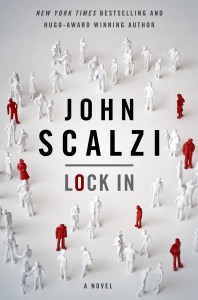
Jason Sheehan over at NPR has a very nice review of John Scalzi’s Lock In today. I’m looking forward to getting my hands on a copy:)

Lock In is a cop story first… There is blood, a body, a couch pushed out a hotel room window from a high floor… Once he’s gotten past the tricky part of building a near-future world and putting a dead body in it without getting bogged down in the details of either, the rest is all cake and hand grenades.

Read Full Post »

Pieces I want to read, have just read, or am reading again:

Writing Stuff:
Random Stuff:

Read Full Post »

If you haven’t seen it yet, there’s a nice piece by Lev Grossman in The New York Times on “Finding My Voice in Fantasy.”

We — as a whole, as a culture — seemed to be getting more interested in the kinds of questions fantasy deals with: questions about history, and about our connection to the natural world, and about power, how to find it in yourself, how to master it, what to do with it.

Fantasy is sometimes dismissed as childish, or escapist, but I take what I am doing very, very seriously. For me fantasy isn’t about escaping from reality, it’s about re-encountering the challenges of the real world, but externalized and transformed.


Read Full Post »

A new pro-level magazine of science fiction and fantasy? Yes, please! Uncanny Magazine is being launched via Kickstarter, and as a supporter of things sfnal, writerly, and otherwise cool I signed on. It’s a project by three-time Hugo Award-winner Lynne M. Thomas and three-time Hugo Award nominee Michael Damian Thomas, and it already features a terrific contributor roster of authors and artists.

Also? Space unicorns!

So if you also like the idea of more markets for professional science fiction and fantasy, check out Uncanny: A Magazine of Science Fiction & Fantasy.

Read Full Post »

« Newer Posts - Older Posts »