Feeds:
Posts
Comments

Posts Tagged ‘writing’

Storytelling is good for so many things: entertainment, shared cultural touchstones, lessons from elders, or other instruction manuals for living. Even so, speculative fiction has always been burdened by accusations that it is less able to comment on reality than, say, literary fiction.

I disagree.

In fiction or nonfiction, no matter the genre or approach, storytelling is always, always, grounded in the cultural currents from which it springs. It’s how we pass on what’s important, even if it isn’t always “real.” Whether it shows us futures to avoid, goals to achieve, values of importance or daily ways to survive, the work’s foundation always reflects its context.

On a related note, here’s a short document on surviving difficult times, written in the form of an RPG-style guide. It wouldn’t surprise me to see an actual game follow soon.

Because life and art are two facets of the same die. And we’re all just players, trying to level up.

“The idea that any of us can do everything is instant failure. We all have our own skill sets and our own passions and we will accomplish the most if each of us works within those arenas to do what we’re already good at, what we already care about. You don’t have to do it all. Just a little.”

— Bree Bridges

* * *

Read Full Post »

“To care about climate change, you only have to be one thing, a human living on Planet Earth.”

— Katharine Hayhoe

(I submit that other animals and any Earth-bound aliens also qualify, but “humans” is a good place to start.)

If you are a creator concerned with the livability of the planet, this guide from This Is Planet Ed may be useful. It’s designed for works aimed largely at younger audiences, but the ideas apply across the board.

A Toolkit For Climate Storytelling

Whether you want to develop a whole show, a story line, or embed climate solutions in your character’s world, this guide offers ideas, strategies, and tips to help.

Because as my landing page reminds us:

“Children already know that dragons exist. Fairy tales tell children the dragons can be killed.”

— G.K. Chesterton

* * *

Photo by Klim Sergeev on Unsplash

Read Full Post »

The cat lies dreaming

claws spread wide to catch the Moon,

Her bright wings outstretched.

The cat’s fine, thanks for asking:)

* * *

Photo by Nadezhda Nikolaenko on Unsplash

Read Full Post »

Of all Nature’s gifts

Bright sun, warm rain, skies above…

You bring naught but joy.

* * *

Photo by Marcus Woodbridge on Unsplash

Read Full Post »

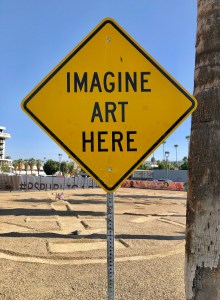
“Any form of art is a form of power; it has impact, it can affect change. It can not only move us, it makes us move.”

— Ossie Davis

* * *

Photo by Varun Gaba on Unsplash

Read Full Post »

“If l’d waited to know who I was or what I was about before I started ‘being creative,’ well, I’d still be sitting around trying to figure myself out instead of making things. In my experience, it’s in the act of making things and doing our work that we figure out who we are. You’re ready. Start making stuff.”

— Austin Kleon

* * *

Photo by Steph Wilson on Unsplash

Read Full Post »

“To survive, you must tell stories.”

— Umberto Eco

* * *

Read Full Post »

It’s release day for friend and fellow Writer of the Future David Hankins, who has published the second book in his fun, funny and well-written Grimsworld series. The series started off with the award-winning Death and the Taxman, and keeps rolling with book two, Death and the Dragon. He’s also got a new collection of related stories out called Grimsworld Tales.

Maybe you were part of David’s Kickstarters, in which case you already know what I’m talking about. If not, I highly recommend you pick up these books.

Want to get a taste for David’s writing? Check out sample chapters at your online bookseller of choice or read this free multi-award winning* story at DreamForge.

To Catch a Foo Fighter by David Hankins

To catch a foo fighter, you need three things: tech, speed, and bait. I’m the bait.

Hehe. Recommended!

* David wins lots of awards because he’s just that good. He’s also a great guy, even if he does have a thing for rubber duckies.

* * *

Photo by Rajvir Kaur on Unsplash

Read Full Post »

“We are the opening verse of the opening page of the chapter of endless possibilities.”

— Rudyard Kipling

* * *

Photo by tommao wang on Unsplash

Read Full Post »

My mother sent me an article about Octavia Butler, one of a number I’ve seen recently in the wake of the LA fires. Butler was an award-winning sci-fi and fantasy author know for her all-too-realistic versions of the future. Although she died in 2006, a week of devastating fires in LA fit right in with her vision of 2025.

In fact, she was once asked how she was able to predict the problems of the future as accurately as she did, and her answer is a telling lesson for writers but also for people who want to make a difference.

“A Few Rules for Predicting the Future” by Octavia E. Butler – Seven Good Things

“I didn’t make up the problems,” I pointed out. “All I did was look around at the problems we’re neglecting now and give them about 30 years to grow into full-fledged disasters.”

Ouch.

But that’s not all Butler said. I recommend you read the essay in full. It’s not long, but it packs a punch.

“Okay,” the young man challenged. “So what’s the answer?”

“There isn’t one,” I told him.

“No answer? You mean we’re just doomed?” He smiled as though he thought this might be a joke.

“No,” I said. “I mean there’s no single answer that will solve all of our future problems. There’s no magic bullet. Instead there are thousands of answers, at least. You can be one of them if you choose to be.”

I so choose, and I hope you do, too.

* * *

Photo by Luwadlin Bosman on Unsplash

Read Full Post »

« Newer Posts - Older Posts »