Feeds:
Posts
Comments

Posts Tagged ‘writing advice’

Write. There is no substitute…But start small: write a good sentence, then a good paragraph, and don’t be dreaming about writing the great American novel or what you’ll wear at the awards ceremony because that’s not what writing’s about or how you get there from here.

The road is made entirely out of words. Write a lot…it’s effort and practice. Write bad stuff because the road to good writing is made out of words and not all of them are well-arranged words.

— Rebecca Solnit

So write bad stuff. Good stuff too, just try not to worry too much about which is which.

Just keep going.

* * *

Photo by Ravi Sharma on Unsplash

Read Full Post »

How does science fiction author Charlie Jane Anders record history that hasn’t happened, build cities that may never exist, and ground her stories in unreal realities? And what advice does she give for those of us working to build our own fictional futures?

…I kind of start by daydreaming the wildest stuff that I can possibly come up with, and then I go back into research mode, and I try to make it as plausible as I can by looking at a mixture of urban futurism, design porn and technological speculation. And then I go back, and I try to imagine what it would actually be like to be inside that city. So my process kind of begins and ends with imagination, and it’s like my imagination is two pieces of bread in a research sandwich.

Whatever works for you, works. So go ahead and dream.

* * *

Photo by Bruce Christianson on Unsplash

Read Full Post »

You can’t create and critique at the same time. It’s like being pulled in two different directions with equal force. You will just end up spinning your wheels.

— Ilona Andrews

* * *

Photo by Filip Mroz on Unsplash

Read Full Post »

Interested in writing advice? Perhaps you’re on the waiting list for Charlie Jane Anders’ new book, Never Say You Can’t Survive, and wondering how long it will be until Tor opens up the ebook to libraries?

Good news! The posts on which the book is based are available on Tor.com’s website. Reading them is a window into the voice of experience, and persistence, and a lot like a call from a friend when you’re not quite sure things are going to work out.

Spoiler alert: They will.

Never Say You Can’t Survive | Series | Tor.com

* * *

Photo by Elena Koycheva on Unsplash

Read Full Post »

Today, some useful writing advice from award-winning writer Nalo Hopkinson.

The point of fiction is to cast a spell, a momentary illusion that you are living in the world of the story. Fiction engages the senses, helps us create vivid mental simulacra of the experiences the characters are having.

* * *

* * *

Photo by Sean Pierce on Unsplash

Read Full Post »

Here’s a brief piece by Kate Wilhelm of Clarion Workshop fame, on writing and what to avoid. A little harsh? Possibly. But it still looks like good advice.

One year Damon and I arrived to teach the last two weeks of the six-week Clarion Writers Workshop with a list of stories we forbade the students to pursue. We explained each item on the list and said don’t do it again.

— OWW SF, F, & H Tips and Advice: Kate Wilhelm

* * *

Photo by Melissa Askew on Unsplash

Read Full Post »

A few days ago I talked about finding ideas, and even better, how to find good ideas. But what comes after that? After a writer sifts through the mountain of “not bad” and “ok” and even “pretty good” ideas and finds the one that is worth investing in, what comes next?

Because that’s what you’re doing, investing your time, energy, creativity, and care into this little story seed. How can you give it the best chance to grow up healthy and strong?

* * *

Elizabeth Bear has a useful piece out about taking ideas to the next level:

A post office box in Schenectady.

“I used to despair of coming up with A Great Idea. Eventually I discovered that the way to make my not-so-great ideas better is to keep asking more complicated questions about them.”

For writing in general (and as previously discussed), a good first step is to check out Techniques of the Selling Writer by Dwight V. Swain

Once you’ve done that, what’s next? I moved on to Stein on Writing.


And what do you know, I roughed out notes for that book too. If you’re interested, check out the PDF below!

* * *

And when it comes right down to it, this is some of the best advice on creativity I’ve seen:

can’t find the original post/s but here is a screenshot that was living under a digital rock in my computer files, next to many other fascinating and under-utilized resources

* * *

And to be clear, yes, I like sparkle:)

Photo by 3Motional Studio on Pexels.com

Read Full Post »

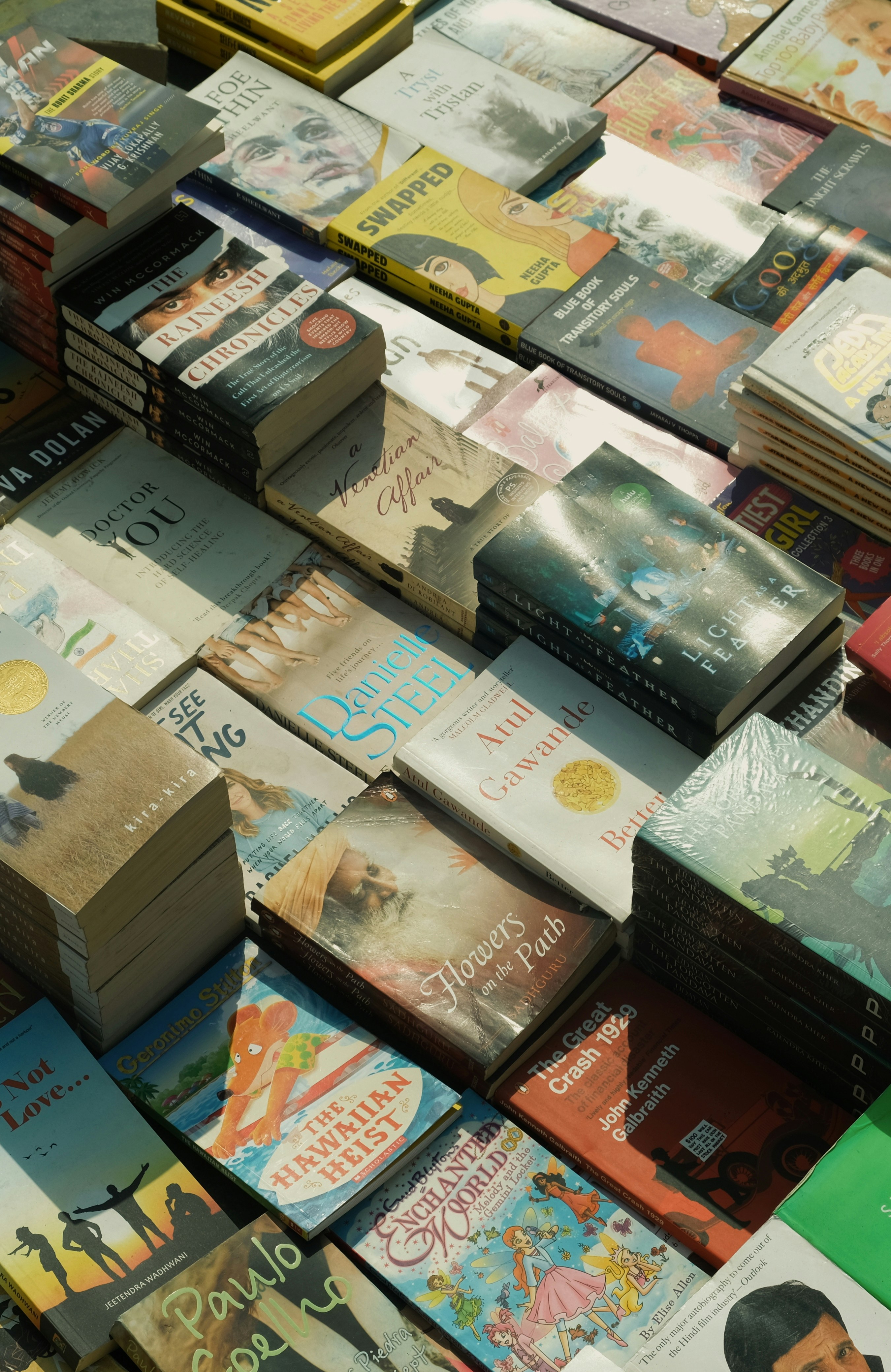
This is a somewhat random selection of books I like.

What do they have in common? Awesomeness, that’s what (at least to my mind:). But at their core, they each have a different, clever, well thought-out idea that powers the story engine. And this is just a selection of one person’s likes. There are so many ways to tell a story, and so many ideas from which to start. 

Great. So how do you get to a good idea?

“The best way to have a good idea is to have lots of ideas.”

— Linus Pauling

Excellent, so helpful. It’s good to have goals. But if you’re like me, you might be wondering what exactly that means, and how one goes about it?

So glad you asked! There are lots of ways, of course, from diving in with a crappy first draft (I do like this approach, so helpful for getting past blocks, but it can waste a lot of time), writing prompts, genre-bending or gender-bending existing ideas, to headline news to updated fairy tales to history. And when I’ve seen most professional writers talk about this, getting ideas isn’t really the problem.

It’s getting a good idea. How do we do that?

* * *

Here is a ten-part approach to generating, selecting, and growing ideas from Scott Myers. He recommends generating an idea a day for a month, to get in the habit. Given his background, his suggestions are geared toward screenwriting, but the essential principles are useful across genres.

* * *

Maybe you don’t think of yourself as a writer or creative. That’s fine, but humans are still wired to think in terms of stories. It’s how we understand the world, solve problems, and plan for the future.

Stories the world over are almost always about people with problems,” writes Jonathan Gottschall. They display “a deep pattern of heroes confronting trouble and struggling to overcome.” So a possible formula for a story = character(s) + predicament(s) + attempted extrication(s). This pattern transmits social rules and norms, describing what counts as violations and approved reactions. Stories offer “feelings we don’t have to pay [full cost] for.” They are simulated experiments in people-physics, freeing us from the limits of our own direct experience.

— It Is in Our Nature to Need Stories

What do you see when you look out the window? What stories might you tell about the couple across the street, or the rundown house on the next block, or the accident you just drove past?

It’s that simple, and that hard.

* * *

Photo by Dom J on Pexels.com

Read Full Post »

This is a pretty particular post, but it’s something that would have helped me, so here you go.

There are a lot of books and other resources out there for writers. A while back I mentioned a few of the ones I’ve found helpful, including this one:

Techniques of the Selling Writer by Dwight V. Swain

At one point I read an Ilona Andrews* post mentioning they used the book when starting out, and decided to check it out. There’s a lot of useful material here. My edition looks like this:

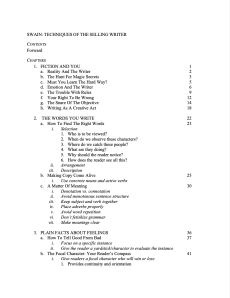
Swain’s approach is very detailed, and while not the last word, obviously, he does have a Lot to say about the nitty gritty craft of writing. What, how, and why, all those questions everyone ahead of you seems to know but often don’t explain. And have I mentioned that this book is Very Detailed with Teeny Tiny Type? Even if you have the book, getting a handle on the discussion’s arc and the location of useful details was something I found time-consuming. So I wrote up an outline, including descriptions and page references for all the bits I wish the table of contents had included. Click the image below to view the full PDF.

* * *

Will this outline help you? If you have the book and are interested, yes. If you don’t have the book but wonder if you might be interested, this file will at least give you a sense of what’s included.

If you want to know more about techniques like Motivation-Reaction Units, I also suggest this summary post by K.M. Weiland:

Motivation-Reaction Units: Cracking the Code of Good Writing

And since we’re here, I’ll also mention Jim Butcher’s LiveJournal series on writing. He discusses outlines, characters, scenes and sequels that look a lot like Swain’s approach, and more:

‎jimbutcher.livejournal.com

* * *

Even if you don’t need this now, tuck it away in your stash of tools for writing. You never know when it might come in handy!

Photo by u015eahin Sezer Dinu00e7er on Pexels.com

* * *

* Love their work. Check it out if you’re into fantasy starring interesting magic, well-developed characters, smart, capable, kick-ass ladies, and more!

Read Full Post »

Today I want to spotlight a collection of writing advice. It comes via OWW, the Online Writing Workshop for Science Fiction, Fantasy and Horror. OWW is a fee-based workshop but this advice is available to all.

These short essays discuss topics on writing in general, how to get your work read (if you’re into workshops like OWW, or the free Critters or Codex, for example), and the publishing business overall. I like Nicola Griffith’s piece about avoiding cliches:*

Don’t write “her heart stopped” unless you mean she died. Don’t talk about saucy serving wenches in an inn where the beef stew is thick and hearty and the ale is fresh, nutty, and strong… Why aren’t “serving wenches” ever tired, middle-aged women? Why is the beer rarely yellow, or thin, or cloudy with sediment?

So true.** There’s a reason the average human lives a much longer and healthier life than their ancestors did just a century ago:

In Japan, 72 has become the new 30, as the likelihood of a 72-year-old modern-day person dying is the same as a 30-year-old hunter-gatherer ancestor who lived 1.3 million years ago.

Modern sanitation, medicine and quality infrastructure (for those handy extras like clean drinking water) for the win!

So, keep a weather eye out for dangerous and terrifying pitfalls you have to escape in the nick of time as you navigate the winding path of language clichés:) But keep writing. Remember, all’s well that ends well! (And that’s just about enough of that;)

While we’re on the subject of advice, I’ll supplement the OWW site and my previous posts on writing advice with a link from Brain Pickings. This collection of wisdom is from a variety of writers, genre and otherwise:

#49: Neil Gaiman’s Advice to Aspiring Writers
“You have to finish things — that’s what you learn from, you learn by finishing things.”

Some of this advice may not apply to you; I tend not to relate to Bukowski, for example. But some of it may, and I hope it’s useful.

Since I’m throwing in everything but the kitchen sink today, let me close with this great post from Elizabeth Bear: “everybody’s scared of things that they don’t understand and all the living they don’t do.

Accept that there will be a lot of failures along the way, and that you can come back from nearly any mistake that doesn’t involve making a left turn in front of an oncoming semi.

Excellent advice.

Write, rewrite, finish. Do it again.

…………
* Some of the examples are also about uncomfortable -isms. Racism and sexism, for instance, are more problematic than simple clichés and should be resolved at a deeper level. Obviously.
** As a side note, if you’re curious about what and how people ate in the Western Middle Ages, SF Canada writer Krista D. Ball has a detailed and useful book on realism in fantasy food: What Kings Ate and Wizards Drank.

Read Full Post »
Older Posts »