Feeds:
Posts
Comments

Archive for February, 2021

Apparently, we are chilling today. 

Do not disturb the Neko Monster!

Mostly, anyway. I’ve accomplished a few things and had planned to plan my next month of writing work, but I’m really just having fun reading.

What else? In keeping with the chilling theme, I may design a few icebergs, because what better art project on a snowy day?

Iceberger

Later, I’ll give Mr. Man a haircut (while appreciating the talents of his regular barber, who does the job roughly 4 million times faster than I do). And then I may do a little design work. Or learn about household economics in early nineteenth-century England. Or shovel some snow. Or find my second-favorite biscuit recipe. Or pack and freeze a 25-pound bag of flour.

Or maybe not. I’ve got a book to finish.

“If you cannot do great things, do small things in a great way.”

— Napoleon Hill

Happy Sunday!

Read Full Post »

This is a somewhat random selection of books I like.

What do they have in common? Awesomeness, that’s what (at least to my mind:). But at their core, they each have a different, clever, well thought-out idea that powers the story engine. And this is just a selection of one person’s likes. There are so many ways to tell a story, and so many ideas from which to start. 

Great. So how do you get to a good idea?

“The best way to have a good idea is to have lots of ideas.”

— Linus Pauling

Excellent, so helpful. It’s good to have goals. But if you’re like me, you might be wondering what exactly that means, and how one goes about it?

So glad you asked! There are lots of ways, of course, from diving in with a crappy first draft (I do like this approach, so helpful for getting past blocks, but it can waste a lot of time), writing prompts, genre-bending or gender-bending existing ideas, to headline news to updated fairy tales to history. And when I’ve seen most professional writers talk about this, getting ideas isn’t really the problem.

It’s getting a good idea. How do we do that?

* * *

Here is a ten-part approach to generating, selecting, and growing ideas from Scott Myers. He recommends generating an idea a day for a month, to get in the habit. Given his background, his suggestions are geared toward screenwriting, but the essential principles are useful across genres.

* * *

Maybe you don’t think of yourself as a writer or creative. That’s fine, but humans are still wired to think in terms of stories. It’s how we understand the world, solve problems, and plan for the future.

Stories the world over are almost always about people with problems,” writes Jonathan Gottschall. They display “a deep pattern of heroes confronting trouble and struggling to overcome.” So a possible formula for a story = character(s) + predicament(s) + attempted extrication(s). This pattern transmits social rules and norms, describing what counts as violations and approved reactions. Stories offer “feelings we don’t have to pay [full cost] for.” They are simulated experiments in people-physics, freeing us from the limits of our own direct experience.

— It Is in Our Nature to Need Stories

What do you see when you look out the window? What stories might you tell about the couple across the street, or the rundown house on the next block, or the accident you just drove past?

It’s that simple, and that hard.

* * *

Photo by Dom J on Pexels.com

Read Full Post »

I have a thing about Beauty and the Beast tales, and I think I’ve just figured out why.

Fairy tales are classics for a reason. They strike deeply-ingrained cultural notes that resonate across many lines. (And like most of history, they’re often pretty hard on women.) But what is it about this particular storyline that appeals to me? I’d never really thought about it, until I found myself reading a not terribly well-done version and wondering why I was still reading. Why this sub-genre appeals to me. Then I figured it out.

It’s because in this story, she saves the day.

* * *

We can argue about the story or the level of efficacy Beauty has (not to mention her name), but the template of the story lends itself to modern updates in a way that many other fairy tales do not.

Now, don’t get me wrong, I have enjoyed other fairy tale retellings, but they don’t always appeal to me in the same way. Is it because there’s no princess in sight? Because there’s room for ethical debates alongside the magic and mystery? Because both main characters are flawed in interesting ways? Probably.

* * *

If you’re too young to remember a time when girls in (at least some) stories did not rescue themselves, count your lucky stars. When I was a kid, that’s pretty much all we had. Princess in a tower, waiting to be rescued? Check. Princess in dragon’s lair, waiting to be rescued? Check! Princess orphaned, alone, and (say it with me now) waiting to be rescued? Yep. And then, of course, there were all those stories where the girl didn’t even make it out alive. Ouch.

My parents tried, but it’s hard to counter the weight of all that history. Slowly, slowly, feminists pushed and creators did better and the world began to shift, but in the meantime, I was a voracious reader with limited formative years.

My attachment to the story may also have had something to do with my own position in the world at the time. The role of misunderstood outsider was one to which I could relate.

I mean, Heinlein’s* Friday was a big deal back in the day. Hard sci-fi starring a kick-ass woman of complex genetic makeup and latte-colored skin? Um, yes please.

* * *

On a related note, I recently learned that my father’s science fiction habit started thanks to recommendations from a sci-fi minded staff member at his university, lo those many years ago. That’s what got our shelves filled with speculation, and I’m better for it. So thank you, interesting unnamed woman who cared enough to share what she knew. (And if that doesn’t sum up most of human history, well, I don’t know what does.)

And that is one reason why I like what I like. Whatever you like, find a way to distill what’s good from it and embrace it. Even if at first it looks a little like a beast.

* * *

* There is deserved debate over Heinlein’s portrayals of women, but his stories helped me see that a different world, a better world, was possible as a kid, and that’s something I’ll always appreciate. It also made me think more about writing, and how to fix what’s broken, and it looks like I’m not the only one. Here’s Jo Walton’s take: The worst book I love: Robert Heinlein’s Friday.

* * *

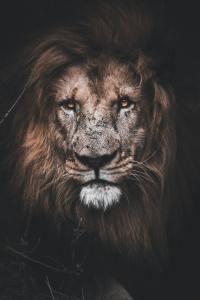
lion in darkness
Photo by Matthew Kerslake on Unsplash

Read Full Post »

I like Rube Goldberg machines. They are ridiculous and entertaining and look like something I might actually be able to make (even if that’s not always true). They also help me pay attention to the everyday objects and systems around me in new and more interesting ways, always helpful for creativity!

Here’s a fun one for all you cake lovers out there.

I especially love the butter bit. (TBH, though, after all that, I’d want chocolate:)

* * *

And don’t even get me started on some of the lockdown creations people have come up with, like this family of awesome in Toronto. 

Well done!

Read Full Post »

If you, like me, watched the Mars landing and thought, “So cool. But something is definitely up with that parachute,” you were not wrong!

Image via the Parachute Up-Look Camera A on Feb. 23, 2021 (Sol 2). NASA/JPL-Caltech

The striking red and white pattern was too distinctive to be meaningless. 

I initially speculated that the design was meant to help engineers better understand the forces at work as the lander fell through the atmosphere, but nope. With more thought I might have made some progress, but I put the question aside and focused on other things (like the first audio recording from the Red Planet).

Cue the Internet.

There’s a hidden message in the parachute of NASA’s Mars rover – The Verge

Depending on the shape and location of the red-and-white color patterns circling around the parachute’s center, the segments represent different numbers which can be translated through binary code.

— Internet sleuths solve secret message on Perseverance rover’s Mars parachute | Space

Check out the key below, showing the code in four concentric patterns. It reads: Dare Mighty Things. That’s the Perseverance team motto and is also on the wall at the Jet Propulsion Lab. JPL gets another shout-out in the outer ring, which lists the Lab’s lat/long coordinates on Earth. (That’s going to be awfully confusing for any aliens who find it on Mars:)

Image shared by Rick von Hagn on Twitter https://twitter.com/MrIosity/status/1364436321457082370

Well done!

* * * 

Speaking of extraterrestrials, now seems like a grand time to plug my favorite new Syfy show, Resident Alien.

An alien crash lands on Earth and must pass himself off as small-town human doctor Harry Vanderspeigle. Arriving with a secret mission to kill all humans, Harry starts off living a simple life…but things get a bit rocky when he’s roped into solving a local murder and realizes he needs to assimilate into his new world.

It stars the fabulous Wash, I mean Alan Tudyk, plus a cast of other terrific, talented and quirky actors, and is a thing of beauty. The premiere was frakking hilarious.

It’s on my mind because it plays on Wednesday nights, but if you missed it, full episodes are available online for the next year or so.

I’m chuckling just thinking about it.

Read Full Post »

Because it’s Tuesday, my most stressful day of the week, here’s a “how to defeat stress” breathing video. 


This video and many others are included in James Nestor’s collection of expert material on the benefits of hacking your biological systems via invisible forces, a.k.a. air. I enjoyed his Breath book, too.

Here’s hoping you stay stress-free, my friends!

* * *

Photo by eberhard grossgasteiger on Pexels.com

Read Full Post »

I spend a lot of time online for non-writing-related work, and on the way to serious business I run across a lot of interesting things. It’s Monday, so here’s a calming fascinating visualization of The Internet and its growth from 1997 to 2021. (Actually, you know what? This isn’t calming at all. I updated the wording but now I’m worried this is going to give small children nightmares. Or maybe me. Still interesting though.)

For more on this, visit THE INTERNET — Opte

Look closely enough and you might see sledding pandas and cat videos and recipes and sales and news and art and perhaps even yours truly.

* * * 

Parts of the internet are pure entertainment and too many are just awful but others include useful lessons on How to Do Better.

You may remember my motto, A Posse Ad Esse.* I don’t always achieve this goal, but I spend a non-zero amount of time trying to Do Better. Find ways to be more productive, to end the day feeling like I crossed off, if not everything, then the most important things on my list. 

That’s been a challenge the past year or, hmm, so. That’s partly why I’m going back to writer’s guides like Swain. It’s also why when I run across articles about grit or new research on how to accomplish more, I take a minute and peruse.

Lately, I’ve found this recent research in Applied Psychology: An International Review helpful. (Ok, fine, I found this article and its summary of those results helpful. I don’t have access to that journal and honestly, reading every interesting scientific study would cut into my cat video time**;)

What did they find? That when working to accomplish something, it’s useful to ask yourself a few specific questions:

  • What’s my goal?
  • How would a person who is good at this achieve the goal?
  • How will I feel if I don’t do this?
  • What is the first (or next) thing I need to do?

It helps to take a brief break, a couple of times a day, to step back and revisit what you’re trying to do and what needs to happen next. And as “with advertising, repeated exposure was key.” So asking these questions a couple of times a day can help prompt a quick moment of self-reflection that (here’s the useful bit) actually leads to action. I have my Calendar app set to pop up these questions first thing in the morning. So far it’s been helpful.

Let’s try it:

  • What’s my goal? Write this post. 
  • How would a person who is good at this achieve the goal? Probably stop procrastinating and start writing, so that’s what I’ll do.
  • How will I feel if I don’t do this? Lame.
  • What do I need to do next? Open a file and start writing.

And look, here we are! Now I get to cross this off my list and go have lunch. Have fun getting things done today!

* * *

“A majority of life’s errors are caused by forgetting what one is really trying to do.”

— Charlie Munger

* * *

* My Latin is 110% terrible so this may not be exactly right, but it gets the point across.

** I don’t actually watch cat videos much, but it’s nice to know that I could.

* * *

Photo by Pixabay on Pexels.com

Read Full Post »

This is a pretty particular post, but it’s something that would have helped me, so here you go.

There are a lot of books and other resources out there for writers. A while back I mentioned a few of the ones I’ve found helpful, including this one:

Techniques of the Selling Writer by Dwight V. Swain

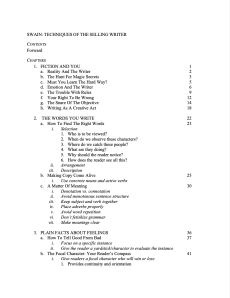
At one point I read an Ilona Andrews* post mentioning they used the book when starting out, and decided to check it out. There’s a lot of useful material here. My edition looks like this:

Swain’s approach is very detailed, and while not the last word, obviously, he does have a Lot to say about the nitty gritty craft of writing. What, how, and why, all those questions everyone ahead of you seems to know but often don’t explain. And have I mentioned that this book is Very Detailed with Teeny Tiny Type? Even if you have the book, getting a handle on the discussion’s arc and the location of useful details was something I found time-consuming. So I wrote up an outline, including descriptions and page references for all the bits I wish the table of contents had included. Click the image below to view the full PDF.

* * *

Will this outline help you? If you have the book and are interested, yes. If you don’t have the book but wonder if you might be interested, this file will at least give you a sense of what’s included.

If you want to know more about techniques like Motivation-Reaction Units, I also suggest this summary post by K.M. Weiland:

Motivation-Reaction Units: Cracking the Code of Good Writing

And since we’re here, I’ll also mention Jim Butcher’s LiveJournal series on writing. He discusses outlines, characters, scenes and sequels that look a lot like Swain’s approach, and more:

‎jimbutcher.livejournal.com

* * *

Even if you don’t need this now, tuck it away in your stash of tools for writing. You never know when it might come in handy!

Photo by u015eahin Sezer Dinu00e7er on Pexels.com

* * *

* Love their work. Check it out if you’re into fantasy starring interesting magic, well-developed characters, smart, capable, kick-ass ladies, and more!

Read Full Post »

I lost my biscuit recipe the other day. You know how it goes, you dig through your cookbooks, go online, pick a selection of recipes that looks promising, triangulate ingredients and techniques, make adjustments, then test and sample and retest until you come up with a recipe that works for you. Then you lose the piece of paper you scribbled it all on.

So there I was on Valentine’s Day, all ready to make chicken pot pie with biscuits (one of Mr. Man’s favorites) but I was short one biscuit recipe. I cobbled together a replacement but it was an imperfect substitute. Good news? Mr. Man was still happy. More good news? I found my original recipe!

I like this one because it’s quick, easy, uses the kefir we always have, and the melted butter with cold milk trick results in a lot of well-distributed butter bits without all the hassle of cubing and cutting in.

I am hereby committing it to these pages for posterity, and for Valentine’s Days to come.

* * *

Buttermilk Drop Biscuits

  • 283g [2 C.] flour
  • 9g [2 t.] baking powder
  • 2.3g [½ t.] baking soda
  • 5g [1 t.] sugar
  • 3g [½ t.] salt
  • 113g [½ C.] butter, melted
  • 245g [1 C.] kefir or buttermilk
  1. Preheat oven to 475F.
  2. Whisk together flour, baking powder, baking soda, sugar and salt. 
  3. Melt butter (I used the microwave for this), add kefir or buttermilk, whisk together.
  4. Pour butter mixture into dry mix and stir until just incorporated.*
  5. Scoop and drop large, rounded spoonfuls of dough onto a lined tray or on top of hot pot pie filling.
  6. Bake until just golden and cooked through, 12-14 minutes for biscuits alone, or 24 minutes on pot pie.**

* * *

* It’s easy to overwork biscuit dough. Ask me how I know!

** I’m experimenting with dropping the temperature to 425–450F for the last ten minutes of the pot pie to keep the edges from scorching, but that’s still in the trial phase. And I might add a bit more salt and sugar. And baste the top with butter when done, but only if they aren’t on top of the already buttery pot pie. And this is how I roll in the kitchen.

* * *

Photo by Gaelle Marcel on Unsplash

Read Full Post »

I may have a Mars hangover,* so today it’s… drum roll please… Free Fiction Day! Wherein I source high-quality fiction for your perusing pleasure. It’s Friday and I am looking forward to the weekend, so today’s installment is this recent little gem from the good folks over at Daily Science Fiction: 

Onboarding Practices for the Ravaging Horde

When ravaging, it is important that you work hard to create a suitably terrifying experience for the peasant farmers of the indolent lands of Gresh. Best practices include clearly establishing client expectations in an orderly and timely manner, particularly for any projects with cyclical processes such as the burning of seasonal crops, the dismaying of children’s birthday parties, or the poisoning of wells.

— Daily Science Fiction :: Onboarding Practices for the Ravaging Horde by E. B. Brandon

Aren’t you glad you don’t work for that guy? (At least, I hope you don’t!)

Photo by James Wheeler on Pexels.com

* * *

* Way to go, Perseverance! And yes, we watched The Martian last night. Still fun, and I had the added enjoyment of measuring the distance between where we are now and the movie world. It’s also interesting to consider the fact that (as far as I know) there’s really nothing stopping private citizens from going to Mars themselves. Aside from an ocean of money, which we’ve oh so helpfully given to space-geeks like Elon Musk and Jeff Bezos. Will the first human on Mars plant an Amazon flag? Drive a Tesla rover? Claim (ahem) prime real estate and start building oversized warehouses, then charge the rest of us entrance fees? Disturbing thoughts!

Read Full Post »

Older Posts »