And if you, like my friend Elaine Midcoh (great story, recommended!), are interested in the legal status of lunar-based events, this article has some preliminary thoughts.
Despite a lack of momentum toward a new legal framework, there are substantial mechanisms that can be taken now to mitigate harm from cislunar activity.
Best to prepare now, I think, while the regolith is still clear.
“If you believe you can accomplish everything by “cramming” at the eleventh hour, by all means, don’t lift a finger now. But you may think twice about beginning to build your ark once it has already started raining” [rocket parts]. — Max Brooks (with a minor addition)
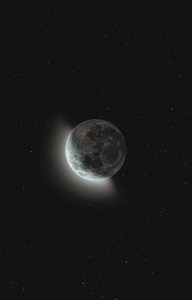
Early this morning, part of a SpaceX rocket was expected to hit the moon. Yes, our Moon! The bad news is that this is a pretty significant bit of littering. The good news is that the strike and subsequent impact crater were at least expected to provide some new observations for lunar science.
Sadly, despite a great deal of professional and amateur peering into the heavens early this morning, no one seems to have spotted the actual event. Yet.
US and South Korean lunar satellites will be positioned to photograph the site after impact but it may take days to receive that information.
With any luck we’ll know more soon. If you have any information leading to the discovery of this rocket part and its impact crater, inquiring minds want to know!
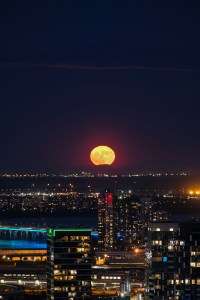
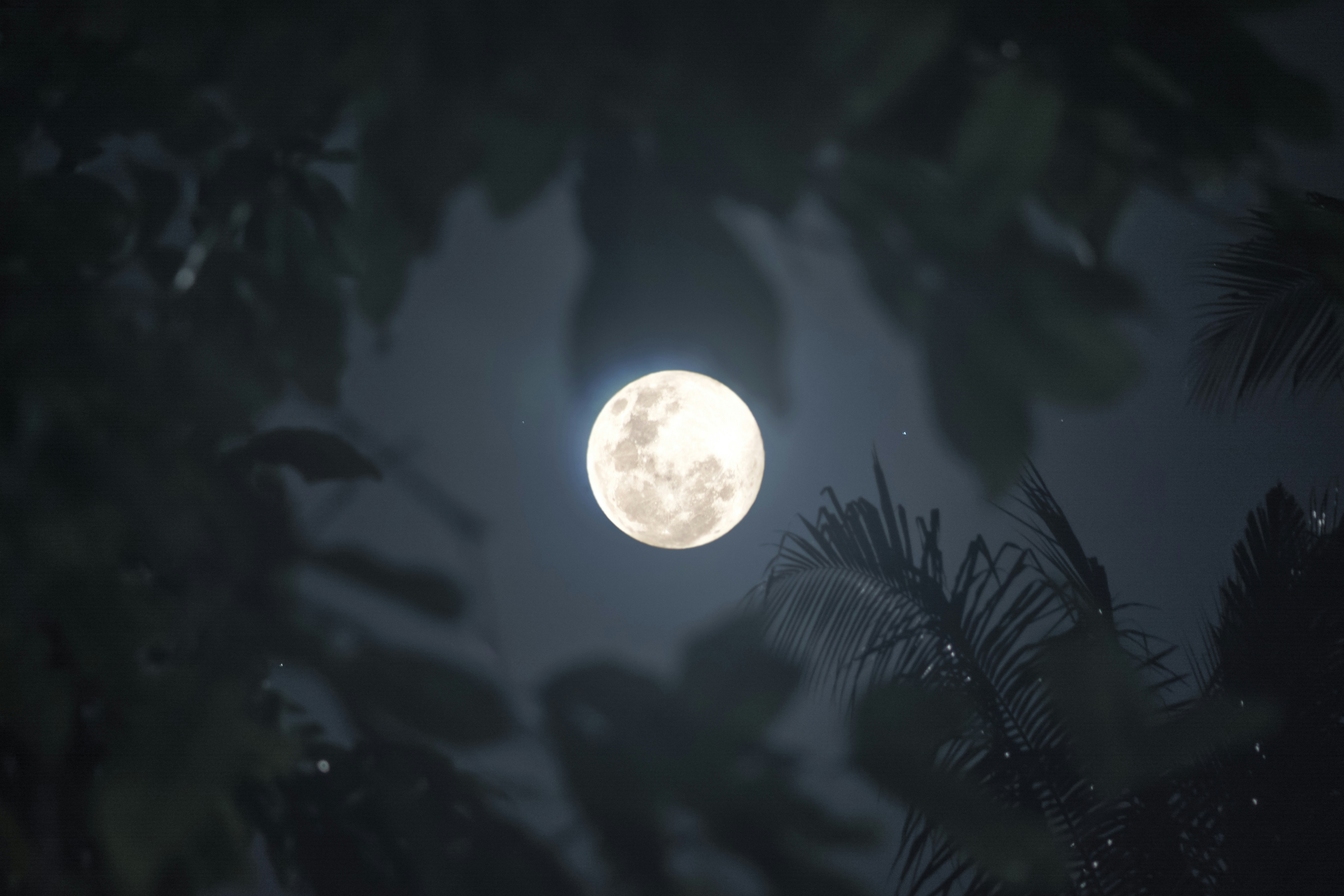
Last night’s moon looked just shy of full, and like a scoop of orange creamsicle ice cream in the sky. Tonight, if the weather gods align, we should be treated to the real thing, the full Buck Moon.
It’s called that because it happens around the time male deer start sprouting antlers in preparation for fall. It’s also known as the Raspberry Moon, which suits me just fine!
* * *
I considered an image of raspberries, or orange ice cream, but this shot of a full moon over Montreal seemed like just the thing. Ice cream still sounds like a fine idea though. Photo by Edi Bouazza on Unsplash
If you missed yesterday’s blue moon, don’t worry, it will still look full tonight too. And as I should also have mentioned, it’s a micromoon (the opposite of a supermoon). The moon is at apogee, or as far from us as it can get. Right now, that’s about 251,000 miles away.
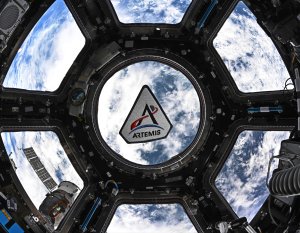
And to save you from tracking down one of the many (many) space-themed Artemis links I’ve put up over the past couple of days, you can watch tonight’s homecoming here starting at 6:30pm EDT!
The countdown has begun! Tomorrow is the first April launch date for the Artemis II flight. (If the weather or tech doesn’t cooperate, the mission will be pushed forward, so the next couple of days could be interesting!)
The countdown for NASA’s Artemis II test flight is underway at the agency’s Kennedy Space Center in Florida, with members of the launch team arriving at their consoles inside the Rocco Petrone Launch Control Center. The onsite countdown clock started ticking down at 4:44 p.m. EDT to a targeted launch time of 6:24 p.m. on Wednesday, April 1.
The Americans who blazed the trail to the moon more than half a century ago were white men chosen for their military test pilot experience. This first Artemis crew includes a woman, a person of color and a Canadian, products of a more diversified astronaut corps.
Speaking of the comparison to Apollo, what else is different, how are they similar, is that an excellent graphic showing time and trajectory (yes!) and more:
NASA has announced that Artemis II’s journey around the Moon will be available to track online and via a downloadable app called Artemis Real-time Orbit Website (AROW).
And here’s what it will be like inside Firing Room 1 a.k.a. Mission Control:
…who has the Artemis II astronauts’ backs as they make the 10-day, roughly 685,000-mile journey around the moon, aboard a rocket and spacecraft that haven’t carried humans before? And what does it take to work in the high-stakes, behind-the-scenes roles that keep astronauts safe and the mission on track?
Because astronauts are just the most visible part of what it takes to get a project like this off the ground. Here’s to the engineers, adventurers, and dreamers too!
Sadly, it looks like the Ispace lander Resilience did not make a successful landing on the moon yesterday. (If it did land, it’s harboring enough resentment about the process that it’s refusing to pick up the phone.)
Ispace has gone out of its way to make clear that it’s not giving up. The motto underpinning today’s mission was “never quit the lunar quest.” And by all accounts, the company has every intention of sticking with these moon missions until they succeed.
Let this be a lesson to all you aspiring creatives out there. Never quit! (And maybe name the next lander Persistence?)
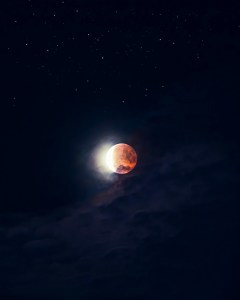
March’s full moon, known as the Worm Moon, will pass into Earth’s shadow on the night of March 13, or early on March 14, depending on the time zone, according to NASA. This eclipse will be visible from Earth’s Western Hemisphere.
While the peak of the eclipse will happen in the middle of the night (my time, at least), we should be able to see the event begin as the red(dish) moon rises around 7pm.
Why red? The color can vary based on the Moon’s path and the Earth’s atmosphere. The shade is measured on the Danjon Scale, which is a thing I hadn’t heard of but absolutely needed to know!
Earth’s atmosphere contains varying amounts of water (clouds, mist, precipitation) and solid particles (dust, organic debris, volcanic ash). This material filters and attenuates the sunlight before it’s refracted into the umbra. For instance, large or frequent volcanic eruptions dumping huge quantities of ash into the atmosphere are often followed by very dark, red eclipses for several years. Extensive cloud cover along Earth’s limb also tends to darken the eclipse by blocking sunlight.
The moon will be officially full at 8:53 a.m. EST on Wednesday (Feb. 12) and will be best seen at dusk at the moment of moonrise where you are. It will be in the constellation Leo, hanging above the bright star Regulus.
And since we’re talking storms, if you’ve ever wondered why some bring snow while others bring sleet or freezing rain, check this out: Severe Weather 101: Winter Weather Types.
We may not be able to see the moon tonight, if the storm is as dramatic as predicted, but it’s nice to know it’s up there!




You must be logged in to post a comment.