Because some days it’s helpful to remember that even the biggest challenges are literally small.
* * *
Posted in Other, Science!, tagged #365Ways, #365Ways2025, space, Thoughts on September 11, 2025| Leave a Comment »
Because some days it’s helpful to remember that even the biggest challenges are literally small.
* * *
Posted in Science!, tagged #365Ways, #365Ways2025, astronomy, lunar eclipse, planetary stuff, science on September 7, 2025| Leave a Comment »
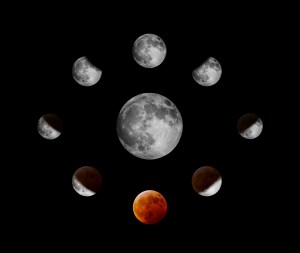
Tonight there will be a total lunar eclipse visible for most of humanity (just not for we Western Hemispherians; here’s a map of viewing locations). The moon has been very bright the past few days, and tonight it will be full. As the Earth’s shadow blocks the sun, the moon will turn red.
What to expect during the ‘blood moon’ total lunar eclipse on Sept. 7-8 | Space
The Sept. 7-8 total lunar eclipse will be visible to over 7 billion people in Asia, Australia, Africa and eastern Europe.
Not in a region that will see the full eclipse? Enjoy the power of modern technology and livestream it:
LIVE: Total Lunar Eclipse (Blood Moon) – September 7–8, 2025
Looking forward to it!
* * *
Posted in Science!, Writing, tagged #365Ways, #365Ways2025, quoteandaprettypicture on September 4, 2025| Leave a Comment »
Doubt is unpleasant, but certainty is absurd.
— Voltaire
/Thanks to the artists at Obvious State for dropping this quote in my inbox today. Their work is beautiful, recommend!
* * *

Posted in Science!, Writing, tagged #365Ways, #365Ways2025, science, sorry!, Thoughts, writing on August 31, 2025| Leave a Comment »
/with apologies to the Lepidoptera experts among us…
Ok, so here’s the thing:
— I like moths and butterflies but there’s a lot about the evolution of the family Lepidoptera that I don’t know;
— the idea that moths evolved from butterflies is, as far as I can tell, bunk;
— also, moths come out during the day, too;
— but sometimes a thought / idea / feeling flutters my way and sticks around long enough to inspire, even when I regretfully inform said idea that it is probably flying in the face of science.
And so, that’s how this most certainly unscientific poem about moths dreaming about sunshine came to be.
Some days you just go with it.
Do moths love the moon
because they remember
being butterflies?
* * *

Posted in Science!, tagged #365Ways, #365Ways2025, history, maps, Thoughts on August 26, 2025| Leave a Comment »
Have you ever wanted to see history ebb and flow like a river of time? Me too!
This 5-Foot-Long Chart Lays Out Over 4,000 Years of World History
In 1931, John B. Sparks created the Histomap, condensing more than 4,000 years of world history into a vibrant infographic…
“Clear, vivid, and shorn of elaboration, [the] Histomap holds you enthralled as you follow the curves of power down time’s endless course,” the map’s front cover reads. “Here is the actual picture of the march of civilization, from the mud huts of the ancients through the monarchistic glamor of the middle ages to the living panorama of life in present day America.”
(Conflating “monarchist glamor” and the Middle Ages is a bit much, but such information provides yet another view of history, and how it changes.)
Time waits for no one but this map stops at the beginning of the 20th century. Even so, it’s a fascinating visualization of the rise and fall of civilizations, both common and lesser known.
The link above will take you to the article and smaller image of the map. For a more detailed, digital version of the Histomap, head over to Yale University Library and enjoy!
* * *
Posted in Other, Science!, tagged #365Ways, #365Ways2025, astronauts, heroes, inspiration, NASA, Thoughts on August 11, 2025| Leave a Comment »
Astronaut James Lovell, Apollo 13 commander, dies at 97
“James Lovell, the commander of Apollo 13 who helped turn a failed moon mission into a triumph of on-the-fly can-do engineering, has died. He was 97.”
(If you’re curious, here’s a quick refresher on the Apollo program.)
And because so many of us know of Lovell from the excellent movie version of his most famous mission, here’s Tom Hanks’ appreciation:
Tom Hanks pays tribute to Apollo 13 commander Jim Lovell
“There are people who dare, who dream, and who lead others to the places we would not go on our own. Jim Lovell, who for a long while had gone farther into space and for longer than any other person of our planet, was that kind of guy.”
Here’s to the brave, to the can-do, to the explorers among us. Humanity is the better for you.
* * *
Posted in Science!, tagged #365Ways, #365Ways2025, astronomy, inspiration, JWST, NASA, science on August 8, 2025| Leave a Comment »
Sometimes a picture is worth much more than a thousand words:
Andromeda Galaxy Panorama Features Over 200 Million Stars
Stitching together more than 600 overlapping snapshots, the panorama serves as the largest photomosaic ever assembled from Hubble Space Telescope observations. Across its 2.5 billion pixels are a vast and vibrant assortment of 200 million stars, a mere fraction of Andromeda’s entire population. Taken in its entirety, the panorama is not only a technological or photographic achievement, it’s also a critical glimpse into the Andromeda galaxy itself.
And here’s the video version.
Andromeda revealed!
* * *
Posted in Science!, tagged #365Ways, #365Ways2025, inspiration, ISS, NASA, science, space, technology, Thoughts, Writers on August 4, 2025| Leave a Comment »
I have a folder of interesting articles, quotes, and ideas. When the cicadas are buzzing and the temperature is too hot to think of anything particularly timely, I search that folder for stories that might interest you.
Today, this treasure trove of ideas wants you to know about a critical space station issue: water.
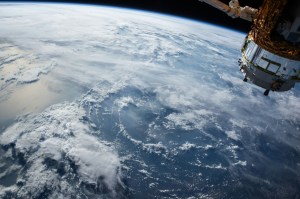
When you’re on a camping trip, you might have to pack your own food and maybe something to filter or treat water that you find. But imagine your campsite is in space, where there’s no water, and packing jugs of water would take up room when every inch of cargo space counts. That’s a key challenge engineers faced when designing the International Space Station.
Real life Dune! Ok, not really, but kind of! And this is exactly the sort of technology that can benefit the Earth-bound among us too.
* * *

Posted in Entertainment, Other, Science!, tagged #365Ways, #365Ways2025, cool facts, creativity, Indiana Jones, inspiration, NASA, Thoughts on August 2, 2025| Leave a Comment »
I enjoy the fact that there is always something new to learn. Some things are big, like the latest on asteroid deflection from NASA’s DART program, and some are small, like the fact that Dan Aykroyd had a cameo in Indiana Jones and the Temple of Doom. (Did you know that? I didn’t, until last night when I did a double take and said, “Wait, the guy with the mustache and the British accent. Was that Dan Aykroyd?” It was!)
Of global importance or not, these facts are all interesting reminders that there is always something new around the corner, if you keep looking.
And that, I think, is magic.
* * *

Posted in Other, Science!, tagged #365Ways, #365Ways2025, innovation, inspiration, science, science fiction, Thoughts on August 1, 2025| Leave a Comment »
Here’s a fun and productive use of the internet that answers a very important question: How close are we to living in the Star Trek universe?
Check it out and see!
This guide is intended to be a comprehensive look at the tech that Star Trek suggested to drive humanity forward ad astra per aspera. The emphasis is on innovations that don’t violate physics according to present consensus understanding. Go ahead and explore boldly… Just don’t waste too much time on idle speculation: there’s a whole lot to do if we’re going to get to Trek, and it’s going to take all of us.
* * *



You must be logged in to post a comment.