Yesterday, we headed out into one of the many beautiful trail systems dotted around Ottawa. The day was bright and the paths were carpeted in a lovely array of gold, orange and red leaves. It felt like a perfect way to usher in fall, but it turns out we were a day early.
Today, however, we can celebrate the Autumn Equinox, when night and day are (more or less) equal, and the sun shines directly down streets set east to west, as they do in places like Chicago.
A carefully worded answer is that on Sunday, Sept. 22, at 8:44 a.m. Eastern daylight time (5:44 a.m. Pacific daylight time) autumn begins astronomically in the Northern Hemisphere, and spring in the Southern. At that moment, the sun would be shining directly overhead as seen from a point in the equatorial Atlantic Ocean, 461 miles (743 km) south-southwest of Monrovia, Liberia.
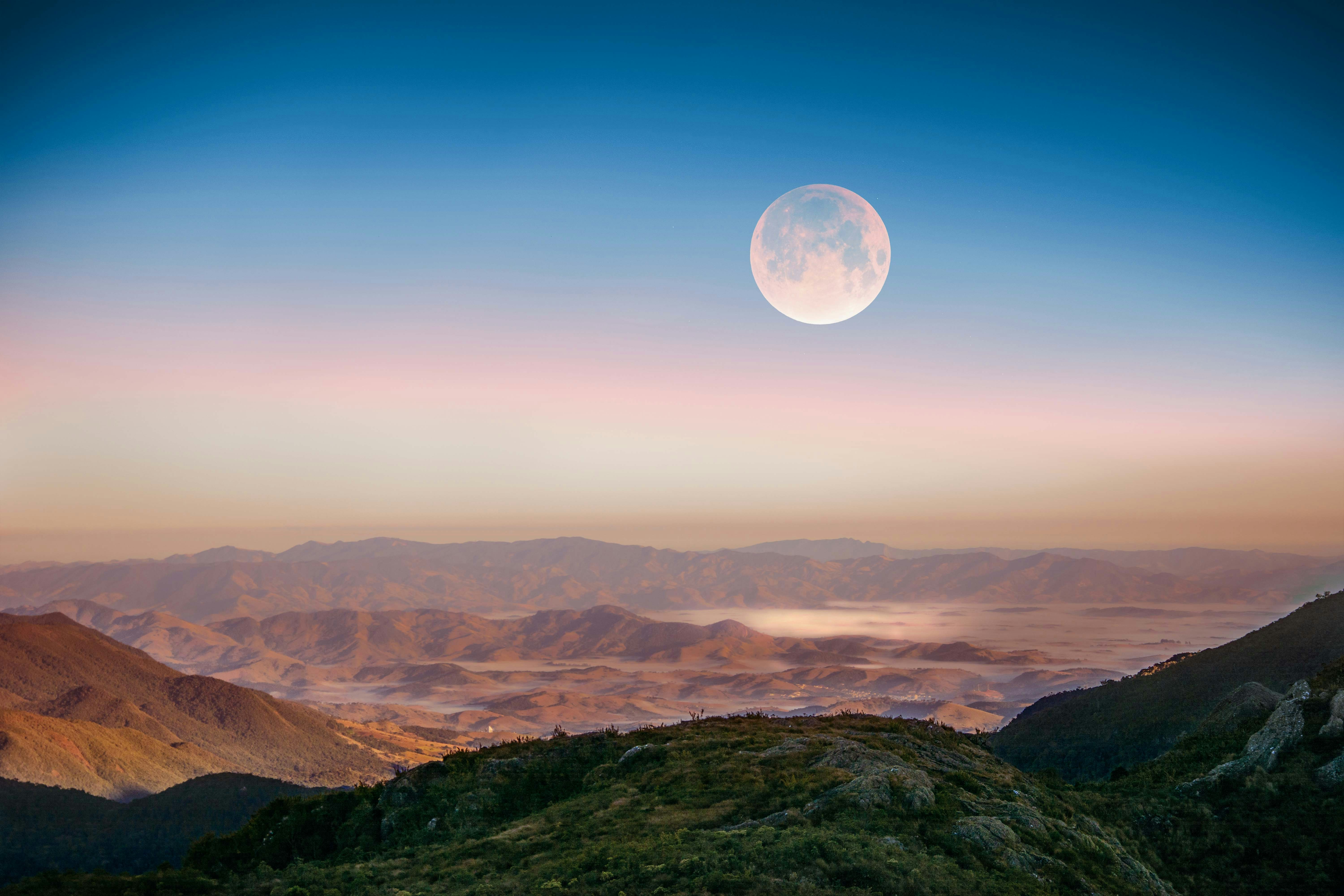
The best times to view the event will depend on your location, but the lunar eclipse will peak at 10:44 p.m. ET, according to NASA. All of North and South America will have a chance to see the partial lunar eclipse and harvest supermoon depending on the weather. Europe and Africa will also have an opportunity to see the eclipse.
As the full Moon closest to the autumnal equinox, this is the Harvest Moon. The first known written use of this name in the English language (per the Oxford English Dictionary) was in 1706. During the fall harvest season farmers sometimes need to work late into the night by moonlight. On average moonrise is about 50 minutes later each night. Around the Harvest Moon this time is shorter, about 25 minutes for the latitude of Washington, DC, and only 10 to 20 minutes farther north in Canada and Europe.
Here is some general info on eclipses and a fun video from NASA.
* * *
And as for that more-or-less moon related bonus item? It’s a tasty one.
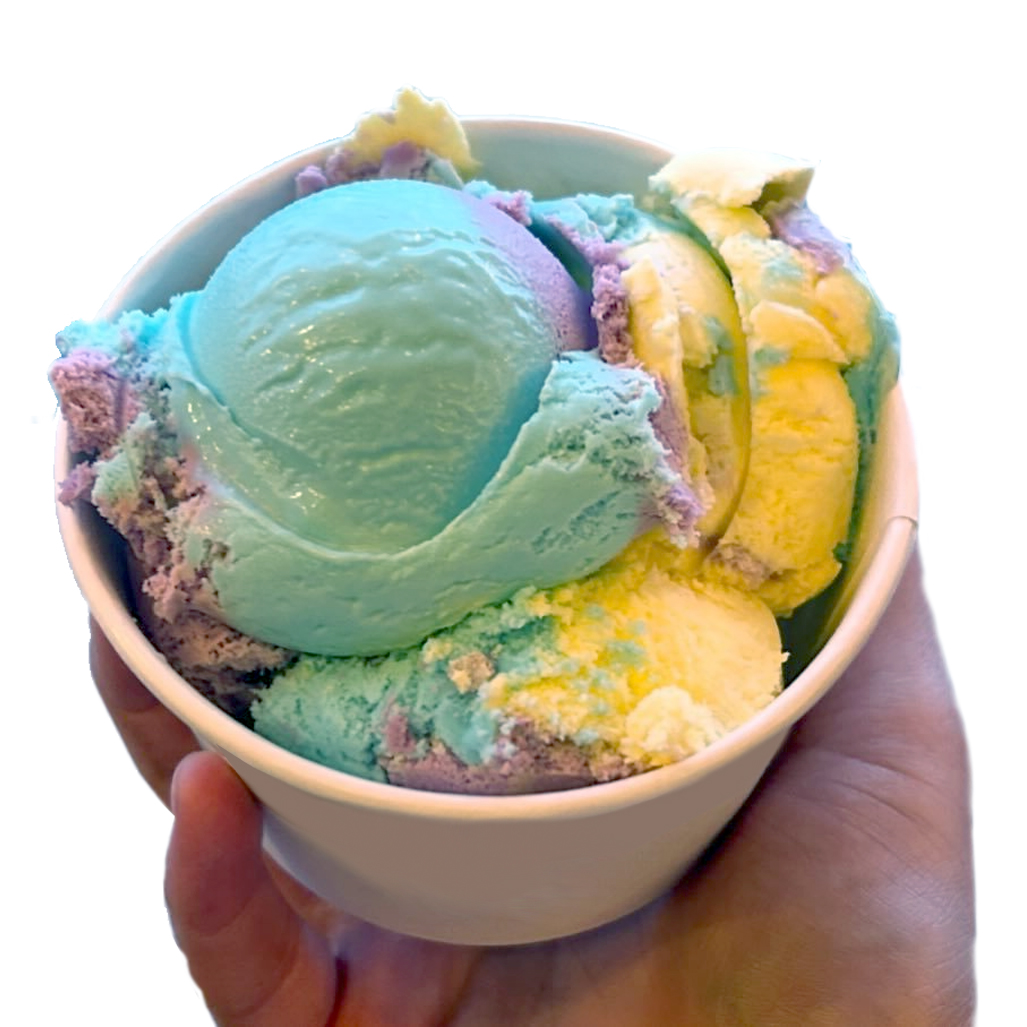
Mr Man and I went for a lovely if hot hike down by the river, and decided that the best way to cap it off would be with ice cream. We found ourselves at Chris’s Ice Cream Ottawa.
This fun little shop had a number of interesting and creative flavors, including blood orange, chili chocolate, strawberry crunch, and… hang on, what’s this?
I did not think I would like it. I did not think the flavors would work. In fact, they did more than work, as all three flavors combined into a new, better flavor.
I don’t quite know how to describe this “improbable” combination except as a structural shift. Imagine three individual flavors, normally experienced as if they were sequential, or side by side. When eaten together, however, the flavors stack together to create a singular new experience.
The acclaimed US sci-fi author Kim Stanley Robinson is also a star in the world of climate activism because his work often features climate change – on Earth and beyond. Robinson has been a guest speaker at the COP climate summit, and novels such as The Ministry For The Future and The Mars Trilogy are admired by everyone from Barack Obama to former UN climate chief Christiana Figueres.
Now, the answer to this question seems fairly self-evident to me. I see innovation as a conversation, in a way, between what is and what we can imagine will be. And fiction is excellent at helping us imagine new and better worlds.
Mr Man and I recently went on the hunt for the perfect blue gift for a friend. We did eventually find a beautiful piece of handblown glass in a dark blue with silver flecks. Lovely.
The only issue, we later discovered, was that our goal should have been a color that was closer to teal. So not the deep blue of a falling dark sky, but the vibrant green-tinged hues of a Caribbean sea over a white sand beach.
Regardless, the piece was still pretty. And it brought up the question of whether one person’s idea of blue is the same as another’s.
If you think the page color is blue, click the button at the bottom right. If you think it’s green, click the bottom left. And don’t be surprised when it starts to get tricky!
For more on this topic, check out this article on the variability in color perception, and interpretation, in humans.
A lot of factors feed into how people perceive and talk about color, from the biology of our eyes to how our brains process that information, to the words our languages use to talk about color categories. There’s plenty of room for differences, all along the way.
For example, most people have three types of cones — light receptors in the eye that are optimized to detect different wavelengths or colors of light. But sometimes, a genetic variation can cause one type of cone to be different, or absent altogether, leading to altered color vision. Some people are color-blind. Others may have color superpowers.
How did we get the landscape that we have today? I’m talking the big stuff, geology, not horticulture. Plate tectonics. We all know what Earth looks like now, but how did we get here?
This animation starts with the world we recognize, then rolls back time to show how the planet’s macrostructure has changed. Fun, right?
What’s on the roster? Another supermoon, a partial lunar eclipse, Saturn doing its ring thing, and something called International Observe the Moon Night, plus more more more.
It’s Tuesday (ugh) and it’s practically a Monday thanks to the holiday weekend and I’ve been thinking about Nature thanks to our recent museum visit, so let’s get a little weird, shall we?
What’s this, you may ask? A serious science center (excuse me, centre) with a public engagement arm so dedicated and creative that they turned parasites into a comic book? And when the first issue became a surprise hit, went on to produce a five-part series about some of the world’s most impactful parasites?
Yes, that is exactly what I’m saying.
You’re wellcome.*
* Heh, see what I did there. Yeaahhh, because it’s that kind of day:)
The Canadian Museum of Nature is situated in Ottawa’s Victoria Memorial Museum Building, a giant stone edifice built over a hundred years ago. Its mosaic tile floors, carved wooden bannisters and stained glass windows provide a lovely backdrop for exhibits old and new.
Can’t go in person? Here’s a brief video tour:
We started at the top, in a temporary exhibit on insects. Some icky, yes, but the longevity, creativity and adaptability of that class of creatures is fascinating.
Next stop wolves, then the Arctic, then Earth, Mammals, Water, Birds and finally, Dinosaurs.
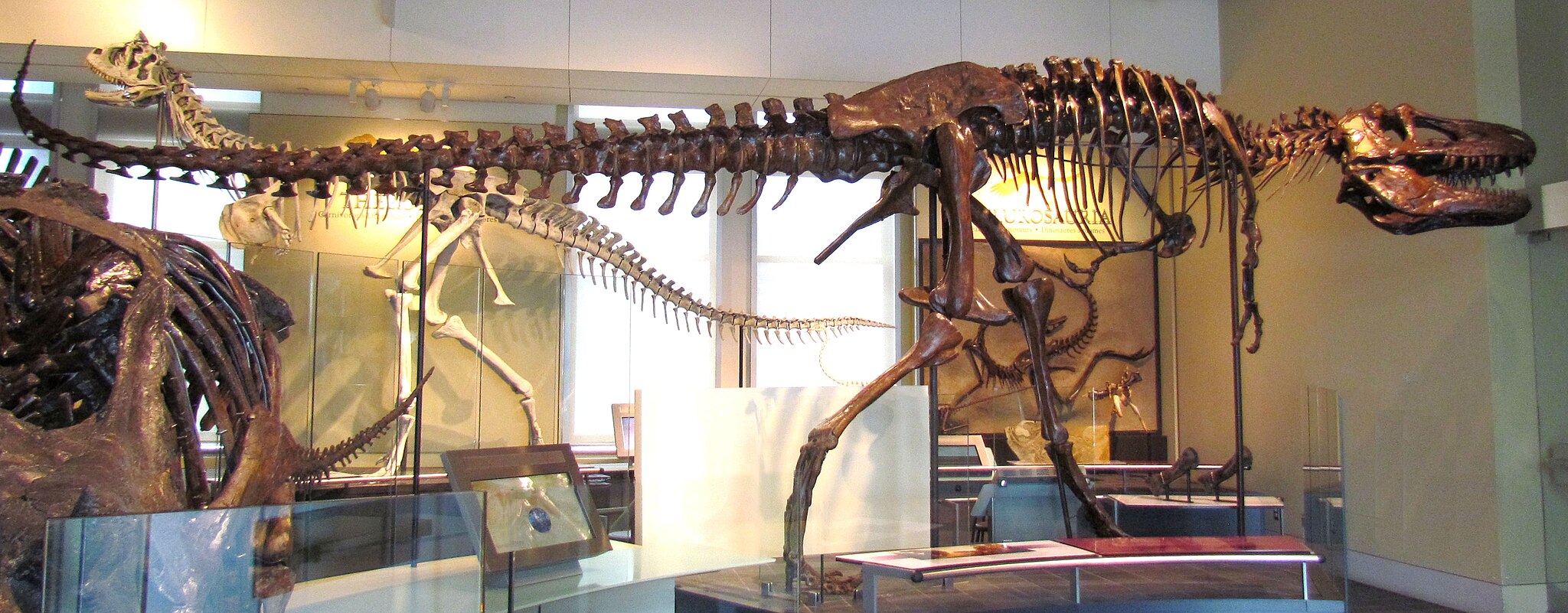
The fossils throughout were impressive. Giant whale? Check. A complete Daspletosaurus torosus (a cousin of T. rex) skeleton? Check!
A bit of fun from a Museum palaeobiologist:
I also picked up a box of Canadian rocks to remember the beauty and complexity of the geology beneath our feet.
Example rocks include rose quartz, quartz crystal, bornite, amazonite, sodalite, pyrite, amethyst, hematite, copper, labradorite, jade, rhodonite and fluorite. Lovely.
And in the floor of the Fossil Gallery, an embedded spiral* shows the extent of geological history as we know it, complete with a tiny section at the end for the Cenozoic era, age of mammals, with an even smaller epoch at the end featuring the rise of humanity.
* I should have taken a picture of this but did not, and can’t find a picture of it online. Here’s a different version to give you an idea.
This is why I love history in general, and museums in particular. On the one hand, a long-term perspective is very good at making one feel small, but on the other hand, there is real joy in knowing that you are a part of something so very big.
The experience was both humbling and delightful.
* * *
The aforementioned spiral is at the feet of this fine fellow. D. Gordon E. Robertson, CC BY-SA 3.0 via Wikimedia Commons
Think back to what the Earth was like a thousand years ago — the year 1,015. Almost everything would be foreign to modern eyes and ears — even the language would be incomprehensible. For all intents and purposes, humanity from a millennium ago may as well be an alien species (culturally, at least) with similar DNA, which simply happens to have lived on the same planet we do now.
How do we communicate with people so far removed from our own language, culture, and assumptions? It’s a great question, whether you’re thinking about the safest approach to nuclear waste disposal or contacting aliens.
In order to keep the people of the future safe from the radioactive goop created today, we need a way to tell them to watch out. And more likely than not, very few aspects of today’s society will be around to do that. Even a sign warning travelers of potential dangers would be insufficient — who among us could translate runes from the Middle Ages?
(My mom, that’s who, but point taken.)
What particularly interests me about these proposed solutions (an Atomic Priesthood dedicated to perpetuating knowledge through myth? color-changing cats?!) is that they seem to have skipped over the most obvious approach. How to conjure the fear of death, to warn people away, and to alert the future not to what is there, but what will happen if it is disturbed?*
This is a plague panel from the early 17th century. If you saw this on a house, would you go in or turn and run the other way?
Deutsches Historisches Museum Berlin, Public domain, via Wikimedia Commons
In the end, the U.S. Department of Energy plan opted to go with warning signs in multiple languages illustrated with images of people in pain. Still, I wondered, what’s wrong with the classics?
Another odd writer thought, brought to you by an odd writer.
* Also, the real problem seems to be the gap between exposure and untimely demise. If you break into a tomb and die immediately, that sends a pretty strong message. And no one has to tell people not to build on an active lava flow, but a peaceful-looking mountain with fertile soil close to the bustling port of Naples and the dynamic town of Pompeii (circa 78 AD)? What’s not to like?








_-_path_text.svg)
_-_path_text.svg)


You must be logged in to post a comment.