Do all the other things, the ambitious things — travel, get rich, get famous, innovate, lead, fall in love, make and lose fortunes, swim naked in wild jungle rivers (after first having it tested for monkey poop) – but as you do, to the extent that you can, err in the direction of kindness.
Today is a holiday in Canada so while I had to work this morning, I’m taking the afternoon off to sit outside, read, and drink a tasty beverage. I’m thinking Sangria-ish, a new drink I’m perfecting with whatever I happen to have in the fridge, like half a bottle of Alsatian red, frozen lime cubes, haskap juice, lemonade, cherries, and sparkling water:)
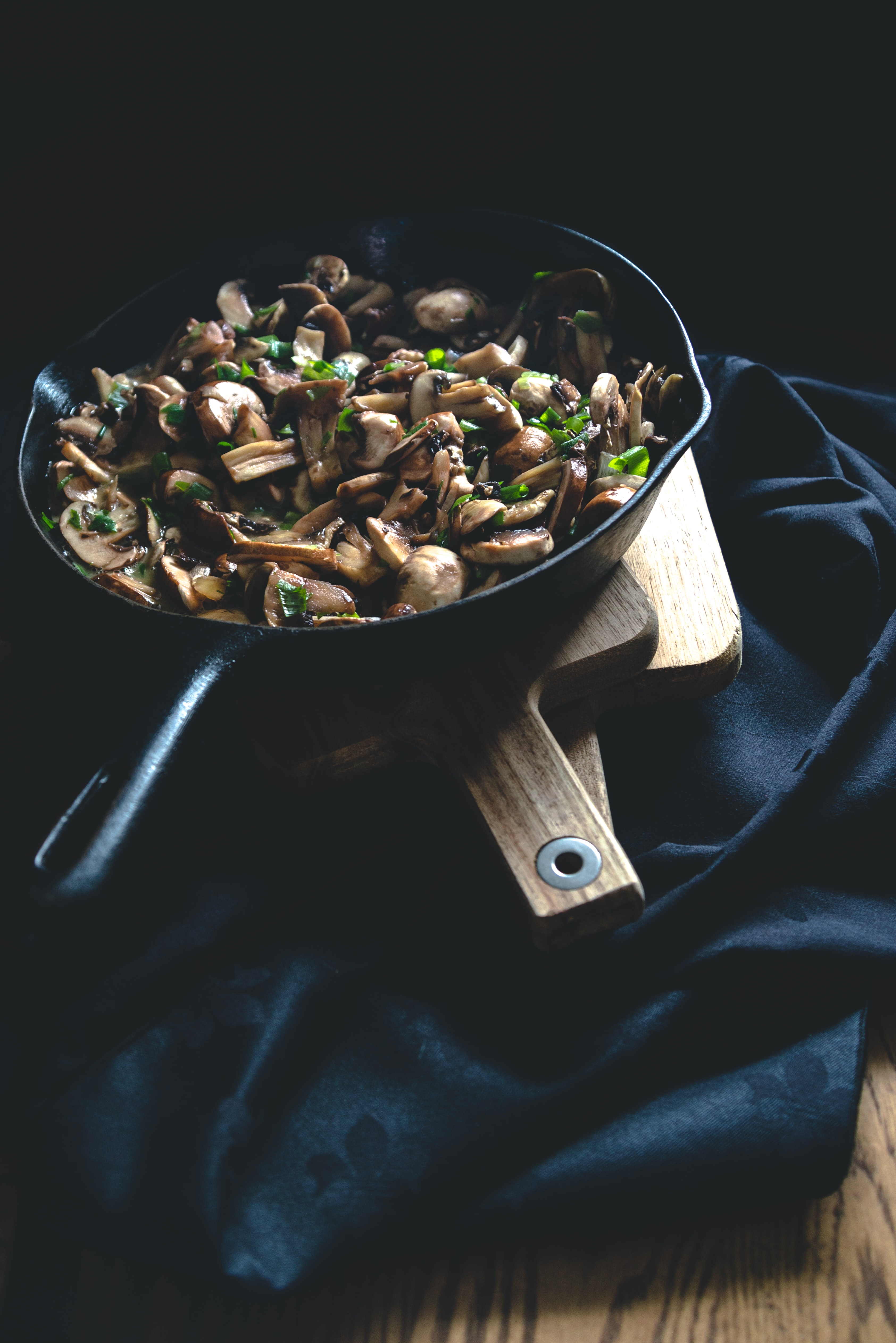
Today, my plan is to make bread, prep and roast a batch of mushrooms (oyster, shiitake, cafe), make black currant jam, and a batch of smoothies. I might also test out the KitchenAid ice cream attachment we borrowed from friends yesterday, free my tomatoes from the dastardly clutches of the cucamelon vine, and make strawberry Pop Tarts hand pies.
Or I’ll get distracted by a good book, a cozy Sunday, and the Olympics.
Note: This post is long but both Ray Bradbury and Jane Austen make an appearance, so there’s that.
* * *
We keep a little pad of paper stuck to the side of the fridge to use as a grocery list. Every couple of weeks I get tired of crossing things out and trying to remember what we actually bought and what I only think we bought, and I start fresh. Yesterday I pulled the latest iteration of the list off the pad and turned to toss it in the recycling bin, when the back of the sheet caught my attention. It was blank.
Not a big surprise there, think of all the Post-its you’ve used one side of in the last decades. But! It struck me how much times have changed. Wealth is a continually moving target, and so are our measures of it.
I mean you’re warm in winter and cool in summer and can watch the World Series on TV. You can do anything in the world. You literally live better than Rockefeller. His unparalleled fortune couldn’t buy what we now take for granted, whether the field is—to name just a few—transportation, entertainment, communication or medical services. Rockefeller certainly had power and fame; he could not, however, live as well as my neighbors now do.
In the case of paper, we’ve got both more and better.
Once upon a time, people had to use both sides of the paper. Heck, once upon a time, people didn’t have paper, and after its invention it took centuries to become what we think of today: cheap, high quality, readily available, reliable information storage, bird cage liner, and paper plane in waiting.
Even after paper became widespread in the Western world, wood pulp paper was terrible. Like, sheets of nasty grey pulp held together with weird glues and chemicals that slowly (or not so slowly) destroyed itself.
“Unfortunately, early wood-based paper deteriorated as time passed, meaning that much of the output of newspapers and books from this period either has disintegrated or is in poor condition; some has been photographed or digitized (scanned). The acid nature of the paper, caused by the use of alum, produced what has been called a slow fire, slowly converting the paper to ash.”
Depending on the circumstances, writers also did their best to use every inch of a page. Part of that was the paper itself, and part was the cost of postage. (Insert obligatory statement of love for modern postal services here!)
Click through to see a letter from Jane Austen to her sister Cassandra using cross writing, designed to condense as much information as possible onto a given sheet:
A crossed letter written by Mrs. F. L. Bridgeman to Fanny West, December 15, 1837. Public domain, via Wikimedia Commons
* * *
It turns out that paper wasn’t quite as expensive as I’d thought, but the good stuff still wasn’t cheap.
Based on paper purchases by individuals from the 1570s to the 1640s, paper was “roughly a penny for six sheets… To put this in perspective, the average laborer making 6-12 pence a day could purchase up to 75 sheets of paper with a day’s wages. (Was early modern writing paper expensive? – The Collation)
Later, Regency-ish England did have additional duties that made quality paper, particularly in book-sized quantities, more expensive.
“The excise duty on paper was a frequent problem for all printers and publishers. The reorganisation of the duty in 1794, whereby it was charged by weight rather than ream, had the effect of making the burden heavier”
In researching this I came across a wealth of fascinating economic information. For example, what was one shilling worth in London during the mid-1700s? So many things!
Dinner in a steakhouse – beef, bread and beer, plus tip
Sign-on bonus for army recruitment: The king’s Shilling
Admission to Vauxhall Gardens
Admission to Ranelagh Gardens (although it could be as much as 2 guineas on masquerade nights)
A dish of beef at Vauxhall
1lb of perfumed soap
Postage of a one page letter from London to New York
How did we get here? Right, a grocery list, and my appreciation that so many of us now have access to things like affordable paper, postal service, and oh yes, literacy!
Me: You know, I feel like we haven’t talked much lately. Was it something I said?
Muse: No, no, nothing like that. It’s just…
Me: It’s ok, I’m listening.
Muse: Thanks, this is hard for me. I just haven’t been feeling like myself. I know you want to write and I’m trying to come up with fun ideas, but I keep getting distracted.
Me: Interesting. What’s catching your eye?
Muse: Pretty things. Colorful things. Bright, shiny, fun, sometimes practical but maybe not always Things.
Me: So you mean…
Muse: Yes! Concrete, physical items like turned wooden bottle stoppers are fun, or if it’s digital, something colorful. And self-contained. Writing a few pages in a big story feels so small, you know?
Me: I do know. Is that why we’ve been playing with photo processing?
Muse: Yep. I love it when you bring my ideas to life. Not in months or (god forbid) years, but right f-ing now. Pardon my Fffrench.
Me: No worries, it’s my second language.
Muse: Heh. But do you see?
Me: I think so. You’re saying we should either write faster or stop focusing on writing alone. Shake it up a little. Stretch. Experiment. Do more and don’t worry about genre boundaries or shoulds or “Seriously? That is a crazy idea!” and see what happens.
Here’s a heaping helping of free fiction, with a side of motivation. John Scalzi’s first novel is posted free to read on his site. It’s the web version, with each chapter its own link and charmingly antiquated page design, but the novel is fun.
After a long day of work sometimes you just want to dust yourself off, meet an alien at the corner bar, and laugh a little. At least I do:)
Scalzi refers to this as his practice novel, but it’s well written and entertaining. (If you’d rather get the full version, the book was eventually published via traditional means, so visit your favorite retailer.) It’s also a great example of what can be done if you just knuckle up to the keyboard and see what comes out.
Busy day today, and none of the three ideas I had for this post came together. Instead, have some fiction, this time read to you by Levar Burton. (You know, the Jeopardy host, and oh yes, Roots and Star Trek and Reading Rainbow and a few other things as well;)
His podcast is Levar Burton Reads, and he picks some of the best speculative short* fiction out there. So when you have a few minutes, sit back, listen, and relax.
If we think about science fiction (sf) in terms of the genre’s connections to pressing issues in 21st-century culture, no topic is more urgent than climate change and the ways it promises to transform all aspects of human life, from where we live to how we cultivate our food to what energy sources will fuel our industries.
…
Preparedness discourse responds to change, understood as disaster, through strategies of containment. But science fiction offers something much more. It offers us a way of thinking and perceiving, a toolbox of methods for conceptualizing, intervening in, and living through rapid and widespread change — and the possibility to direct it toward an open future that we (re)make.
Here’s to thinking new thoughts, building new worlds, and making them.
“Listen to the mustn’ts, child. Listen to the don’ts. Listen to the shouldn’ts, the impossibles, the won’ts. Listen to the never haves, then listen close to me… Anything can happen, child. Anything can be.”
It’s hot and sticky, I’m in the middle of several projects but have nothing finished, and I’m short on time because Mr. Man wants me to give him a haircut. What does that mean for this blog post and you, fair readers?
How about something fun and easy, with a bit of history thrown in? I give you the NHL’s oldest recorded footage of hockey:












You must be logged in to post a comment.