Feeds:
Posts
Comments

Posts Tagged ‘#365Ways2024’

Writers are known for their weird web histories, and I am no exception. Today, I’ll highlight just one of the many oddities I have come across lately. In case you are a writer. Or are the curious sort.

The official CIA manual of trickery and deception

The manuals reprinted in this work represent the only known complete copy of Mulholland’s instructions for CIA officers on the magician’s art of deception and secret communications written to counter Soviet mind-control and interrogation techniques

I found the reference after reading this newsletter, featuring a little magic and some talking shoelaces. 

These Shoes Are Made for Talking – Now I Know

So in 1953, according to the BBC, the CIA hired a man named John Mulholland to help, paying him $3,000 (the equivalent of $35,000 today) to write the first-ever “CIA Manual of Trickery and Deception.” Mulholland, though, wasn’t a spy — he was a magician. The manual outlined lots of different ways CIA agents could use the principles of illusionists to help them survive in the field and advance their goals.

I wondered, was the book still available? And lo, it was!*

* Free to read with login.

* * *

Photo by Mark Rabe on Unsplash

Read Full Post »

I’m reading a nonfiction book that is fascinating, detailed and (so far, at least) very well written. My favorite sentence from the bit I read at lunch is this perfect illustration of how to set the tone as well as the stage:

The lighting is subtle, the decor an elegant symphony of beige.

— Gretchen Bakke, The Grid: The Fraying Wires Between Americans and Our Energy Future

Can’t wait to read the rest!

* * *

Photo by Photoholgic on Unsplash

Read Full Post »

“Help others and give something back. I guarantee you will discover that while public service improves the lives and the world around you, its greatest reward is the enrichment and new meaning it will bring your own life.” — The Terminator v.1 Arnold Schwarzenegger

* * *

Photo by Andre Ouellet on Unsplash

Read Full Post »

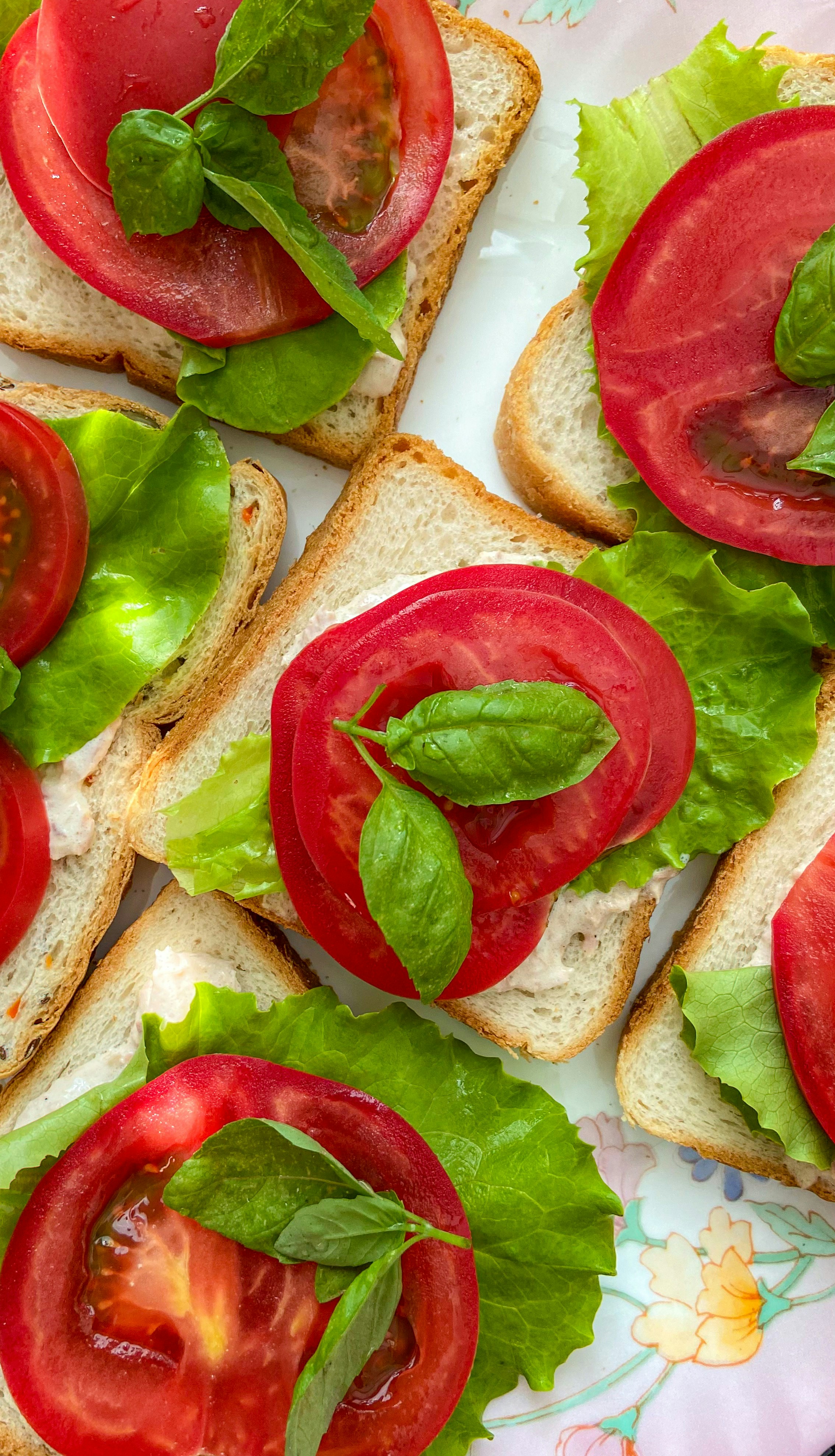
There’s a storm rolling in so I’ll make this brief. Also, we’re stuffed after a fun brunch with waffles, fauxmosas, BLTs and good friends. How good?

They brought chocolate croissants.

“There is nothing better than a friend, unless it is a friend with chocolate.”

― Linda Grayson

* * *

Photo by Mia Cambriello on Unsplash

Read Full Post »

My favorite sandwich bread recipe makes two loaves. That’s just enough for Mr Man to eat most of a loaf the first day, and then polish off the second loaf over the next day or two. Making this bread isn’t hard but it does take up most of a morning, and it would be nice if the results lasted a bit longer.  

Given that, I’ve adapted the recipe to make three loaves and include it here so I won’t misplace the random scrap of paper I used for my calculations. (Yes, that happens a lot!)

* * *

Even More Sourdough Sandwich Bread

Ingredients

Levain

  • 192g flour
  • 192g water
  • 66g sourdough starter

Dough

  • 946g flour
  • 75g sugar 
  • 22g salt
  • 8.4g instant yeast
  • 85g butter, softened
  • 573g milk (70° to 80°F, I microwave for 63 seconds) 
  • the ripe levain

Instructions (abbreviated*)

  • Mix the levain ingredients the night before and let rise
  • The next morning, mix and then knead together all of the dough ingredients (~12 minutes)
  • Let the dough rise for 1 to 2 hours, until ~doubled in size
  • Divide the dough into three, shape into loaves, let rise in buttered 9″ loaf pans until ~1″ above rim
  • Bake for 30 to 35 minutes at 375F

* I’ve memorized this recipe by now, but for more details see the original post. And apologies for not converting these measurements back into cups etc. but my bread needs to be shaped!

Enjoy!

* * *

Not quite the BLTs we’re planning, but close enough! Photo by Dimitri on Unsplash

Read Full Post »

“It’s good to do uncomfortable things. It’s weight training for life.”

― Anne Lamott

* * *

Photo by Greg Rosenke on Unsplash

Read Full Post »

If you are a writer, an illustrator or creator of any kind, this Writers of the Future winner has a message for you.

You Don’t Need to Fit In | Kal M

Hey, you. Yes, you, the one fretting in front of the computer because you’re too nervous to start on that story you promised yourself you’d work on. Come here a second; I have something to tell you.

Ready? Okay, here it is: you’ll be fine.

Maybe today is the day you need to hear this. If not, put it in your pocket and save it until you do. 

Then pick yourself up and make something. It will be beautiful.

* * *

Photo by Amy Humphries on Unsplash

Read Full Post »

Are you laces over Crocs? Pedals over e-bike? Spiral pad over iPad? And are you looking for a tried-and-true way to translate your stories from mind to digital matter? 

This new/old writing program could be for you.

Sci-fi writer and WordStar lover re-releases the cult DOS app for free | Ars Technica

WordStar’s most recent claim to fame might be that it’s the word processing application on which George R.R. Martin is still not finishing A Song of Ice and Fire.

But many writers loved and still love WordStar, a word processor notably good for actual writing.

Last updated in 1992, Wordstar still has devoted users. Rob Sawyer, all-around nice guy and winner of (checks notes) pretty much every sci-fi award ever, is one of them. He’s also done waiting.

Deciding that the app is now “abandonware,” Sawyer recently put together as complete a version of WordStar 7 as might exist. He bundled together over 1,000 pages of scanned manuals that came with WordStar, related utilities, his own README guidance, ready-to-run versions of DOSBox-X and VDosPlus, and WordStar 7 Rev. D and posted them on his website as the “Complete WordStar 7.0 Archive.”

I’ll be honest, this program probably isn’t for me. But I do love the fact that Rob figured out what works for him, found a way to keep it working for him (no mean feat in our current environment of disposable tech), and wants to share it with the rest of us. 

If you are in the market for a head-down, “focus first” approach to writing and don’t mind installing a DOS emulator to use it, check out this beloved program.

* * *

Portions blurred to protect delicate sensibilities. Photo by Senad Palic on Unsplash

Read Full Post »

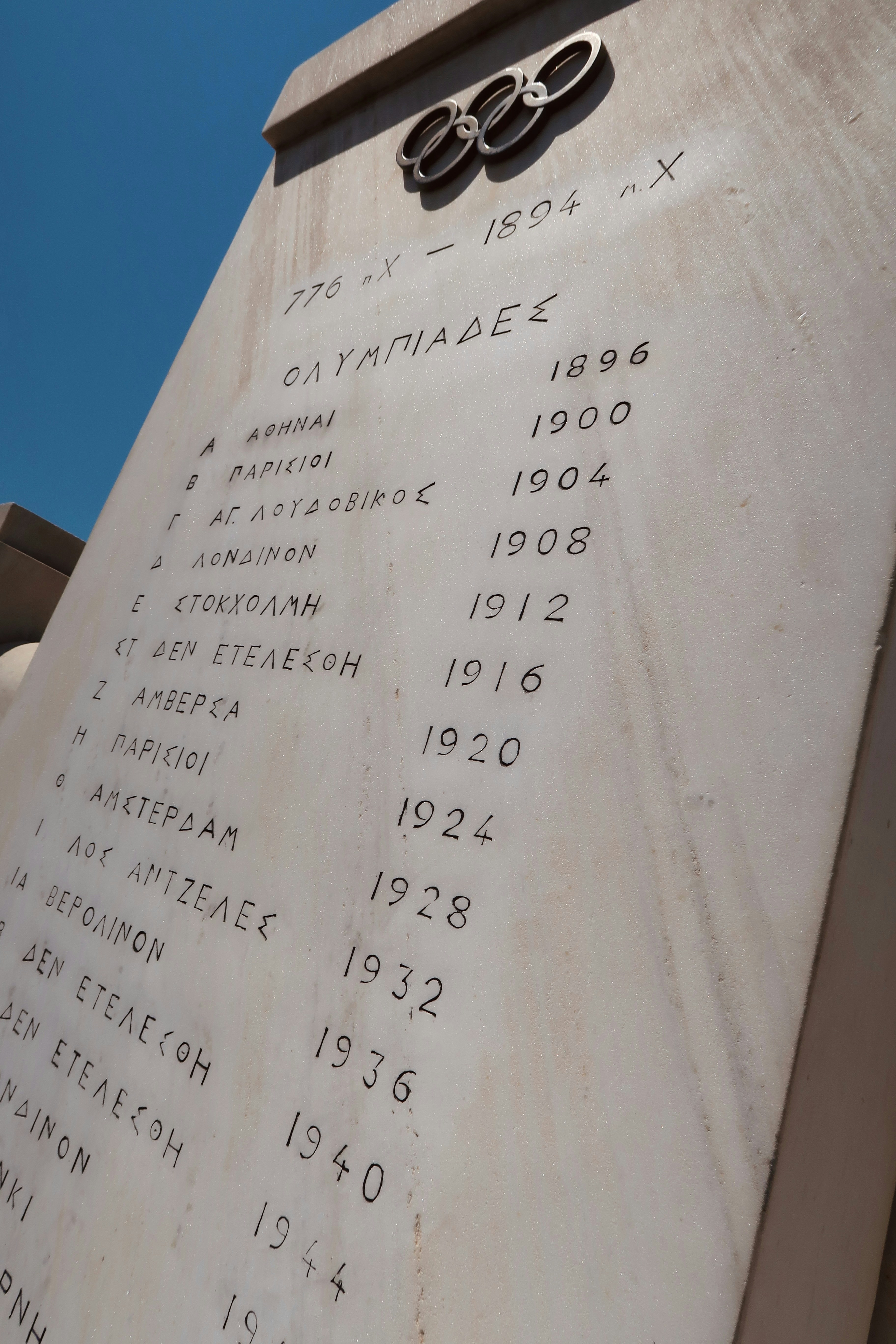
The modern Olympic Games began in 1896, but where did they come from? What were the original Olympics like? If you’re interested in the historic details that shaped our current Games, this article gets into all the naked, nitty gritty details.

The origin of the Olympic Games

For twelve centuries, the sacred Games in Olympia were a spectacle of blood, sweat, and glory. These ancient contests, held in honor of the gods, captivated spectators with displays of strength, endurance, and skill. Today, the modern Olympics carry forward this legacy, uniting athletes from all over the world.

And if you have a chance to visit the Panathenaic Stadium in Athens, I recommend!

* * *

Photo by Julio Hernández on Unsplash

Read Full Post »

It’s Monday and my day job brain is a little tired. So why not take a little time to stretch my mind in other ways, like listening to a couple of cool dudes chat about a nice light topic… like controversies in quantum mechanics;)

Neil deGrasse Tyson and Sean Carroll Discuss Controversies in Quantum Mechanics

(We’re also watching 3 Body Problem, the series based on Liu Cixin’s award-winning novel, so it’s maybe kind of like semi-related big brain study material?)

Yeah, I don’t understand most of this at a deep level but I really like that there are other humans on this planet who do.

* * *

Speaking of science, this is also an excellent opportunity to celebrate a new blog by scientist, award-winning author and friend Arthur H. Manners. He is currently working on The Sci-Fi Writer’s Guide to Reality, a series with the goal of helping SF writers understand the fundamentals of science.

I love this idea so much. One great session at last year’s Writers of the Future workshop was given by Dr. Beatrice Kondo. It was Day 6 of a long week. Many of us were half asleep, until the good doctor started talking in a serious, straightforward way about what it would take to make some of the crazy stuff in our heads work in real life. Really terrific stuff.

Writers & Illustrators of the Future Workshop Week 2023 – Day 6

Kondo talked the writers through the science of several common writing scenarios. Why can a submarine only travel at certain speeds underwater? What would happen to someone’s body if they tried to lift a car? How do exoskeletons work?

Then she touched on tissue engineering, stem cells, 3D bio-printing, breathing underwater, genetic engineering, and whether human wings or human photosynthesis would actually work.

Chatting after the session, a lot of the writers expressed a desire for a collection of introductory information on various scientific topics. Not a thick textbook for students of the field, but the sort of material one might need to both ground a story and to better imagine the possibilities of those topics.

I am so happy to see that Arthur has taken up this challenge. 

New Release: Writing About Remote Sensing in Sci-Fi – Arthur H. Manners

I’ve just finished the first 6-part primer in my new blog called the Sci-fi Writer’s Guide to Reality. The blog aims to help science fiction writers with the fundamentals of science. The first primer focuses on remote sensing (the act of trying to determine what’s going on over there, i.e., at a distance, through means other than physical contact). This topic is rich and essential to many aspects of science fiction, from spaceship sensors to astronomical observations.

Yes, please!

Here’s the first installment of his six-part primer on remote sensing: 

Sci-fi Primers- Remote Sensing – Part 1

Ensign: “Captain, the long-range scanners indicate that the aliens’ blood-type is O-negative.”

Captain: “My God… Universal donors. What else is on the scanners?”

Ensign: “That the aliens think Star Wars Episodes Seven through Nine were the best.”

Captain: “Monsters! Arm the photon torpedoes!”

So if you’re wondering how remote sensing works, what is handwavium (official writer terminology alert!), and what crosses the boundaries between science and magic, check out this guide: 

Sci-fi Primers- Remote Sensing – Part 1

Sci-fi Primers- Remote Sensing – Part 2

Sci-fi Primers- Remote Sensing – Part 3

Sci-fi Primers- Remote Sensing – Part 4

Sci-fi Primers- Remote Sensing – Part 5

Sci-fi Primers- Remote Sensing – Part 6

Go, science!

* * *

Real magic. Photo by Ahmed Nishaath on Unsplash

Read Full Post »

« Newer Posts - Older Posts »