Welcome to the new year! Here’s what you can expect from space in 2025 (including a new way of studying the solar corona that looks enough like the Millennium Falcon to be extra fun):
After a spectacular 2024, which featured a year of wonder in the skies, including a total solar eclipse and rare sightings of the northern lights, 2025 is set to bring even more astronomical events.
“At 4:20 a.m. EST, the solstice marks the beginning of winter in the Northern Hemisphere and summer in the Southern Hemisphere,” NASA says on its website.
That means from now until the end of June, each day will get a little bit longer — and brighter…
Read the full article for some fun facts on the solstice, plus a link to solstice-themed music, food and writing, including work by beloved children’s author Susan Cooper (my brother and I loved The Dark Is Rising).
Today is also the official start of winter, and the temperature is dropping like a rock in a gravity well. Stay warm, it just gets brighter from here!
* * *
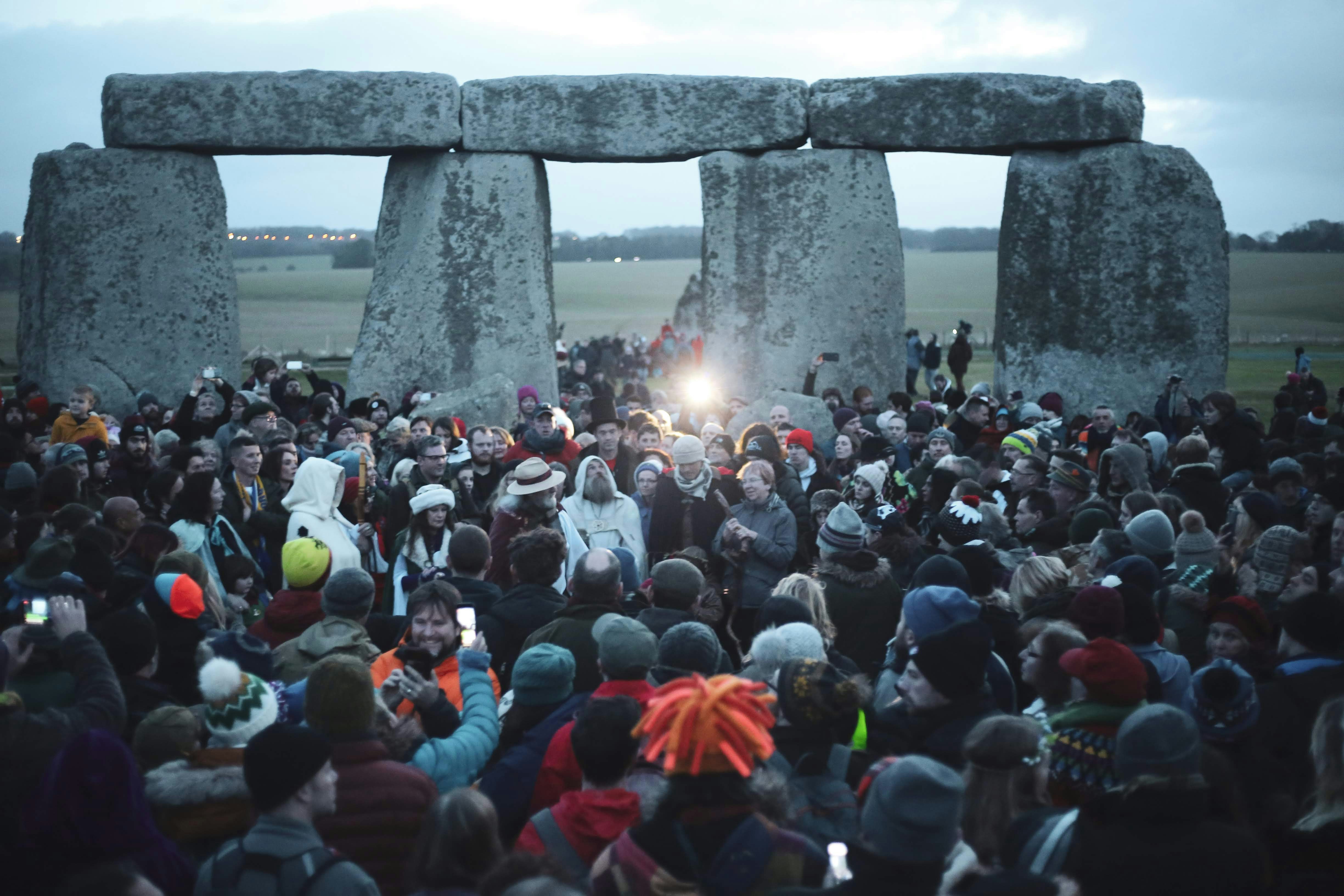
I think there’s a druid in there somewhere. Photo by Dyana Wing So on Unsplash
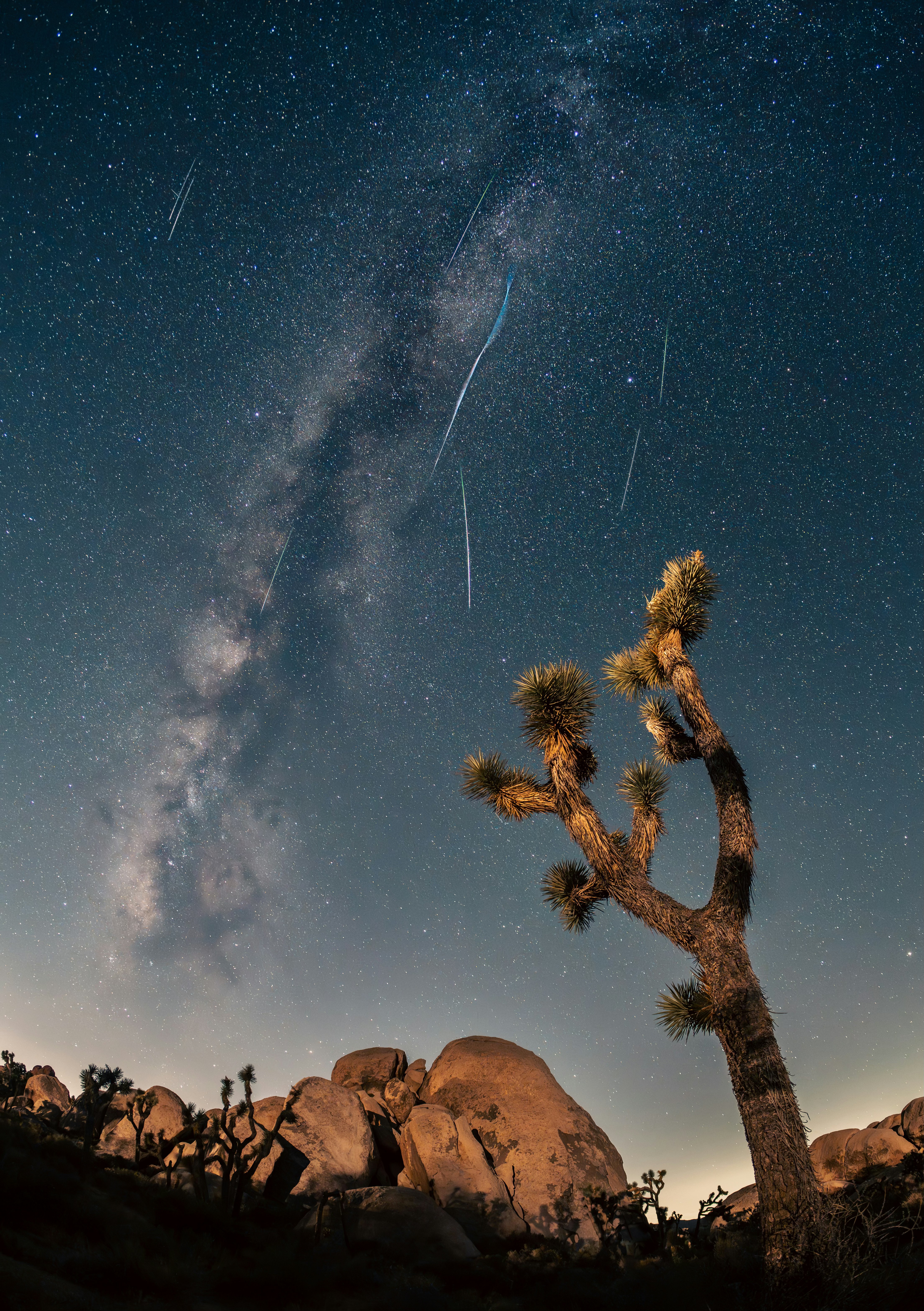
If you happen to live in a place that will have clear skies tonight (or tomorrow), rejoice! It is time for that highlight of the annual meteor shower cycle, the Geminids.
The Geminids, which are bright and have a yellow hue, are considered one of the best and most reliable annual meteor showers, when at least 120 meteors are usually seen per hour during its peak, NASA says.
The Geminid meteor shower peaks in the middle of December, with the most activity this year expected late Friday and into early Saturday, according to NASA.
Alas, we expect snow and clouds here tonight, but I’m happy knowing that you, dear reader, might have a chance to see one of the most spectacular shows in the solar system.
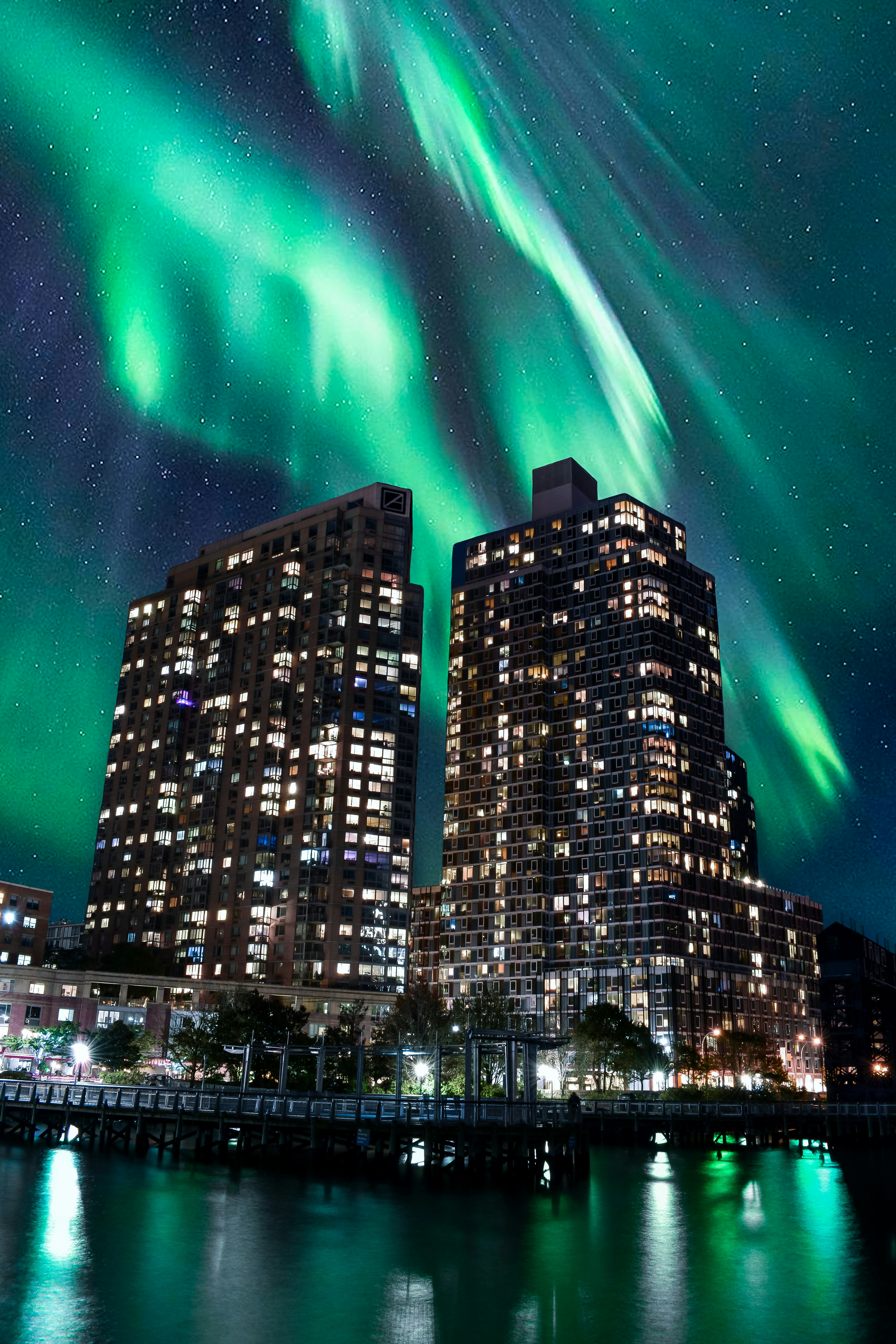
If my brain had been working yesterday I would have mentioned the fact that many of us have an unusual opportunity to see the Aurora Borealis right now.
“The word Aurora was first used by Galileo and comes from Latin and is the name of the goddess of dawn.” — NOAA
This light show in space is typically reserved for latitudes close to the Earth’s poles, but we happen to be experiencing a G3 solar storm right now. This happens when solar storms drive coronal mass ejections, solar flares, solar particle events and solar winds at us. And by us, I mean Earth.
First, some pretty pictures from as far south as Florida:
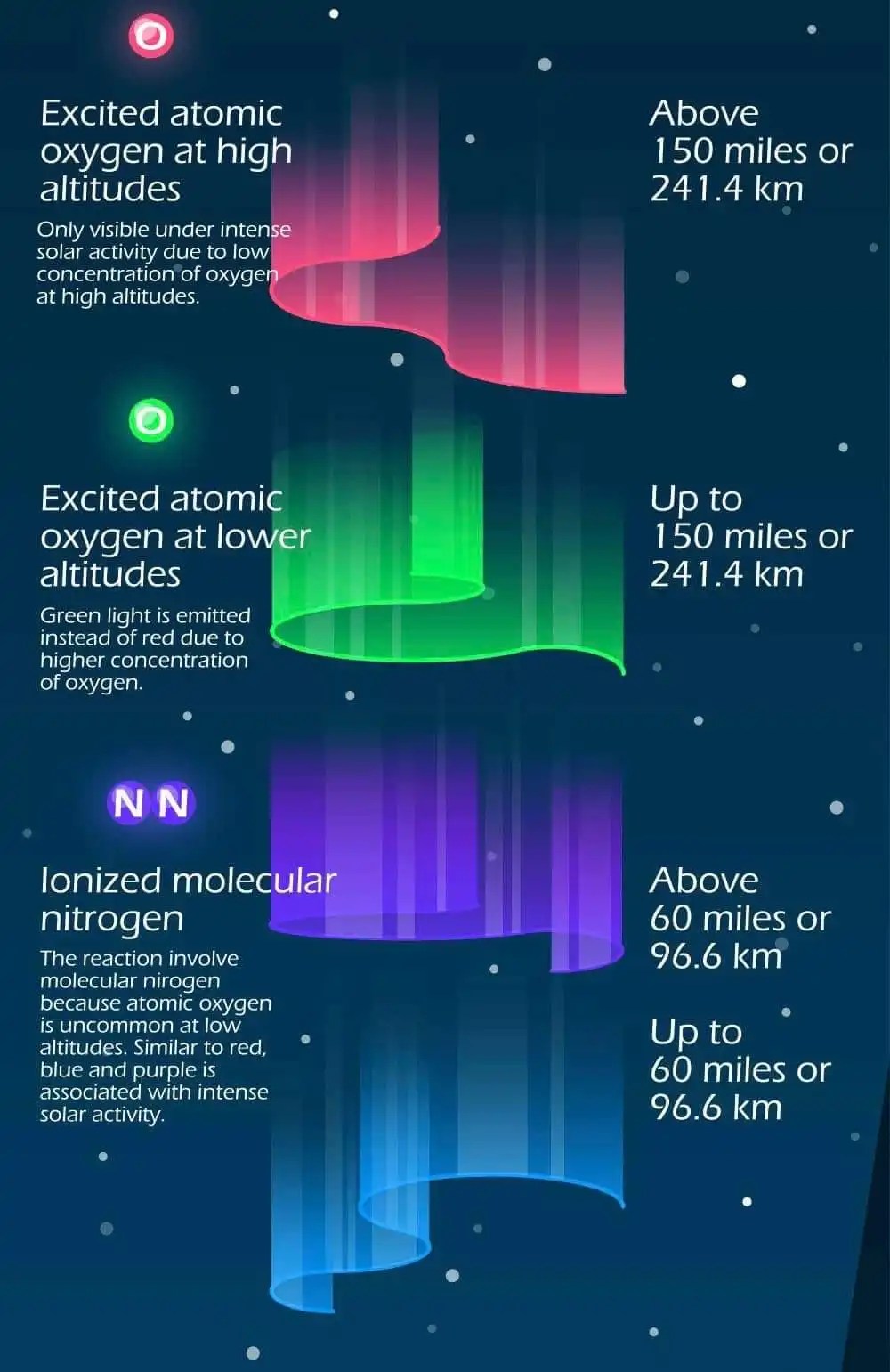
Our sun is the main reason for an aurora display. Particles energized by the sun race toward Earth, colliding with our upper atmosphere. Earth’s magnetic field divert this energy towards the north and south poles. As these energized particles enter Earth’s atmosphere, they excite gas atoms and molecules. The colors observed depend on which gas atoms they interact with.
In addition to colorful light bands, sometimes an aurora has black bands that block starlight. The dark regions likely come from electric fields in the upper atmosphere that block electrons from interacting with gases.
I won’t be hurt if you want to stop here and go search for more pictures, but if you’d like to know more about the how and why, read on!
When and where can you see the northern and southern lights also known as the aurora? This page provides a prediction of the aurora’s visibility tonight and tomorrow night in the charts below. The animations further down show what the aurora’s been up to over the last 24 hours and estimates what the next 30 minutes will be like. The aurora’s colorful green, red, and purple light shifts gently and often changes shape like softly blowing curtains.
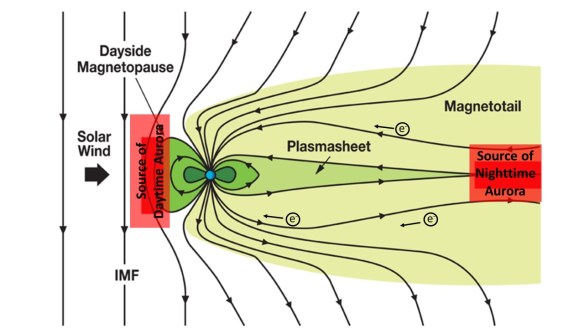
The figure below shows the magnetosphere and the locations where electrons are accelerated (in red). The red region on the right of the figure is where the electrons that produce night-time aurora are accelerated and the source of the processes that generate geomagnetic storms.
Pretty colors are pretty, of course, but why should we care about space weather?
Space weather is a global issue. Unlike terrestrial weather events, like a hurricane, space weather has the potential to impact not only the United States, but wider geographic regions. These complex events can have significant economic consequences and have the potential to negatively affect numerous sectors, including communications, satellite and airline operations, manned space flights, navigation and surveying systems, as well as the electric power grid.
Aaaand in case you haven’t had enough about auroras in particular and space weather in general, NOAA has a fun dashboard for you!
Yesterday, we headed out into one of the many beautiful trail systems dotted around Ottawa. The day was bright and the paths were carpeted in a lovely array of gold, orange and red leaves. It felt like a perfect way to usher in fall, but it turns out we were a day early.
Today, however, we can celebrate the Autumn Equinox, when night and day are (more or less) equal, and the sun shines directly down streets set east to west, as they do in places like Chicago.
A carefully worded answer is that on Sunday, Sept. 22, at 8:44 a.m. Eastern daylight time (5:44 a.m. Pacific daylight time) autumn begins astronomically in the Northern Hemisphere, and spring in the Southern. At that moment, the sun would be shining directly overhead as seen from a point in the equatorial Atlantic Ocean, 461 miles (743 km) south-southwest of Monrovia, Liberia.
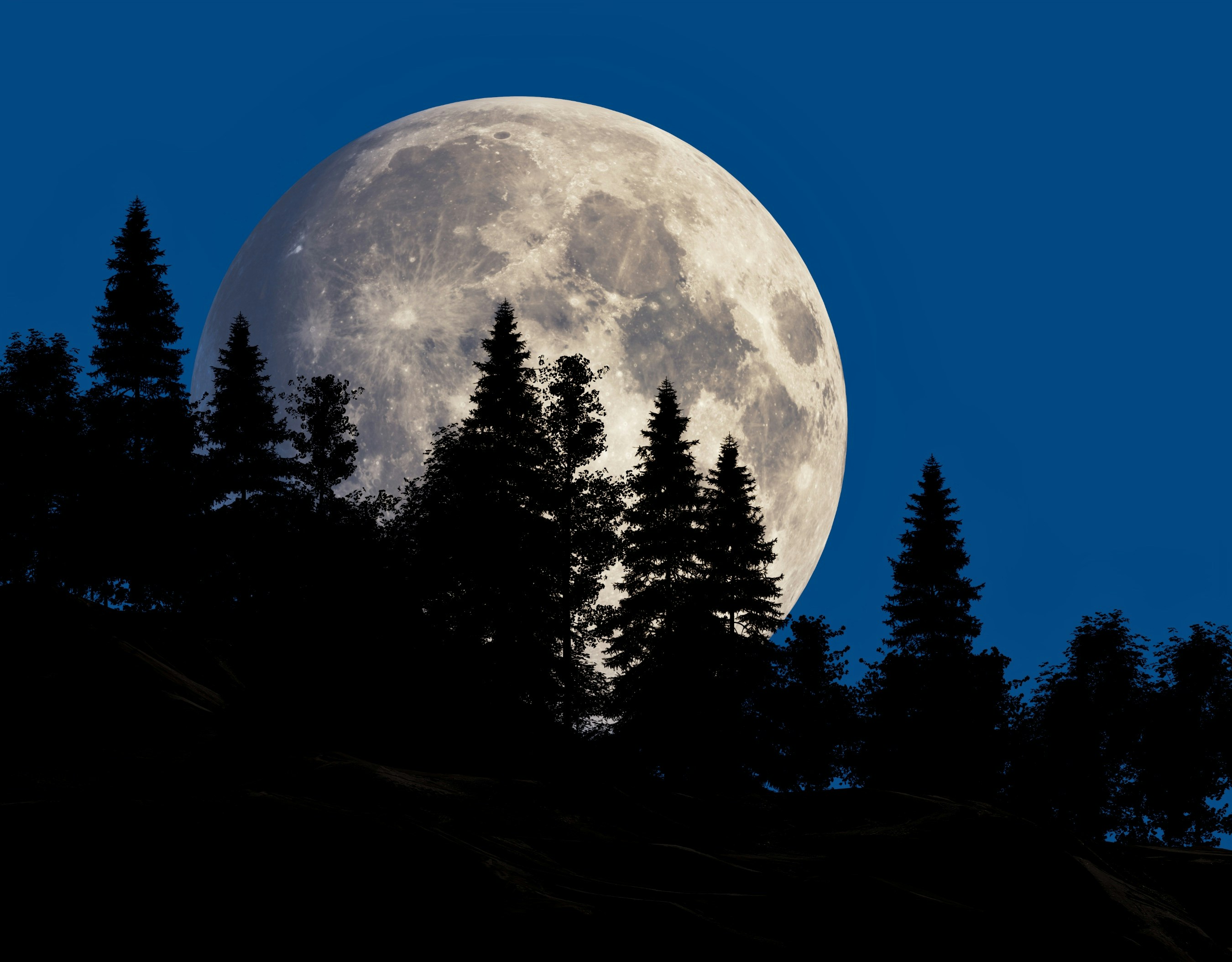
What’s on the roster? Another supermoon, a partial lunar eclipse, Saturn doing its ring thing, and something called International Observe the Moon Night, plus more more more.
Apologies for the late notice but this is a public service announcement. Please be aware that there will be a parade in your neighborhood about twenty minutes before sunrise, on the morning of June 3rd, and everyone is invited!
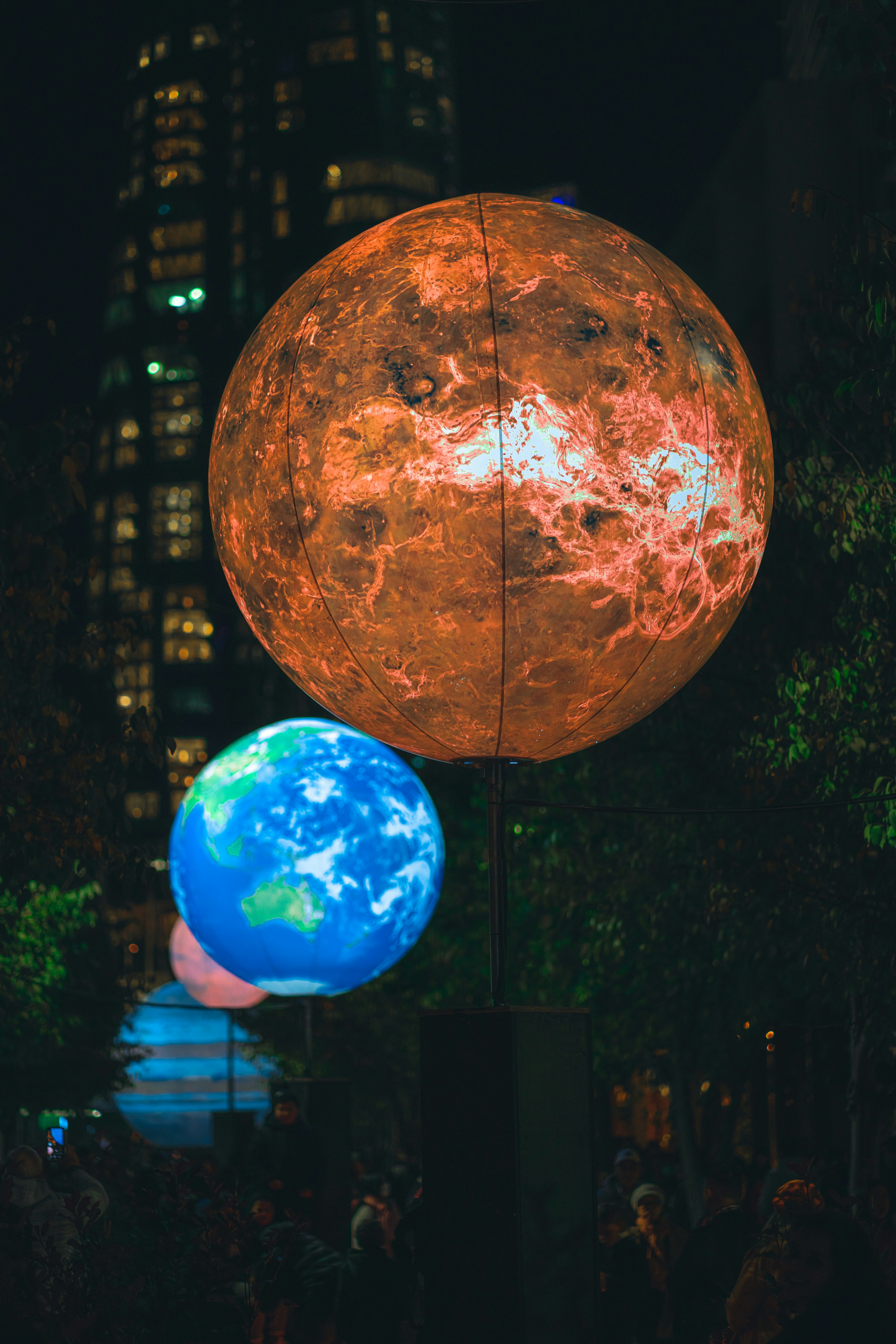
This rare event, often referred to as a “planet parade,” will occur on June 3, 2024, and feature Mercury, Mars, Jupiter, Saturn, Uranus, and Neptune all lining up close together.
Unfortunately, most of the planets won’t be visible to the naked eye, but it’s fun just to know that it’s happening.
If you are anywhere near the path of totality for the big event on Monday, April 8th, are you eclipse ready? I will argue that one of the most important parts of such prep is to ensure that you have a plan for safe eclipse viewing. This article may be of help:
Legitimate eclipse glasses are at least 1,000 times darker than the darkest sunglasses you can buy….
While lab tests are the best way to determine whether glasses meet the ISO standard, Fienberg says there is a three-part test people can do at home if they’re concerned their eclipse viewers aren’t up to the task.
First, put your glasses on indoors and look around. The only things you should be able to see are very bright lights, such as a halogen bulb or a smartphone flashlight.
Then, if the glasses pass the indoor test, bring them outside—but don’t look at the sun just yet. Look around: it should be too dark to see distant hills, trees or even the ground.
If that second test is passed, keep the glasses on and quickly glance at the sun. You should comfortably see a bright, sharp-edged round disk. If your glasses pass all three tests, they are probably safe to wear. Still, Fienberg points out that it’s best to use them for only a few seconds every minute or so during the eclipse…
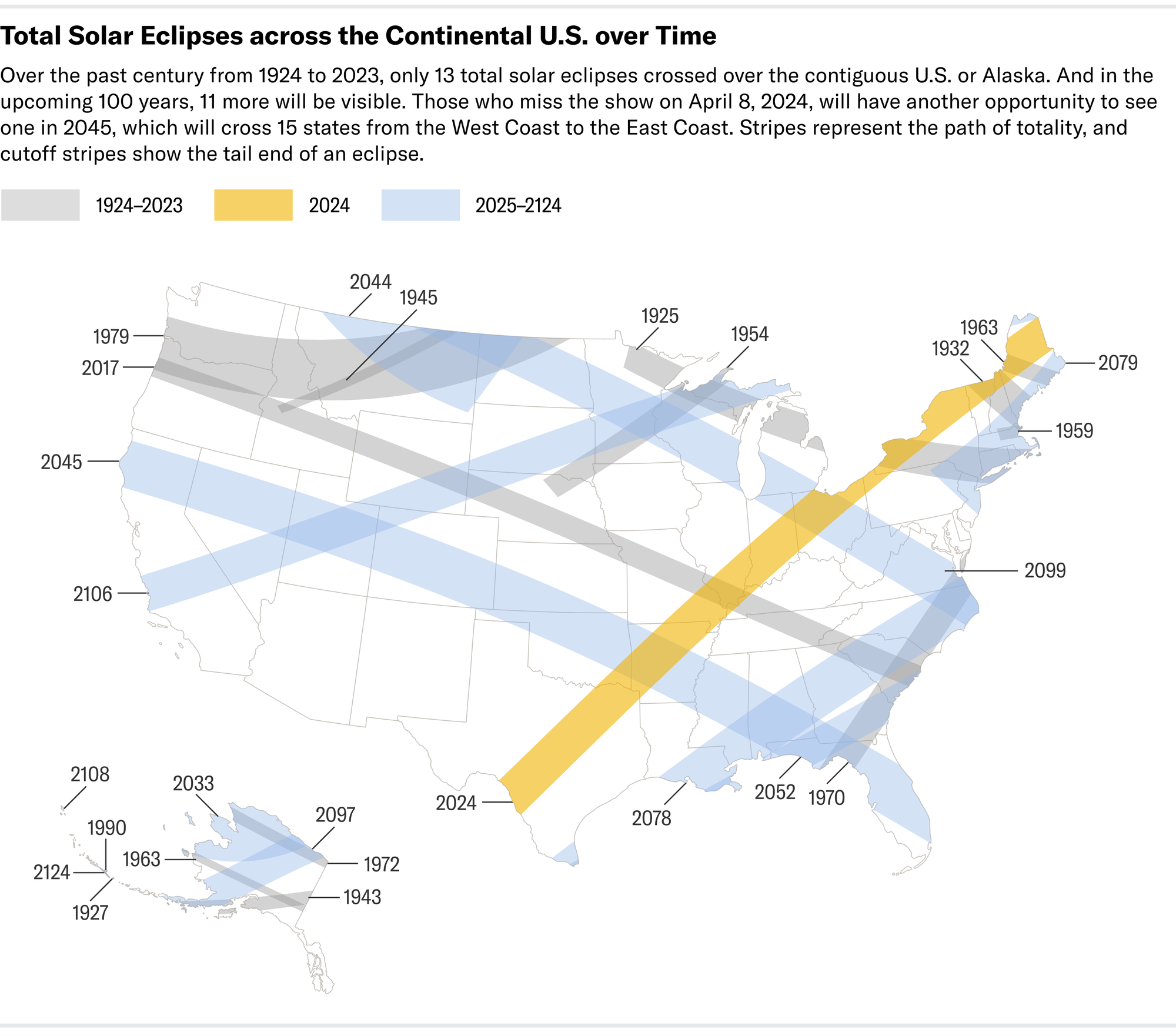
By now you have probably heard that there will be a full eclipse of the Sun on April 8th. (If you haven’t, this is your public service announcement. The world is not ending and the Sun will return to its place in the sky. No wolves, dragons or demons are involved. The gods of sun and light just need to slip out for a quick break.) The next time this will happen in the contiguous US won’t be until 2044.
Millions of people will be able to view the eclipse. Here’s a map of the eclipse path:
Of course, we now know that the Sun isn’t really eaten during an eclipse. Instead, it does what it always does: rain ultraviolet rays on everything in its path. That’s why you should never look at a solar eclipse without protective eyewear.
And if you are in charge of kids on April 8th (or adults, we should have sciencey fun too!) consider the ideas in this article:
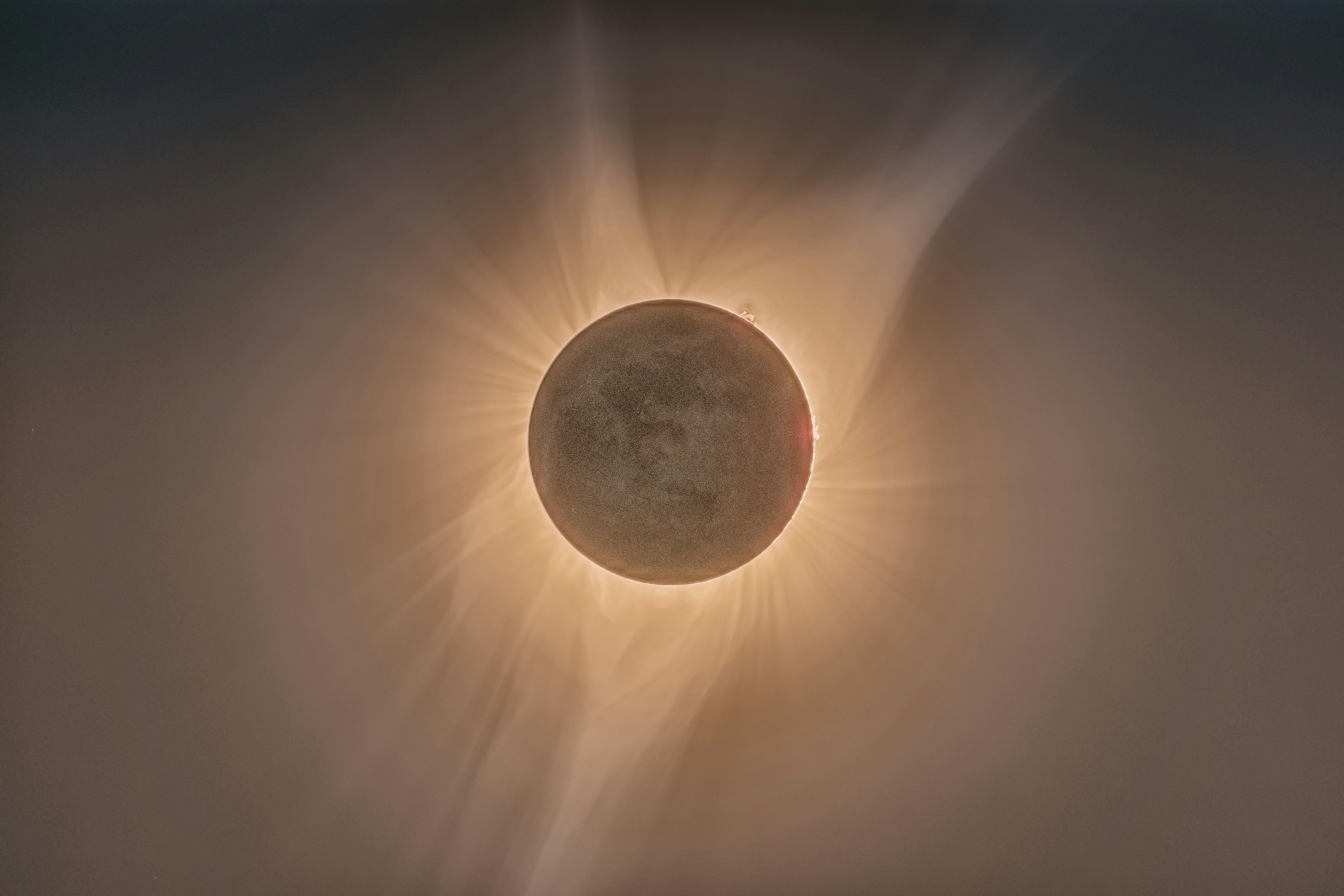
If the weather cooperates, science students of all ages could be in for quite a show on April 8. The first sign will be a sudden temperature drop. The sky will darken, and winds will shift. A dark shadow will appear on the horizon. Faint waves of light may waft across the ground. A ring of bright light will shine from the outer edges of the otherwise darkened sun. Then the moon will cover the sun completely and, for a few seconds, a thin red layer may appear around its outer rim.
And just for fun, here’s a little something for your ears, too:





You must be logged in to post a comment.