Feeds:
Posts
Comments

Posts Tagged ‘history’

* * *

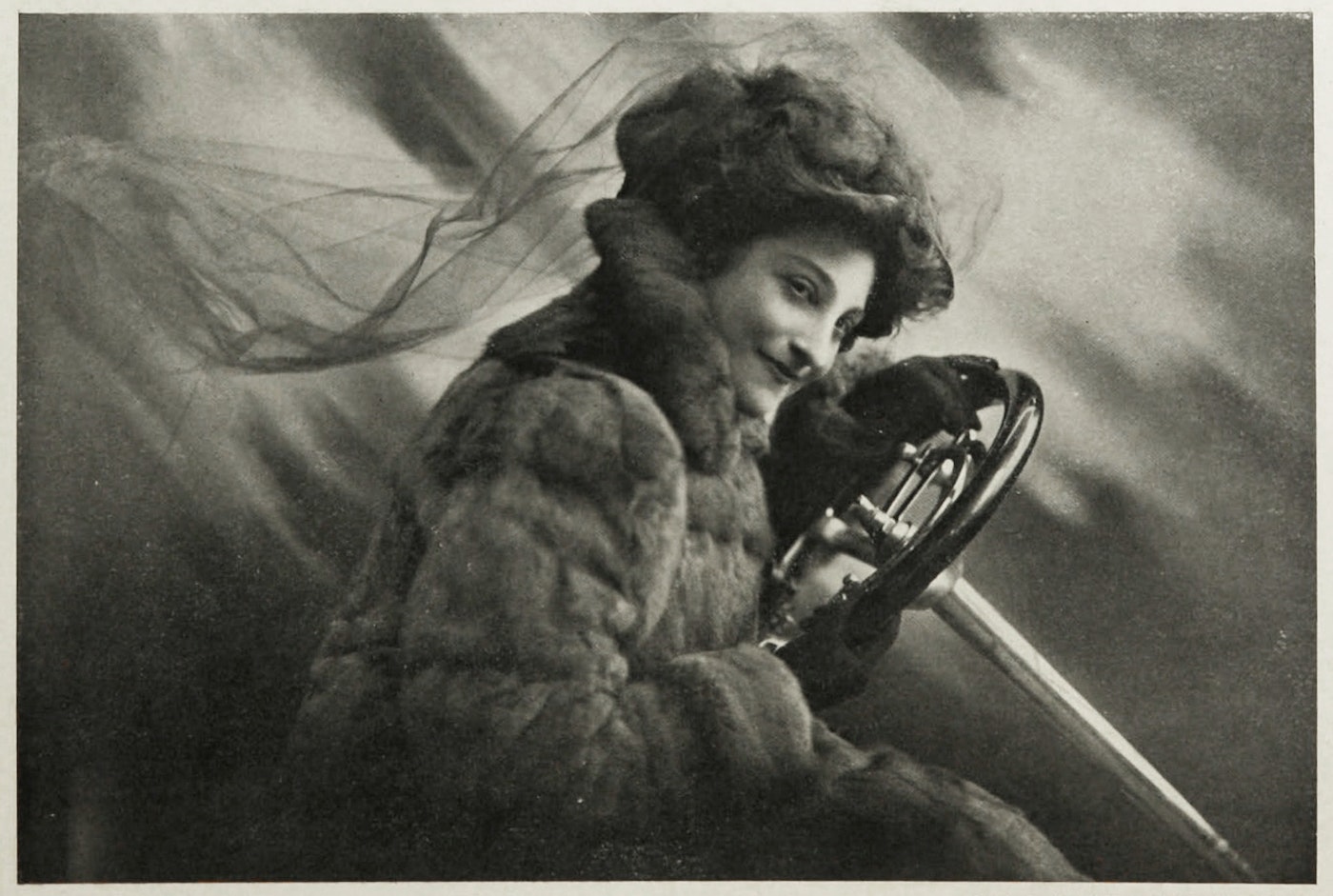
In the early twentieth century, Dorothy Levitt, née Elizabeth Levi (1882-1922) was “the premier woman motorist and botorist [motorboat driver] of the world”… The Woman and the Car is a practical, how-to guide for those who wanted to take to the roads, but did not quite know how. 

— On the Road: *The Woman and the Car* (1909) – The Public Domain Review

Have times changed since 1909? Obviously, but not everything. “Many of the extensive recommendations regarding mechanics, etiquette, and the temptations of car culture hold true today.” Also, who wouldn’t like to have this much fun going to the grocery store?

I’m off to run an errand, but am I just picking up milk, or am I practicing a little petro-feminism?*

* * *

* And I’m looking forward to the day when I can practice electro-feminism.

Read Full Post »

I’m still thinking about history, and how even when it’s gone it really isn’t.

I came across a series of reconstructions (by a travel insurance company, who knew insurance could be this interesting?), showing a selection of UNESCO heritage sites as they are, and as they were.

Once upon a time.

Reconstructions of UNESCO World Heritage Sites

* * *

Palmyra. Budget Direct Travel Insurance via World History Encyclopedia

Read Full Post »

More from the olde thyme archives. You may have seen the recent to-do about My Heritage’s Deep Nostalgia:

‘Deep Nostalgia’ AI gives life to old photos through animation – Big Think

#DeepNostalgia – how animating portraits with AI is both bolstering and undoing historic painted lies

Essentially, they are using AI-based technology to animate a static image. Very cool with a side of potentially creepy, but fascinating.

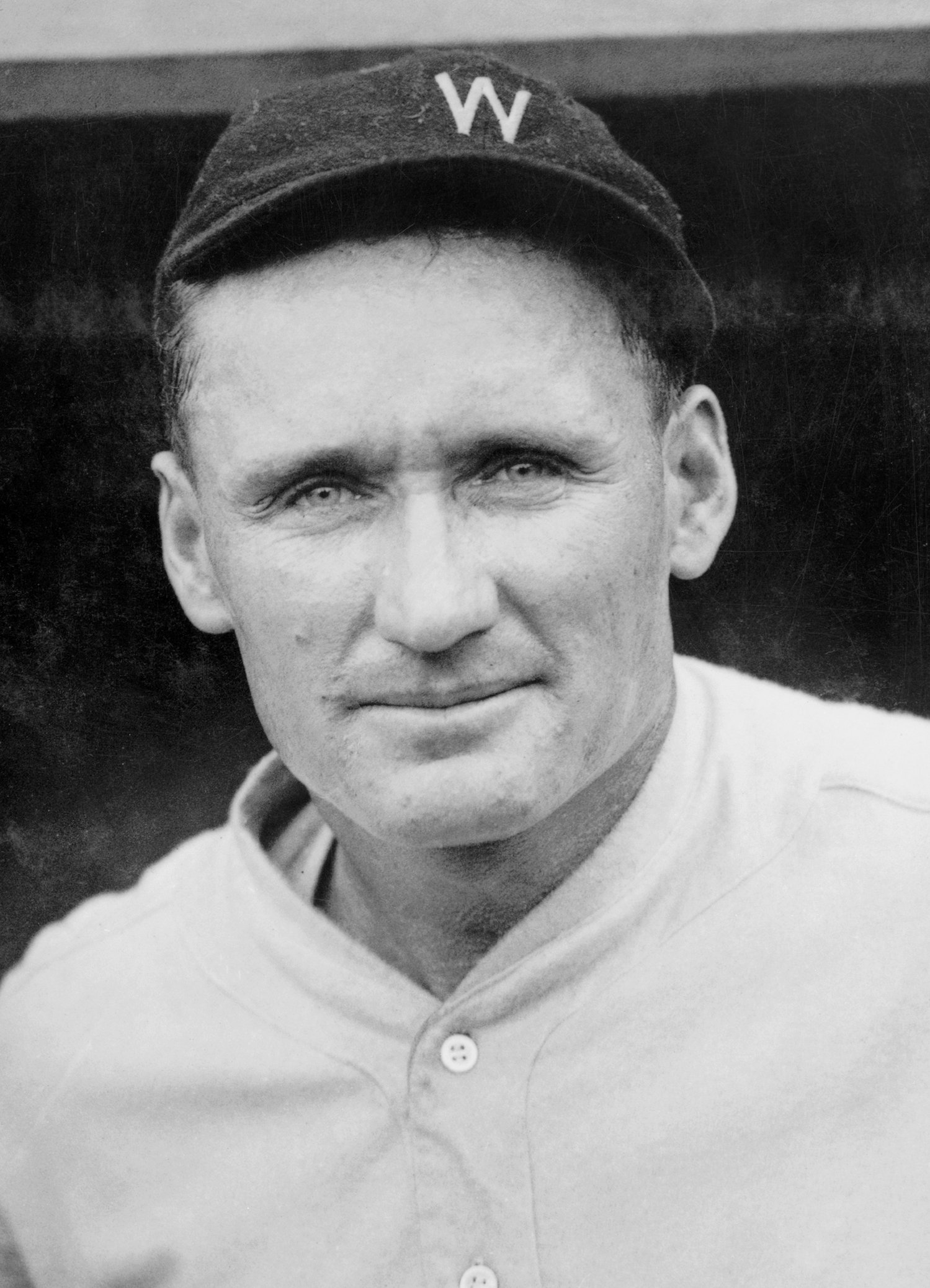
This is my great great great? uncle Walter “The Big Train” Johnson (1887-1946), one of the first inaugural members of the Baseball Hall of Fame:

Library of Congress, Public domain, via Wikimedia Commons

* * *

I love how people are using this technology to animate ancestors, and also add life to historical figures we know only as two-dimensional figures. Here are just a few examples:

Read Full Post »

I’m feeling Olden Timey today, so let’s take a trip down memory lane, to 1906 San Francisco. Sure, this video has been posted all over the internet, but this definitive version includes narration and historical details, with a new digital transfer to include the full video, sprockety edges and all.

Plus it’s just cool.

Funny how a simple video conversion can suddenly make the past feel quite present. And really, they were us, and someday we will be them. Let’s do history proud!

* * *

Photo by Debby Hudson on Unsplash

Read Full Post »

My father started a friends and family email chain about An Indigenous Peoples’ History of the United States, a window on a history that is both important and difficult. For a bit of balance, here are indigenous students doing something that is both important and uplifting.

Here’s to survival, and to hope.

* * *

Students at Allison Bernard Memorial High School in Cape Breton sing Paul McCartney’s Blackbird in their native Mi’kmaq language.

Read Full Post »

I just learned a new word-related thing and thought I’d share. The correct phrase is “just deserts” not “just desserts.”

Despite its pronunciation, just deserts, with one s, is the proper spelling for the phrase meaning “the punishment that one deserves.” The phrase is even older than dessert, using an older noun version of desert meaning “deserved reward or punishment,” which is spelled like the arid land, but pronounced like the sweet treat.

— ‘Just Deserts’ or ‘Just Desserts’? | Merriam-Webster*

I always thought this term was a food reference. Shows how my mind works.

And now that I know I was wrong, I can start being right. Learning stuff is great.

* * *

* So wait, no “dessert” before the 16th century? Dark ages indeed;)

* * *

Photo by Marta Dzedyshko on Pexels.com

Read Full Post »

My little brother just got his first shot. I can’t tell you how happy I am that he and his wife are one step closer to full protection.

As discussed in many venues in recent months,* the path to the Covid-19 vaccines has been convoluted. And not only does our health and safety rest on the shoulders of scientists who spent most of their careers in under-rewarded obscurity** but the history of vaccines is even more complicated than it may at first seem.

* * *

The past year has been a nightmare, but I am incredibly grateful that we haven’t had to deal with a disease like, say, smallpox. Wildly contagious with a fatality rate of about thirty percent, for most of human history this disease was unstoppable. It spread within communities and also, devastatingly, between locations (like 17th century Europe and North America).

Thanks to a concerted international effort and global vaccination campaign, by 1980 smallpox was eventually eradicated. Thank you, science! And now we’re tackling our own pandemic with the power of vaccination. How did we get here?

* * *

The history of vaccination usually starts something like this:

One of the first methods for controlling smallpox was variolation, a process named after the virus that causes smallpox (variola virus)… The basis for vaccination began in 1796 when the English doctor Edward Jenner noticed that milkmaids who had gotten cowpox were protected from smallpox. Jenner also knew about variolation and guessed that exposure to cowpox could be used to protect against smallpox.

— History of Smallpox | CDC

What caught my eye about this bit in particular was “variolation.” Who, I wondered, was behind the initial work? I’m always interested in the beginnings of things. Who worked out how to eat a poisonous plant like cassava, for example? In this case, where did the idea of inoculation come from? What of the giants on whose shoulders we stand?

Practitioners in Asia worked out the method, and by the 1700s it had spread to Africa, India and the Ottoman Empire. Next stop, North America, by way of the slave trade.*** Here’s a version of that story in graphic form:

* * *

At the same time, a smallpox epidemic devastated England. An English Lady (yep, capital L), Lady Mary Wortley Montagu, brought information about inoculation back with her from the Ottoman Empire, where female medical professionals practiced a variation of the technique:

An Old Effort To Stop The Smallpox Virus Has Lessons For COVID-19 Today

Unfortunately, “European doctors were aware of what the Ottomans and others were doing but they refused to believe it worked. At the time, “Europe was pretty isolated and it was fairly xenophobic”…”

Lady Mary’s efforts came up against (stop me if you’ve heard this one) prejudice, xenophobia, and the perverse financial incentives of the medical profession.

“I am patriot enough to take the pains to bring this useful invention into fashion in England.” But in the next breath, she expressed contempt for British doctors, who she believed were too preoccupied with making money: “I should not fail to write to some of our doctors very particularly about it, if I knew any one of them that I thought had virtue enough to destroy such a considerable branch of their revenue, for the good of mankind.”

— Lady Mary Wortley Montagu

Even so, she had a positive impact, not least on one particular individual:

…the technique she’d borrowed from Ottoman women did take hold in England. Many thousands were inoculated, including a young boy named Edward Jenner. He went on to develop the first vaccine, also against smallpox.

— An Old Effort To Stop The Smallpox Virus Has Lessons For COVID-19 Today

* * *

So here’s to the unsung heroes who took the first steps into the unknown, the practitioners lost to history, and those who passed their knowledge down in the hopes that we would use it to build something better, like the slave who shared what he knew and the aristocrat who used her status for good. 

“One takeaway for everyone, whether it be scientists or nonscientists, is that we’re not nearly as smart as we think we are,” he says. “We have much we can learn from others.”

— An Old Effort To Stop The Smallpox Virus Has Lessons For COVID-19 Today

* * *

* Here are a couple of articles if you’re interested in the background: How mRNA went from a scientific backwater to a pandemic crusher and How mRNA Technology Gave Us the First COVID-19 Vaccines.

** That really should change, and I hope the Nobel Prize Committee agrees with me. Katalin Karikó, Ugur Sahin and Ozlem Tureci in particular come to mind.

*** No, I’m not happy about this either, but I am very grateful that Onesimus was willing to share.

* * *

vials of Covid-19 vaccine
Photo by Daniel Schludi on Unsplash

Read Full Post »

Today is International Women’s Day, and I’m feeling fine. If you’re interested in learning more about the sorts of women who are often shunned by history, check out this sampling of women who dared greatly:

Historical awesome:

And in a bit of modern-day awesome, NASA has named the Perseverance landing site after Octavia Butler. How cool is that?

Speaking of NASA:

Inspiration much? Yes, thanks!

* * *

In related news, we finally watched Terminator: Dark Fate and enjoyed the heck out of it. I’ll admit to avoiding it, a bit. Lackluster reviews, messed-up timeline issues (which earlier movies were we supposed to ignore and which not? oy), plus the “Yeah, you’re not the threat. It’s your womb” series concept kept me from watching it sooner. 

Now that I have, what did I think?

Let’s just say that the ladies kick ass.

* * *

Photo by Jen Theodore on Unsplash

Read Full Post »

From the Library of Congress:

Today in History – February 7
On February 7, 1867, Laura Elizabeth Ingalls, the author of the beloved semi-autobiographical Little House series, was born in Wisconsin, the second daughter of Charles and Caroline Ingalls.

Little House on the Prairie etc. were some of the first real books I read.* They were also where I learned (among many other things) to make candy from maple syrup and snow, twist straw into logs, cast bullets, make candles, that nails were once a precious commodity, and that life before modern medicine was often hard and sometimes deadly.
***
Speaking of modern medicine, I’ve been following the new measles outbreaks. Here’s a little public service announcement:

“Are you feeling all right?” I asked her.
“I feel all sleepy,” she said.
In an hour, she was unconscious. In twelve hours she was dead.
— Roald Dahl, on his daughter Olivia and Measles


Now, some people can’t be vaccinated.** That’s why the rest of us should. “You are a human shield”! (I love that, and I love being a real-life superhero and all-around good neighbor.) Thank you to the researchers who made vaccines possible, to the public policies making it a requirement, and to my parental units for helping me be part of a healthy community by keeping my vaccinations up to date!

***

* Ok, Hop on Pop and other such books are real too, but these had chapters and everything! Also Little House was only semi-autobiographical and had some race issues, but acknowledging that lets us know how far we’ve come.

** For more on the “don’t” rather than the “can’t,” check out this TED Talk: Why (Some) Parents Don’t Vaccinate.

Read Full Post »

(today I bring you a dispatch from the wilds of suburbia)

I just mowed the front lawn. I hate mowing. We have an electric mower that’s great, it’s a small yard, no big deal, but it is not my cup of tea.

English estates popularized lawns, but it took America to democratize the things. I’ll cite a few lines from a nineteenth-century book based on Frederick Law Olmsted‘s work (via this excellent article by Michael Pollan), but the real push for lawns started in the 1950s.

“Let your lawn be your home’s velvet robe, and your flowers its not too promiscuous decoration… A smooth, closely shaven surface of grass is by far the most essential element of beauty on the grounds of a suburban house.”
— “The Art of Beautifying Suburban Home Grounds,” Frank J. Scott (1870)

Pretty? Sure, if you like uniformity. But in terms of land use, water use, and pesticide chemical use, lawns are terrible for the environment. They are also a massive time suck. Don’t get me wrong, I love Olmsted’s take on keeping nature in cities and improving society through physical design, etc. But there has to be a better way.

We planted a clover-grass mix (yes, on purpose:), but by the time the clover is tall enough to flower, the grass is twice as high and seeding. The neighbors have beautiful, chemically-induced perfections of green. They look askance at our “grass plus” mix, and at the way we wave the weed control van on when it comes around.

And so to keep the peace, I mow. Even when the clover is flowering and the bees are buzzing and can’t understand why I would take away their glorious buffet. I’m not sure why either. I ask the bees for understanding, and I mow in slow motion to give them time to leave the all-you-can-eat-restaurant-turned-food-desert and under my breath I’m asking myself “What’s the flipping point?” I mutter it as I mow the clover, the edible wood sorrel and lamb’s quarters, and the wild strawberries that spring up under the bushes.

Except I don’t say “flipping.”

We’re still looking for ways to shift our lawn to something more useful, but it’s a process. Want to save time, money, and the planet? Here are a few ideas to get you started.

The back yard doesn’t get as much sun, and only patches of clover flower there. I let them grow anyway.

Read Full Post »

« Newer Posts - Older Posts »