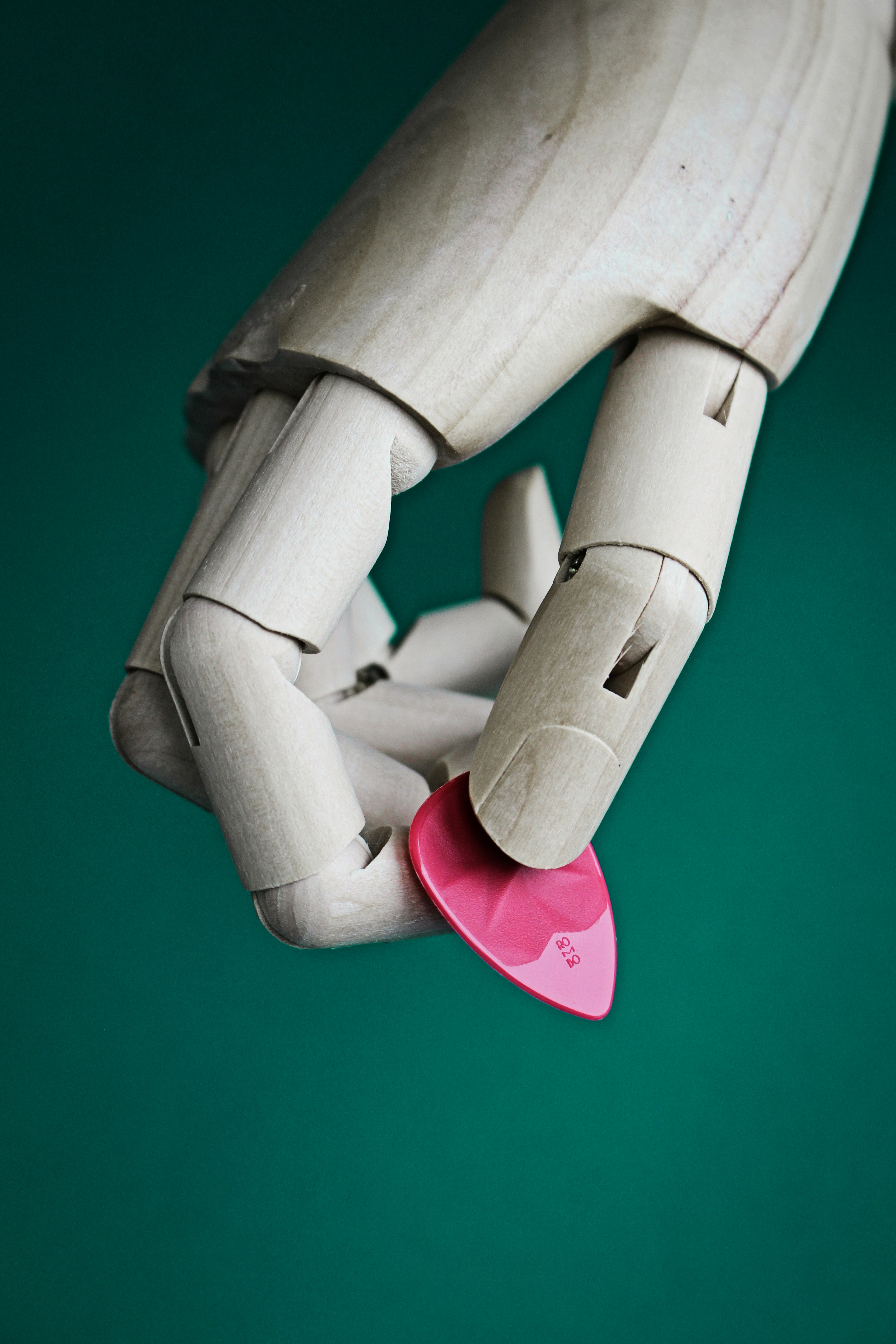
“I want Al to do my laundry and dishes so that I can do art and writing, not for Al to do my art and writing so that I can do my laundry and dishes.”
— Joanna Maciejewska
* * *
Posted in Writing, tagged #365Ways, #365Ways2024, #peoplebeforeprocessors, art, creativity, innovation on June 3, 2024| Leave a Comment »
“I want Al to do my laundry and dishes so that I can do art and writing, not for Al to do my art and writing so that I can do my laundry and dishes.”
— Joanna Maciejewska
* * *
Posted in Science!, tagged #365Ways, #365Ways2023, innovation, Science and Technology, Thoughts on October 26, 2023| Leave a Comment »
I did not know that solar panels have been around for more than a century.
I did not know that one of the early pioneers in this field was a Canadian inventor named George Cove.
And I did not know that Cove was on the brink of bringing solar power to the masses when he was kidnapped and threatened unless he closed down his company.
While researching the economics of clean energy innovation, I came across a little-known story: that of Canadian inventor George Cove, one of the world’s first renewable energy entrepreneurs. Cove invented household solar panels that looked uncannily similar to the ones being installed in homes today – they even had a rudimentary battery to keep power running when the Sun wasn’t shining. Except this wasn’t in the 1970s. Or even the 1950s. This was in 1905.
It sounds like that wasn’t the only reason Cove’s company collapsed, but whoever was behind the actions against him clearly had, shall we say, other interests at heart. Spare a thought for George Cove and other creators who were either ahead of their time or swept aside.
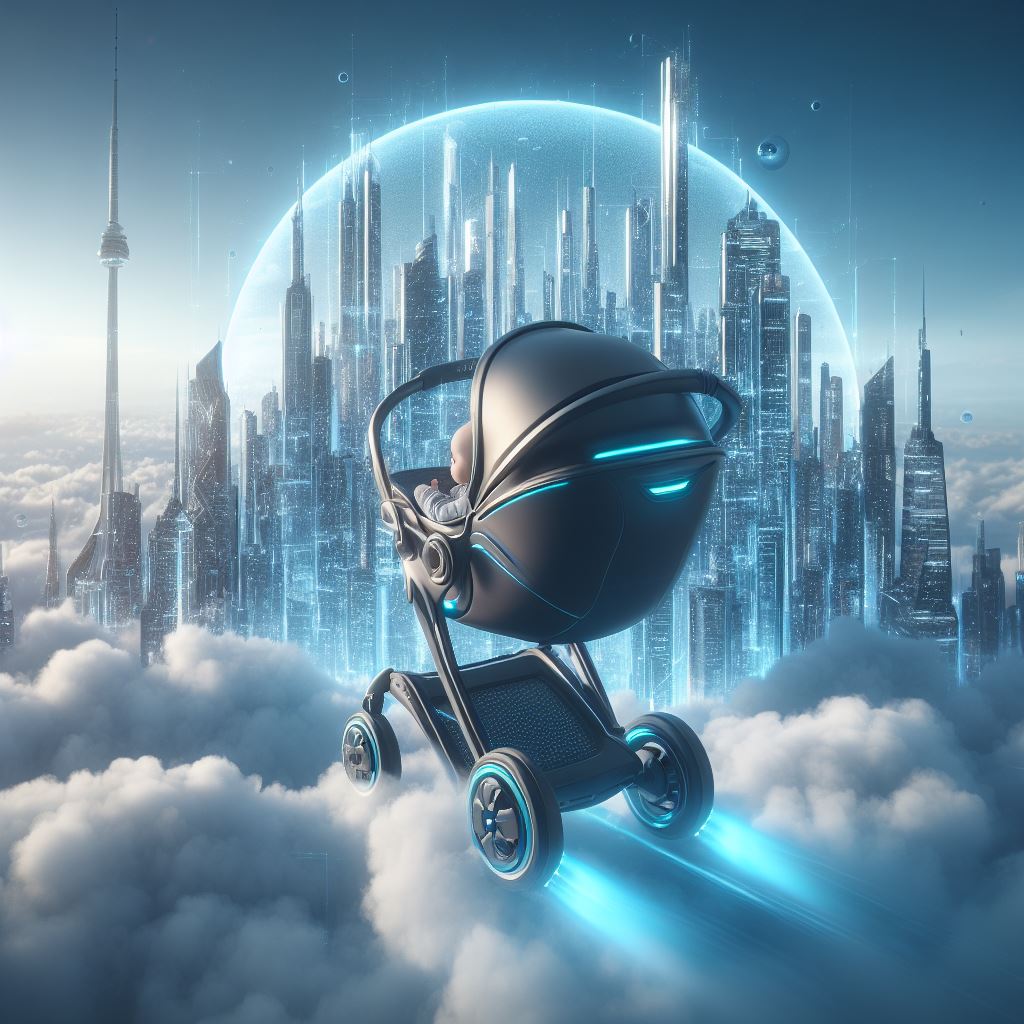
While we’re here, enjoy these images of early electric cars, milk trucks, and… baby carriages?
Shock of the old: the amazing, infuriating history of the electric car – in pictures
Believe it or not, battery-powered vehicles have been around since Victorian times – everything from private automobiles to taxis, ambulances and tricycles. We’ve got the photos to prove it.
History is a fascinating place, full of lessons for the future.
* * *
Posted in Writing, tagged #365Ways, #365Ways2023, AI, creativity, innovation, technology, Thoughts, Writers, writing on October 12, 2023| Leave a Comment »
A little reassurance about AI, from the great Margaret Atwood.
Margaret Atwood Reviews a “Margaret Atwood” Story by AI | The Walrus
Take heart! Not all is gloom! So far, generative AI chatbots don’t seem able to reflect on what they’re saying, though that in itself wouldn’t differentiate them from some actual human beings. Also, they’re bad at verbal texture, and they have a poor grasp of metaphor and sometimes even of punctuation. Well, they’re learning from us, so why wouldn’t that be true?
You’re still worried, young author? You doubt my word? Here are a couple of recent literary attempts by AI chatbots that ought to reassure you.
So we can all sleep well. For now, anyway;)
* * *

Posted in Science!, tagged #365Ways, #365Ways2023, communication, innovation, science, technology, Thoughts on May 24, 2023| Leave a Comment »
Today’s post is brought to you by fiber optic cable, the innovation currently being inserted into my lawn.
In a discussion about grass vs. clover lawns today, I mentioned that our neighborhood is being wired for fiber internet. For weeks, we’ve had orange-vested dudes (and they’re all dudes) roaming in packs, hauling giant spools of multi-colored cables, digging up driveways and yards (and reseeding with industrial-strength grass seed), and generally doing their best to drag our 1990s development into the modern era.
Now we’ve got cable ends sticking up everywhere, a new panel in the grass looking like a secret bunker entrance, and neighbors wondering whether all this fuss is worth it.
It also led to the question, how do fiber optics work, exactly?
Answer: I have a layman’s understanding of the technology (data becomes light and zoom zooms down a shiny glass tube) but yeah, better look that up:)
* * *
Here’s a quick backgrounder about fiber optics from the folks who invented it.
Educational Resources | Optical Fiber | Optical Communications | Corning
Corning scientists Dr. Robert Maurer, Dr. Peter Schultz, and Dr. Donald Keck invented the first low-loss optical fiber in 1970. Inspired by their belief that information could be transmitted through light, Drs. Maurer, Schultz, and Keck spent four years experimenting with different properties of glass until they succeeded, creating the first low-loss optical fiber for telecommunications use.
…
How does it work?
Encoded into a pattern of light waves, information travels through each optical fiber by a process of internal reflection. The waves move through the fiber from a given source to a destination such as a cable box where it is then decoded.
(So is it a little like a super sophisticated version of an Aldis signal lamp? I guess that’s one way to think about it.)
For more (and more scientific) details, check out this excellent video:
And just for fun, how do they connect North America to Africa to Asia, and everywhere else?
* * *

Posted in Favorites, Science!, tagged #365Ways, #365Ways2023, innovation, inspiration, technology, Thoughts on April 1, 2023| Leave a Comment »
A century ago gasoline-powered cars really came into their own. (In 1920, if memory serves, Ford sold a million Model Ts for the first time.) Now, a hundred or so years after that milestone, we’re living in the midst of another significant change.
Mr Man and I were discussing electric vehicles today. As an example, in the space of a block we spotted half a dozen Teslas. Regardless of what one thinks about the company (or its owner’s shenanigans), it has been a pioneer and visible symbol of the shift from fossil fuels to electrification. Despite decades of resistance from established interests, that change is now happening at a rapid pace.
That also got me thinking about the speed of technological change over humanity’s history, which brings me to this article.
Technology over the long run: See how dramatically the world can change within a lifetime
…we live in a time of extraordinarily fast technological change. For recent generations, it was common for technologies that were unimaginable in their youth to become common later in life.
The graphic captures this well.

It makes me think of my grandparents, born around the time of that Model T milestone. They lived to see the moon missions, internet and cell phones.
It’s been said before but it bears repeating. We’re living our ancestors’ dreams. Let’s make them good ones.
* * *

Posted in Likes, Science!, tagged #365Ways, #365Ways2023, creativity, innovation, inspiration, problem solving, Thoughts on March 30, 2023| Leave a Comment »
Most mornings I stop by the MIT homepage to see what new projects are in the works. Today I was particularly struck by the sense that these folks are freaking rockstars.
Designing a flexible graphene supercapacitor for solar energy storage?
Rockstars.
Researching cell-based treatment for Type 1 diabetes?
Rockstar.
Advising the White House on space policy?
Rockstar.
Reducing concrete emissions, making affordable air quality sensors, supporting collaborative action, and addressing disparities in health care?
Rockstars all.
As someone who imagines the future, I love to see it being built.
And it’s not just MIT, of course. The world is full of creative innovators at all levels, from cutting-edge research to finding solutions to everyday issues. Scientists or not, that’s kind of humanity’s thing.
Take a moment to remember a time when you identified a problem and worked to fix it. Have you ever soaped a sticky drawer, had a stoplight installed at a dangerous intersection, added pollinator-friendly plants to your garden, or tackled any of the many (many) problems we face every day?
Then you’re a rockstar too.
* * *

Posted in Other, Science!, tagged #365Ways, #365Ways2022, healthcare, innovation, science, srslytho, Thoughts on November 17, 2022| Leave a Comment »
This article from 2016 highlights the terahertz spectrometer, which is a technology that can read books without opening them.
This new machine can read book pages without cracking the cover | PBS NewsHour
The machine uses beams of radiation to creep in between pages and scan individual letters. This new tool wasn’t made to create disdain among classic readers or for those too lazy to lift a cover. Rather it may unlock the secrets of old books or ancient texts too fragile to be disturbed by human touch.
Scanning an object layer by layer and deriving meaning from the images? Cool, nifty, amazing, a breakthrough for archaeologists and antiquarians everywhere!
Also, remind me again why mammograms still require what is, in effect, a highly sophisticated panini press?*
And yes, it is exactly as uncomfortable as it sounds.
* I know, I know, living tissue is not the same thing as parchment or an Italian sandwich. Still, it’s hard not to think that the gap between the current and ideal mammogram experience represents an untapped opportunity for innovation. Ladies, can I get an amen?
* * *

Posted in Food and..., Writing, tagged #365Ways, #365Ways2022, creativity, history, innovation, inspiration, Thoughts, Writers, writing on October 8, 2022| Leave a Comment »
A young family member tried her first root beer float this past week. She preferred straight ice cream, in the end, but it got me thinking about the complex history of what appears to be a fairly simple treat.
From a societal standpoint, the road to such a dessert requires an understanding of the science of crystallization as well as carbonation, plus the ability to package and distribute the ingredients while maintaining temperature and freshness.
From an entrepreneurial perspective, who came up with the idea of merging frozen dessert with thirst-quenching beverage in the first place?
A lot of folks, it seems.
Meet the people who claim to have invented (some version of) this classic dish:
The Delicious History of the Root Beer Float
As he was serving soda to his costumers, he ran out of ice to put in their drinks, so he decided to put ice cream in them to make them cold.
The Root Beer Float Was Invented In 1893 By A Gold Miner In Colorado – South Florida Reporter
The full moon that night shined on the snow-capped Cow Mountain and reminded him of a scoop of vanilla ice cream. He hurried back to his bar and scooped a spoonful of ice cream into the children’s favorite flavor of soda, Myers Avenue Red Root Beer. After trying, he liked it and served it the very next day. It was an immediate hit.
Whether these somewhat fanciful stories reflect the full truth we can’t know. What we do know is that by the end of the nineteenth century, the U.S. was awash with ice cream floats.
* * *
Why so many instances of similar inventions, all around the same time? That takes us back to the bit about this particular creation being part of a complex system of social, technical and economic factors. Simultaneous invention happens all the time, with ideas big and small.
In the Air | The New Yorker (Malcolm Gladwell)
The history of science is full of ideas that several people had at the same time.
So don’t worry that your idea for a vampire story or cake recipe or video game or mousetrap has already been done. The world needs new creations, and new versions of old inventions, all the time. Learn from what’s gone before, of course, but if a project captures your attention, pursue it.
It hasn’t been done your way. And your way may be exactly what the world needs right now.
* * *

Posted in Likes, tagged #365Ways, #365Ways2021, creativity, innovation, Thoughts on June 23, 2021| Leave a Comment »
I love seeing ideas move from imagination to reality, even if I’m not the one doing it. Take this robot mani/pedi machine idea, for example:
Want Your Nails Done? Let a Robot Do It. – The New York Times
This ideas has been in the back of my mind for some time.
Now, I don’t polish my nails. I think I have a bottle of clear somewhere that I bought for a wedding once (my wedding? Quite possibly, but the fact that I don’t remember tells you something). I keep it around to use in the workshop and the garage.
* * *
So why did I start thinking about an automated mani/pedi machine years ago, and why am I excited to see it now?
Because a lot of things are hard for the elderly, and doing your nails is one of them.
These particular machines aren’t there yet, but the fact that innovators are working on polishing suggests that shaping won’t be far behind. And that means anyone could keep their nails in good condition without having to rely on someone else or popping a hip joint, and stay healthier for it.
If the end result is effective and affordable, it’s good for people, and, as the population continues to age and boost demand for adaptive technologies, good for companies.
And I’m all about win-wins.
* * *

Posted in Favorites, Holidays, Likes, Science!, Writing, tagged #365Ways, #365Ways2021, #EarthDay, Ann Druyan, because what are the options?, carl sagan, climate change, hope, innovation, optimism, we are legion on April 22, 2021| Leave a Comment »
Today is Earth Day. Happy 4.543 billionth birthday, Earth! Here’s hoping for many more.
Much of my day job is based in current news and events, which means I spend a good part of most days knee-deep in the internet. Yeah, it can be exactly as fun as it sounds. That said, I’m not looking for the bad stuff, or not only the bad stuff.
I’m looking for the uplifting, the hopeful, the rays of light. For a path to something better. So for every article I read telling me that in recent years, there are more Starbucks locations in California than overwintering monarch butterflies, there are pieces on what’s good, like these:
Let These Stunning Photos of a Year of Virtual Youth Climate Activism Inspire You
Halifax-based developer of CO2-injected concrete wins multimillion-dollar prize
It’s hard to miss the evidence of change, but the good news is that we’re not just discussing it, we’re beginning to take concrete action.
* * *
You already know that doing big things is hard. Like ”saving the planet.” Human beings are small, and I suspect that at the root, most of us are plagued by the niggling feeling that we are just bit players on an unimaginably vast stage. That at some fundamental level our actions don’t matter much at all in the bigger picture. Not really.
But we’re wrong. And the world is made up of smaller pictures.
* * *
It’s the question every hero is asked: The future is uncertain. The path is unknown. What are you going to do about it?
What you can, wherever you can. As a minor example, I spent time today researching ways to turn our absolutely useless lawn space into a pollinator garden.
Of course, a lot of what needs to happen on climate change isn’t just about individual action. Deciding not to eat meat on Tuesdays matters, but standards and infrastructure for energy, transportation, agriculture and construction, to name a few sectors, will need to modernize too.
It means working together on new ideas, new innovations, and new legislation. More and better targets, the kind that make a positive difference in people’s lives.*
Because humans are a social species. There is never just one, and when it comes to saving our home that’s a challenge but also a benefit. Sea shanties swept the globe in a matter of weeks. Why not this?
* * *
It sounds big, and it is, but we do big things all the time, often by accident.** It’s just time to do this particular big thing on purpose. Here’s the mantra I try to stick with: Pick a goal. Break it down. Start today.
We are never just one. None of us are. We are legion. And we got ourselves into this mess. We can get ourselves out.
Starting today.
* * *
* Like clean air and water. And I really enjoy the fact that one day, for example, I’ll be able to put my seat belt on, drive an electric car down well-maintained roads, sit in a non-smoking section at a restaurant, and eat food that won’t kill me. And that my nephews don’t spend their summers swimming in a creek laced with PCBs (like we did). Crazy, I know!
** I mean, who sets out to upend civilization? They just want to see what happens if they burn that dirty rock or invent the light bulb or the assembly line or freaking Facebook. There is no button a curious monkey will not poke. Wouldn’t it be nice if we can make it work for us for a change?
* * *
“Look again at that dot. That’s here. That’s home. That’s us. On it, everyone you love, everyone you know, everyone you ever heard of, every human being who ever was, lived out their lives… The Earth is the only world known so far to harbor life. There is nowhere else, at least in the near future, to which our species could migrate. Visit, yes. Settle, not yet. Like it or not, for the moment the Earth is where we make our stand… To me, it underscores our responsibility to deal more kindly with one another, and to preserve and cherish the pale blue dot, the only home we’ve ever known.”
— Carl Sagan and Ann Druyan


You must be logged in to post a comment.