“If we are bold, love strikes away the chains of fear from our souls.”
— Maya Angelou
* * *
Posted in Other, Writing, tagged #365Ways, #365Ways2025, #adventure, art, creativity, failure, fear, inspiration, persistence, Thoughts, Writers, writing on June 11, 2025| Leave a Comment »
“If we are bold, love strikes away the chains of fear from our souls.”
— Maya Angelou
* * *
Posted in Other, Writing, tagged #365Ways, #365Ways2025, dreams, fantasy, history, inspiration, J.R.R. Tolkien, language, Middle Earth, runes, Thoughts, Writers, writing on June 10, 2025| Leave a Comment »
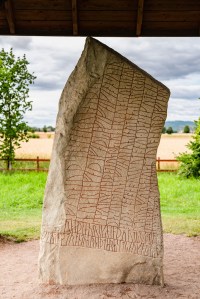
You know how some days you wake up at 5:30 and lie there in the early morning sun wondering what brought your mind up from sleep? That was me this morning. And as I lay there, the answer bubbled up from my dreams, slow and obscure but clear: Elder Futhark.
Weird, I thought, but I’m sure I’ll get over it.
Nope. For the past few hours every time my mind is unoccupied for more than a moment, what pops into my mind? Elder Futhark.
Wondering what I’m going on about? Runes. Let me give you a brief (very brief!) introduction to this early Germanic writing system.
The Elder Futhark (or Fuþark, /ˈfuːðɑːrk/), also known as the Older Futhark, Old Futhark, or Germanic Futhark, is the oldest form of the runic alphabets. It was a writing system used by Germanic peoples for Northwest Germanic dialects in the Migration Period. Inscriptions are found on artifacts including jewelry, amulets, plateware, tools, and weapons, as well as runestones, from the 2nd to the 8th centuries…. knowledge of how to read the Elder Futhark was forgotten until 1865, when it was deciphered by Norwegian scholar Sophus Bugge.
Why would I have this stuck in my head? No idea. My mother studied it once upon a time, and of course, the runes of Middle Earth owe a lot to the old runic languages.
Here’s Gandalf’s mark, Certh rune no. 19:
And here’s the letter F in Elder Futhark: ᚠ
As for what it means? What can I say, the mind works in odd ways.
This wisp of a dream got me thinking about language, and how a characteristic of civilization that we think of as both ubiquitous and permanent, like an alphabet, can just… disappear.
What’s really interesting to me about this, aside from the historical progression of written language, is that what that language represents hasn’t changed all that much.
Writing systems transform, but the stories, the ideas we’re trying to communicate and pass on with that language, those haven’t changed much at all.
I mean, sure, a not insignificant part of language has always been about keeping track of death and taxes, but those aren’t the only things that are inevitable.
No matter the language, stories remind us that we are not alone, help us give structure to the problems we face, and provide an outlet for our experiences.
We’re still interested in heroes and villains, quests and homecomings, pain and joy, and the idea that no matter what challenges we face, there is always hope.
Always.
“Remember, language is fun! It is also magical, so use it well and use it wisely!”
* * *
Posted in Other, tagged #365Ways, #365Ways2025, inspiration, quotes, Thoughts, Writers on June 9, 2025| Leave a Comment »
“We are travelers on a cosmic journey, stardust, swirling and dancing in the eddies and whirlpools of infinity. Life is eternal. We have stopped for a moment to encounter each other, to meet, to love, to share. This is a precious moment. It is a little parenthesis in eternity.”
― Paulo Coelho, The Alchemist
* * *

Posted in Writing, tagged #365Ways, #365Ways2025, creativity, inspiration, persistence, Thoughts, Writers, writing on June 8, 2025| Leave a Comment »
“Winning is fun… Sure. But winning is not the point. Wanting to win is the point. Not giving up is the point. Never letting up is the point. Never being satisfied with what you’ve done is the point.”
— Pat Summitt
* * *

Posted in Science!, Writing, tagged #365Ways, #365Ways2025, failure, inspiration, moon, science, space, Thoughts on June 6, 2025| Leave a Comment »
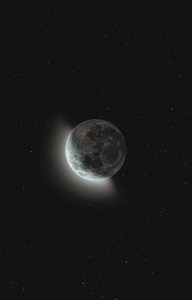
Sadly, it looks like the Ispace lander Resilience did not make a successful landing on the moon yesterday. (If it did land, it’s harboring enough resentment about the process that it’s refusing to pick up the phone.)
Ispace fails in moon landing attempt, confirms Resilience likely crashed into the moon | CNN
Ispace has gone out of its way to make clear that it’s not giving up. The motto underpinning today’s mission was “never quit the lunar quest.” And by all accounts, the company has every intention of sticking with these moon missions until they succeed.
Let this be a lesson to all you aspiring creatives out there. Never quit! (And maybe name the next lander Persistence?)
* * *
Posted in Other, Writing, tagged #365Ways, #365Ways2025, inspiration, Thoughts on June 4, 2025| Leave a Comment »
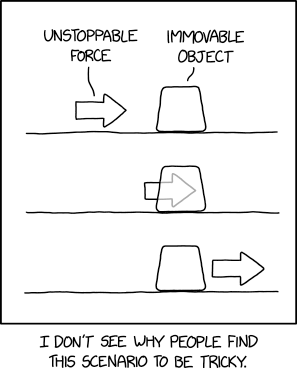
From the good folks at xkcd, a lesson for anyone with a seemingly impossible project or an unwieldy to do list.
* * *
Posted in Other, tagged #365Ways, #365Ways2025, creativity, history, inspiration, Thoughts on June 3, 2025| Leave a Comment »
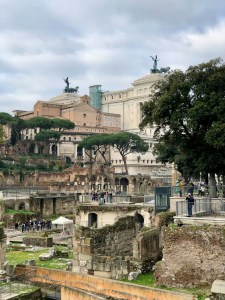
I could go into a whole thing about history and how it’s cool, or ancient civilizations and how they are cool, or uncovering architectural ruins that were foundations for lives lived once upon a time (and how that’s cool), but as I’m on deadline at the day job I’ll just leave you with this:
How Civilizations Built on Top of Each Other: Discover What Lies Beneath Rome, Troy & Other Cities
The idea of discovering a lost ancient city underground has long captured the human imagination. But why are the abandoned built environments of those fantasies always buried? The answer, in large part, is that such places do indeed exist under our feet, at least in certain parts of the world.
And it’s not just places like Rome or London. Cities like New York and Paris also have underground layers, and some cities were built in or under the earth.
I also enjoy this image of a cross-section of the A303 in England, which runs from Hampshire to Devon via Stonehenge (or so Wikipedia tells me, I haven’t been!).
In case you, too, have always wondered about the history beneath your feet!
* * *
Posted in Other, Writing, tagged #365Ways, #365Ways2025, creativity, inspiration, Thoughts on May 30, 2025| 1 Comment »
“Do. Not. Forget. how special and bizarre it is to get to live a human life. It took 3 billion years for the Earth to go from single-celled life forms to you. That’s more than a quarter of the life of the entire universe. Something very special and strange is happening on this planet and it is you.”
— Hank Green, 2025 Commencement address, MIT
* * *

Posted in Other, tagged #365Ways, #365Ways2025, inspiration, traditional craft on May 29, 2025| Leave a Comment »
It’s overcast and rainy today, and the kind of quiet that lends itself to creative thinking, at least for me. The perfect sort of day to learn about a new art, like kumiko and mageki.
What, you may ask, are those? A kind of magic balancing geometry and nature.
Kumiko Woodworking and Mageki Woodbending
Thin pieces of Japanese cedar or cypress wood are shaved and shaped precisely before fitting into delicate patterns. No nails are required. The art of Kumiko woodworking blossomed during Japan’s Asuka Era (600-700 AD) and “has since been refined and passed down through generations of craftsmen who are passionate about the tradition…”
(This sort of thing appeals to me on a lot of levels. Not only is it an amazing craft, but it gets my creative mind thinking about interesting story ideas.)
No nails. No glue!
Just precision and symmetry in perfect balance.
* * *
Posted in Other, tagged #365Ways, #365Ways2025, change, inspiration, Thoughts on May 28, 2025| Leave a Comment »
“People deal too much with the negative, with what is wrong. Why not try and see positive things, to just touch those things and make them bloom?”
— Thích Nhất Hạnh
I’m not arguing that we should ignore the many bad things currently happening in the world, especially not when we have the power to change them. But balancing the bad with the recognition of what’s good?
I’m in.
* * *






You must be logged in to post a comment.