Feeds:
Posts
Comments

Posts Tagged ‘poetry’

I have a confession to make. I recently found myself in a position I never expected: burning books.

The experience was disturbing at a gut level, at least to me. But it made sense. And we didn’t burn everything.

Allow me to explain.

We were in the process of cleaning out a house and needed to sort through decades worth of material. There were a lot of interesting memories involved, woven across continents and generations.

There was a lot of random stuff too. 

In this case, the “random stuff” included a lot of dictionaries.

Out of date dictionaries, falling apart dictionaries, duplicate dictionaries, dictionaries that would be picture perfect examples of what organizations mean when they put up notes that say, “Thank you for your donation. No dictionaries, please.”

So we were stuck. If we tried to donate to a library or second-hand store, the books would be sent straight into a landfill. (I get the appeal of pretending that they would be shipped to a nice farm upstate, but there was no happy ending, and foisting a problem off on someone else doesn’t mean it’s not still a problem. It was still hard, though!)

We were warned. Fair enough.

So instead, we decided to be warmed (heh).

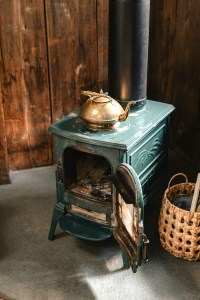
The house had a wood stove. It felt wrong but there we were, burning what was once of value but was now at best trash.

Sad, yes. But as we learned in the Day After Tomorrow, there are books, and then there are whole shelves on tax law (for example).

And we didn’t burn everything. 

There were many other books, interesting journals, photos and letters and keepsakes that still spoke to both the past and the future.

Like a poem from French Surrealist Paul Éluard, which was published during World War Two and became a hymn to freedom. 

“Liberté… J’écris ton nom”: Eluard’s poem and the Cambridge UL Liberation collection

Translated, it begins:

On my school notebooks,

on my desk and the trees,

on the sand on the snow,

I write your name

On every page I’ve read,

on every blank page

Stone blood paper or ash

I write your name.

The poem was published outside of Vichy-controlled France to evade censorship. British pilots dropped copies into occupied territory to encourage the Resistance. And we found a copy that had been transported from (we’re guessing) a charming museum shop in France to a quiet corner of Canada decades after the war, its pages still bright with color and intensity. 

Reminding us what was lost, and what was won.

A lot falls by the wayside of life. Receipts, old bills, dictionaries. I have a history degree and I haven’t met a bit of ephemera that doesn’t interest me, but I also believe that we shouldn’t keep everything. 

Life is short. I don’t want the past to bury me before my time.

Still, the dictionary dilemma was an unusual case. Not everything should be returned to the fire.

My typical solution? When dealing with items I no longer want that still hold memories I’d rather not lose, I take photographs. Then I can pass those items on without losing the stories that made them precious.

Choosing what to keep and what to remember is an art in itself, a way of curating what we value in order to make our lives, and our futures, better.

When it’s your turn to decide, what would you sacrifice? And what will you save?

* * *
Read Full Post »

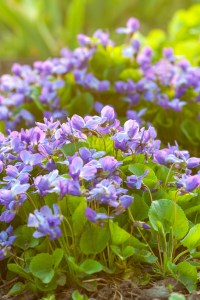
The violets, along the river, are opening their blue faces, like

small dark lanterns.

The green mosses, being so many, are as good as brawny.

How important it is to walk along, not in haste but slowly,

looking at everything and calling out

Yes! No!

— Mary Oliver, from the poem “Yes! No!”

* * *

Read Full Post »

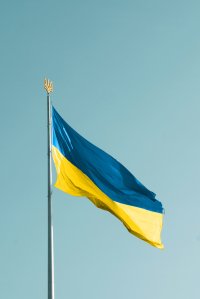
Four Years

That’s four years too long.

Our thought, our song

Will not die, will not perish…

Oh there, people, is our glory,

Glory of Ukraine!

Taras Shevchenko

* * *

Read Full Post »

2025 marks the one hundred year anniversary of the development of quantum mechanics, and has been named Unesco’s International Year of Quantum Science and Technology.

It is also a good time to mention a poetry contest I came across, from Brilliant Poetry. I haven’t participated in it, but perhaps it will interest you? The contest goal is to “express scientific wonder and discovery through verse” and poems “must find inspiration in the quantum.”

Do I know what that means? I do not, but it might be fun to let my creative voice play with the idea. Hang on, here’s a quick related video.

And this is a much longer explainer: Physicist Brian Cox explains quantum physics in 22 minutes.

Ahem. Now that you have a bit of background, let’s get back to that poetry contest.

What are the rules?

Submit Your Poem

Contest tradeoffs: 

The upside is that there is no entry fee that I can see, and there are cash prizes. Good.

One downside is that by entering, “you give the organizers the right to publish your poem both online and in printed media.” In other words, you’ve essentially given away first world publication rights, so keep that in mind. (On the other hand, the limit is maximum 40 lines, so it may not be a big investment if you’re interested in some experimentation.)

Does this concept tickle your imagination? Submissions close June 20th so you’ve got a bit of time to consider the options, and get into the quantum.

* * *

Read Full Post »

I spent a non-zero amount of time today writing out-of-office poetry. Because the holidays need more fun:)

* * *

Photo by Clay Banks on Unsplash

Read Full Post »

This weekend marks the final supermoon in what has been a months-long fall cycle of supermoons. If you have a chance to look up, you can see the moon’s super hurrah for the year before its orbit takes it farther away from us. 

Here’s NASA’s quick explanation for the supermoon, when the moon is closest to us, and its inverse, the micromoon.

The next full supermoon will be on November 5, 2025. Until then, a micropoem.

Night’s shadows await

the Moon’s sly smile, waxing bright

as She steals the stars.

* * *

Photo by Tony Detroit on Unsplash

Read Full Post »

The Stars are Mansions Built by Nature’s Hand

The stars are mansions built by Nature’s hand,

And, haply, there the spirits of the blest

Dwell, clothed in radiance, their immortal vest;

Huge Ocean shows, within his yellow strand,

A habitation marvellously planned,

For life to occupy in love and rest …

— William Wordsworth

* * *

Photo by Thomas Ciszewski on Unsplash

Read Full Post »

I received an email this morning wishing me a Happy World Bee Day.

“What’s that?” I asked. 

Exactly what it sounds like, as it turns out. And that’s exactly the sort of holiday I like to support.

World Bee Day 2024| Food and Agriculture Organization of the United Nations

We all know the bee basics. They’re important pollinators. They make honey. They make buzz. They like to join you at picnics.

But did you know that they also provide us with medicines and even help keep our planet beautiful and healthy?

As I head out to maintain my pollinator lawn, I leave you with this excerpt from “A More Ancient Mariner” by Bliss Carman:

The swarthy bee is a buccaneer,

A burly, velveted rover,

Who loves the booming wind in his ear

As he sails the seas of clover.

* * *

Not clover, I know, but pretty nonetheless. Photo by Adonyi Gábor on Unsplash

Read Full Post »

Some habits are good, some not so much. How do you break a bad habit (just as a totally random example, like jumping straight into day job work instead of carving out a bit of time for creativity)? 

It’s National Poetry Month, so here’s a poem on the subject. And while I don’t necessarily agree with the slightly depressing penultimate line (“unhelped, alone”), I do think the larger message is a good one: if you made it, you can break it.

Habit

How shall I a habit break?

As you did that habit make.

As you gathered, you must lose;

As you yielded, now refuse.

Thread by thread the strands we twist,

Till they bind us, neck and wrist;

Thread by thread the patient hand

Must untwine, ere free we stad;

As we builded, stone by stone,

We must toil unhelped, alone,

Till the wall is overthrown.

— John Boyle O’Reilly

* * *

Photo by K. Mitch Hodge on Unsplash

Read Full Post »

System request: An Impressionist painting of a robot in a garden, smelling a flower.

To see a World in a Grain of Sand
And a Heaven in a Wild Flower,
Hold Infinity in the palm of your hand
And Eternity in an hour.

― William Blake

* * *

Robot, garden, flower.
In collaboration with DALL-E.

Read Full Post »

Older Posts »