Feeds:
Posts
Comments

Posts Tagged ‘nonfiction’

I’m reading a nonfiction book that is fascinating, detailed and (so far, at least) very well written. My favorite sentence from the bit I read at lunch is this perfect illustration of how to set the tone as well as the stage:

The lighting is subtle, the decor an elegant symphony of beige.

— Gretchen Bakke, The Grid: The Fraying Wires Between Americans and Our Energy Future

Can’t wait to read the rest!

* * *

Photo by Photoholgic on Unsplash

Read Full Post »

Thursday

Cairo

Up a few steps and across a pedestrian overpass and we were in the market. The guidebooks warned that getting lost here was easy, and not to be surprised at the incredible number of small passages and alleys in this area. They were absolutely right, but I loved it. The market’s narrow winding paths, busy streets, men sitting outside shops, women herding children they could barely see through crowds, carts, stalled taxis, cats everywhere, and getting lost were all part of the fun. For the first time I felt I was in a true souk, a local market where tourists were not yet driving the economy. Sure, there were tchotchkes on the main streets, but there were also suitcases and socks and nightgowns and shirts. When we did get completely and unbelievably lost, a small boy appeared from nowhere. He led us back to our starting point, but his way out was nothing like our way in. I followed the boy’s slight figure down stairways just wide enough for one, around corners, into shops and out their backdoors, and finally out into the cool night air. We thanked him profusely, tipped him and everyone went home happy.

* * *

Photo by Alex Azabache on Unsplash

Read Full Post »

I’ve always enjoyed Mary Roach’s science writing (especially Packing for Mars: The Curious Science of Life in the Void and Gulp: Adventures on the Alimentary Canal). I also have family in Colorado, spent many of my formative mountain-biking and blueberry-picking years trying not to encounter bears*, and passed a conservation truck with a (reassuringly sturdy) bear cage in the back just the other day. 

All of this means that Roach’s essay caught my attention, and so today’s fun bit of reading is about the perils, and promise, of life with bears. It’s an excerpt from her latest book, Fuzz: When Nature Breaks the Law.

Black bears are back and in your back yard | New Scientist

With a growing percentage of Fat Alberts, will coexistence eventually become a possibility? Or even a policy? Could we live with bears in the backyard the way we live with raccoons and skunks?

* I grew up around black bears like those in this article. Large and potentially dangerous, sure (the rule was never get between a bear and her cub, because yeah, just no), but they’re not grizzlies or polar bears. They can be a very different kind of story. (One that starts with “nom” and ends with… you may not be around for the end.)

* * *

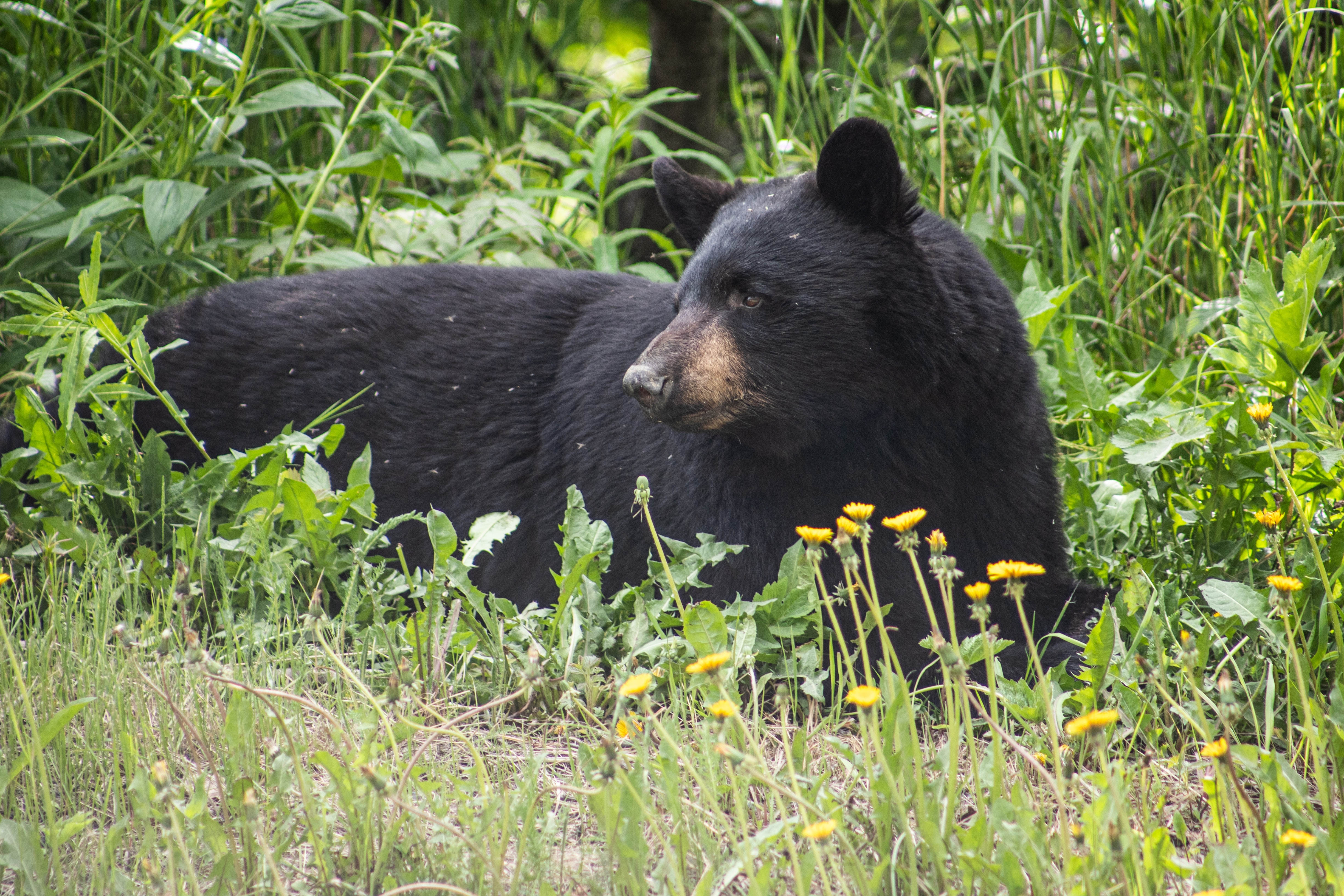
Would you be this chill with all those mosquitoes on you? I would not. Photo by John Thomas on Unsplash

Read Full Post »

Yesterday’s drabble was fiction, but this article is not. There really are Martians, and they’re living among us!

NASA engineer Nagin Cox on Mars rover time

This comic, illustrated by Anuj Shrestha, is inspired by an interview with NASA engineer Nagin Cox from TED Radio Hour’s episode It Takes Time.

Read Full Post »

How does fiction help us reimagine the future of worlds, including our own? This essay explores the history of that relationship:

A Century of Science Fiction That Changed How We Think About the Environment

If we think about science fiction (sf) in terms of the genre’s connections to pressing issues in 21st-century culture, no topic is more urgent than climate change and the ways it promises to transform all aspects of human life, from where we live to how we cultivate our food to what energy sources will fuel our industries.

Preparedness discourse responds to change, understood as disaster, through strategies of containment. But science fiction offers something much more. It offers us a way of thinking and perceiving, a toolbox of methods for conceptualizing, intervening in, and living through rapid and widespread change — and the possibility to direct it toward an open future that we (re)make.

Here’s to thinking new thoughts, building new worlds, and making them.

* * *

Photo by veeterzy on Unsplash

Read Full Post »

I ran across this article today and wanted to pass it along.

You Got This

In the front yard of a home right along the main drag in Mifflinburg, someone has put a sign – not unlike a political candidate’s election sign – in their front yard.  No logo or sponsor name.  Just simple black letters on a white background.

— Patty Kleban

Because some days, you just need to hear it. Especially Mondays.

You got this.

* * *

Photo by Eileen Pan on Unsplash

Read Full Post »

This is a lovely piece about a ship, a bird, and making the most of even trying circumstances. It’s a message I think we could all use right about now:)

What a Songbird Lost at Sea Taught Me About Survival | Audubon

She has reminded me that all of us can find ourselves lost. Winds don’t only carry songbirds to sea.

And here, floating atop this undulating unknown, Homeslice reminds me I am still on Earth. There is air and water, light and dark, and there is life in all forms, including restless humans, migrating birds, and the symbiotic methane-fueled fan worms discovered on our trip. Including even the sort-of-living viruses that plague us. We travel the wind, walk on land, float in currents, or remain anchored in sediment. We’re all surviving on this spinning island in the cosmos. And there’s more than one way to survive, even at the bottom of a sea of Mondays.

* * *

Female Scarlet Tanager, Ottawa, ON
Matt Osborne, CC BY-SA 4.0, via Wikimedia Commons

Read Full Post »

Today’s Thing I Like is nonfiction writing in general, and author Mary Roach in particular. If you aren’t familiar with her work, check out the books linked below or this interview with Seth Shostak at SETICon 2012.

Nonfiction can be a fiction writer’s best friend. At its best, it includes detailed, character-driven explorations of real-life situations and challenges, and can provide the sort of solid foundation a more speculative piece needs to succeed. I’ve mentioned this before, but avoiding abstractitis is key to good writing.

Specifically:

No matter how abstract your topic, how intangible, your first step is to find things you can drop on your foot.
— John Maguire

Nonfiction helps you do that, and Mary Roach is a great example of a quality nonfiction writer.

I have yet to read all of Roach’s books but Gulp: Adventures on the Alimentary Canal and Packing for Mars: The Curious Science of Life in the Void were terrific. Her books take a somewhat off-beat topic and delve in, deep. She’s also funny. The level of detail is satisfying and succeeds in painting an engaging portrait of her subject that is also educational. Packing for Mars, for example, is a great way for writers to familiarize themselves with the nitty gritty of space exploration, how we got to where we are now, and how we’ll get to where we’re going.

To note, if you’re interested in popular nonfiction about the intricacies of digestion or Mars exploration, check out Giulia Enders’ excellent Gut: The Inside Story of Our Body’s Most Underrated Organ, and Steve Squyres’ Roving Mars: Spirit, Opportunity, and the Exploration of the Red Planet.

Read, then write:)

Read Full Post »

Today’s #ThingILike* is West with the Night, a fabulous piece of non-fiction first published in 1942 by bush pilot, adventurer and racehorse trainer Beryl Markham. I picked it up in a second-hand store on the strength of the title and the back cover blurb. I’d never heard of the author, but when Ernest Hemingway says he wishes he could write so well, I pay attention. Glad I did.

“Did you read Beryl Markham’s book, West with the Night? I knew her fairly well in Africa and never would have suspected that she could and would put pen to paper except to write in her flyer’s log book. As it is, she has written so well, and marvelously well, that I was completely ashamed of myself as a writer. I felt that I was simply a carpenter with words, picking up whatever was furnished on the job and nailing them together and sometimes making an okay pig pen. But [she] can write rings around all of us who consider ourselves writers. The only parts of it that I know about personally, on account of having been there at the time and heard the other people’s stories, are absolutely true . . . I wish you would get it and read it because it is really a bloody wonderful book.”
— Ernest Hemingway

Recommended.
* Again, items in this series of Things I Like are linked for your information; no sponsors, no kickbacks, just a sampling of things that I find useful or fun or funny or sweet.

Read Full Post »

I came across my In Case of Emergency folder the other day. You know, the one where you list your contacts and funeral preferences and the user names for all those Gmail accounts. Yeah, that folder. I also found a note, written ages ago, and decided it was stupid to wait until my own demise (or the heat death of the universe, whichever comes first) to say it, because You Just Never Know.

Here at the end of another year seems like a good time to share.

To My Family,

I probably haven’t said this often enough, certainly not as often as you all deserve.

I love you. Always have, always will. You are all so interesting and complicated and heart-achingly wonderful.

So… there:)

Read Full Post »

Older Posts »