We had brunch today with good friends. They are smart and fun and interesting and love our cat (which, let’s face it, is about the best thing you can say about a person).
We don’t all share the same politics. Why do I mention this? To point out that it doesn’t matter.
We may not be on the same page in terms of voting and algorithms, but we like a lot of the same real-life things, we share a lot of the same fundamental values, and are always curious about the others’ experience and perspectives.
The interesting thing about being a human is that we’re stuck inside our internal model—it’s all we ever see. But with the endeavors of science, literature, and philosophy, we’re able to step outside of ourselves and understand, “Hey, the way I see the world isn’t the only way to see the world. It’s not the only truth.” The more we get good at that, the more we can try to build a better society.
We’re having some electrical work done today, which means I’ll be in and out of the modern world. It also means that I will be spending a non-zero amount of time asking questions about power, and wishing my childhood had included a little more time with (Presidential Medal of Freedom awardee!) Bill Nye and his catchy explanations of science science science.
And for those of you who just want the basics, i.e. how not to become a path to ground for the “opportunistic freeloader” that is electricity, check out this quick explainer:
Welcome to the new year! Here’s what you can expect from space in 2025 (including a new way of studying the solar corona that looks enough like the Millennium Falcon to be extra fun):
After a spectacular 2024, which featured a year of wonder in the skies, including a total solar eclipse and rare sightings of the northern lights, 2025 is set to bring even more astronomical events.
Have you ever thought, “what if I just dug a really really deep hole?”
Well, the USSR actually did. The hole they dug is deeper than the deepest part of the ocean. It’s deeper than Mt. Everest is tall! They began digging it in the 1970s as part of a space race, but down. The United States only got to 600 ft before pulling funding. But the USSR kept going for 20 years. They made it about a third of the way through the Earth’s crust and then STOPPED.
But what if… you just… kept… digging?
If you dug a hole to the center of the Earth, what would you find? What would happen to you? And what does our newest tech tell us is REALLY down below your feet?
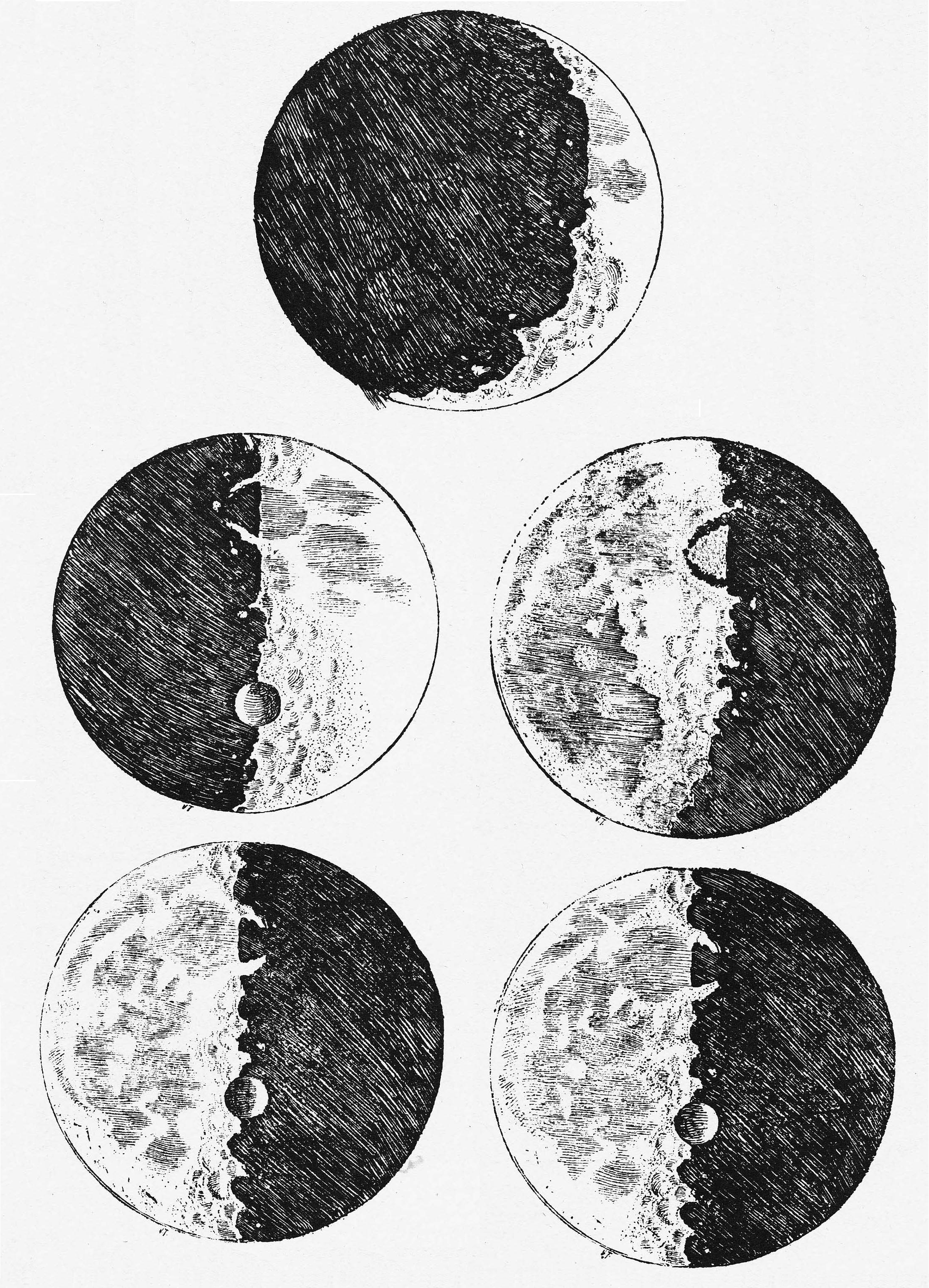
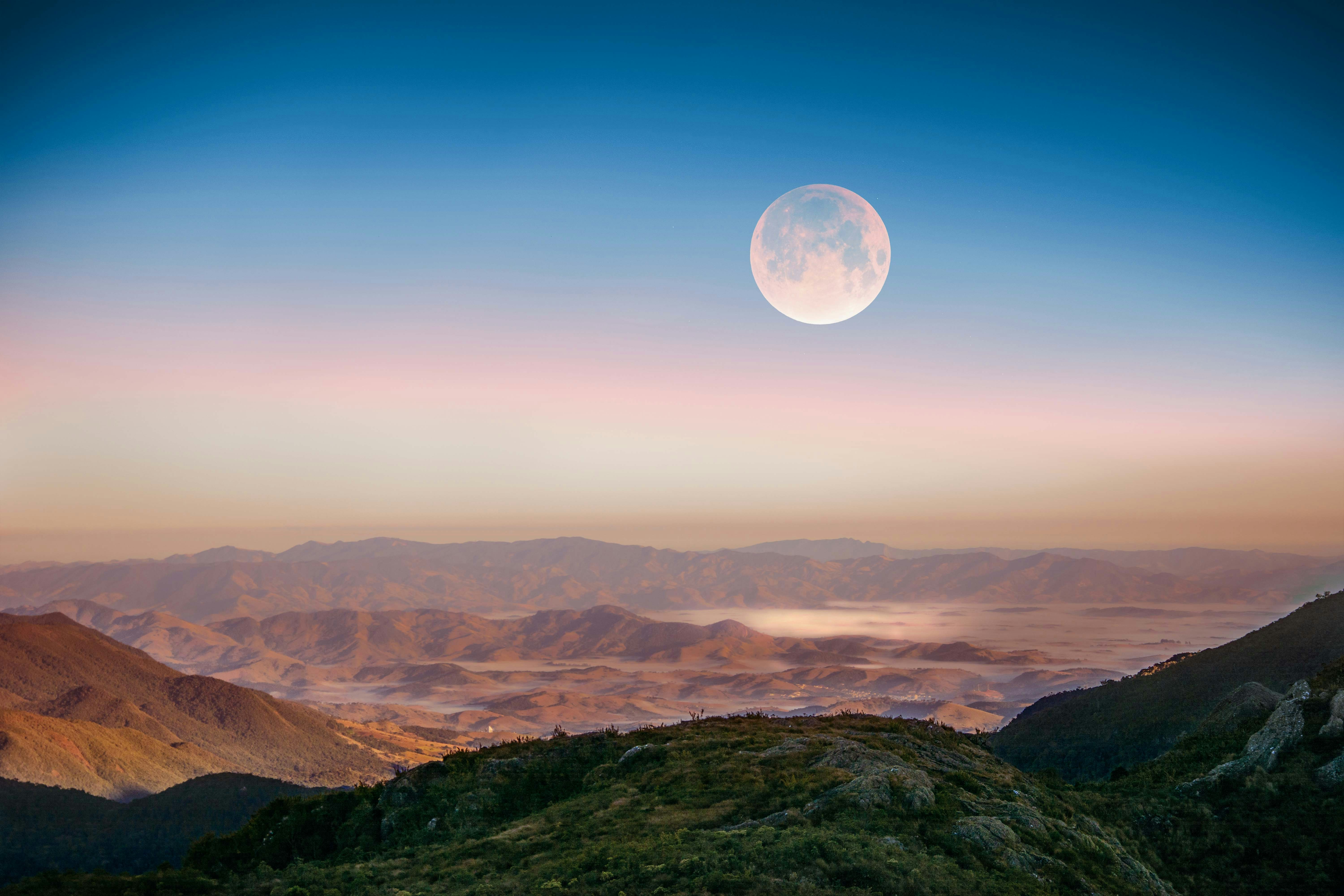
As we’re right around the full (super!) moon this weekend (and I’m knee-deep in tech and tax stuff, super fun), here’s a composite image of the moon with amazing detail.
The self-taught Kurdish astrophotographer amassed 81,000 images, which he stitched into a 708-gigabyte composite revealing the intricacies of the lunar topography in stunningly high resolution.
Scroll down through the images to be impressed by the work of this self-taught astrophotographer.
Today is all about cake baking and other kitchen stuff. We needed a few ingredients like apples and eggs, which required a trip to the store, which in turn led to that age-old question: Why is our checkout line so slooooow? What is queuing theory anyway? And, inevitably, how would this affect procedure at a transdimensional transit hub?
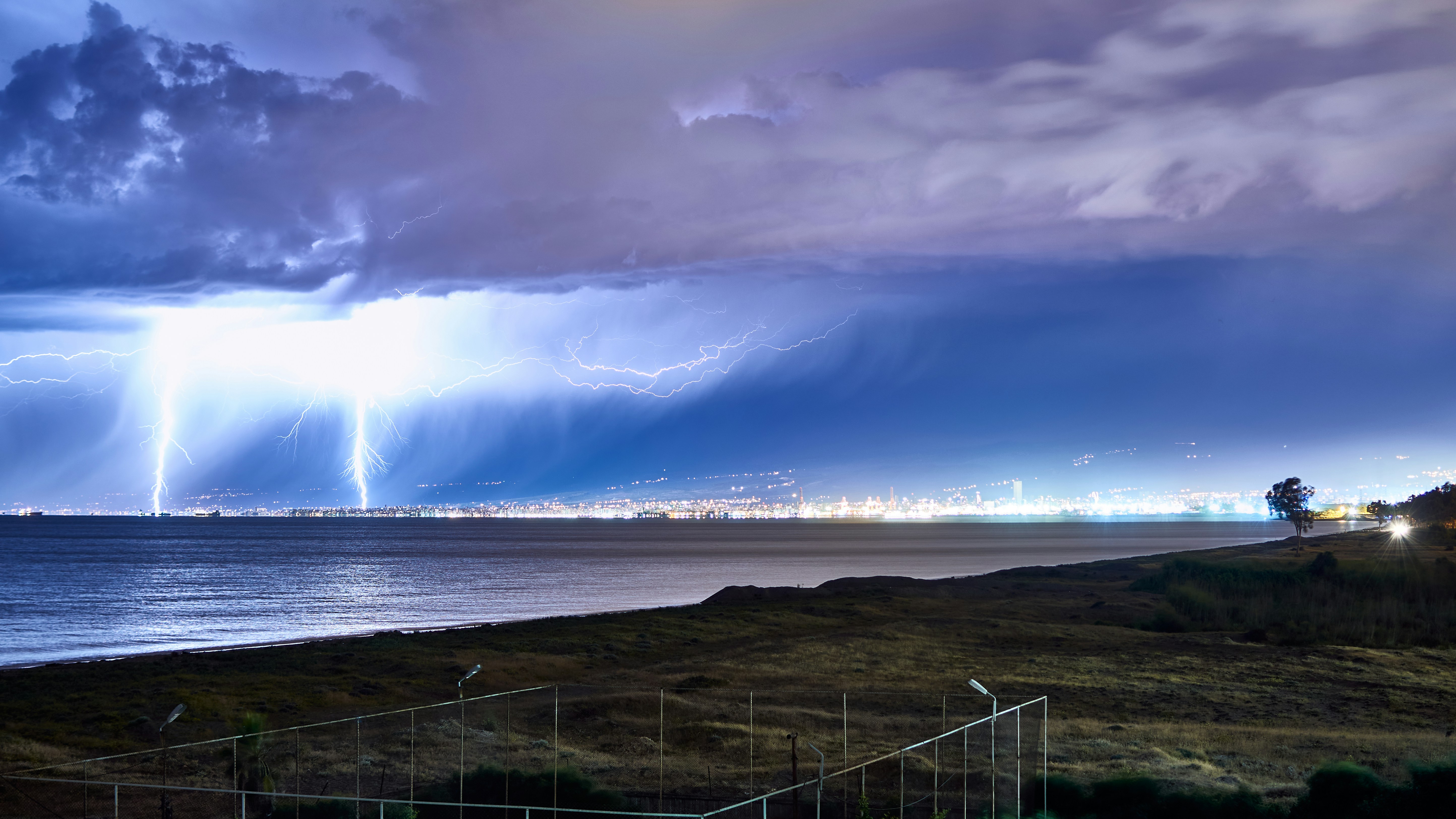
If my brain had been working yesterday I would have mentioned the fact that many of us have an unusual opportunity to see the Aurora Borealis right now.
“The word Aurora was first used by Galileo and comes from Latin and is the name of the goddess of dawn.” — NOAA
This light show in space is typically reserved for latitudes close to the Earth’s poles, but we happen to be experiencing a G3 solar storm right now. This happens when solar storms drive coronal mass ejections, solar flares, solar particle events and solar winds at us. And by us, I mean Earth.
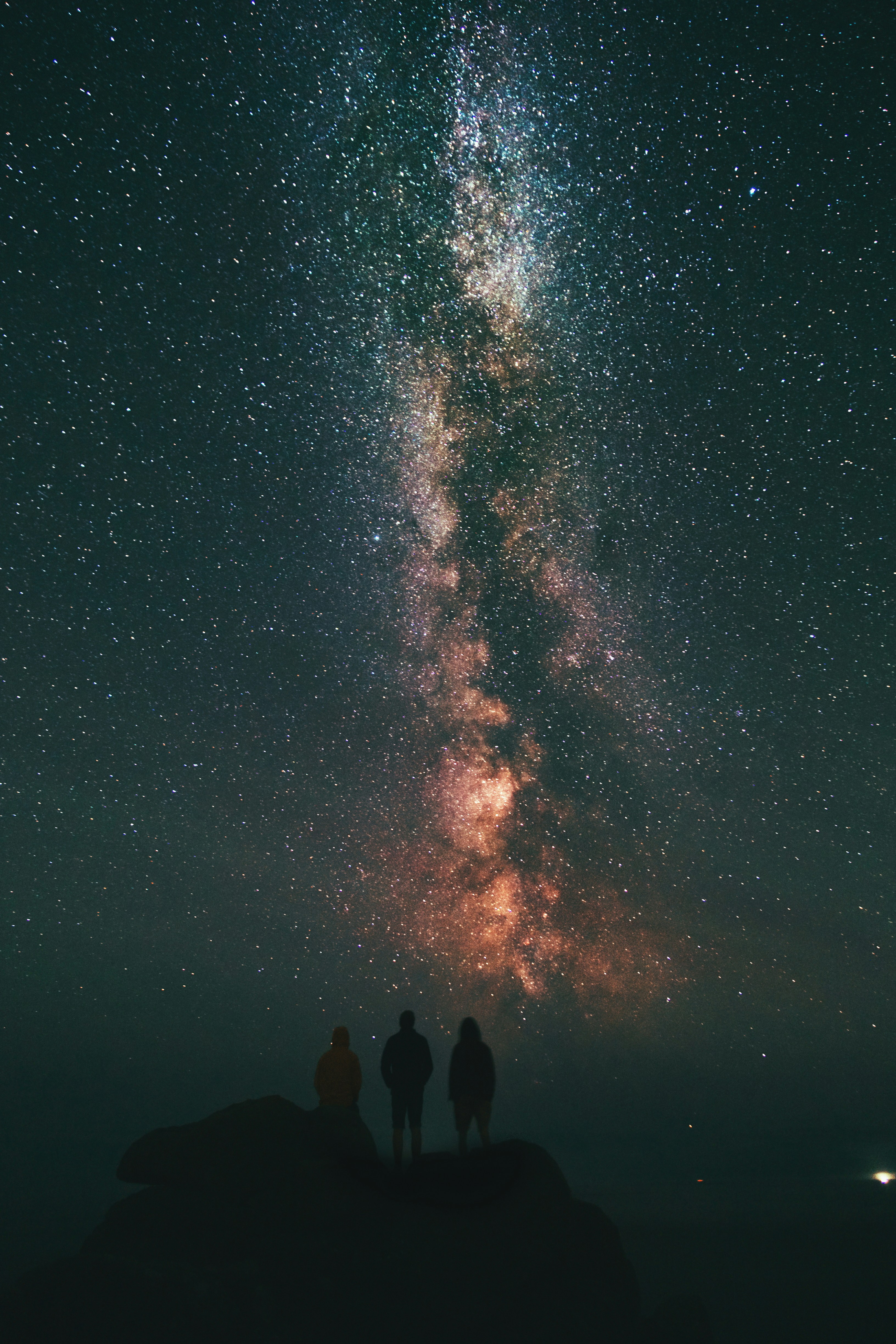
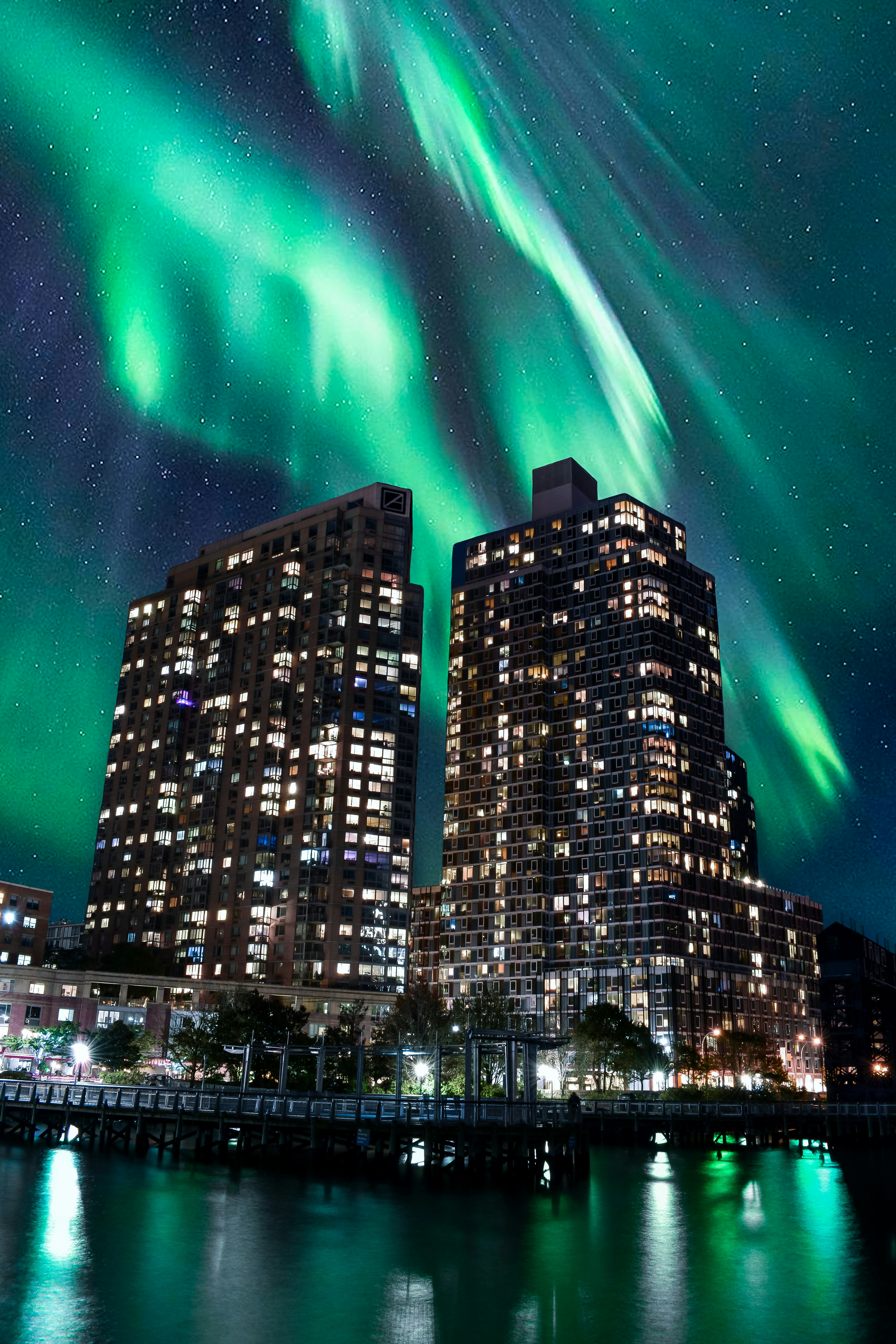
First, some pretty pictures from as far south as Florida:
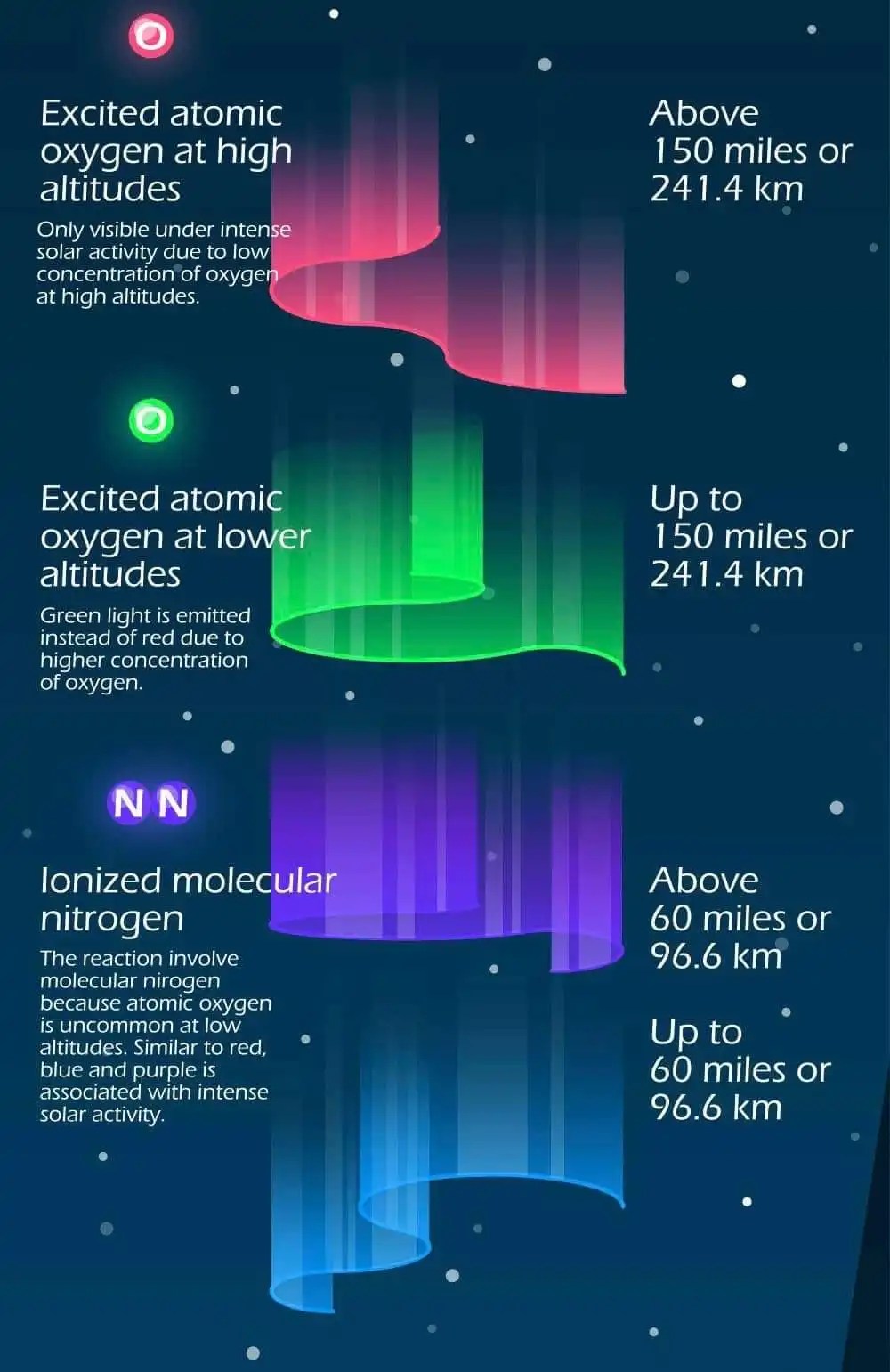
Our sun is the main reason for an aurora display. Particles energized by the sun race toward Earth, colliding with our upper atmosphere. Earth’s magnetic field divert this energy towards the north and south poles. As these energized particles enter Earth’s atmosphere, they excite gas atoms and molecules. The colors observed depend on which gas atoms they interact with.
In addition to colorful light bands, sometimes an aurora has black bands that block starlight. The dark regions likely come from electric fields in the upper atmosphere that block electrons from interacting with gases.
I won’t be hurt if you want to stop here and go search for more pictures, but if you’d like to know more about the how and why, read on!
When and where can you see the northern and southern lights also known as the aurora? This page provides a prediction of the aurora’s visibility tonight and tomorrow night in the charts below. The animations further down show what the aurora’s been up to over the last 24 hours and estimates what the next 30 minutes will be like. The aurora’s colorful green, red, and purple light shifts gently and often changes shape like softly blowing curtains.
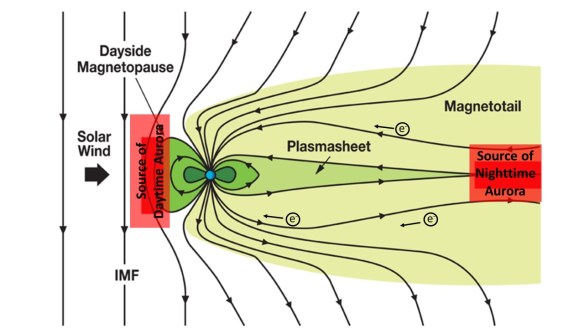
The figure below shows the magnetosphere and the locations where electrons are accelerated (in red). The red region on the right of the figure is where the electrons that produce night-time aurora are accelerated and the source of the processes that generate geomagnetic storms.
Pretty colors are pretty, of course, but why should we care about space weather?
Space weather is a global issue. Unlike terrestrial weather events, like a hurricane, space weather has the potential to impact not only the United States, but wider geographic regions. These complex events can have significant economic consequences and have the potential to negatively affect numerous sectors, including communications, satellite and airline operations, manned space flights, navigation and surveying systems, as well as the electric power grid.
Aaaand in case you haven’t had enough about auroras in particular and space weather in general, NOAA has a fun dashboard for you!
The best times to view the event will depend on your location, but the lunar eclipse will peak at 10:44 p.m. ET, according to NASA. All of North and South America will have a chance to see the partial lunar eclipse and harvest supermoon depending on the weather. Europe and Africa will also have an opportunity to see the eclipse.
As the full Moon closest to the autumnal equinox, this is the Harvest Moon. The first known written use of this name in the English language (per the Oxford English Dictionary) was in 1706. During the fall harvest season farmers sometimes need to work late into the night by moonlight. On average moonrise is about 50 minutes later each night. Around the Harvest Moon this time is shorter, about 25 minutes for the latitude of Washington, DC, and only 10 to 20 minutes farther north in Canada and Europe.
Here is some general info on eclipses and a fun video from NASA.
* * *
And as for that more-or-less moon related bonus item? It’s a tasty one.
Mr Man and I went for a lovely if hot hike down by the river, and decided that the best way to cap it off would be with ice cream. We found ourselves at Chris’s Ice Cream Ottawa.
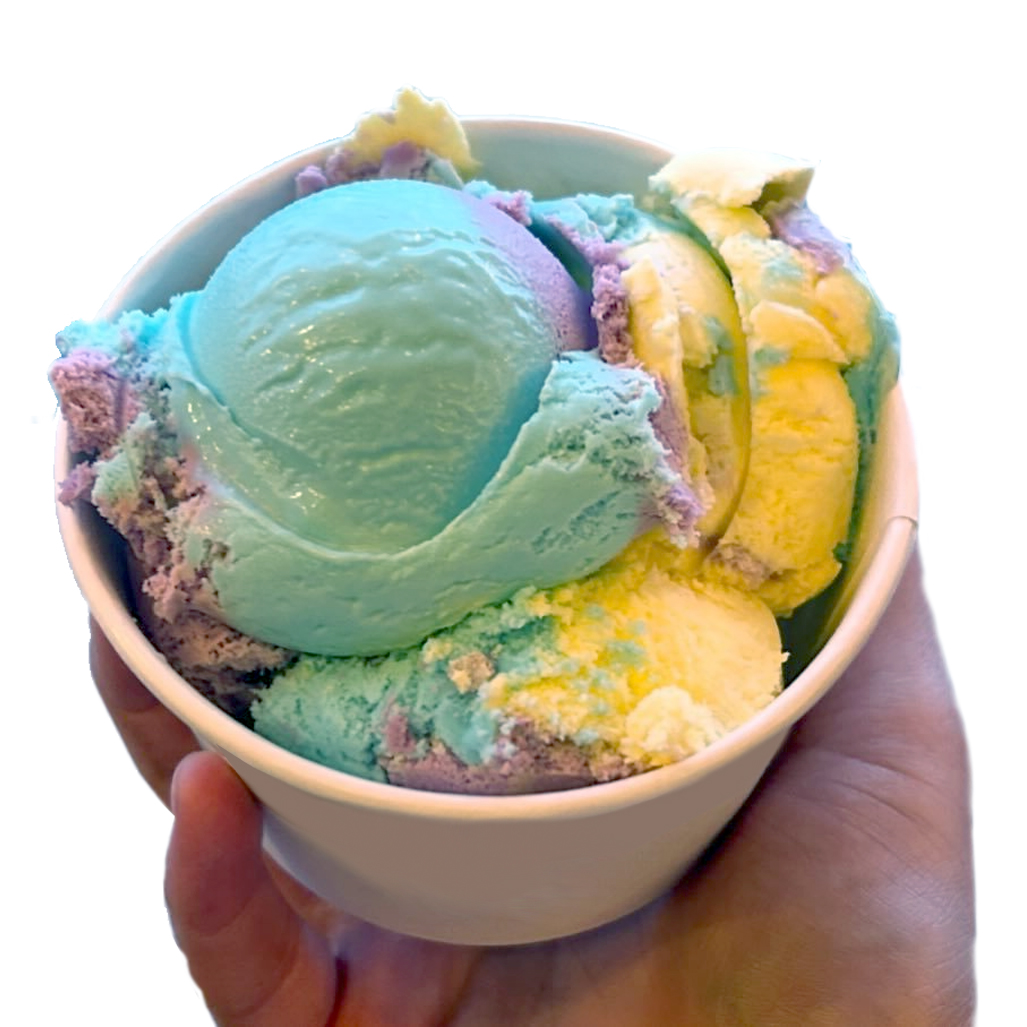
This fun little shop had a number of interesting and creative flavors, including blood orange, chili chocolate, strawberry crunch, and… hang on, what’s this?
I did not think I would like it. I did not think the flavors would work. In fact, they did more than work, as all three flavors combined into a new, better flavor.
I don’t quite know how to describe this “improbable” combination except as a structural shift. Imagine three individual flavors, normally experienced as if they were sequential, or side by side. When eaten together, however, the flavors stack together to create a singular new experience.






You must be logged in to post a comment.