Feeds:
Posts
Comments

Posts Tagged ‘sky’

You may remember in 2023 when I mentioned a five-planet parade in the skies, or in 2024 when six planets aligned

Fun sky news: this week we are in line for a parade of all seven planets!

When and how to view February planet alignment

Skywatchers will get a cosmic treat this week with a celestial gathering of planets.

A planetary alignment, or a “planet parade,” according to the internet, will grace our night sky just after dusk, according to SkyatNightMagazine. You can expect to see seven planets align Friday when Mercury joins Mars, Jupiter, Uranus, Neptune, Venus and Saturn.

Mercury, Venus, Jupiter, and Mars will be visible to the naked eye, but Saturn will be harder to spot low on the horizon, and you’ll need a telescope for Uranus and Neptune. Still, “every other world in our solar system will be visible among the stars at the same time — if you know where to look.”

“You really only have a few minutes after sunset to catch them before they drop below the horizon. After that, you’ll still be able to see Venus, Jupiter, and Mars clearly for a much longer time,” Dr Bloomer added.

I don’t have a telescope, and we often can’t see this kind of event because of city lights. 

Still cool!

* * *
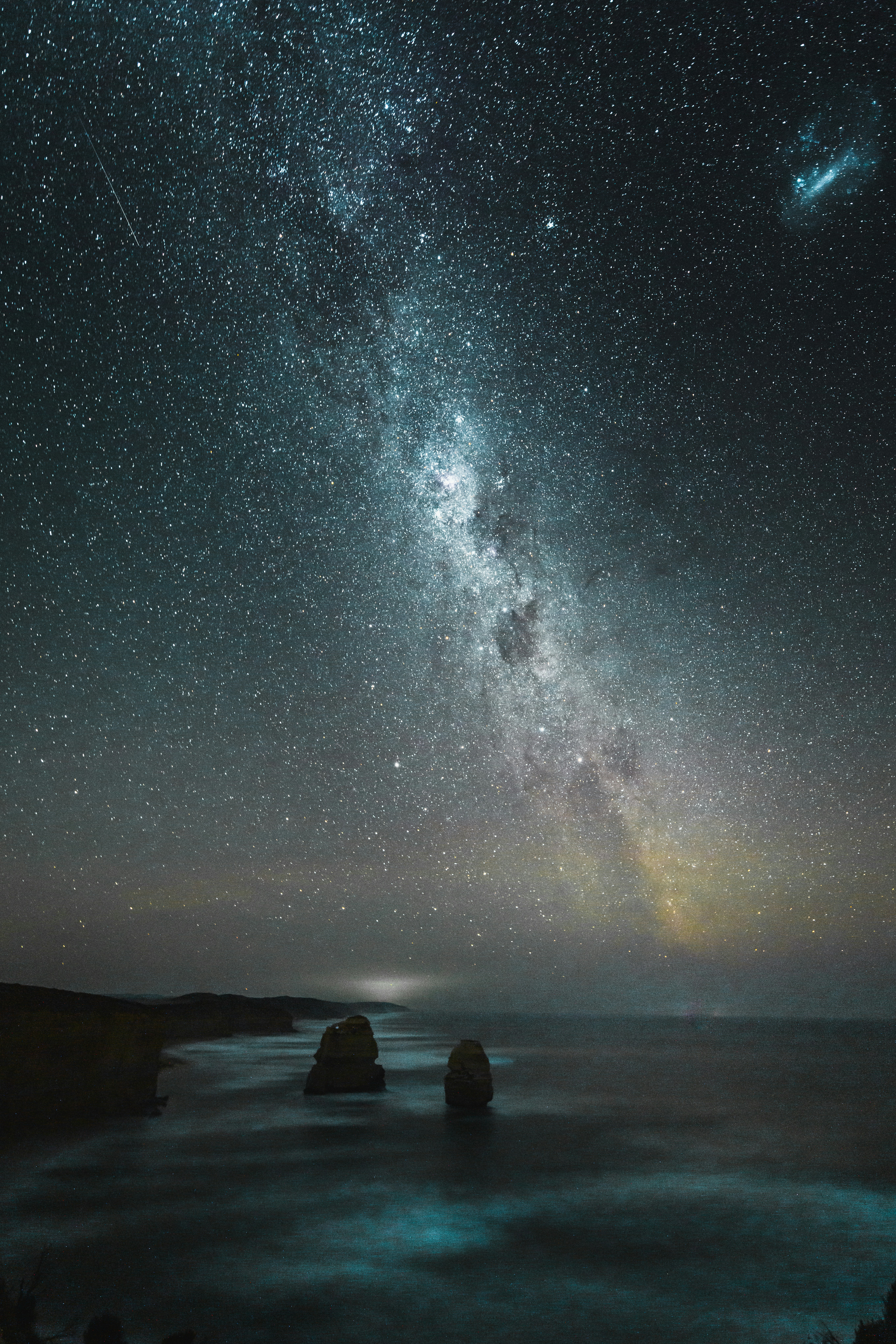
Photo by Luke Stackpoole on Unsplash

Read Full Post »

Want to see a rare astronomical event tonight? (And really, why wouldn’t you?)

The extremely rare Betelgeuse occultation by asteroid (319) Leona

For a very short time, we will see the legendary Orion constellation without its famous, orange shoulder, as it will be in the distant future, once Betelgeuse will have exploded as a supernova and faded to black.

Hey, I like Orion! What’s this all about?

Watch an asteroid eclipse the puzzling red giant star Betelgeuse tonight live online

At at 8:17 p.m. EST Monday (Dec. 11) (0117 GMT, Dec. 12), an asteroid will pass in front of the curious red star Betelgeuse, eclipsing it from our vantage point here on Earth and blocking it from view for up to 15 seconds in an event known as an occultation. The asteroid is known as 319 Leona, a main belt object that orbits the sun between Mars and Jupiter. Shaped roughly like an egg, 319 Leona measures some 50 by 34 miles (80 x 55 kilometers) in size.

Here’s a link to live coverage of the event.

So Orion’s loss is temporary, and will also help scientists better understand both the asteroid’s shape and the star’s characteristics. No Tim Burton movie required!

* * *

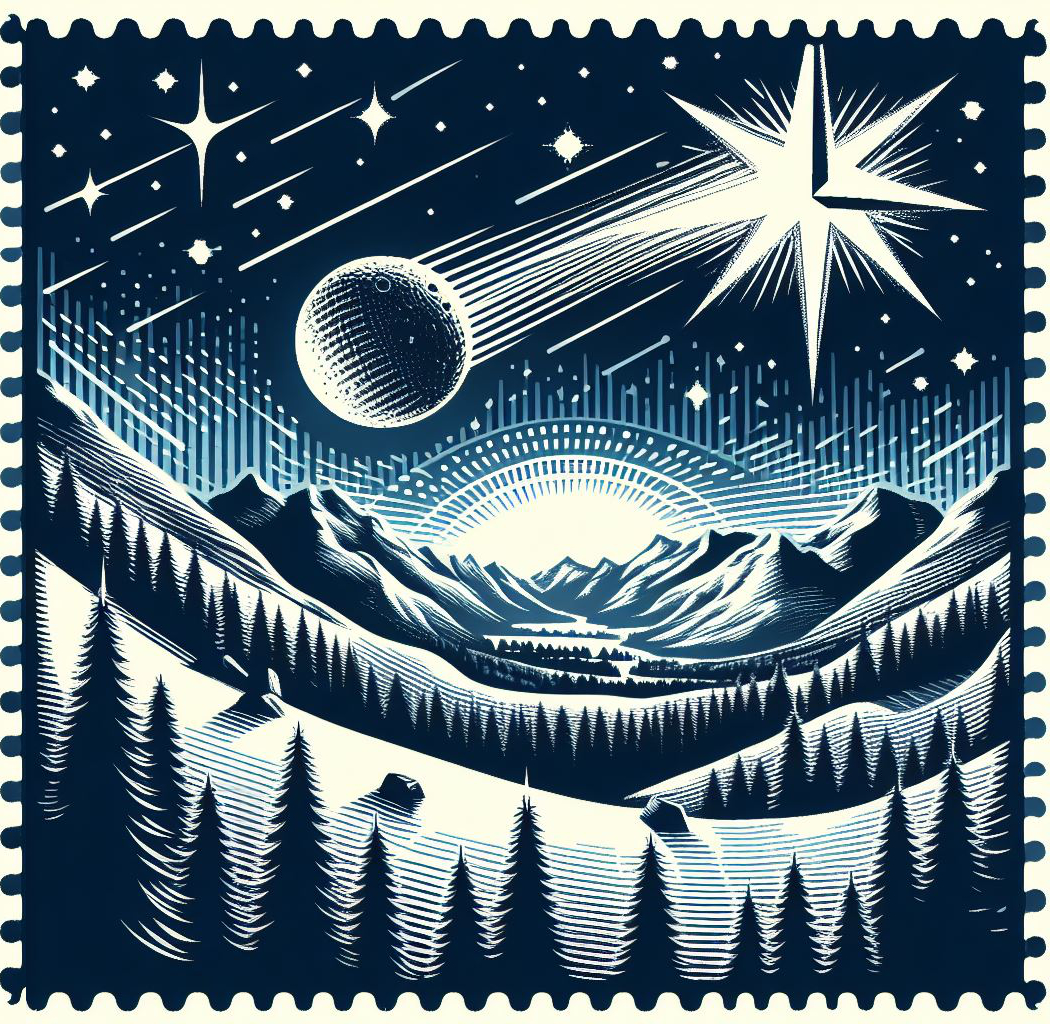
via Microsoft Image Creator: graphic illustration stamp of a star over mountains in winter, with a passing asteroid

Read Full Post »

Today’s Word of the Day (in my world, at least) is “noctilucent.”

The term is typically applied to a specific type of cloud, “a luminous thin usually colored cloud seen especially at twilight at a height of about 50 miles (80 kilometers).” It’s the luminous aspect that makes these clouds particularly dramatic.

Noctilucent clouds: What are they and how can you see them? | Space

The name noctilucent is derived from the Latin words “nocto” and “lucent” which translates to “night” and “shining” respectively, according to Merriam Webster.

These clouds are seasonal, and in the Northern hemisphere that season is now.

Noctilucent clouds: The season starts now!

The season for noctilucent clouds at northerly latitudes is now. People at high latitudes report seeing noctilucent clouds. This happens every year, from about May through August in the Northern Hemisphere, and from November through February in the Southern Hemisphere.

I chose this word because its Latin origins are interesting to unpack, it refers to a beautiful and intriguing phenomenon, and it’s fun to say.

The world is a marvelous, mysterious and magical place. Science (and science fiction!) just makes it that much better.

* * *

Photo of noctilucent clouds taken in Laboe, Germany, on June 21, 2019. Image by Matthias Süßen/ WikipediaCC BY-SA 4.0.

Read Full Post »