“A problem is a chance for you to do your best.”
— Duke Ellington
* * *

Posted in Writing, tagged #365Ways, #365Ways2023, creativity, Thoughts, Writers, writing on May 28, 2023| Leave a Comment »
“A problem is a chance for you to do your best.”
— Duke Ellington
* * *
Posted in Other, tagged #365Ways, #365Ways2023, home, nature, Thoughts on May 26, 2023| Leave a Comment »
My lawn is lovely, with white and purple and yellow flowers. The dandelions are going gangbusters, as they do. And I’ve just been out front tidying them up in the hopes that my neighbors won’t get too stressed out about our lawn’s diversity.
In that vein, I give you a brief history of that underrated flower, the dandelion.
* * *

Posted in Other, tagged #365Ways, #365Ways2023, art, creativity, Thoughts, tutorials on May 25, 2023| Leave a Comment »
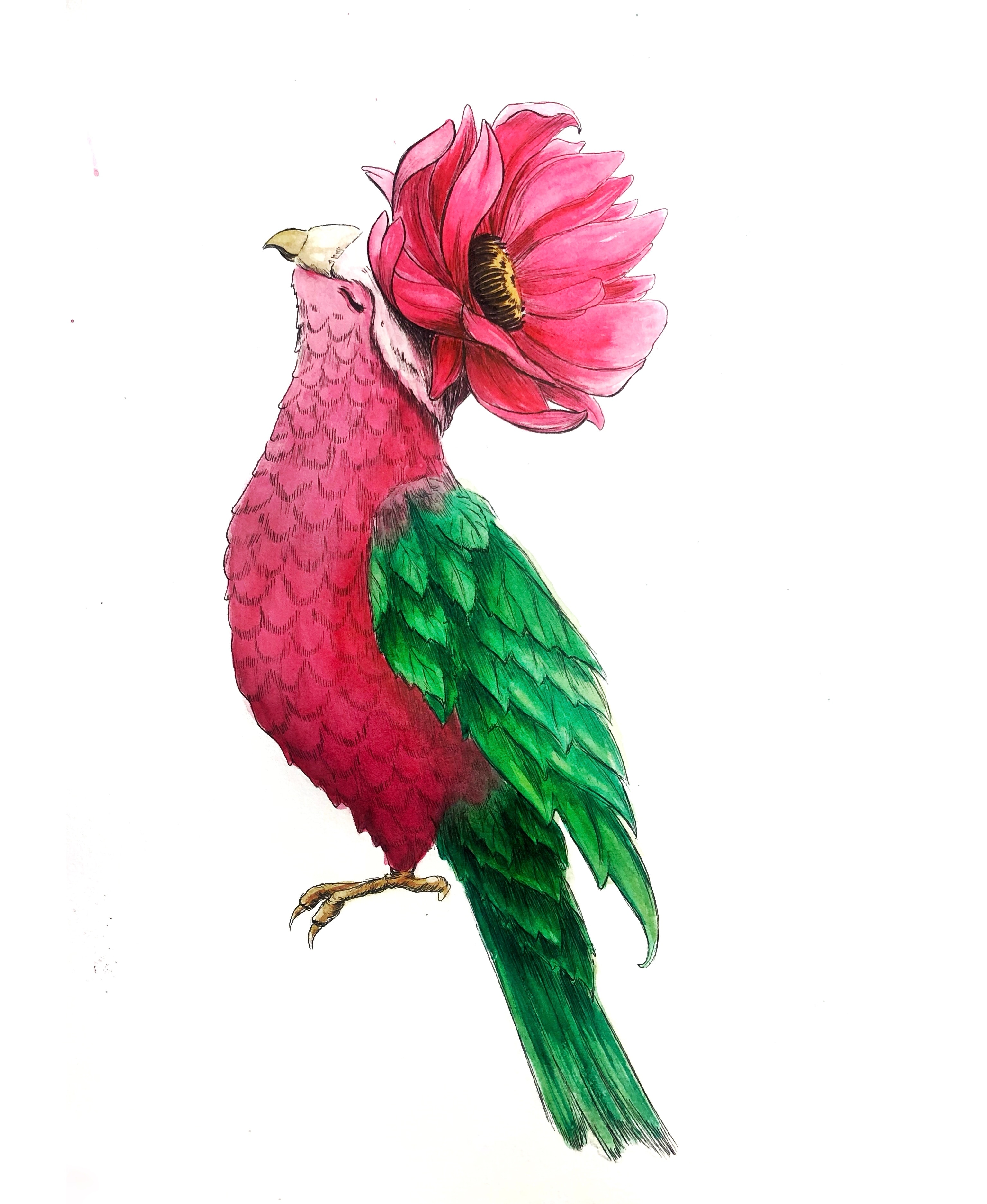
I find myself wanting to try out a new project. I don’t have time and have no idea where my watercolors ended up, but this tutorial caught my eye. Perhaps it will inspire you, too.
Painting whimsical watercolor birds, a tutorial | The Kid Should See This
* * *
Posted in Science!, tagged #365Ways, #365Ways2023, communication, innovation, science, technology, Thoughts on May 24, 2023| Leave a Comment »
Today’s post is brought to you by fiber optic cable, the innovation currently being inserted into my lawn.
In a discussion about grass vs. clover lawns today, I mentioned that our neighborhood is being wired for fiber internet. For weeks, we’ve had orange-vested dudes (and they’re all dudes) roaming in packs, hauling giant spools of multi-colored cables, digging up driveways and yards (and reseeding with industrial-strength grass seed), and generally doing their best to drag our 1990s development into the modern era.
Now we’ve got cable ends sticking up everywhere, a new panel in the grass looking like a secret bunker entrance, and neighbors wondering whether all this fuss is worth it.
It also led to the question, how do fiber optics work, exactly?
Answer: I have a layman’s understanding of the technology (data becomes light and zoom zooms down a shiny glass tube) but yeah, better look that up:)
* * *
Here’s a quick backgrounder about fiber optics from the folks who invented it.
Educational Resources | Optical Fiber | Optical Communications | Corning
Corning scientists Dr. Robert Maurer, Dr. Peter Schultz, and Dr. Donald Keck invented the first low-loss optical fiber in 1970. Inspired by their belief that information could be transmitted through light, Drs. Maurer, Schultz, and Keck spent four years experimenting with different properties of glass until they succeeded, creating the first low-loss optical fiber for telecommunications use.
…
How does it work?
Encoded into a pattern of light waves, information travels through each optical fiber by a process of internal reflection. The waves move through the fiber from a given source to a destination such as a cable box where it is then decoded.
(So is it a little like a super sophisticated version of an Aldis signal lamp? I guess that’s one way to think about it.)
For more (and more scientific) details, check out this excellent video:
And just for fun, how do they connect North America to Africa to Asia, and everywhere else?
* * *

Posted in Other, Writing, tagged #365Ways, #365Ways2023, blog posts, creativity, nature, randomness, Thoughts, Writers on May 23, 2023| Leave a Comment »
As it is Tuesday (and even worse, Tuesday after a holiday), my to do list is… extensive. Please enjoy a random post and some entertaining ostriches.
* * *
Roll the dice for a random post: Click this link or the image below.

* * *
Posted in Other, Writing, tagged #365Ways, #365Ways2023, constraint, creativity, inspiration, making stuff, sheep, Thoughts, Writers, writing, yay on May 22, 2023| Leave a Comment »
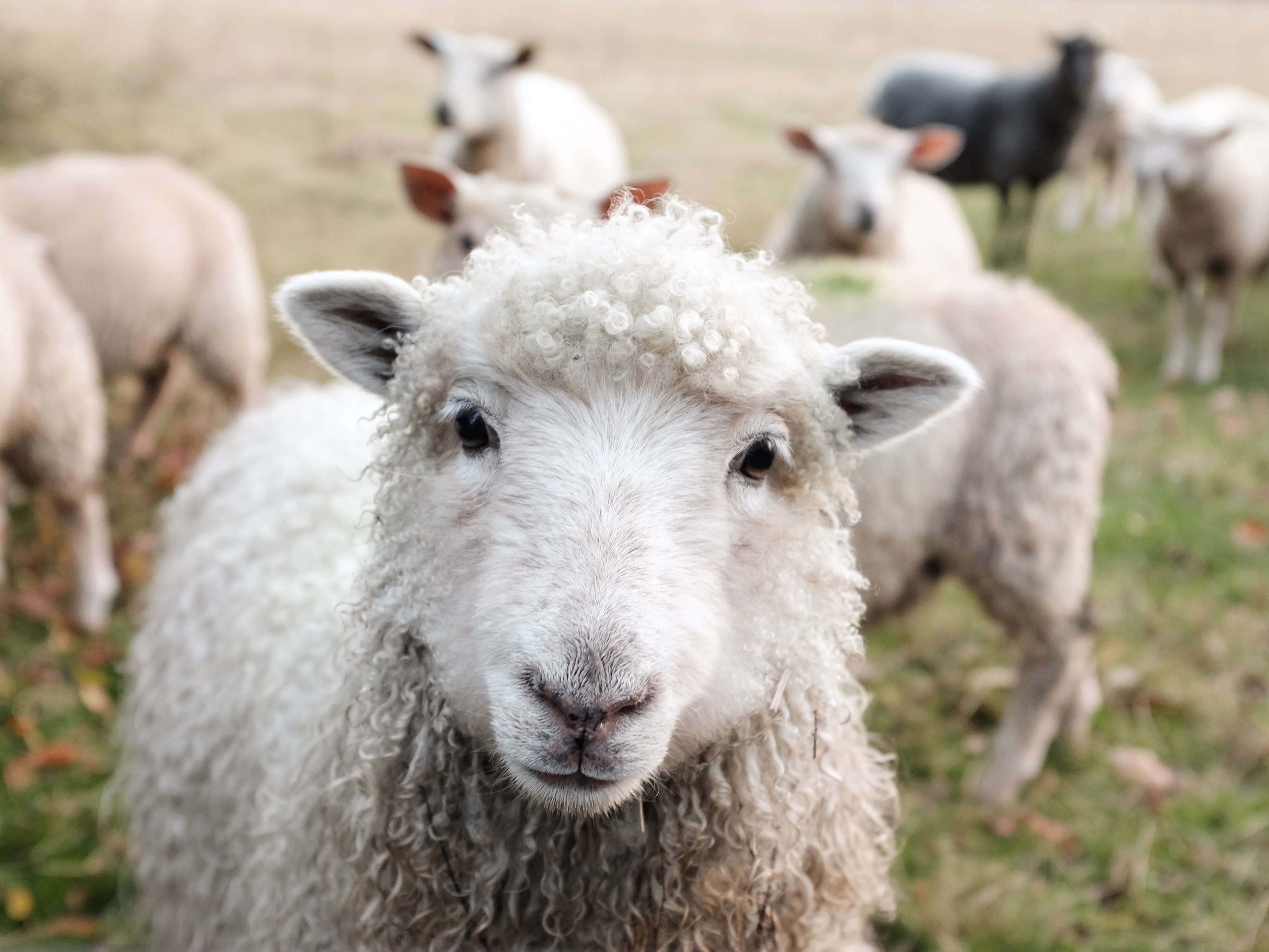
I like crafting in general, I like weaving in particular, and I like the freeing nature of creative constraints, so this “sheep to shawl” competition is right up my alley.
In a Sheep to Shawl competition, you have 5 people, 1 sheep, and 3 hours – NPR
Each team is made up of one sheep and five people: one shearer, three spinners, and a weaver. The team has three hours to shear the sheep, card the wool, spin the wool into yarn, and then weave that yarn into an award-winning shawl.
It’s not exactly the same as NaNoWriMo or drabbles or the 24-hour story challenge we recently did at Writers of the Future (crazy, fun, and not nearly as bad as I thought it would be:) but it’s in the same vein.
Here’s to artists exploring boundaries everywhere.
* * *
Posted in Writing, tagged #365Ways, #365Ways2023, Fiction, Thoughts, Writers, writing on May 20, 2023| Leave a Comment »
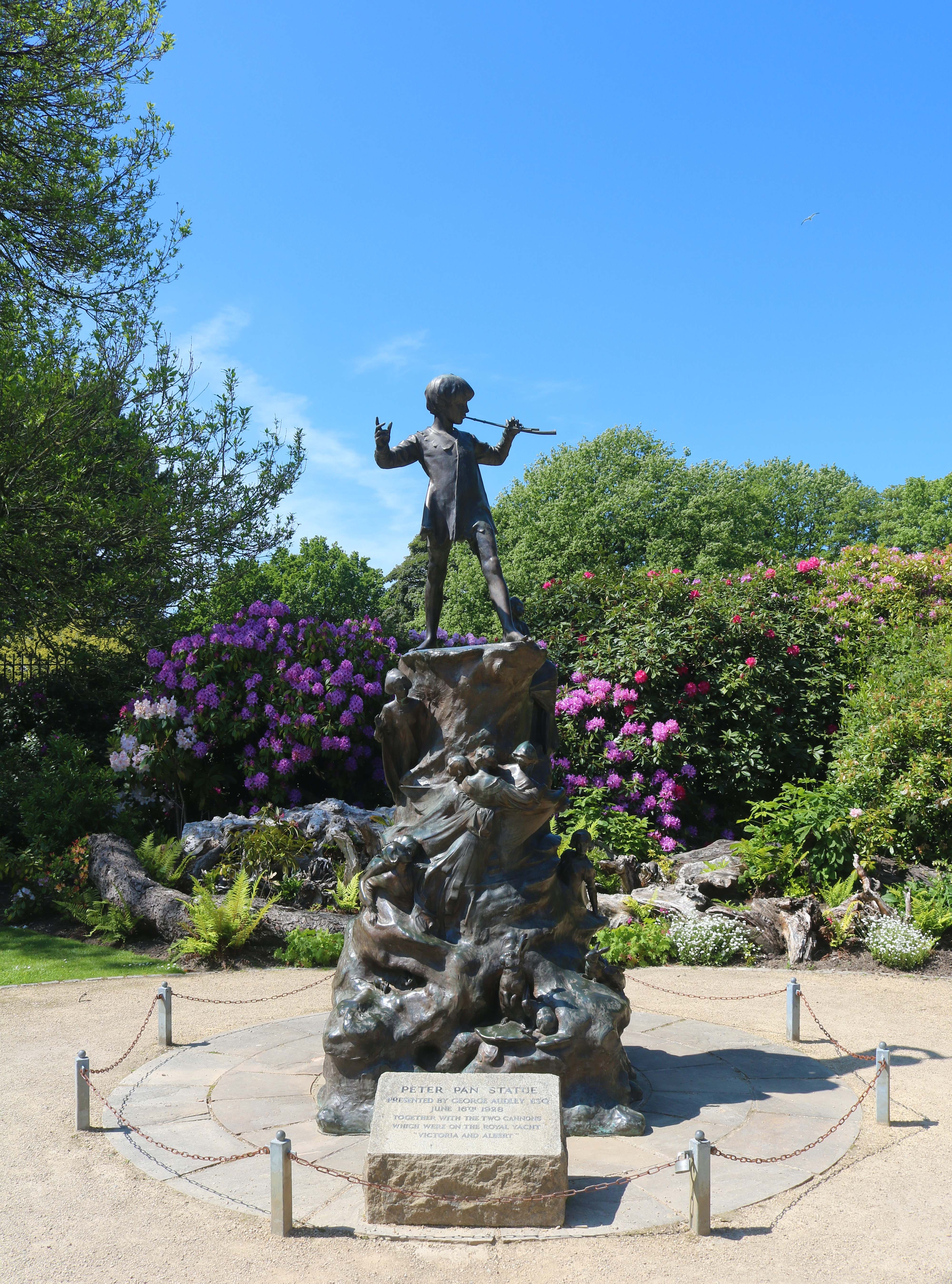
“It was not really Saturday night, at least it may have been, for they had long lost count of the days; but always if they wanted to do anything special they said this was Saturday night, and then they did it.”
― J.M. Barrie, Peter Pan
* * *
Posted in Favorites, Other, Writing, tagged #365Ways, #365Ways2023, choice, freedom, libraries, reading, Thoughts on May 18, 2023| Leave a Comment »
Like many of you, I love libraries. Like, a lot:
Run, Don’t Walk | J.R. Johnson
Passport to Wonders | J.R. Johnson
Keys to the Universe | J.R. Johnson
Inquiring Minds Want to Know | J.R. Johnson
Books Neverending | J.R. Johnson
Keys to the Universe | J.R. Johnson
I don’t love that some people are trying to control what others can read in libraries. If this is happening in your neighborhood, what can you do?
How to Protect Your Local Library From Book Ban Campaigns – Bloomberg
Library boards, school boards and legislatures are becoming battlegrounds in a push to censor books. Communities are fighting back.
I was also glad to see this policy on Intellectual Freedom And Controversial Material at my childhood library:
The libraries have a responsibility to serve all segments of the county. Materials useful to some may be objectionable to others. Selections are based solely on the merits of the work in relation to building the collections and to serving the interests of readers. The libraries attempt to represent all sides of controversial issues. Their function is to provide information, not to advocate specific points of view.
Reading preferences are a purely individual matter; while anyone is free to personally reject books and other materials, this right cannot be exercised to restrict the freedom to others.
Library materials will not be marked or identified to show approval or disapproval of the contents, and no cataloged item will be placed on closed shelves, except for the express purpose of protecting it from injury or theft. Items may be placed on temporary reserve for specific class assignment or projects.
Responsibility for what children and young adults read and view rests with their parents’ and/or legal guardians. Selections will not be inhibited by the possibility that controversial materials may come into the possession of children or young adults.
* * *
Posted in Holidays, tagged #365Ways, #365Ways2023, family, inspiration, Thoughts on May 14, 2023| 1 Comment »
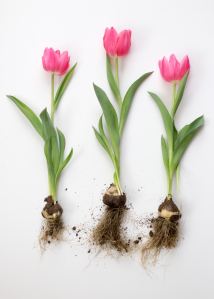
For my mother, and my other mothers, and to all those out there who appreciate flowers, here’s a piece on the history of tulips (one of my mother’s favorite flowers) and their role in art (another of my mom’s favorite things).
Happy Mother’s Day!
There is no other period of art history more closely associated with tulips than the Dutch Golden Age. Marked by economic prosperity, scientific discovery, and flourishing arts and culture, the tulip came to be a hallmark of the Netherland’s successes. There is some disagreement about exactly when and by whom the first tulips were brought to the Dutch Republic, but it is known that they were imported from the Ottoman Empire sometime in the latter half of the 16th century. Already a costly commodity, the demand for specific bulbs of different colors and varieties quickly outpaced the supply of tulips—and thus Tulip Mania, or the Tulip Craze, began. At its height, the price for a rare and prized tulip bulb was on par with a craftsperson’s annual wage.
* * *
Posted in Other, tagged #365Ways, #365Ways2023, birthdays, family, memories, Thoughts on May 13, 2023| 1 Comment »
Today would have been my grandfather’s 113th birthday. I’ve written about him on this day for the past two years, and I thought it would be nice to keep up the tradition.
My previous birthday posts about Grandpa:
Eleventy-First, with Memories | J.R. Johnson
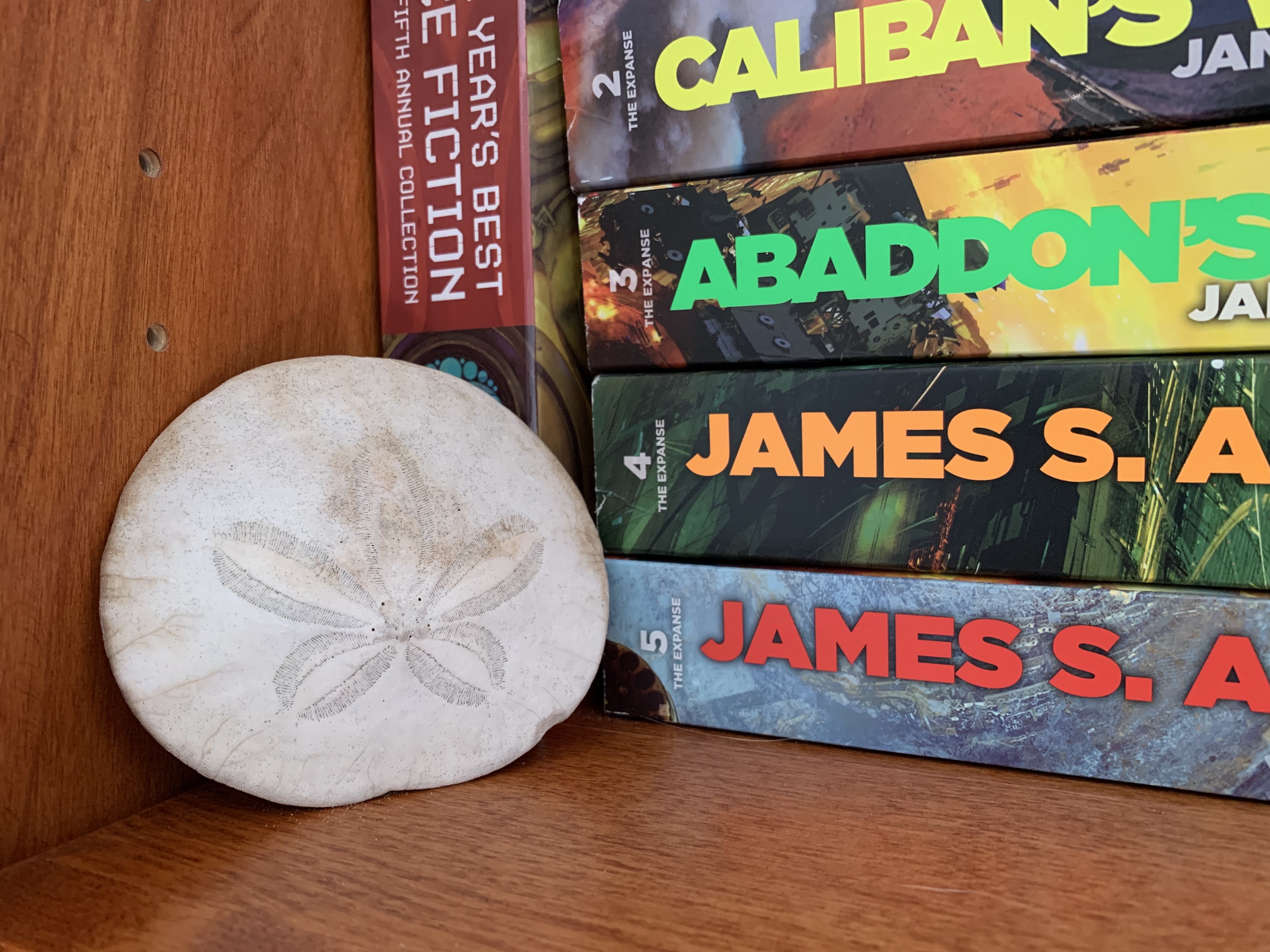
My grandparents lived in Chicago for most of my life but when they retired they became snowbirds, the kind that fly south for the winter. Later, they moved down there permanently. My grandfather walked the beaches south of Cape Canaveral and found, among other things, the bleached white skeletons of Echinarachnius parma, otherwise known as sand dollars.
I saw live sand dollars for the first time on our recent visit to the Monterey Bay Aquarium. They resemble their skeletons only in shape, and even that is unexpectedly flipped upright. Check out the images in the article below.
9 Fascinating Facts About Sand Dollars
The sand dollar—or “sea biscuit,” or “sand cake,” in other parts of the world—is purple and hairy in its prime.
Grandpa used to collect sand dollars and give them to us kids, a tiny piece of a magical, tropical land far to the south.
I still keep one on my bookshelf.
Happy birthday, Grandpa.
* * *


You must be logged in to post a comment.