This is for all those who take the world and mold it, via fiction or fact, into something creative and new.
The most interesting inventions are those that haven’t worked yet. — Nathan Myhrvold
* * *
Posted in Science!, Writing, tagged #365Ways, #365Ways2026, creativity, inspiration, invention, Thoughts, Writers, writing on March 26, 2026| Leave a Comment »
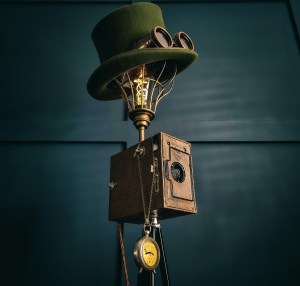
This is for all those who take the world and mold it, via fiction or fact, into something creative and new.
The most interesting inventions are those that haven’t worked yet. — Nathan Myhrvold
* * *
Posted in Science!, tagged #365Ways, #365Ways2026, reading, Thoughts, Writers, writing on March 10, 2026| 4 Comments »
Because it can sometimes be hard to keep a positive attitude with everything going on in the world, I thought I’d share this article. Also, books are just a good time.
How reading books regulates your nervous system – Big Think
Reading is relaxing, and many people do it as a counterbalance to our overstimulated age.
But what exactly is happening when we read? What’s going on beneath the surface that makes reading a book feel so restorative?
The answer lies in how reading changes our neurochemistry in real time. Reading isn’t just about decoding words on a page. It’s a complex neurochemical process that affects everything from our heart rate to our hormone levels.
Go ahead, change your neurochemistry for the better.
* * *

Posted in Science!, tagged #365Ways, #365Ways2026, entertaining absurdities, science, Writers on March 6, 2026| 1 Comment »
A critical writing question addressed by the good people over at xckd (home of “serious answers to absurd questions”):
Can you power your computer by typing?
I mean, the answer’s pretty obvious, but the details are interesting!
* * *
Posted in Science!, tagged #365Ways, #365Ways2026, citizen scientists, helping, inspiration, nature on March 3, 2026| 3 Comments »
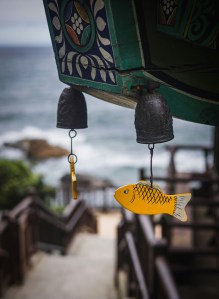
Yes, the world is a dangerous mess right now but not everything is terrible. Exhibit A: The Fish Doorbell is back!
The Fish Doorbell — The Fish Doorbell
Every spring, thousands of fish swim through the Oudegracht in Utrecht, searching for a place upstream to lay their eggs. But the Weerdsluis is often closed. You can help the fish continue their journey! If you see a fish, press the doorbell. This alerts the lock operator to open the lock.
Love this!
* * *
Posted in Science!, tagged #365Ways, #365Ways2026, astronomy, lunar eclipse on March 2, 2026| Leave a Comment »
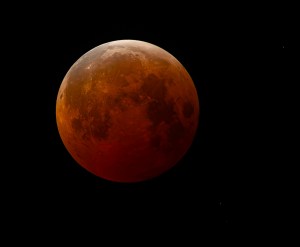
Tomorrow morning very early, the last full moon of the winter season will coincide with a total lunar eclipse. When? Check the links below for precise times, but as an example, maximum eclipse in Ottawa will be at 6:33am ET.
The result? A blood moon.
We’ve talked about this phenomenon before, but this will be the last one for a couple of years.
Check here for timing and more info on the eclipse and how to view it: Total Lunar Eclipse on March 2–3, 2026 – Where and When to See
Visible from Asia, Australia, and North America, this is the last total lunar eclipse until the December 31, 2028–January 1, 2029 New Year’s Blood Moon Eclipse.
If your view is obstructed you can watch this livestream from the Griffith Observatory in Los Angeles.
* * *
Posted in Science!, tagged #365Ways, #365Ways2026, astronomy, NASA, science, space on February 26, 2026| Leave a Comment »
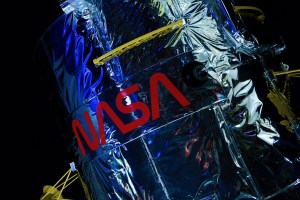
Sadly, the Artemis II moon mission has been pushed back again, and the new launch window now won’t happen until April at the earliest. Pesky helium flow issues!
Happily, this week we can entertain ourselves with a planetary conjunction!
APOD: 2026 February 24 – Planet Parade over Sydney Opera House
Look up this week and see a whole bunch of planets. Just after sunset, looking west (mostly), planets Mercury, Venus, Saturn, and Jupiter will all be visible to the unaided eye simultaneously.
Mercury Completes the Planetary Parade at Dusk
Seeing all the naked eye planets at once is set to become a rarity in coming years.
Here’s hoping the skies are clear where you are!
* * *
Posted in Other, Science!, tagged #365Ways, #365Ways2026, birds, broken isn't always forever, inspiration, nature, people power, volunteering on February 21, 2026| Leave a Comment »
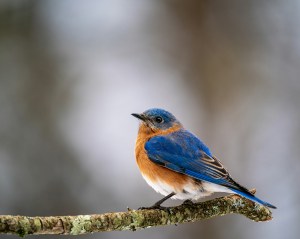
This story is so encouraging:
The Ordinary People Who Saved the Bluebird
There was a time when seeing a bluebird felt less like spotting a bird and more like witnessing a small miracle. But then, the Eastern bluebird population made a comeback. The hero?
A lot of volunteers — and an ordinary box.

Sure, we broke it. But now we’re fixing it, and that’s a story I think we all could use.
* * *
Posted in Entertainment, Science!, tagged #365Ways, #365Ways2026, Artemis, full-moon, inspiration, movies, NASA, science on February 4, 2026| Leave a Comment »
Sadly, NASA’s Artemis mission launch has run into some issues (hydrogen leaks bad!) and will be delayed until at least March.
NASA Conducts Artemis II Fuel Test, Eyes March for Launch Opportunity
That said, safer is better, so you do what you need to do, NASA. (Maybe rehiring some of the folks who were let go last year might help? Just saying.)
What do we hope to see when the mission does launch? This site has a nice explainer.
The flight path of Artemis 2, step by step
And for more on the long-term goals, see this in-depth article: How Artemis will land humans on the Moon.
As we wait to hear more from the launchpad, here’s something fun I ran across the other day that may help keep you entertained:
We asked former astronauts about their favorite space movies, and this is what they said
I mean, I’m more The Martian and Galaxy Quest than 2001, but that’s me. So many good movies!
* * *
Posted in Other, Science!, tagged #365Ways, #365Ways2026, full-moon, NASA, science, space, Thoughts, unexpected joys on February 1, 2026| 8 Comments »
We’ve lived in this house for years but this morning I discovered something new. Some confluence of sun angle, time of day and positioning meant that the lampshade in the kitchen reflected a rainbow-colored series of textured light onto the ceiling. It was both joyful and unexpected, reminding me that there is beauty everywhere.
If I look.
Speaking of reflected light, there’s a full moon tonight.
Tonight’s moon is known by many names, including the Wolf Moon, Cold Moon, and Snow Moon. We may finally have clear skies tonight, too, and I’m looking forward to looking up.
Snow Moon: Full Moon in February 2026
February’s Full Snow Moon reaches peak illumination at 5:09 P.M. EST on Sunday, February 1. Step outside after dusk to see the Full Moon in all of its glory!
Since we’re here, I’ll share a link that led to a flurry of conversation in my family.
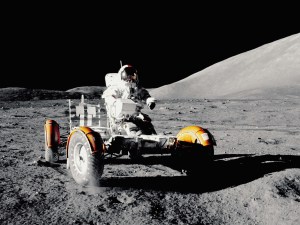
1969 Apollo 11 First steps on the Moon (16mm footage)
On July 20, 1969, the Apollo 11 Lunar Module with Neil Armstrong and Buzz Aldrin aboard touched down on the surface of the Moon 4 days, 6 hours, and 45 minutes after having launched from Cape Canaveral. At 02:56:15 GMT, Neil Armstrong became the first human to set foot on another celestial body.
My parents were remembering where they were when it happened (at the next-door neighbor’s in Michigan, because they didn’t have a television), and what it felt like to watch the landing. Uplifting.
And looking ahead, NASA’s first crewed mission around the moon in over half a century will be happening soon.
Something to look forward to!
* * *

Posted in Science!, Writing, tagged #365Ways, #365Ways2026, Ig Nobel, inspiration, science experiments on January 27, 2026| Leave a Comment »
I’m work work working away here, but of course crossing things off my to do list is never as fast as I’d like. Which is why it was somewhat reassuring to come across The World’s Longest Running Lab Experiment.
The World’s Longest-Running Lab Experiment Is Almost 100 Years Old
The world’s longest-running lab experiment is an ongoing work in sheer scientific patience. It has been running continuously for nearly a century, under the close supervision of several custodians and many spectators – and it’s ever so slowly drip, drip, dripping away.
If you’ve ever wondered about the viscosity of pitch (noun, not verb) or are just curious, read the article above or watch for the next drop. Should only be a few years. A decade at most!
Given this I know I, for one, will be heading back to my to do list feeling just that little bit faster!
* * *


You must be logged in to post a comment.