Today I’m sharing my new favorite background music, great for everything from working to reading. It’s delightfully calming (and even has a little bonus at the end:)
(If you have Amazon Prime, it’s also available there.)
Since my recent posts have spent a lot of time in space, let’s take a slight break from the nonfiction drama of NASA’s Artemis II mission and shift over to the fictional world of space adventure.
In his books, Andy Weir (The Martian) works hard to bring scientific accuracy to his fiction. The challenge is balancing the demands of a thrilling story with the science that grounds it in reality.
While “Project Hail Mary” has its share of explosions and catastrophes, it’s the thinking that’s thrilling. Grace and Rocky must come together, with tools and whiteboards, craft and ingenuity, to solve a seemingly insoluble problem. They make mistakes, but they learn from those mistakes and from each other.
… when I walked out of a recent preview screening of the film adaptation of Andy Weir’s 2021 science fiction novel Project Hail Mary, I had tears of joy in my eyes. The filmmakers had done justice not just to the original story, but also to the science at the heart of it.
From NASA, with lots of interesting subsidiary links:
Let NASA shed some light: Explore the resources below to learn the science facts fueling the science fiction.
(Wait, Tau Ceti was also featured in fiction by Isaac Asimov, Arthur C. Clarke, Frank Herbert, Robert Heinlein, Ursula K. Le Guin, and Kim Stanley Robinson? And was the setting for Barbarella? This planet gets around!)
The final assessment of the science? Not perfect, but good. And precisely accurate or not, this promises to be another very entertaining movie. (I’ve read the book but haven’t seen the film yet. Yes, I am a little behind the curve!)
Since we’re here, how about an article on the movie as a climate parable? (warning, spoilers!)
The original Star Wars is covered with English signage and written words on displays, something that would change in the wake of the film’s blockbuster success. Both Empire Strikes Back and Return of the Jedi would, with the confidence that audiences had accepted the galaxy far, far away, move away from putting English text on-screen, instead creating unique writing systems—reams of text that were not just left untranslated, but were never given meaning behind the symbology beyond the graphic design.
How that changed, and why, is actually a pretty fun read if you’re into that sort of thing. It’s also one of the many reasons why my first re-watch of the Star Wars re-release was repeatedly punctuated by me exclaiming, “Hang on just a minute!”
…at least four important aspects of the “Star Wars” saga are much closer – both in time and space – than Lucas was letting on.
And while it’s true that we’re making progress on the scientific and technological aspects of the Star Wars universe, that’s not the reason we care so much about it.
Star Wars came to me at a difficult time, and has served as an anchor ever since. Why does the story resonate so strongly with so many people?
According to Lucas: “I became fascinated with how culture is transmitted through fairy tales and myth. Fairy tales are about how people learn about good and evil…it’s the most intimate struggle that we cope with – trying to do the right thing and what’s expected of us by society, by our peers, and in our hearts.”
These stories typically appear during times of doubt and can help viewers reclaim the goodness and innocence in themselves, reminding them they can overcome the evil they see in the world.
And while I normally ignore Episodes I, II and III (IV forever!), this quote from the script of III seems appropriate.
“In a dark place we find ourselves, and a little more knowledge lights our way.”
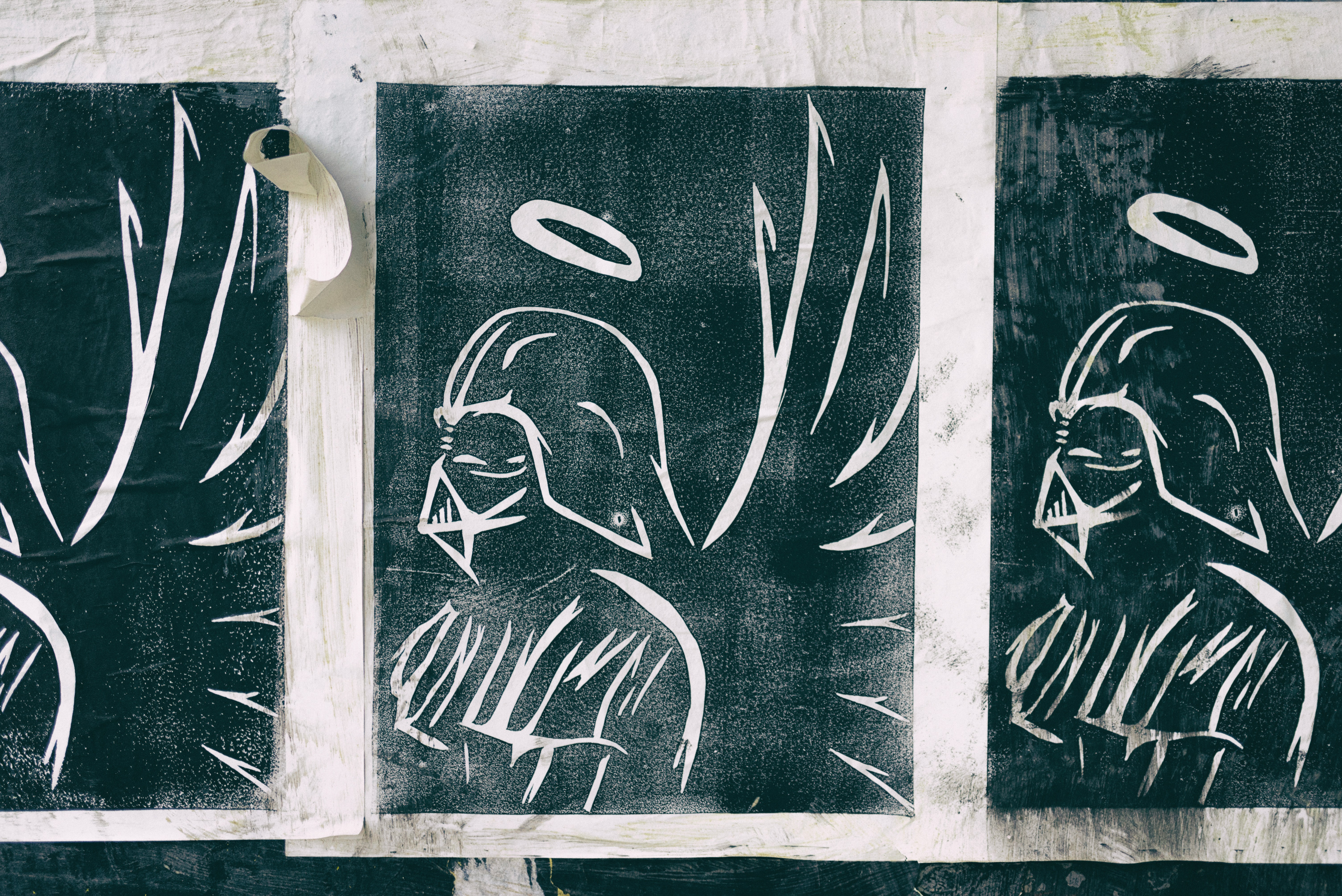
His career spanned three-quarters of a century and included work from stage to voice to movies, but for me he will always be Darth Vader. I’ve written about my love of Star Wars before, and that’s my anchor when thinking about James Earl Jones.
Who else could have captured Vader’s complex and contradictory traits? Who made us both hate and finally feel for the tortured soul that was Anakin Skywalker?
“James was an incredible actor, a most unique voice both in art and spirit. For nearly half a century he was Darth Vader, but the secret to it all is he was a beautiful human being. He gave depth, sincerity and meaning to all his roles, amongst the most important being devoted husband to the late Ceci and dad to Flynn. James will be missed by so many of us…friends and fans alike.”
— “Star Wars” creator George Lucas
A lot of tributes are being published, and if you’re interested in learning more about his impressive and wide-ranging career, I recommend reading them. Here’s just one, from NPR: Actor James Earl Jones, a beloved baritone, dies at 93.
But if you just want to take a quiet moment to appreciate the loss of this generational talent, may I recommend this:
Thankfully, as Luke says, no one is ever really gone.
In a recent chat with my mother, I mentioned that I thought she would enjoy the movie version of The Martian. I don’t know if she was convinced by my sales pitch: “An astronaut is stranded alone on Mars and has to find a way home before he dies a horrible death. It’s hilarious!” but I hope she’ll watch it.
Andy Weir’s book is also a lot of fun. It was published ten years ago this month, and to celebrate he wrote a new chapter and shared it with us all.
a unit of distance used in astronomy, equal to about 3.26 light years (3.086 × 10¹³ kilometers). One parsec corresponds to the distance at which the mean radius of the earth’s orbit subtends an angle of one second of arc.
A parsec is a measurement of distance, not time. Twelve of those do not a winning Kessel Run make, but, as millions of fans (and yes, dollars) attest, no one cares. The story works.
These are the things I think about when I’m stuck on a plot point, or deep in historical or technical weeds.







You must be logged in to post a comment.