Feeds:
Posts
Comments

Archive for the ‘Science!’ Category

If you are anywhere near the path of totality for the big event on Monday, April 8th, are you eclipse ready? I will argue that one of the most important parts of such prep is to ensure that you have a plan for safe eclipse viewing. This article may be of help:

Are Your Solar Eclipse Glasses Fake? Here’s How to Check | Scientific American

Legitimate eclipse glasses are at least 1,000 times darker than the darkest sunglasses you can buy….

While lab tests are the best way to determine whether glasses meet the ISO standard, Fienberg says there is a three-part test people can do at home if they’re concerned their eclipse viewers aren’t up to the task.

First, put your glasses on indoors and look around. The only things you should be able to see are very bright lights, such as a halogen bulb or a smartphone flashlight.

Then, if the glasses pass the indoor test, bring them outside—but don’t look at the sun just yet. Look around: it should be too dark to see distant hills, trees or even the ground.

If that second test is passed, keep the glasses on and quickly glance at the sun. You should comfortably see a bright, sharp-edged round disk. If your glasses pass all three tests, they are probably safe to wear. Still, Fienberg points out that it’s best to use them for only a few seconds every minute or so during the eclipse…

Here’s a reference for Suppliers of Safe Solar Viewers & Filters | Solar Eclipse Across America.

Your eyes need eclipse protection, but did you know that your phone/camera does too?

How to photograph the eclipse, according to NASA | Popular Science

Speaking of NASA, NASA needs your smartphone during April’s solar eclipse. Go citizen scientists!

And if you’re already looking forward to upcoming total solar eclipses, here’s a map to help you plan:

Map of total solar eclipses across the Continental US over time
From Scientific American: See Where Future U.S. Eclipses Will be Visible
Credit: Shuyao Xiao; Source: NASA (data)

2106, here we come!

* * *

Photo by Jason Howell on Unsplash

Read Full Post »

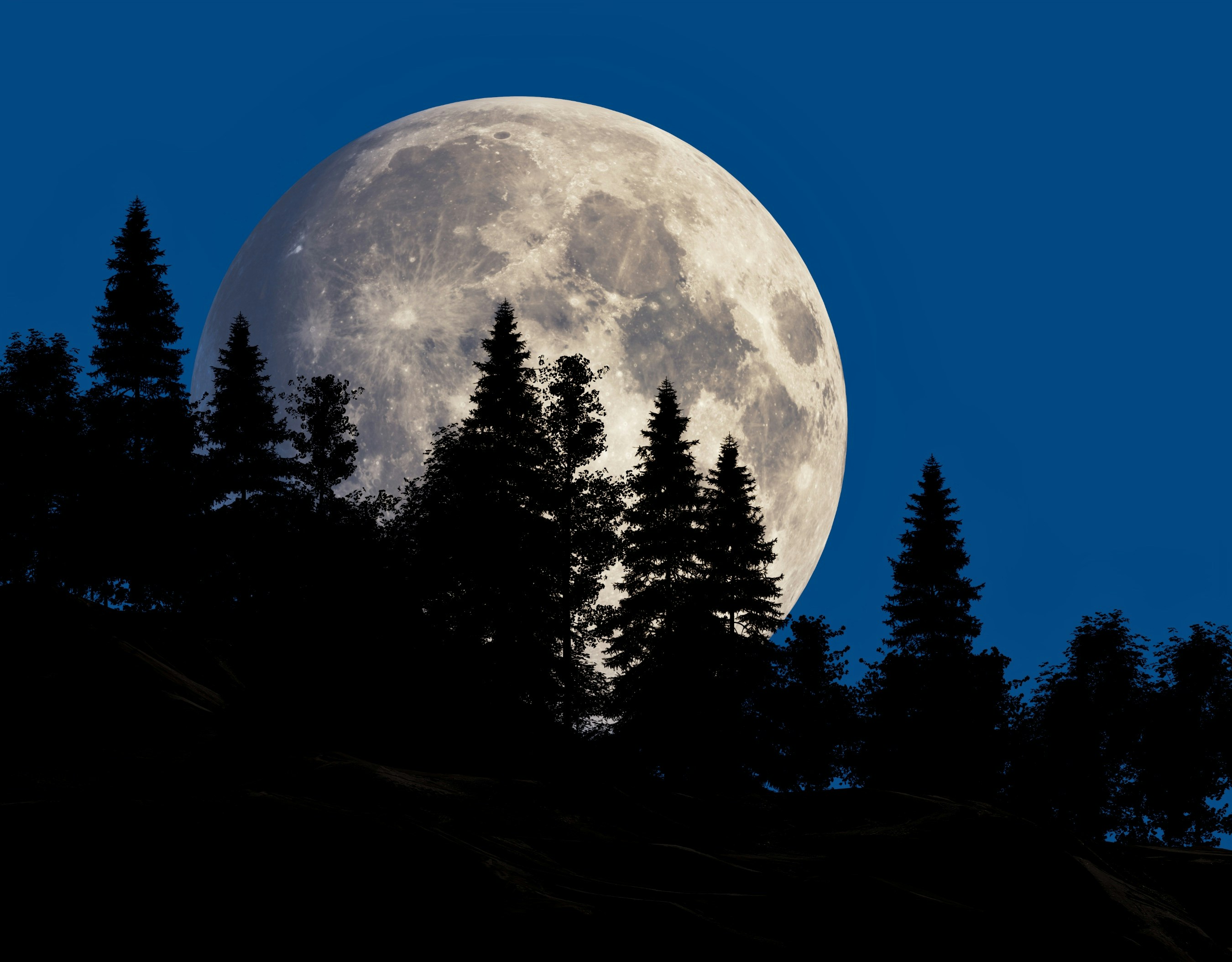
By now you have probably heard that there will be a full eclipse of the Sun on April 8th. (If you haven’t, this is your public service announcement. The world is not ending and the Sun will return to its place in the sky. No wolvesdragons or demons are involved. The gods of sun and light just need to slip out for a quick break.) The next time this will happen in the contiguous US won’t be until 2044.

Millions of people will be able to view the eclipse. Here’s a map of the eclipse path:

NASA Eclipse Explorer

Keep in mind, of course, that even those outside the path of totality will be able to view a partial eclipse. 

When will it happen? Here’s a table, with another map. Because I like maps.

Total Solar Eclipse on April 8, 2024 (Great North American Eclipse )

If you will be able to view this super cool space phenomenon, then you’ll want to get your hands on some eclipse glasses.

How safe are your solar eclipse glasses? Cheap fakes from online marketplaces pose a threat, supply-chain experts say

Of course, we now know that the Sun isn’t really eaten during an eclipse. Instead, it does what it always does: rain ultraviolet rays on everything in its path. That’s why you should never look at a solar eclipse without protective eyewear.

And if you are in charge of kids on April 8th (or adults, we should have sciencey fun too!) consider the ideas in this article:

How Schools Can Turn the Solar Eclipse Into an Unforgettable Science Lesson

If the weather cooperates, science students of all ages could be in for quite a show on April 8. The first sign will be a sudden temperature drop. The sky will darken, and winds will shift. A dark shadow will appear on the horizon. Faint waves of light may waft across the ground. A ring of bright light will shine from the outer edges of the otherwise darkened sun. Then the moon will cover the sun completely and, for a few seconds, a thin red layer may appear around its outer rim.

And just for fun, here’s a little something for your ears, too:

Listen to the Eclipse Song Made by the Sound of Light of an Eclipse

Ok, that’s a little edgy. But still fascinating!

* * *

Photo by Bryan Goff on Unsplash

Read Full Post »

Chewbacca, Prince of Cats, continues to be lovely. He also continues to weigh almost exactly what he did when we got him, despite a year of weight loss efforts. (To be fair, he lost almost a kilo. Then he gained it back.)

Now, his weight would not be a particular issue except that the vet insists on regaling us with a long (long) list of health-related problems that extra weight will bring, so we’re doing our best.

Which brings me to today’s charming bit of ephemera, a handy chart of weights in outer space.

Bad news: the cat weighs over 16 pounds on Earth.

Good news: That’s not nearly as much as he would weigh on Jupiter, where he’d clock in around 42 pounds.

And the Lunar economy must be swimming in Moonzempic because Chewie would weigh a sparse two and a half pounds there. (Kidding! It’s a gravity thing, not a weight-loss tourism thing.)

Sadly, until we pack up and decamp for the Moon, our kitty weight odyssey continues!

* * *

Not our cat, who is too busy sleeping off lunch to pose for a picture.
Photo by Lina Angelov on Unsplash

Read Full Post »

It is once again Pi Day! This one is for my father, who memorized (a whole bunch of digits of) pi back in grade school. It was a feat I never managed to equal, but perhaps with the help of this handy song, there’s still hope! 

* * *

Photo by Brett Jordan on Unsplash

Read Full Post »

So it looks like Area 51 is not what popular culture thinks.

tl;dr sorry, no aliens

Read the Pentagon UFO report newly released by the Department of Defense

“All investigative efforts, at all levels of classification, concluded that most sightings were ordinary objects and phenomena and the result of misidentification,” the report said.

The report also addresses claims that government and private companies are “reverse-engineering extraterrestrial technology” and hiding it, noting that there is “no empirical evidence for claims” and that “claims involving specific people, known locations technological tests, and documents allegedly involved in or related to the reverse-engineering of extraterrestrial technology, are inaccurate.”

I guess this means social media isn’t an alien plot to get us to destroy ourselves? (At least, that’s what they want us to think;)

* * *

Photo by Leslie Jones on Unsplash

Read Full Post »

Maybe you are already adept at converting inches (for example) to other units, but in case you are in the market for measurements made up of furlongs (real), or (somewhat less accepted) Mickeys, Beard-seconds, gkBs or Wheatons, well, this is the reference page for you.

List of humorous units of measurement

In related news, I recently received my MIT tape measure, with units listed in centimeters, inches, and Smoots. It is excellent.

* * *

Photo by Diana Polekhina on Unsplash

Read Full Post »

Today is February 29th, the day that (usually) only comes once every four years. What is a Leap Year, why do we have them and how cool is it that our ancestors figured this out centuries ago?

How does leap day work? Your every-four-years refresher

“I think the significance of the leap year is that it’s a great reminder that the universe is really good at defying our attempts to devise nice and pretty and aesthetically pleasing systems to fit it in”

This video does a good job of illustrating why we leap, and what happens if we don’t!

* * *

Photo by Mohamed Nohassi on Unsplash

Read Full Post »

Want to get away for a year or so? This job might be for you!

Martians Wanted: NASA Opens Call for Simulated Yearlong Mars Mission – NASA

NASA is seeking applicants to participate in its next simulated one-year Mars surface mission to help inform the agency’s plans for human exploration of the Red Planet.

NASA is looking for healthy, motivated U.S. citizens or permanent residents who are non-smokers, 30-55 years old, and proficient in English for effective communication between crewmates and mission control. Applicants should have a strong desire for unique, rewarding adventures and interest in contributing to NASA’s work to prepare for the first human journey to Mars.

The deadline for applicants is Tuesday, April 2.

https://chapea.nasa.gov

* * *

Photo by Benjamin Recinos on Unsplash

Read Full Post »

In a recent chat with my mother, I mentioned that I thought she would enjoy the movie version of The Martian. I don’t know if she was convinced by my sales pitch: “An astronaut is stranded alone on Mars and has to find a way home before he dies a horrible death. It’s hilarious!” but I hope she’ll watch it.

Andy Weir’s book is also a lot of fun. It was published ten years ago this month, and to celebrate he wrote a new chapter and shared it with us all.

Enjoy!

The Martian: Lost Sols

* * *

Photo by Ali Bakgor on Unsplash

Read Full Post »

Natural Allies

This is absolutely the sort of article I like to have with lunch:

Study finds bigfoot sightings correlate with black bear populations | Ars Technica

The results suggest that there’s a strong correlation between sightings and the local black bear population—for every 1,000 bears, the frequency of Bigfoot sightings goes up by about 4 percent.

So another way of interpreting this study is that (and correct me if I’m wrong here but really, it just makes sense) black bears and Bigfoot have formed an alliance.

Pretty sure they meet every third Thursday and swap tips on the best berry patches and how to avoid detection by overly-enthusiastic humans. 

* * *

Image by Alexey Hulsov from Pixabay

Read Full Post »

« Newer Posts - Older Posts »